
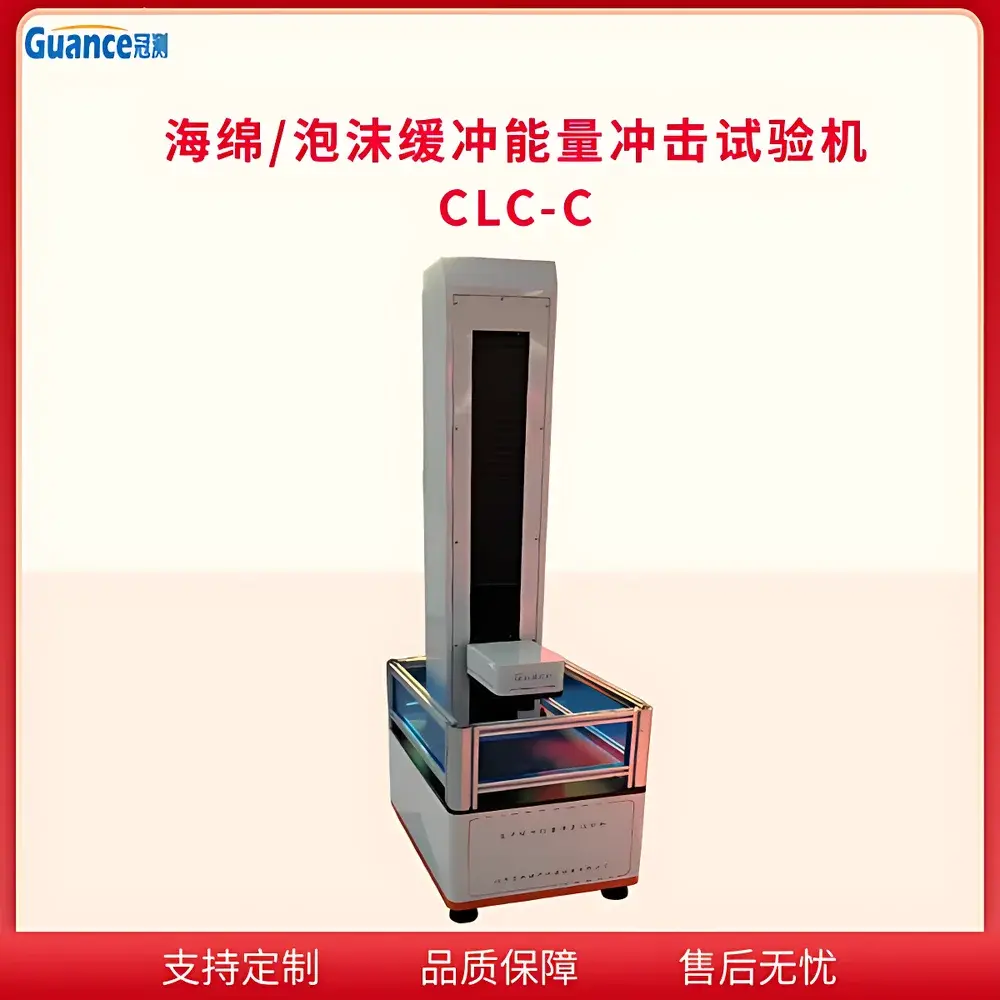
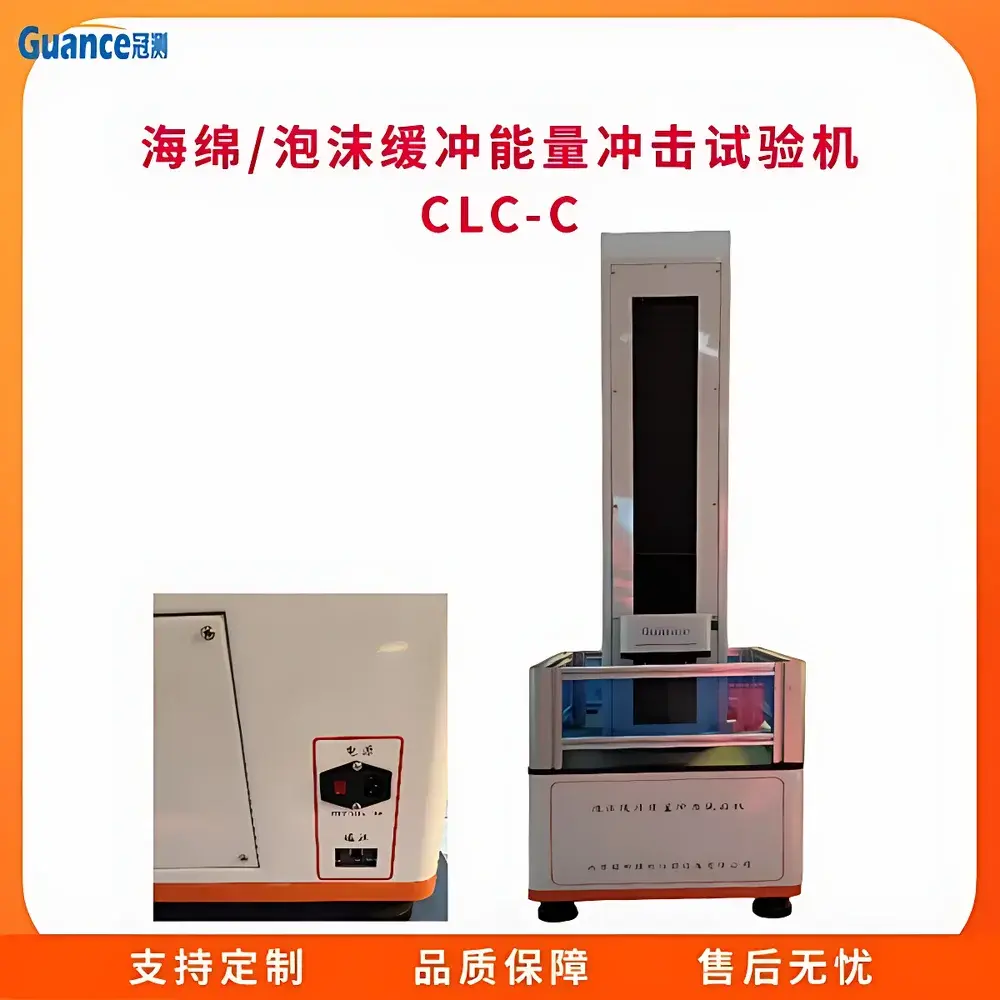
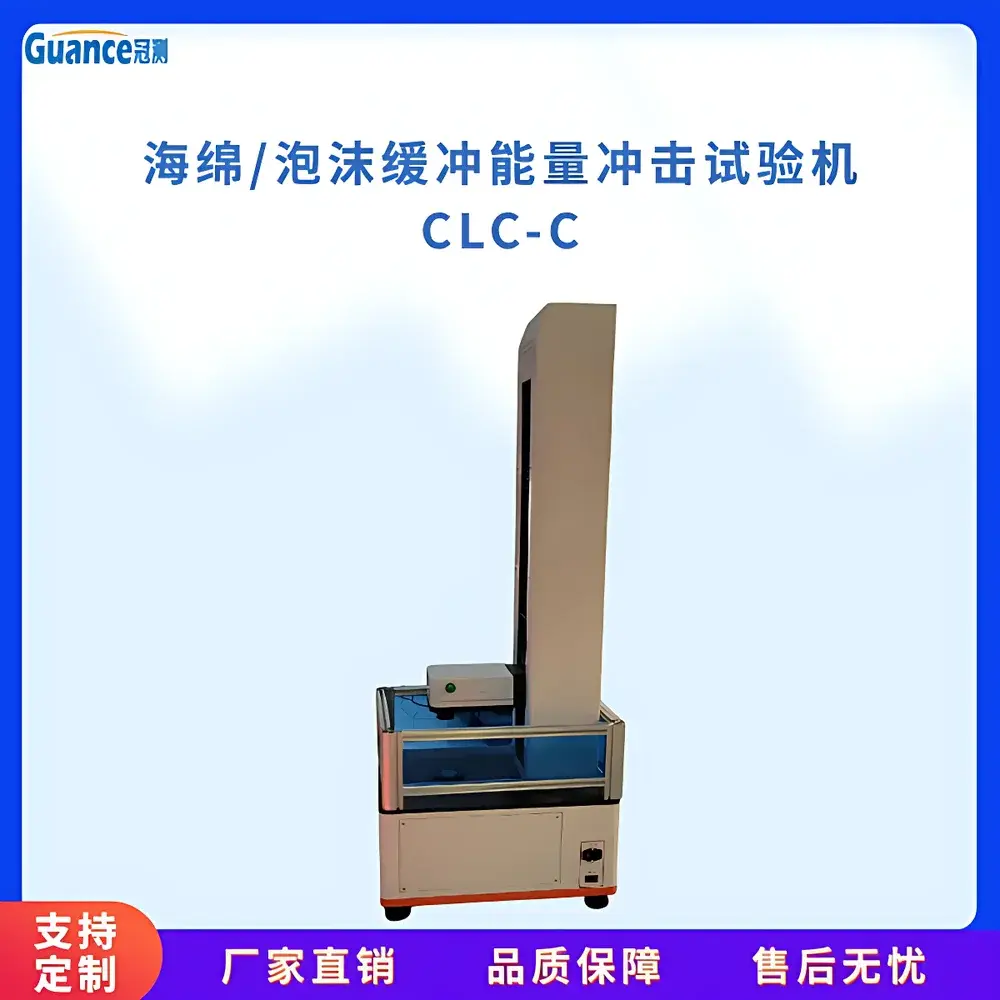
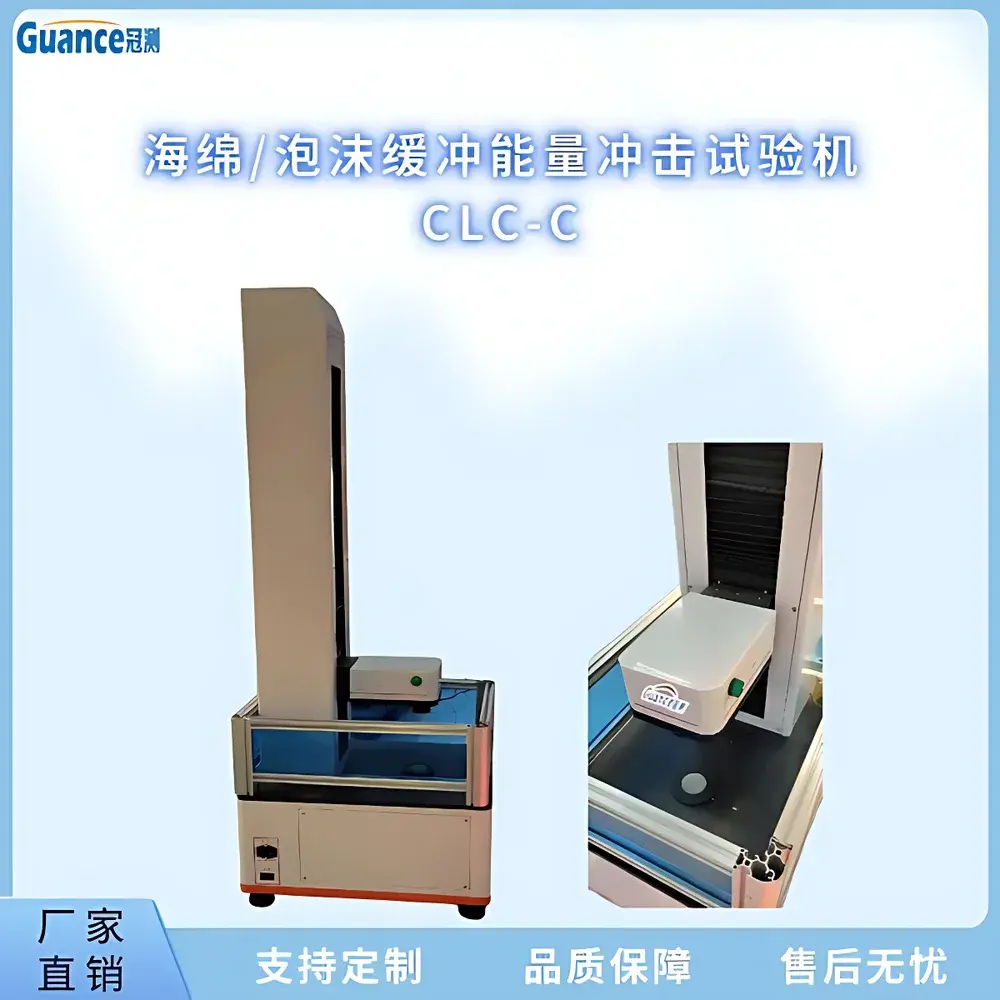
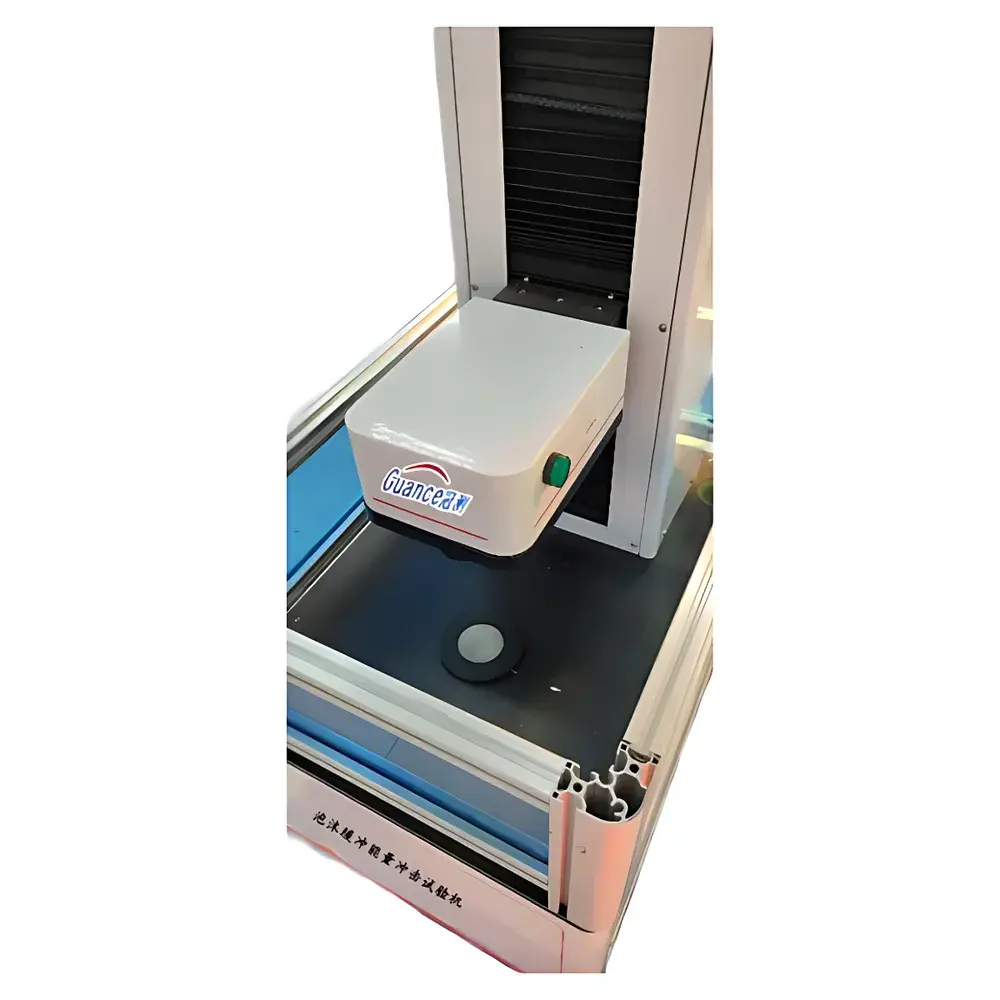
GuanCe Instruments GCCLC-C.3 Foam Cushioning Performance Impact Tester
| Brand | GuanCe Instruments |
|---|---|
| Origin | Beijing, China |
| Model | GCCLC-C.3 |
| Impact Height Range | 0–500 mm / 0–1000 mm (adjustable) |
| Impact Force Sensor Options | 2 kN / 5 kN / 10 kN |
| Pendulum Moment (Impact Constant) | 80 N·m/rad |
| Force Sensor Measurement Range | 10–60 N |
| Maximum Lifting Height | 100 mm |
| Data Acquisition Rate | 1 MHz |
| Release Mechanism | Motorized electromagnetic release |
| Height Adjustment | Motor-driven vertical positioning |
| Steel Ball Mass | Configurable per test standard (e.g., 16 g, 42 g, 100 g, 200 g per ASTM D1564, ISO 179-1, or customer-specified) |
| Compliance | Designed for ASTM D3367 (Foam Cushioning), ISO 18562-2 (Biocompatibility of medical device packaging), and GB/T 21661–2022 (Packaging cushioning performance testing) |
Overview
The GuanCe Instruments GCCLC-C.3 Foam Cushioning Performance Impact Tester is a precision-engineered drop-weight impact system designed to quantify dynamic mechanical response of low-density polymeric cushioning materials under controlled, high-speed compressive loading. Operating on the principle of free-fall impact mechanics, the instrument releases a calibrated steel sphere from a programmable height onto a specimen mounted on a high-fidelity force transducer. By measuring peak impact force (Fmax), impulse duration, energy absorption (Eabs = ∫F·dt), and residual deformation, the system enables objective evaluation of energy dissipation efficiency—critical for validating protective packaging integrity in electronics, medical device transport, and consumer goods logistics. Unlike pendulum-based Charpy or Izod testers, the GCCLC-C.3 employs a vertically oriented, motorized lift-and-release architecture with real-time 1 MHz data capture, ensuring high temporal resolution for transient force profiling during sub-millisecond contact events.
Key Features
- Motor-driven height adjustment with positional repeatability ±0.1 mm across 0–1000 mm range, supporting dual-height configurations (0–500 mm and 0–1000 mm) for compliance with diverse test protocols.
- Electromagnetically actuated, zero-backlash steel ball release mechanism eliminating mechanical trigger delay and ensuring consistent impact initiation timing.
- Modular force sensor options (2 kN / 5 kN / 10 kN full-scale) with integrated temperature-compensated strain gauge technology and linearity ≤±0.5% FS.
- Dedicated impact constant of 80 N·m/rad, enabling direct conversion between measured torque and impact energy per ISO 148-1 calibration methodology.
- Real-time 1 MHz analog-to-digital sampling synchronized with position encoder feedback, capturing waveform fidelity required for derivative-based metrics (e.g., dF/dt for stiffness estimation).
- Integrated safety-rated polycarbonate impact shield with interlocked door sensors meeting IEC 61508 SIL2 functional safety requirements.
Sample Compatibility & Compliance
The GCCLC-C.3 accommodates specimens up to 150 mm × 150 mm × 50 mm (L×W×H), including open-cell polyurethane foams, ethylene-vinyl acetate (EVA) sheets, crosslinked polyethylene (XLPE) pads, silicone gel films, and laminated composite cushioning structures. Its test methodology aligns with key international standards: ASTM D3367–20 (Standard Test Method for Cushioning Characteristics of Packaging Materials), ISO 18562-2:2017 (Biocompatibility evaluation of gas pathways—Part 2: Tests for particulate matter), and GB/T 21661–2022 (Packaging—Performance testing of cushioning materials). All hardware and firmware are architected to support GLP-compliant audit trails, with timestamped metadata (operator ID, environmental conditions, calibration status) embedded in each raw dataset.
Software & Data Management
The proprietary GCCLC Control Suite v3.2 runs on Windows 10/11 and provides full 21 CFR Part 11–ready functionality, including electronic signatures, role-based access control, and immutable audit logs. Upon height input, the software commands automatic vertical positioning and initiates zero-point compensation using pre-trigger baseline averaging. Post-impact, it computes Fmax, Eimpact, Eabs, coefficient of restitution (COR), and cushioning efficiency ratio (CER = Eabs/Eimpact). Comparative overlay of force-time curves (control vs. cushioned) is exportable as SVG/PNG; numerical results are saved in CSV and PDF formats with embedded digital signatures. Raw binary files (.bin) retain full 1 MHz waveform resolution for third-party spectral analysis.
Applications
- Qualification of thin (<2 mm) elastomeric films used in smartphone drop protection systems (e.g., iPhone internal gasketing, foldable display hinge buffers).
- Validation of medical device packaging cushioning layers against simulated shipping vibration and drop scenarios per ISTA 3A and ISO 11607-1.
- R&D benchmarking of novel bio-based foams (e.g., mycelium-derived composites, starch-polylactide blends) for sustainable packaging applications.
- Failure mode analysis of adhesive-backed foam tapes under impact-induced debonding, correlating peak shear stress with interfacial fracture energy.
- Accelerated aging studies—comparing pre- and post-thermal/humidity cycling impact absorption retention per ASTM D5751.
FAQ
What standards does the GCCLC-C.3 directly support for foam cushioning validation?
It is configured to execute ASTM D3367, ISO 18562-2, and GB/T 21661–2022 test sequences out-of-the-box, with parameter presets for height, mass, and sampling rate.
Can the system be integrated into an automated production line for 100% inline cushioning verification?
Yes—RS-232, Ethernet TCP/IP, and Modbus RTU interfaces enable PLC-level communication for pass/fail gating based on user-defined thresholds for Fmax and CER.
Is calibration traceability provided to national metrology institutes?
Each force sensor ships with a UKAS-accredited calibration certificate (ISO/IEC 17025) valid for 12 months, with optional annual recalibration service contracts.
Does the software comply with FDA 21 CFR Part 11 for regulated pharmaceutical packaging labs?
Yes—electronic records include digital signatures, audit trail export, and ALCOA+ principles implementation (Attributable, Legible, Contemporaneous, Original, Accurate).



