
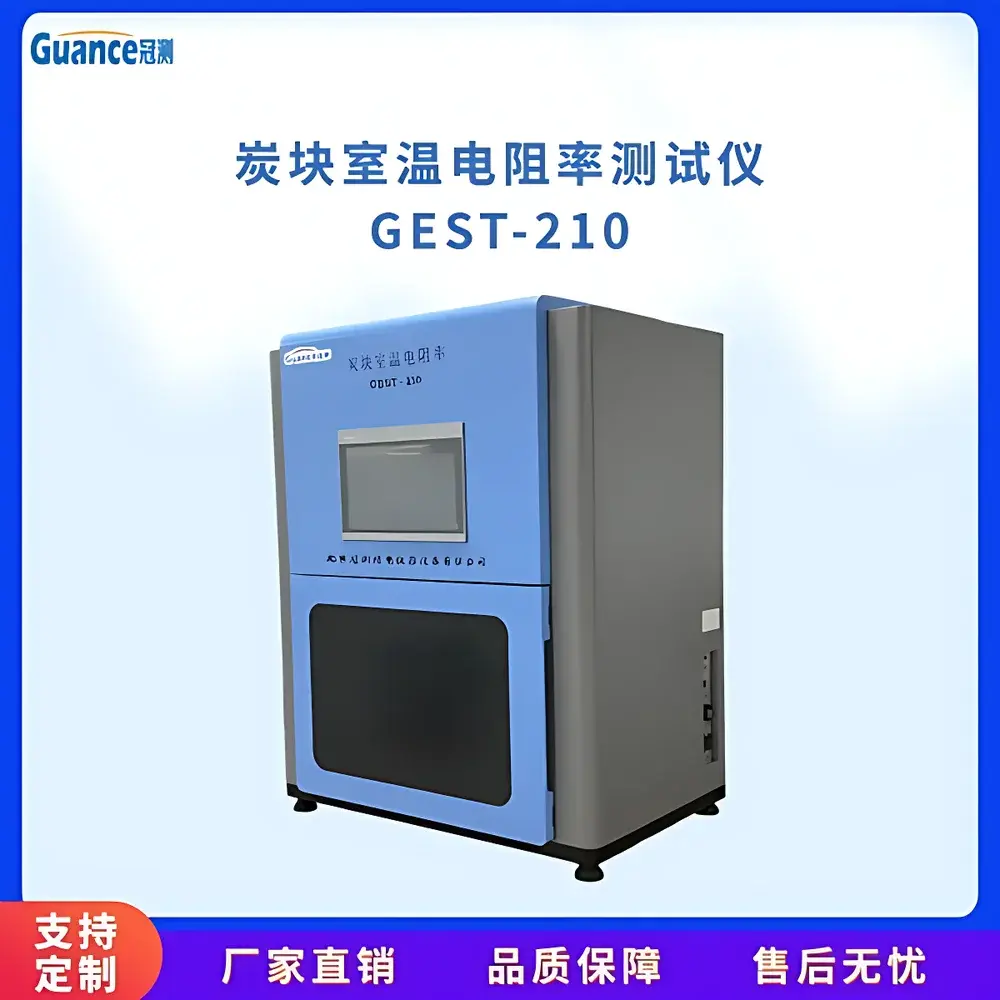
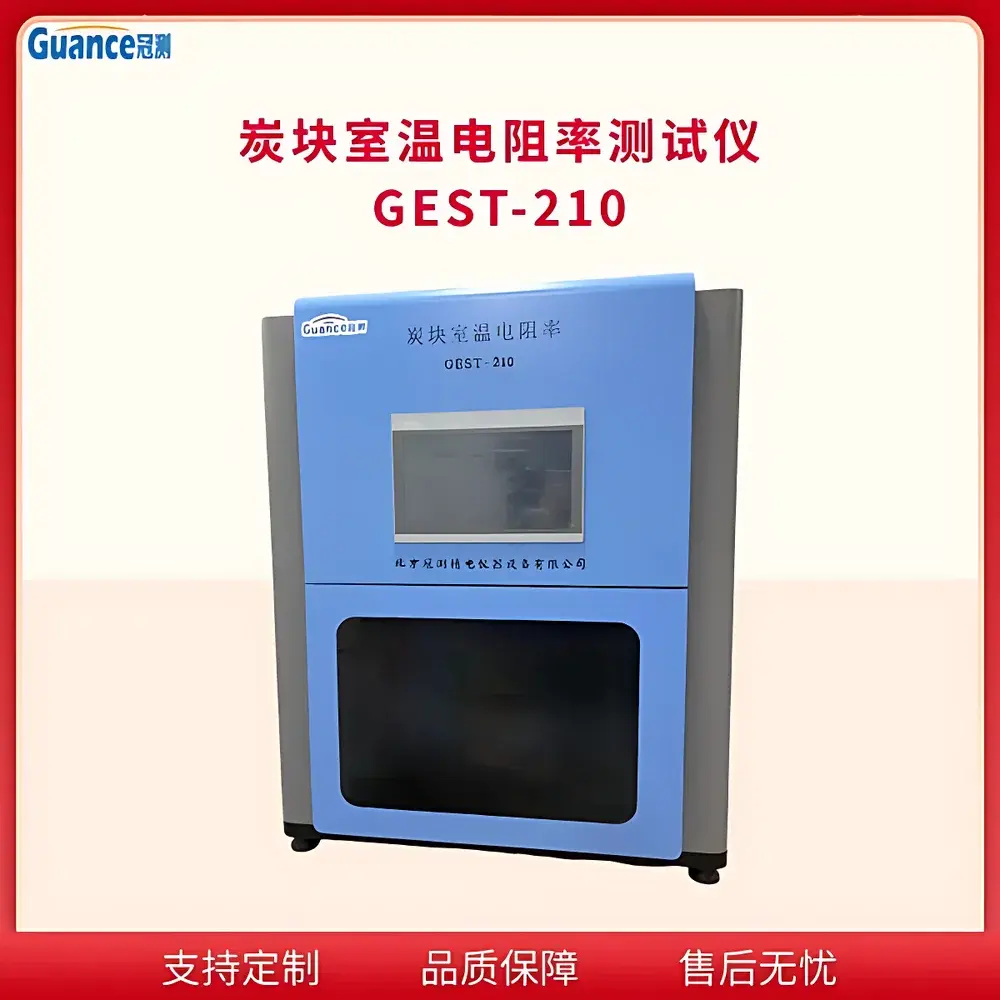
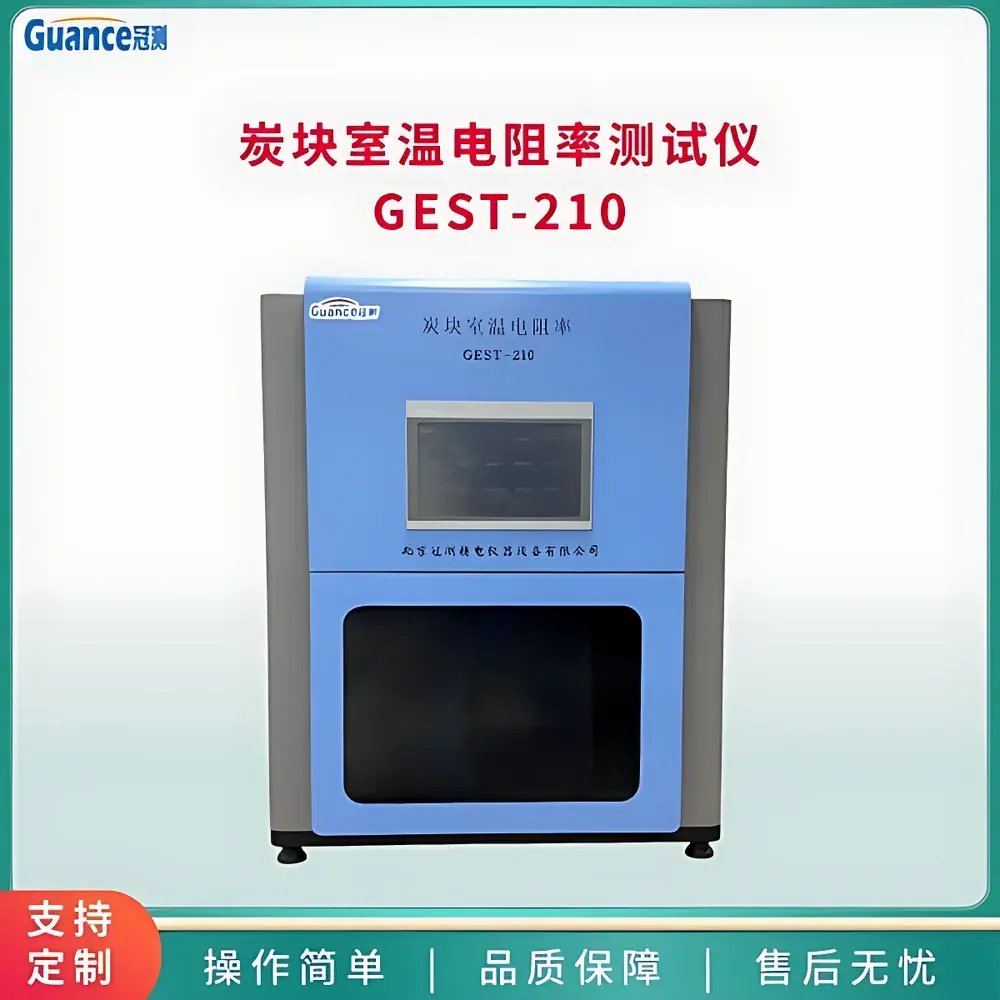
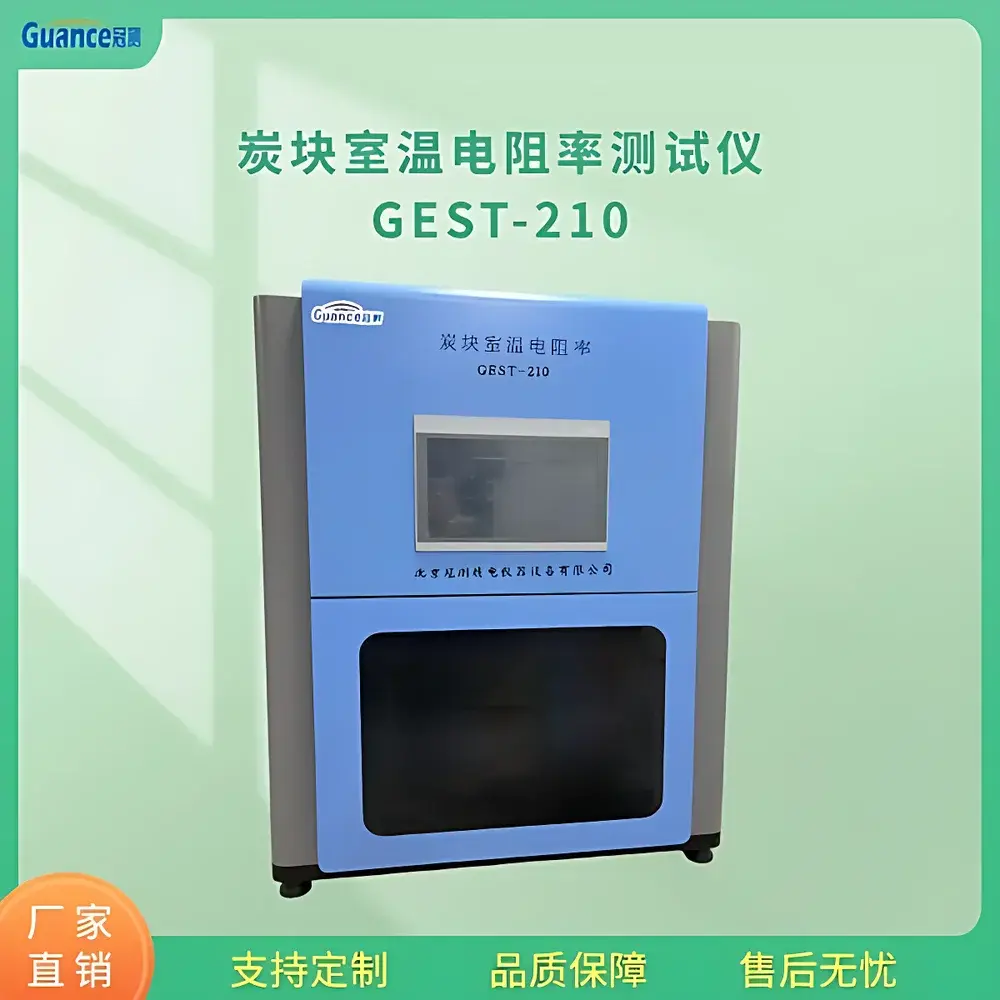
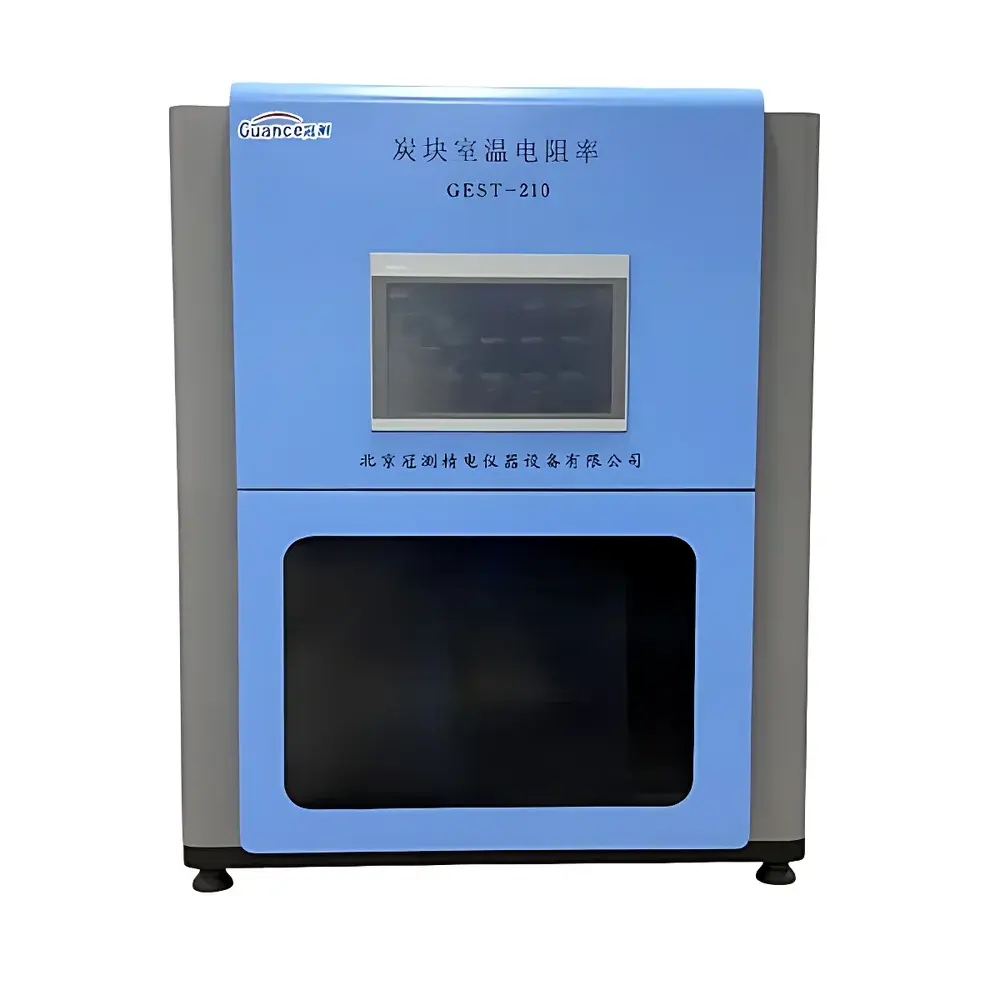
GuanCe GEST-210 Carbon Block Room-Temperature Resistivity Tester
| Brand | GuanCe Instruments |
|---|---|
| Origin | Beijing, China |
| Manufacturer Type | Authorized Distributor |
| Origin Category | Domestic (China) |
| Model | GEST-210/ |
| Price | USD 2,500 (FOB Beijing) |
Overview
The GuanCe GEST-210 Carbon Block Room-Temperature Resistivity Tester is a precision metrology instrument engineered for the standardized determination of electrical resistivity in carbonaceous materials—including anode and cathode carbon blocks, graphite electrodes, calcined coke, and raw carbon feedstocks—at ambient temperature. It operates primarily on the four-point probe (4PP) method, a contact-based DC technique grounded in van der Pauw and ASTM D4292–22 principles, which eliminates voltage drop errors caused by contact resistance and electrode polarization. The instrument is explicitly designed to comply with key international and national standards governing carbon material characterization, including GB/T 24525–2009, GB/T 24521–2018, and YS/T 63.2–2006—standards widely adopted in aluminum smelting, refractory manufacturing, and carbon electrode R&D laboratories. Its architecture integrates a stable low-noise current source (0.1 µA–100 mA), high-input-impedance nanovoltmeter (±100 nV resolution), and electromechanical sample actuation system calibrated for reproducible normal-force application (10–200 N range). Unlike generic multimeters or benchtop LCR meters, the GEST-210 implements geometric correction algorithms for non-square samples per ISO 80000-6 and accounts for thickness-dependent correction factors required under ASTM D4292 Annex A1.
Key Features
- Four-point probe measurement mode with automatic current reversal and dual-polarity voltage sampling to suppress thermoelectric offset and improve long-term stability
- Motorized probe head with programmable vertical displacement and real-time contact detection, ensuring consistent probe-sample normal force across heterogeneous surfaces
- Integrated Pt100 temperature sensor (±0.1 °C accuracy) coupled with embedded temperature compensation algorithm per IEC 60404-15, enabling resistivity normalization to 25 °C reference
- Automated sequence control: sample positioning → force application → contact validation → current injection → voltage acquisition → resistivity calculation → pass/fail flagging
- Onboard data logging with timestamp, test ID, environmental temperature, applied force, current magnitude, measured voltage, and calculated resistivity (µΩ·m)
- Front-panel LCD with touch interface supporting multi-language UI (English, Chinese, Spanish), configurable test protocols, and GLP-compliant audit trail export
Sample Compatibility & Compliance
The GEST-210 accommodates rectangular or cylindrical carbon specimens ranging from 20 mm × 20 mm × 20 mm to 150 mm × 150 mm × 100 mm. Probe spacing is fixed at 1.0 mm (standard) with optional 2.0 mm and 5.0 mm configurations available for macro-scale bulk resistivity mapping. Surface flatness tolerance: ≤0.05 mm over 10 mm² contact area. The system meets mechanical and electrical safety requirements per GB 4793.1–2019 (equivalent to IEC 61010-1) and electromagnetic compatibility per GB/T 18268.1–2010 (IEC 61326-1). All firmware and calibration records support traceability to CNAS-accredited reference standards. Data integrity safeguards include write-protected memory, electronic signature fields for operator authentication, and export logs compliant with FDA 21 CFR Part 11 Annex 11 requirements for regulated environments.
Software & Data Management
The instrument ships with GuanCe Resistivity Suite v3.2—a Windows-based desktop application supporting local database storage (SQLite), batch report generation (PDF/XLSX), and statistical process control (SPC) charting (X̄–R, Cpk). Raw measurement files (.grf) contain unprocessed ADC counts, timestamps, and metadata headers compatible with MATLAB, Python (NumPy/Pandas), and LabVIEW via documented ASCII export schema. Audit trails record all user actions—including parameter changes, calibration events, and result overrides—with SHA-256 hashing and time-stamped digital signatures. Exported reports include full uncertainty budget estimation per GUM (JCGM 100:2008), incorporating contributions from current source stability (±0.02%), voltage measurement noise floor (±0.005%), probe geometry tolerance (±0.15%), and temperature drift correction error (±0.08%).
Applications
- Quality assurance of prebaked anodes in aluminum electrolysis plants per ISO 12988-2
- In-process monitoring of carbon block sintering profiles in refractory production lines
- R&D evaluation of binder-coke ratio effects on green density and final resistivity
- Comparative analysis of graphitization degree across heat treatment cycles (600–3000 °C)
- Validation of isotropic vs. anisotropic conduction behavior in extruded graphite electrodes
- Supporting ASTM D4292 interlaboratory round-robin studies for method harmonization
FAQ
Does the GEST-210 support two-point probe measurements?
Yes—though not recommended for routine use, the instrument includes a two-probe mode for rapid screening of highly conductive samples (ρ < 10 µΩ·m); however, results require empirical correction using certified reference materials due to unquantified contact resistance.
Can the system be integrated into a factory MES or LIMS?
Yes—via TCP/IP Modbus RTU or OPC UA protocol; API documentation and driver packages are provided for Siemens SIMATIC, Rockwell FactoryTalk, and Thermo Fisher SampleManager integration.
What calibration standards are supplied with the instrument?
One NIST-traceable carbon reference block (ρ = 5.21 ± 0.03 µΩ·m @ 25 °C) and one copper shunt resistor (1.0000 Ω ± 0.005%) are included; annual recalibration is recommended per ISO/IEC 17025.
Is temperature-controlled chamber operation supported?
No—the GEST-210 is optimized for ambient-temperature testing only; for elevated-temperature resistivity, GuanCe offers the GEST-220 series with integrated furnace and thermal shielding (up to 800 °C).
How is probe wear compensated during long-term operation?
Probe tip geometry is verified quarterly using optical profilometry; the software allows manual input of effective probe diameter reduction to adjust geometric correction factors in real time.



