

Guance Instruments ZKFT1600 Image-Based Static Particle Size and Shape Analyzer
| Brand | Guance Instruments |
|---|---|
| Origin | Beijing, China |
| Manufacturer Type | Authorized Distributor |
| Country of Origin | China |
| Model | ZKFT1600 |
| Application | Metal Powders |
| Instrument Type | Static Imaging Analyzer |
| Measurement Range | 66.5 dB (dynamic range for grayscale intensity resolution) |
| Number of Lenses | 6 |
| Image Resolution Precision | 100 µm (minimum resolvable feature size under standard optical configuration) |
Overview
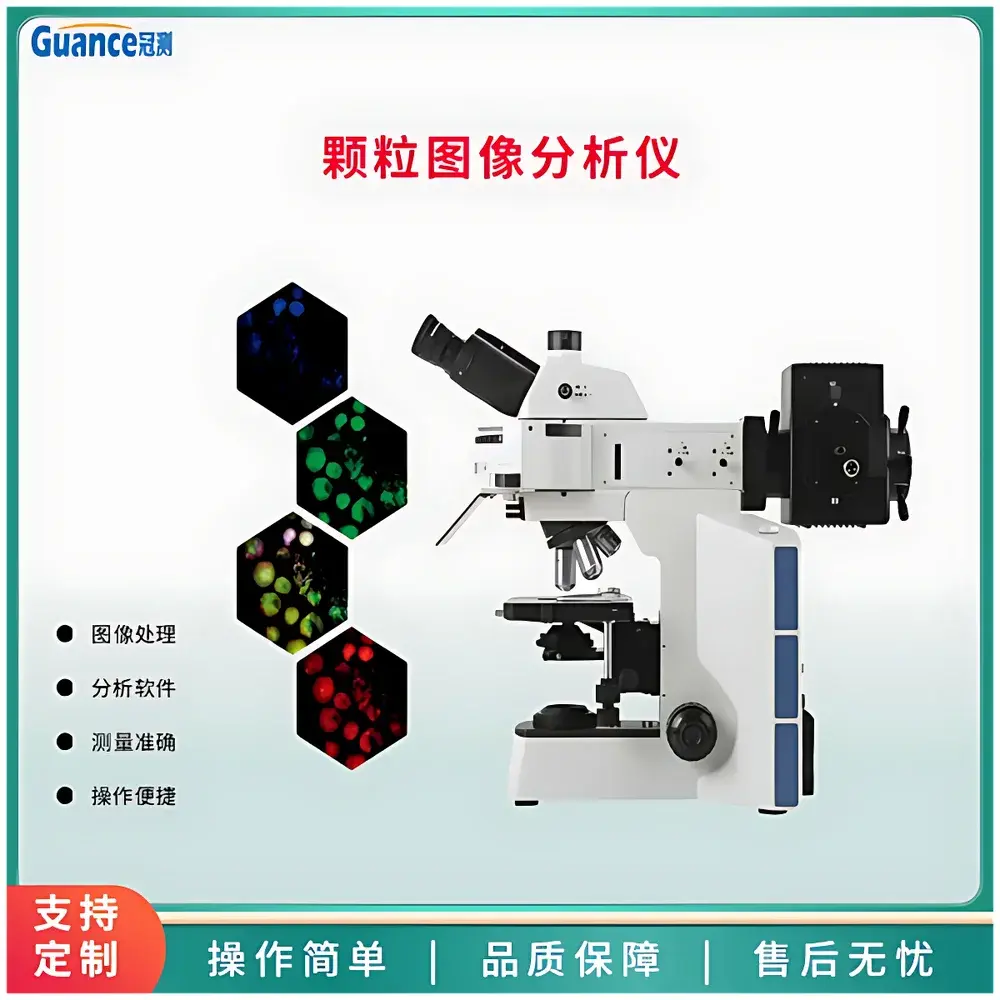
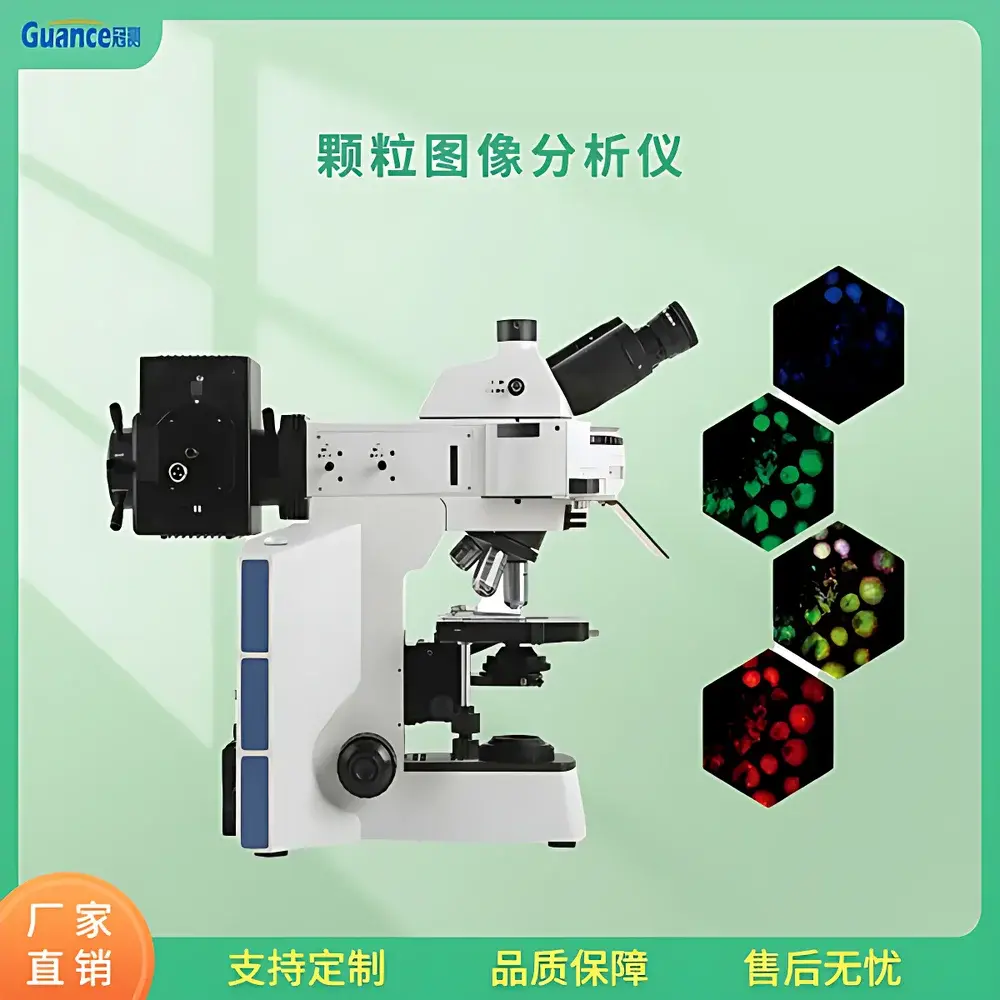
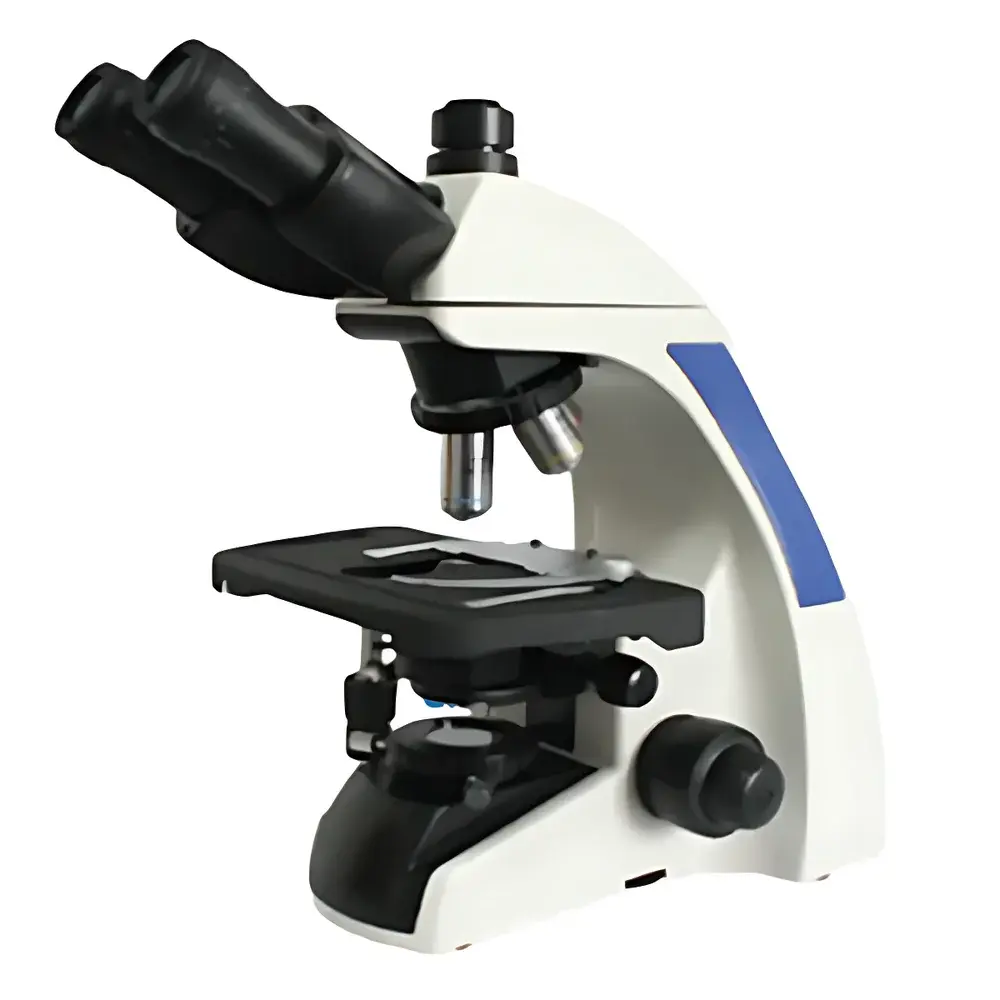
The Guance Instruments ZKFT1600 is a static image-based particle size and shape analyzer engineered for high-fidelity morphological characterization of dry, free-flowing particulate materials—particularly metal powders used in additive manufacturing, powder metallurgy, and advanced ceramics R&D. Unlike dynamic laser diffraction or sedimentation techniques, the ZKFT1600 employs brightfield transmitted-light microscopy coupled with multi-lens optical imaging to capture high-contrast, high-resolution digital micrographs of individual particles at magnifications ranging from 50× to 500×. Each acquired image undergoes pixel-level segmentation and boundary detection using deterministic thresholding and edge-enhancement algorithms embedded in the proprietary analysis engine. This enables direct measurement of geometric descriptors—including equivalent circular diameter (ECD), Feret diameter, aspect ratio (length/width), circularity, convexity, solidity, and roundness—for every resolved particle within the field of view. The system operates on the principle that particle morphology directly influences bulk behavior (e.g., flowability, packing density, sintering kinetics), making quantitative shape metrics essential for process qualification and material specification.
Key Features
- Six independently aligned optical lenses enabling simultaneous multi-magnification imaging—supporting both wide-field overview and high-magnification detail capture without mechanical repositioning.
- Integrated high-sensitivity monochrome CCD camera with 12-bit dynamic range (66.5 dB), ensuring accurate grayscale discrimination across particle edges and internal texture features.
- Static sample stage with precision XYZ manual adjustment and optional motorized focus control for reproducible depth-of-field alignment.
- Calibration traceable to NIST-traceable micrometer standards; software includes automated calibration verification routines per ASTM E2457–23 (Standard Practice for Calibration of Microscope Eyepiece Graticules).
- Rugged aluminum-alloy optical housing with anti-vibration base plate, designed for stable operation in shared lab environments without active isolation.
- Real-time preview mode with live histogram feedback to optimize illumination uniformity and contrast prior to acquisition.
Sample Compatibility & Compliance
The ZKFT1600 is optimized for dry, non-agglomerated particles ≥100 µm in nominal size—ideal for gas-atomized stainless steel, titanium, and nickel-based superalloy powders. Samples are dispersed manually onto conductive carbon tape or glass slides; no dispersion media or surfactants required. The system supports compliance with ISO 13322-1:2020 (Particle size analysis — Image analysis methods — Part 1: Static image analysis) and aligns with the methodological requirements of ASTM E2987–22 (Standard Guide for Characterization of Metal Powders for Additive Manufacturing). All image metadata—including timestamp, magnification, lens ID, exposure settings, and calibration parameters—is embedded in TIFF headers and retained throughout processing. Audit trails meet GLP documentation standards, and raw image archives are stored in vendor-neutral formats for third-party validation.
Software & Data Management
The bundled Guance ParticleVision™ v4.2 software provides full workflow control—from acquisition and batch processing to statistical reporting and export. It implements ISO/IEC 17025-compliant uncertainty estimation for each morphological parameter based on pixel-counting error propagation models. Reports include cumulative distribution curves (D10/D50/D90), bivariate scatter plots (e.g., circularity vs. aspect ratio), and cluster heatmaps identifying morphological subpopulations. Export options include CSV (for Excel/Python integration), PDF (with embedded metadata), and XML (compatible with LIMS platforms). Software supports 21 CFR Part 11-compliant user access controls, electronic signatures, and immutable audit logs for regulated environments.
Applications
- Qualification of metal powders for laser powder bed fusion (LPBF) and electron beam melting (EBM) processes—correlating particle sphericity and surface roughness with melt pool stability.
- Batch-to-batch consistency monitoring in powder production facilities, tracking deviations in angularity or satellite formation post-atomization.
- Research into particle fracture mechanics during milling or handling, quantifying changes in convexity and surface fractal dimension.
- Supporting ISO/ASTM powder specifications (e.g., ASTM F3049–22) by delivering certified morphological datasets for technical data packages.
- Educational use in materials science laboratories for hands-on instruction in stereology, digital image analysis, and statistical grain characterization.
FAQ
What particle size range is reliably measurable with the ZKFT1600?
The system delivers statistically robust measurements for particles between 100 µm and 2 mm under standard optical configurations. Sub-100 µm analysis is possible with oil immersion and higher NA objectives—but requires validation per ISO 13322-1 Annex B.
Does the ZKFT1600 support automated particle dispersion?
No—it is a static imaging platform requiring manual sample preparation. For automated dispersion, consider coupling with an upstream vibratory disperser or fluidized bed module (third-party integration supported via RS-232 API).
Can raw images be exported for independent analysis?
Yes—acquired TIFF files contain full EXIF and custom metadata tags; no proprietary compression or obfuscation is applied.
Is the software validated for GMP-regulated environments?
The core analysis algorithms are documented per ICH Q5E and validated against reference microsphere standards (NIST SRM 1980); full 21 CFR Part 11 validation package available upon request.
How is calibration maintained across multiple lenses?
Each lens is individually calibrated using a certified stage micrometer; software applies lens-specific scaling factors automatically during image acquisition and analysis.



