
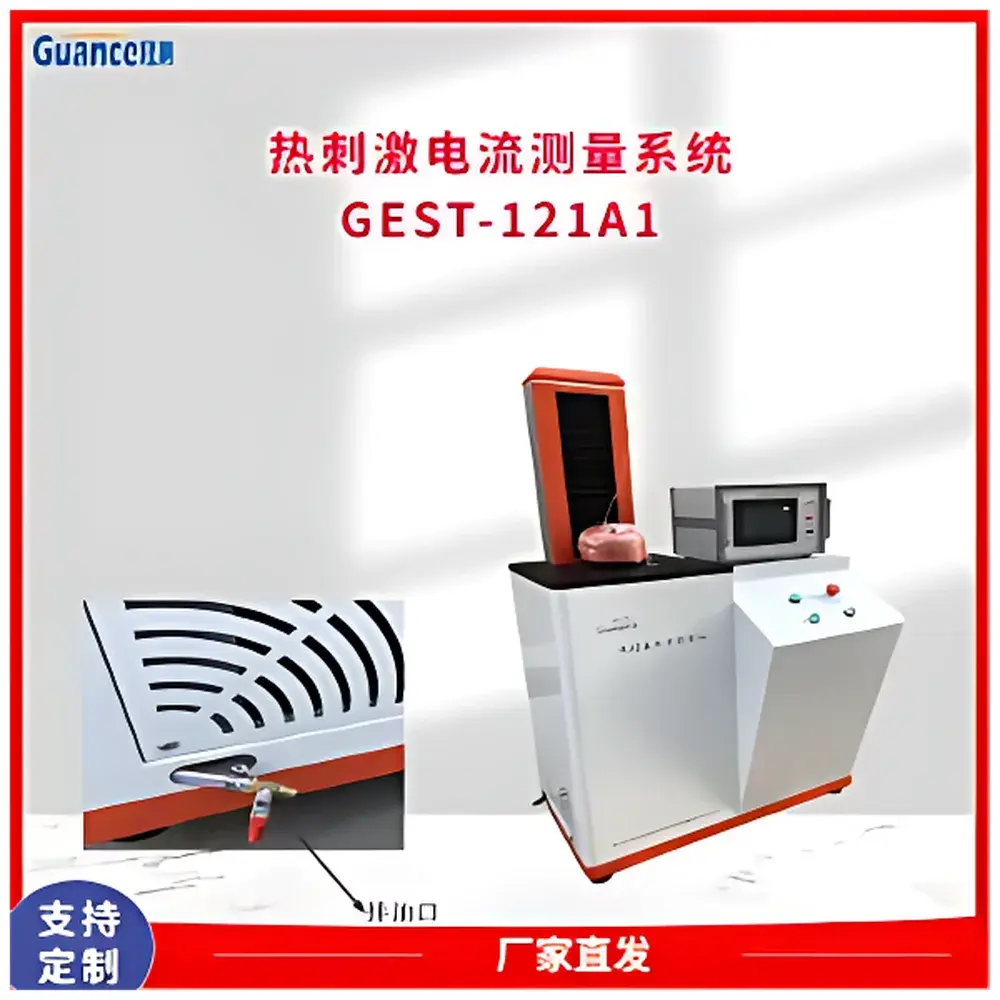
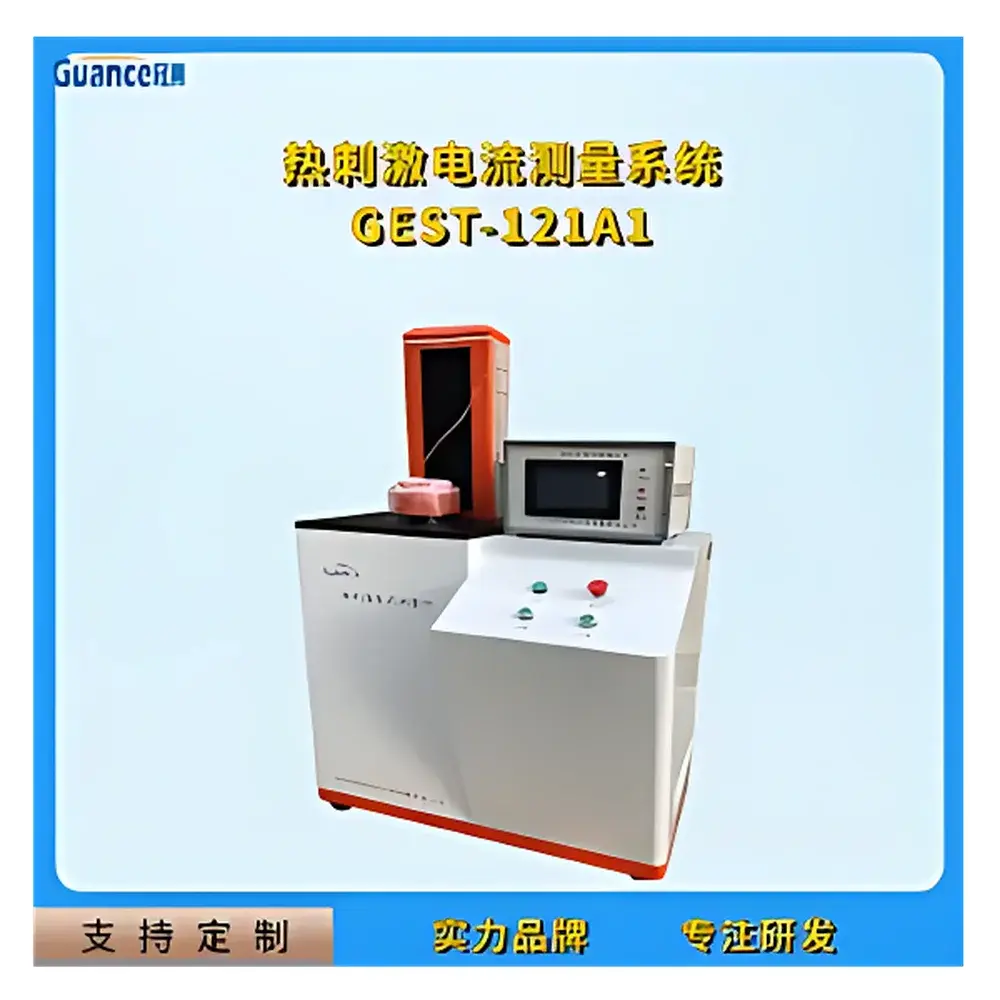
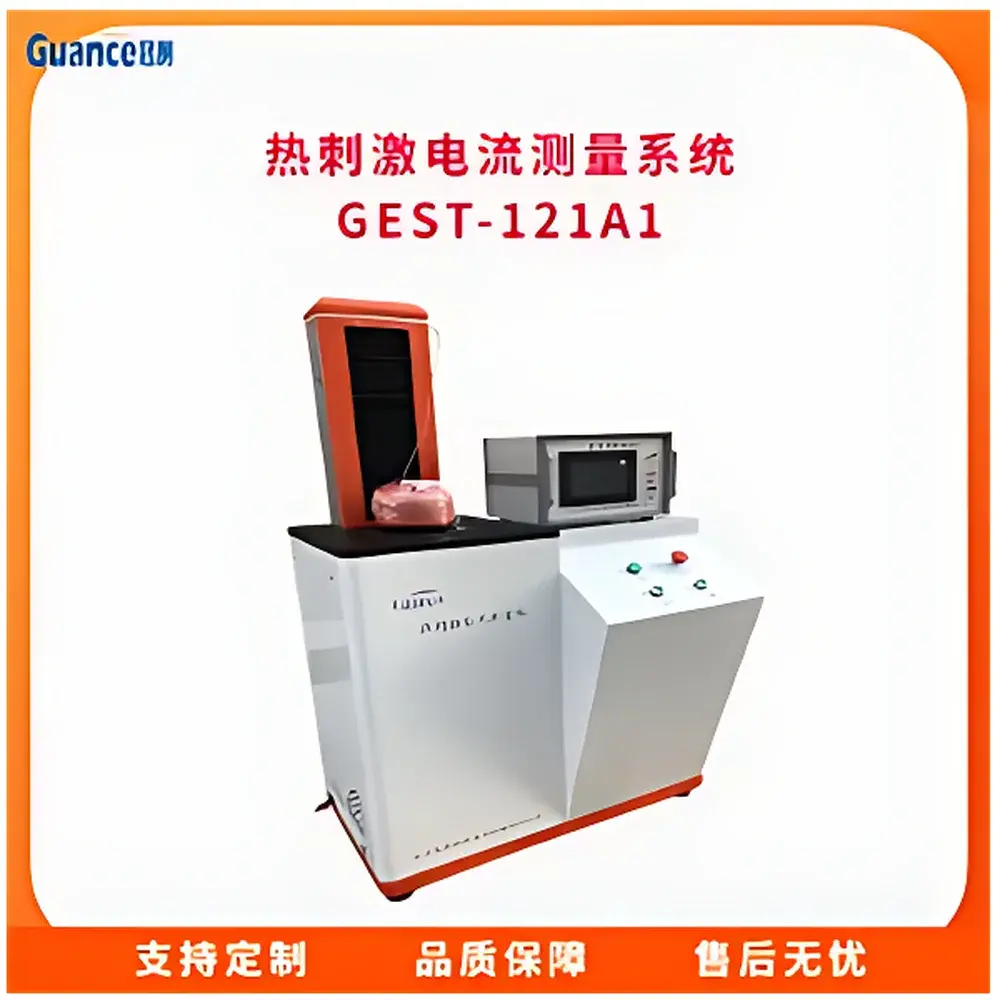
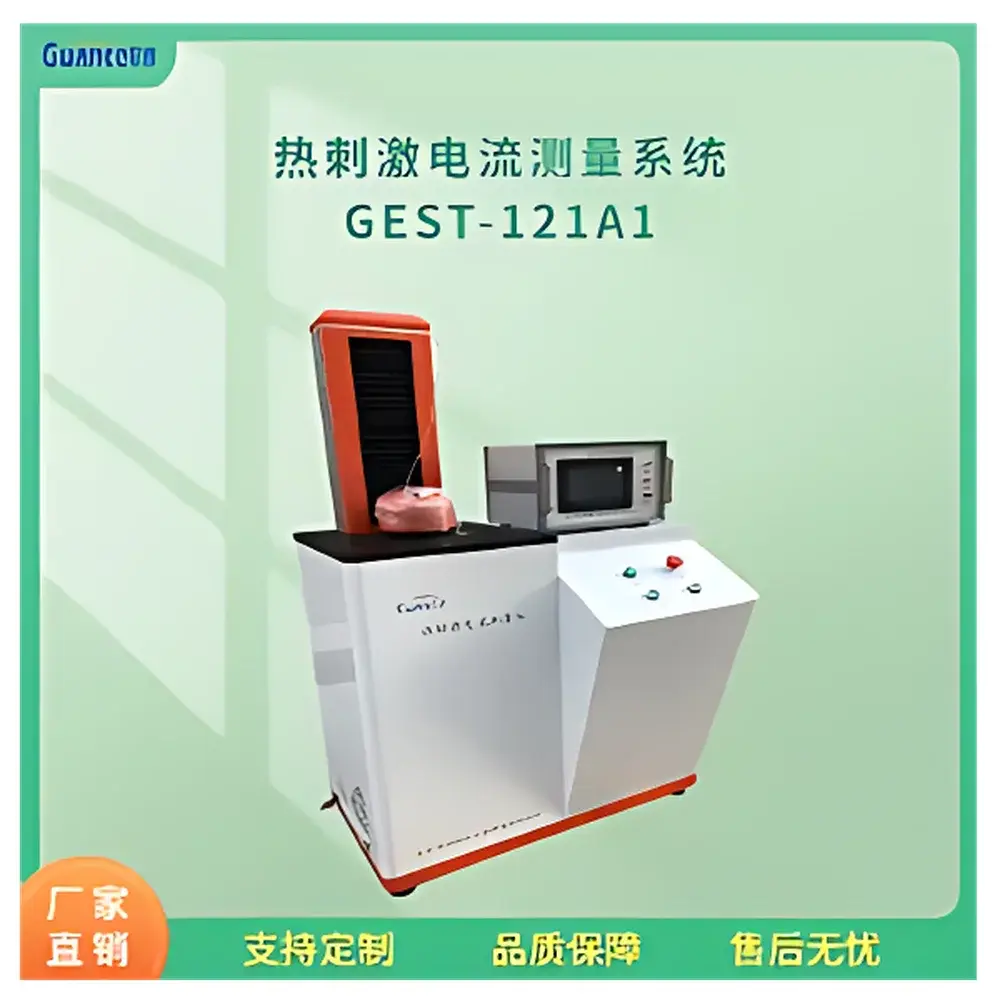
GuanCe Instruments GEST-121A1a Thermal Stimulated Current (TSC) and Resistivity Analyzer
| Brand | GuanCe Instruments |
|---|---|
| Origin | Beijing, China |
| Manufacturer Type | Authorized Distributor |
| Country of Origin | China |
| Model | GEST-121A1a |
| Price | USD 280 (approx.) |
| Minimum Current Resolution | 1×10⁻¹⁶ A |
| Temperature Range | −40 °C to +250 °C |
| Heating Rate | 0.5–10 °C/min |
| DC Voltage Ranges | 10 V / 50 V / 100 V / 250 V / 500 V / 1000 V |
| Electrode Diameter | 10 mm |
| Sample Stage | Motorized Vertical Positioning |
| Heating Method | Resistive Wire Heater |
| Cooling Method | Compressor-Based Active Cooling |
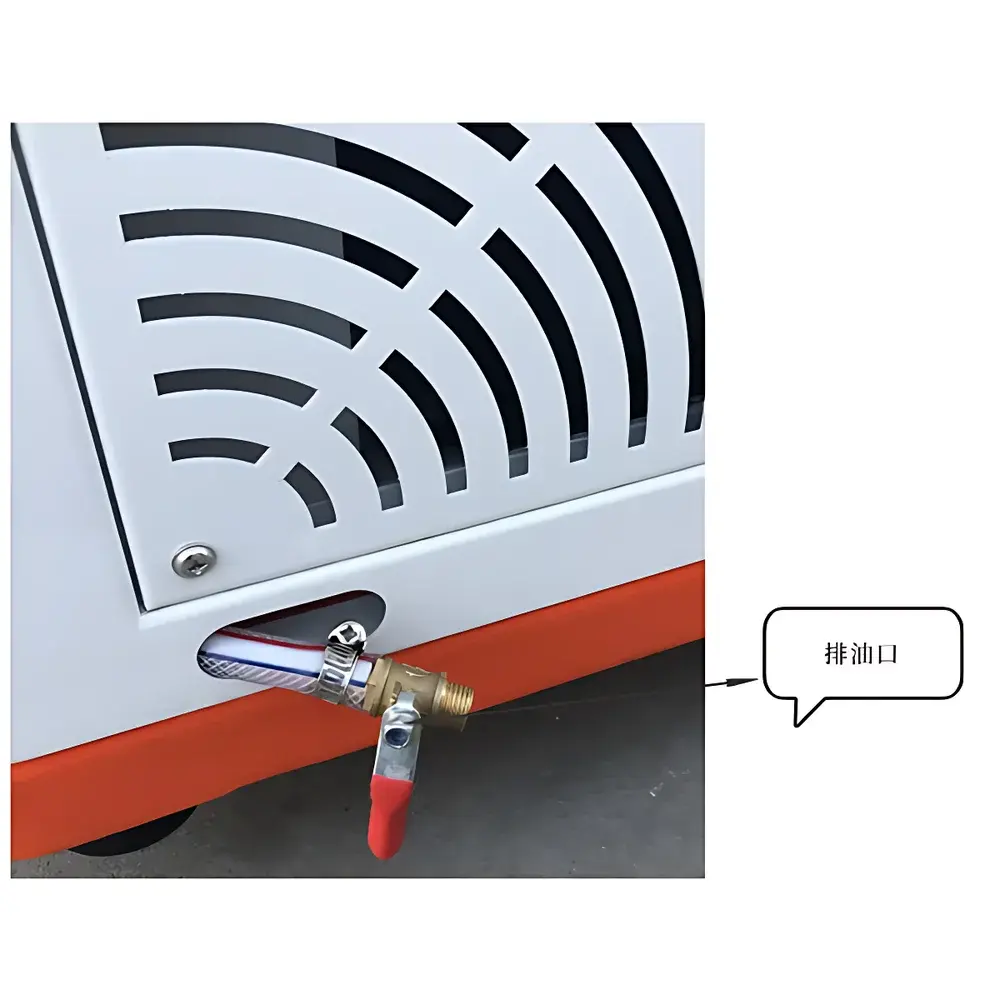
| Thermal Bath Medium | Dimethyl Silicone Oil (2 cSt, 10 L capacity) |
| Data Acquisition | PC-controlled real-time acquisition with dynamic curve visualization |
| Data Export | Excel (.xlsx) format with timestamped metadata and audit-ready report generation |
| Fully Automated Test Sequence | Parameter-defined start/stop temperature, dwell time, ramp rate, and bias voltage |
| Heating Power | 1500 W |
| Net Weight | 100 kg |
Overview
The GuanCe Instruments GEST-121A1a is a precision-engineered thermal stimulated current (TSC) and temperature-dependent resistivity measurement system designed for dielectric and insulating material characterization under controlled thermal gradients. It operates on the fundamental principle of thermally stimulated depolarization current (TSDC), where trapped charge carriers—arising from dipolar relaxation, interfacial polarization (e.g., Maxwell–Wagner effects), or defect-related trapping—are released upon controlled heating, generating measurable current transients. Simultaneously, the system performs high-impedance DC resistivity measurements across a wide temperature range (−40 °C to +250 °C), enabling quantitative analysis of conduction mechanisms—including ionic hopping, electron tunneling, and thermally activated bulk/surface conduction—in polymers, ceramics, composites, and thin-film dielectrics. The instrument integrates a dual-mode thermal chamber with active compressor-based cooling and resistive heating, ensuring stable ramp rates (0.5–10 °C/min) and precise isothermal dwell control. Its ultra-low current measurement capability (down to 1×10⁻¹⁶ A) meets the sensitivity requirements for low-conductivity materials per ASTM D257 and IEC 60093 standards.
Key Features
- Ultra-high-sensitivity electrometer module with 1×10⁻¹⁶ A minimum current resolution, calibrated traceably to NIST-traceable reference standards
- Motorized, software-controlled electrode positioning stage with 10 mm diameter parallel-plate electrodes, ensuring repeatable contact pressure and minimal edge-field distortion
- Integrated thermal bath using 10 L dimethyl silicone oil (2 cSt viscosity) for uniform heat transfer and minimized thermal gradient across sample volume
- Independent compressor-assisted cooling and 1500 W resistive heating subsystems, enabling rapid thermal cycling and sub-0.1 °C temperature stability during dwell periods
- Multi-range DC bias supply (10 V to 1000 V) with programmable voltage ramping and hold functionality, compliant with IEC 60243-1 for dielectric strength pre-conditioning
- Fully automated test sequencing: user-defined start/stop temperatures, ramp rates, dwell durations, and voltage profiles execute without operator interaction post-initiation
- Real-time data acquisition at configurable sampling intervals (10 ms to 10 s), synchronized with thermal and electrical parameters
Sample Compatibility & Compliance
The GEST-121A1a accommodates solid flat specimens up to 50 mm × 50 mm × 10 mm thickness, including thermoplastics (e.g., PE, PP, PET), thermosets (epoxy, polyimide), ceramic substrates (Al₂O₃, AlN), and layered dielectric stacks. Sample mounting follows ASTM D150 and IEC 60674-2 protocols for electrode geometry and surface preparation. The system supports GLP-compliant operation through hardware-enforced audit trails: all parameter changes, start/stop timestamps, calibration events, and user logins are immutably recorded in encrypted binary logs. Data export includes full metadata (operator ID, instrument serial number, calibration due date, environmental chamber status) and conforms to FDA 21 CFR Part 11 requirements for electronic records and signatures when deployed with validated software configuration.
Software & Data Management
The proprietary GuanCe TSC-Resistivity Control Suite (v4.2+) provides a deterministic, deterministic Windows-based interface with dual-axis plotting (temperature vs. time or current/resistivity vs. temperature), coordinate switching, and real-time derivative calculation (dI/dT, dρ/dT). All experiments generate timestamped .csv and native .gct binary files; Excel export (.xlsx) includes embedded formulas for automatic activation energy estimation via initial rise method (IRM) and peak shape analysis (PSA). Software features include password-protected access levels (Operator, Technician, Administrator), forced calibration reminders, and configurable alarm thresholds for out-of-spec thermal drift or current saturation. Raw datasets retain full 24-bit ADC resolution and are compatible with third-party analysis platforms (MATLAB, OriginPro, Python SciPy) via documented API hooks.
Applications
- Quantification of trap depth distribution and density in polymer insulators used in HVDC cable accessories
- Assessment of interfacial degradation in multilayer capacitors after thermal aging (IEC 60384-14)
- Dielectric loss mechanism mapping in piezoelectric ceramics across Curie transitions
- Quality control of space-grade conformal coatings under thermal vacuum simulation protocols
- Correlation of resistivity-temperature coefficients (αρ) with filler dispersion homogeneity in conductive polymer composites
- Pre-qualification testing of encapsulants for photovoltaic modules per IEC 61215 thermal cycling requirements
FAQ
What standards does the GEST-121A1a support for resistivity measurement?
ASTM D257, IEC 60093, and GB/T 1410—fully compliant with guarded electrode configurations and surface/volume resistivity separation algorithms.
Can the system perform isothermal conductivity measurements?
Yes—users define fixed-temperature dwell periods (1 min to 24 h) at any point within the −40 °C to +250 °C range, with continuous current/resistivity logging.
Is external trigger input supported for synchronization with other instruments?
The rear-panel BNC port accepts TTL-level start/stop triggers and provides synchronous pulse outputs for lock-in amplifiers or oscilloscopes.
How is calibration maintained across temperature cycles?
Built-in Pt100 reference sensor and factory-calibrated shunt resistors are verified before each test sequence; optional annual NIST-traceable recalibration service is available.
Does the software support multi-sample batch processing?
Yes—queue-based execution allows unattended overnight runs of up to 16 independent test protocols with auto-naming and folder organization by date/operator.



