
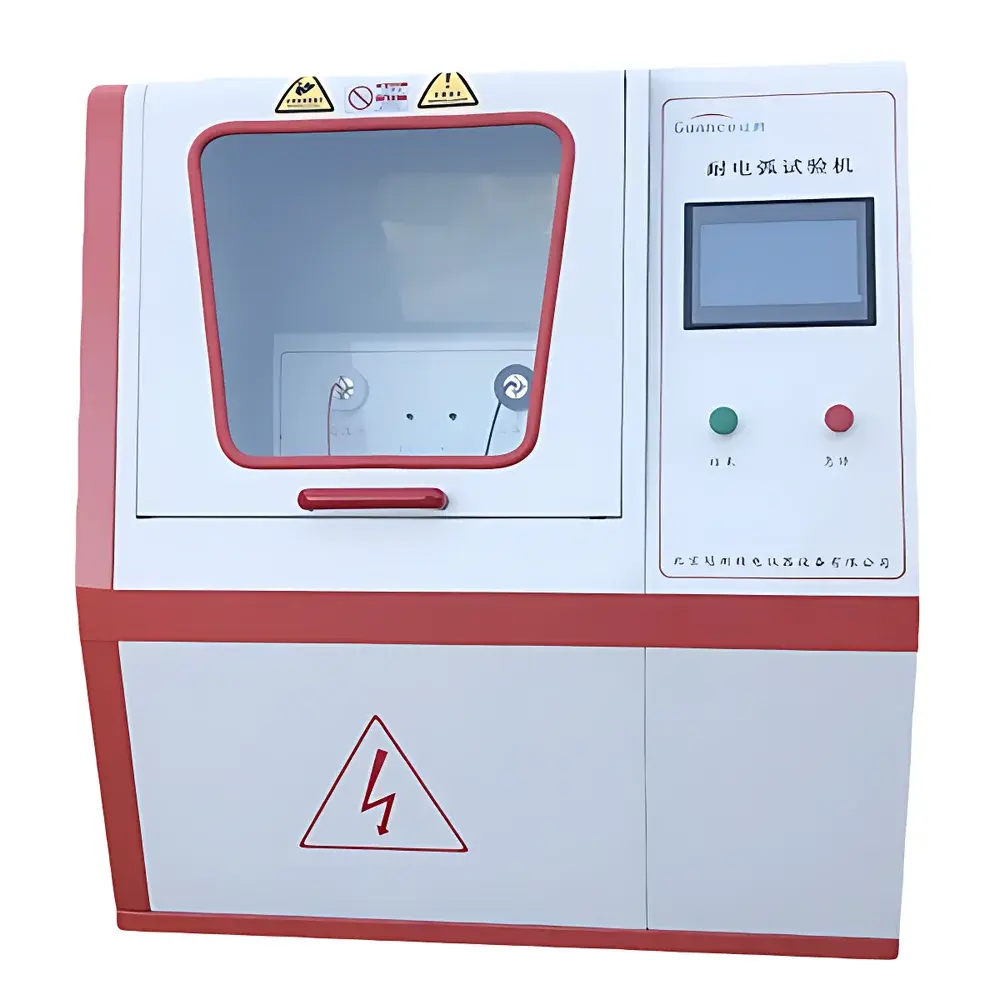
English Product Name
| Brand | Guance Instruments |
|---|---|
| Origin | Beijing, China |
| Manufacturer Type | Authorized Distributor |
| Country of Origin | China |
| Model | NDH-B6 |
| Price | USD 2,350 (approx.) |
| Instrument Type | Electromechanical Universal Testing Machine |
| Standards Compliance | GB/T 1411-2002, IEC 61621:1997, ASTM D495, IEC 149, UL 746A |
| Rated Test Voltage | 12.5 kV |
| Voltage Accuracy | ±1% |
| Current Range | 10–40 mA (selectable steps) |
| Current Control Accuracy | ±3% |
| Current Measurement Accuracy | ±1.5% |
| Arc On/Off Timing Error | < ±1 ms |
| Electrode Force | 0.5 ± 0.05 N |
| Electrode Material | Tungsten Rod |
| Electrode Spacing | 6.35 ± 0.1 mm (IEC), 6.0 ± 0.1 mm (ASTM) |
| Input Power | 220 V AC, 50 Hz |
| Transformer Capacity | 3 kVA |
| Output Voltage Range | 0–17.5 kV AC |
| Operating Environment | 23 ± 2 °C, 50 ± 5 % RH |
Overview
The Guance Instruments NDH-B6 Universal Arc Resistance Tester is a precision electromechanical testing system engineered to quantify the arc resistance of solid insulating materials—particularly thermosetting resins, adhesives, insulating varnishes, laminates, and copper-clad laminates—under high-voltage, low-current arcing conditions. It operates on the principle of controlled electric arc initiation and propagation between two tungsten electrodes positioned at standardized spacing (6.0 mm per ASTM D495 or 6.35 mm per IEC 61621), while applying a fixed 12.5 kV test voltage and programmable current levels (10–40 mA). The instrument measures the time-to-failure (in seconds) from arc onset until surface tracking, carbonization, or permanent conductive path formation occurs—a critical parameter for material classification under IEC 60587 and UL 746A. Designed in strict accordance with GB/T 1411-2002 (identical to IEC 61621:1997), this tester supports full traceability for quality assurance in motor, appliance, and power electronics manufacturing where insulation integrity directly impacts safety certification and long-term reliability.
Key Features
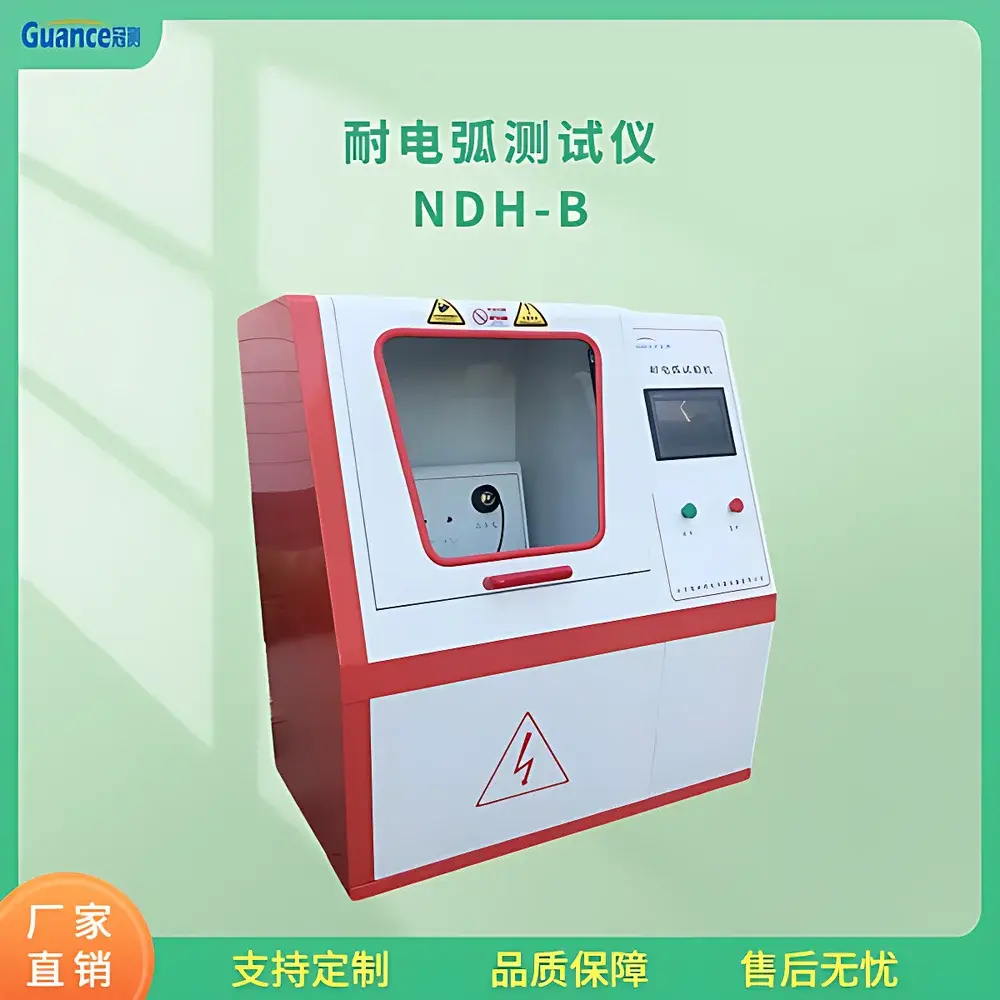
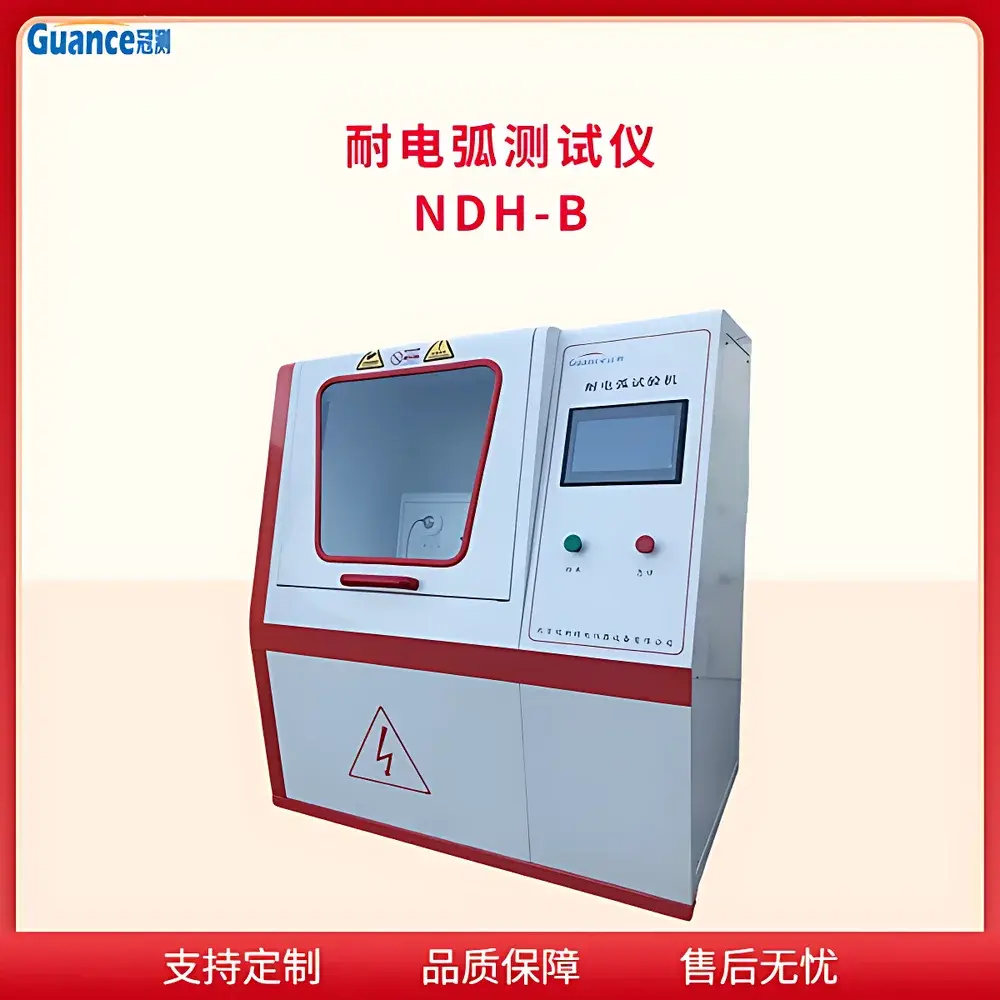
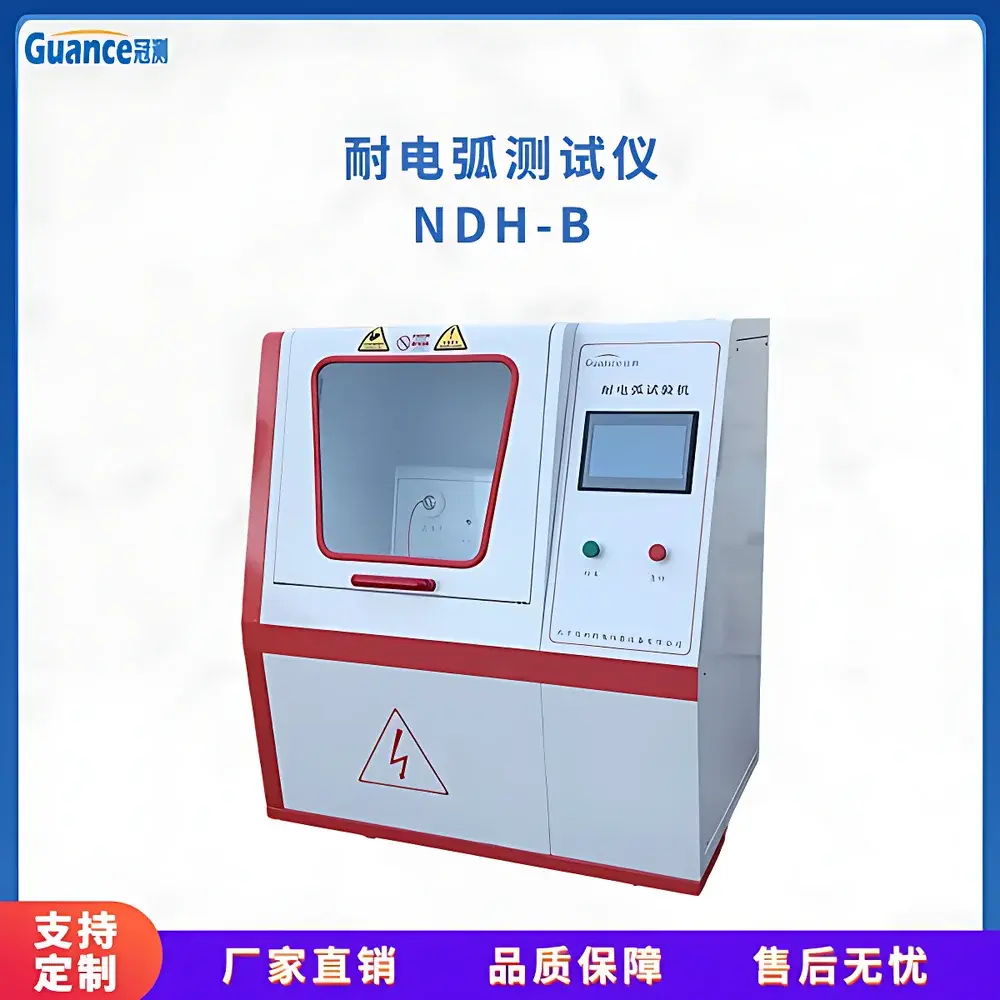
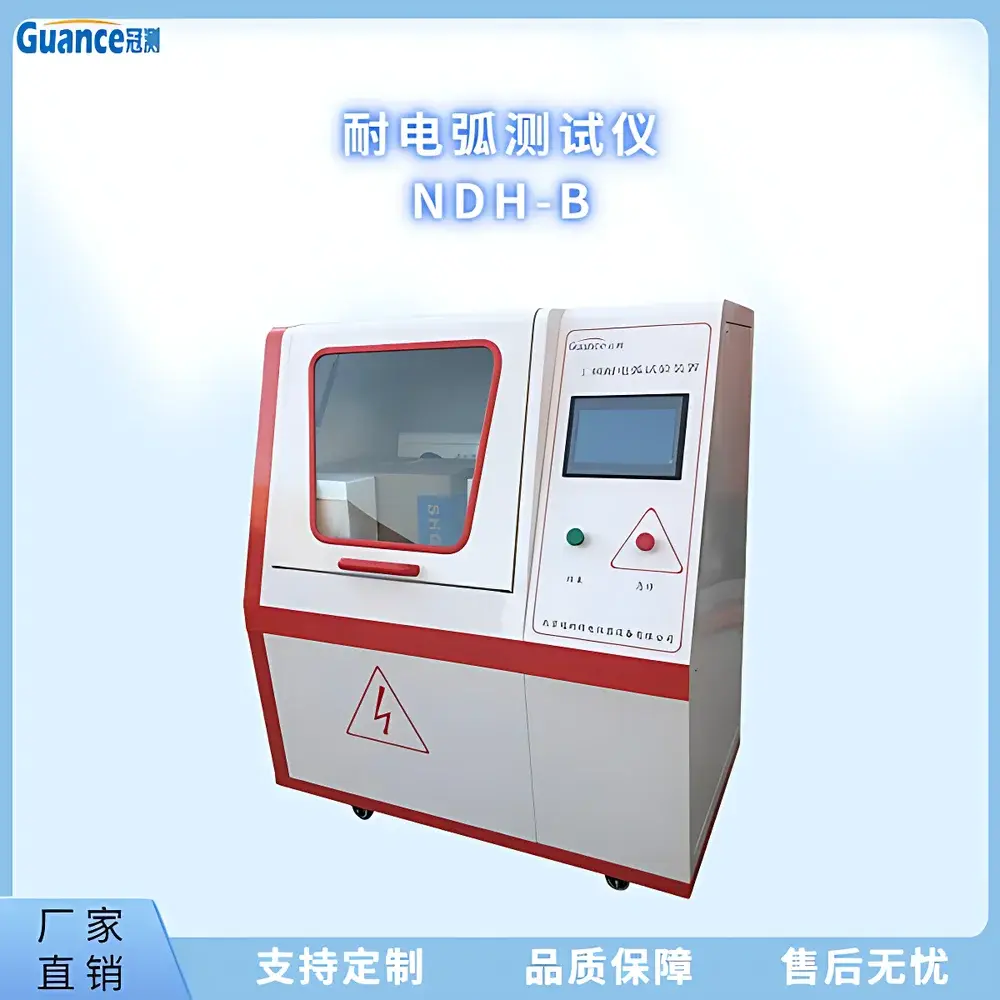
- Integrated dual-zone architecture: left-side high-voltage test chamber with tempered glass viewing window and right-side control cabinet housing Siemens PLC and industrial-grade HMI touchscreen.
- Automated test sequencing with embedded selection between IEC and ASTM protocols—including voltage ramping, timed arc pulsing (on/off intervals down to ±1 ms resolution), and automatic zero-return post-test.
- Dual-current monitoring: analog front-panel ammeter + digital real-time current display on HMI, ensuring cross-verified measurement integrity.
- Configurable inert gas purging port (e.g., nitrogen or argon) to suppress oxidative degradation during elevated-temperature or extended-duration arcs—enabling specialized research-grade evaluations.
- Self-calibrating voltage and current subsystems compliant with ISO/IEC 17025 metrological traceability requirements; facilitates routine verification without external calibration equipment.
- Active safety interlocks including HV warning tower light, grounded electrode shielding, series protection resistors, and automatic circuit shutdown upon door opening or overcurrent detection.
Sample Compatibility & Compliance
The NDH-B6 accommodates flat, smooth-surfaced specimens measuring ≥3.0 ± 0.4 mm in thickness, with minimum dimensions of 100 mm × 100 mm (per GB/T 1411). Compatible substrates include epoxy and phenolic resins, silicone-based adhesives, polyimide films, glass-reinforced laminates (e.g., FR-4), and copper-clad boards used in PCB fabrication. All test procedures align with internationally recognized standards for electrical insulation qualification: IEC 60587 (electrical insulating materials for electrical equipment), UL 746A (polymeric materials—short-term property evaluations), and ASTM D495 (dielectric strength of solid electrical insulating materials at high voltage). The system supports GLP-compliant documentation workflows when integrated with laboratory information management systems (LIMS), and its hardware architecture meets electromagnetic compatibility (EMC) requirements per IEC 61000-6-2 and IEC 61000-6-4.
Software & Data Management
The NDH-B6 features an embedded Siemens S7-1200 PLC paired with a 7-inch capacitive touchscreen HMI running custom firmware. Test parameters—including voltage setpoint, current step sequence, arc timing profile, and pass/fail criteria—are configured via intuitive graphical menus. Real-time data logging records voltage, current, elapsed time, and arc status at 10 Hz sampling rate, stored internally in CSV format for export via USB. Optional Ethernet interface enables remote monitoring and integration with enterprise-level QA platforms supporting FDA 21 CFR Part 11 compliance—featuring electronic signatures, audit trails, and role-based user access control. Raw datasets are structured to support statistical process control (SPC) analysis and automated report generation aligned with ISO 9001 and IATF 16949 quality frameworks.
Applications
- Qualification of resin formulations for high-voltage motor windings and transformer encapsulants.
- Comparative evaluation of arc resistance across batch lots of printed circuit board (PCB) laminates under UL 746A Section 21.
- R&D screening of flame-retardant additives in thermoset composites for aerospace and rail traction applications.
- Verification of surface treatment efficacy (e.g., silane coupling agents) on fiber-reinforced polymer matrices.
- Supporting third-party certification testing for CE marking (EN 60695-11-10) and RoHS-compliant material declarations.
FAQ
What standards does the NDH-B6 fully support for arc resistance testing?
It complies with GB/T 1411-2002, IEC 61621:1997, ASTM D495, IEC 149, and UL 746A—including full implementation of their respective electrode geometry, voltage waveform, and timing sequence requirements.
Can the NDH-B6 perform tests under inert atmosphere?
Yes—it includes a dedicated gas inlet port compatible with nitrogen or argon supply lines, allowing controlled environment testing to eliminate oxidation artifacts during prolonged arcing.
Is the system suitable for ISO/IEC 17025-accredited laboratories?
Absolutely—the built-in voltage and current self-calibration routines, combined with traceable component specifications and audit-ready data logs, meet key metrological requirements for accredited testing facilities.
What sample preparation is required prior to testing?
Specimens must be flat, free of burrs or surface defects, and precisely 3.0 ± 0.4 mm thick; five replicates per condition are recommended to ensure statistical validity per IEC 60455-2.
Does the NDH-B6 support automated reporting for regulatory submissions?
When connected to optional networked software modules, it generates PDF reports with embedded metadata (operator ID, timestamp, environmental conditions, raw curves), satisfying documentation needs for FDA, UL, and TÜV audits.



