
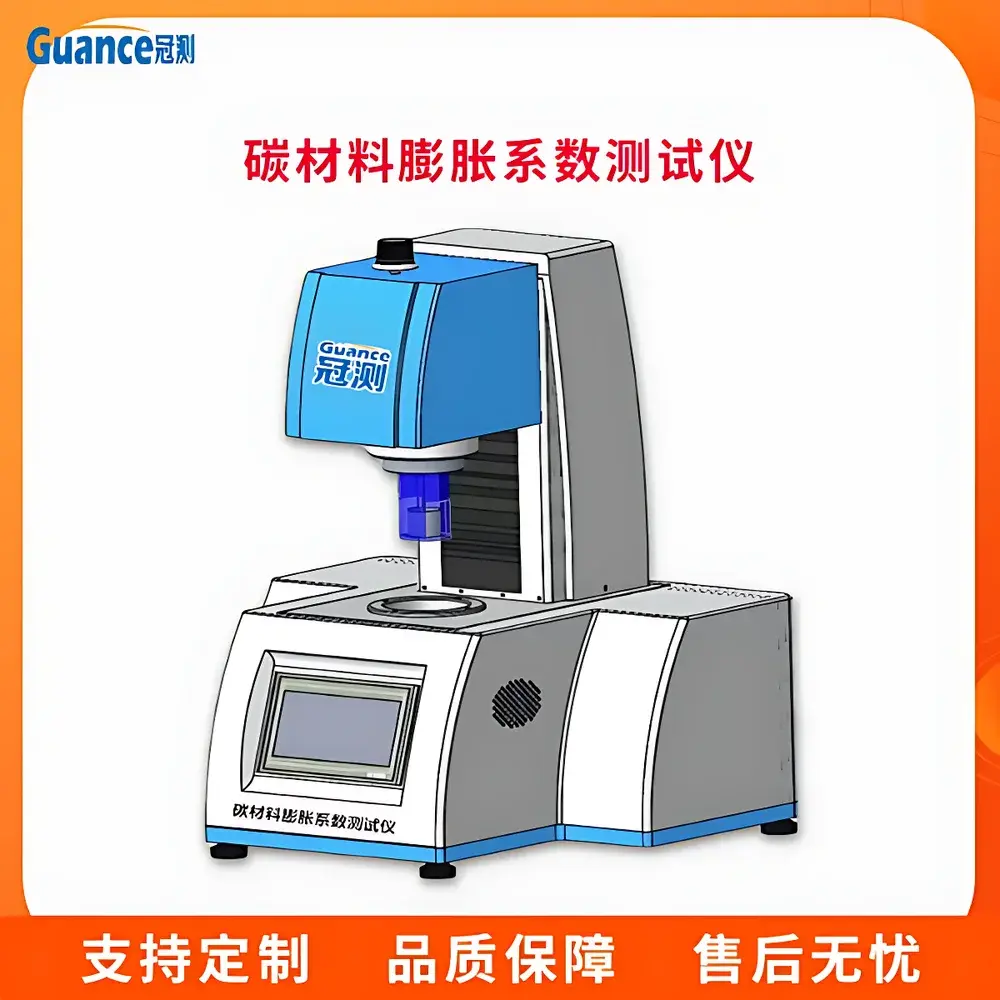
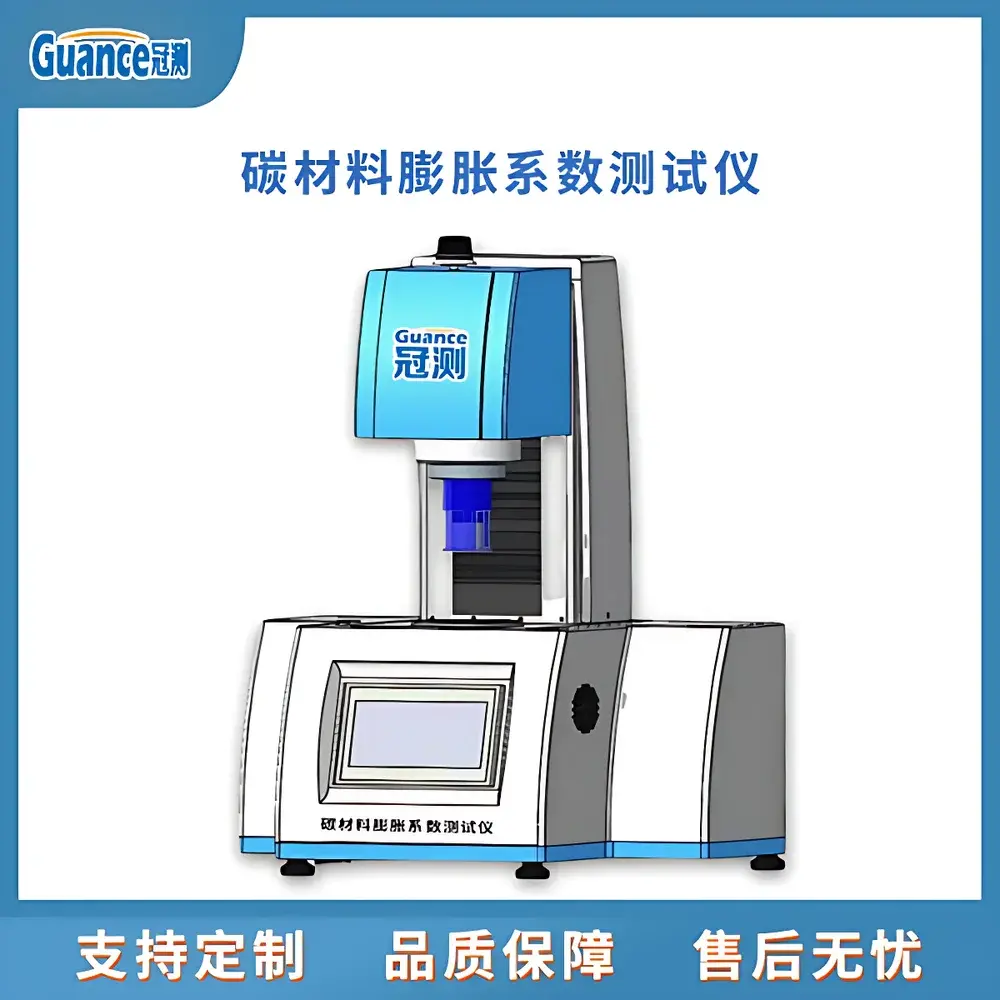
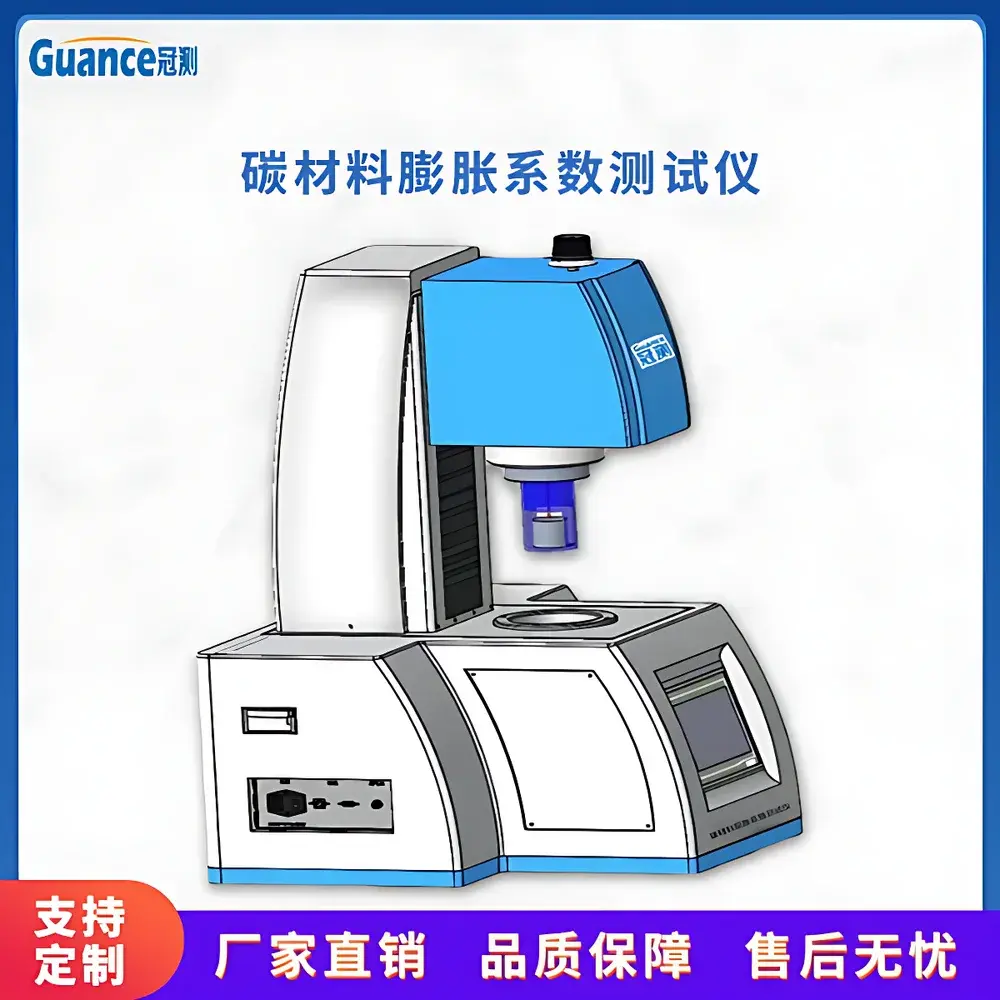
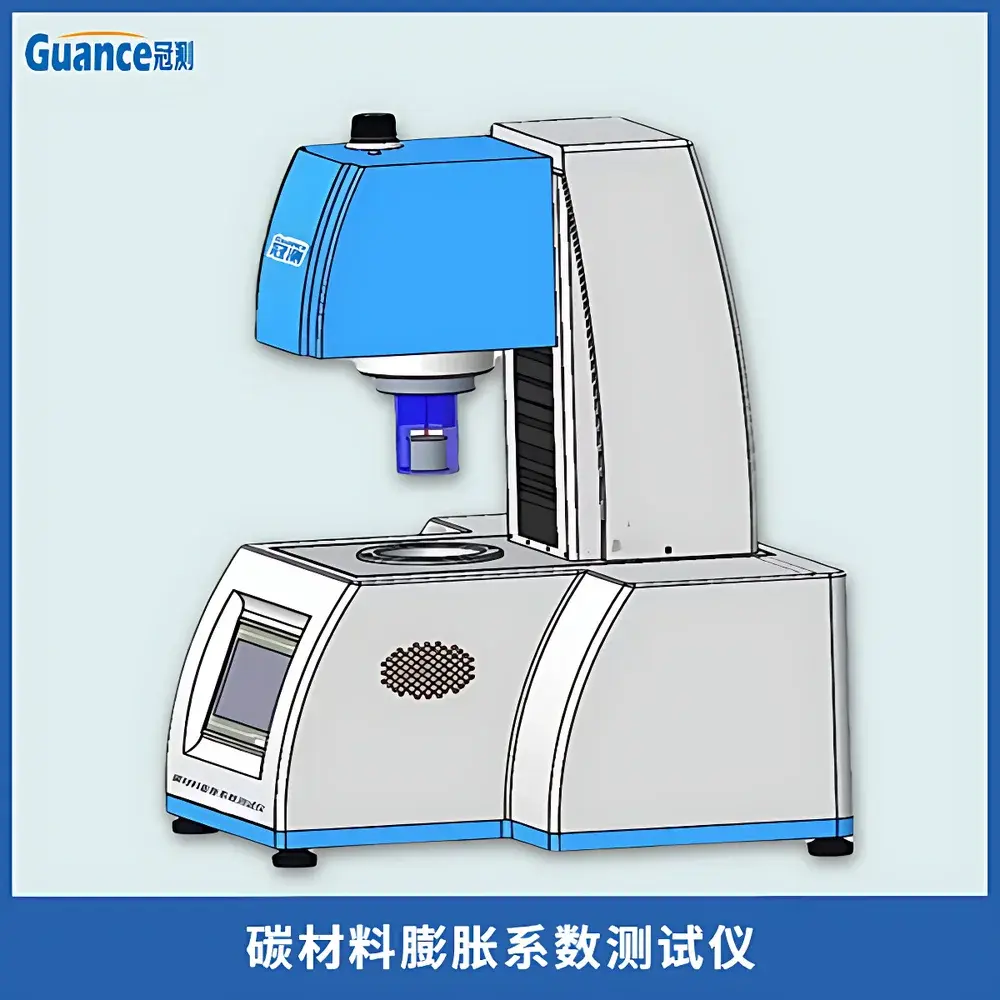
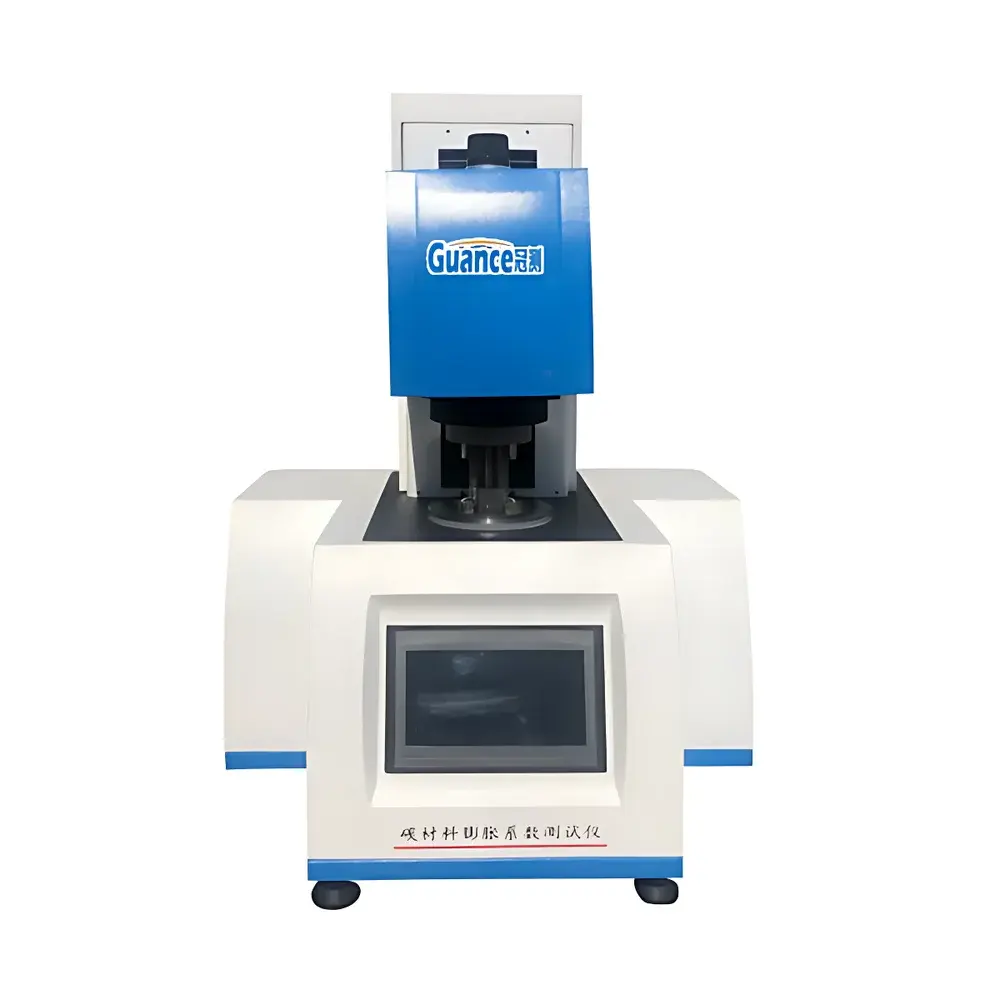
GuanCe Instruments GCTKP-700b Thermal Dilatometer for Carbon Materials
| Brand | GuanCe Instruments |
|---|---|
| Origin | Beijing, China |
| Manufacturer Type | Authorized Distributor |
| Country of Origin | China |
| Model | GCTKP-700b |
| Price | USD 1,280 (FOB Beijing) |
| Temperature Range | Ambient to 700 °C |
| Heating Rate | Programmable, 0.1–10 °C/min (standard configuration) |
| Temperature Accuracy | ±1 °C (after thermal equilibrium, per ASTM E228 calibration protocol) |
| Displacement Range | 0–1 mm |
| Measurement Resolution | ±0.001 mm |
| Sample Dimensions | (i) Ø50 mm × 60 mm cylindrical |
| Atmosphere Control | Pressure range 0–50 kPa (gauge), compatible with inert (N₂, Ar), reducing (5% H₂/95% N₂), or vacuum conditions |
| Power Supply | 220 V AC / 50 Hz / 1.7 kW |
| Thermocouple | Type K, 0–1000 °C, Class 0.1 accuracy |
| Gas Flow Control | Mass flow controller, 0–80 L/min |
| Dimensions (W×D×H) | 700 mm × 810 mm × 1150 mm |
| Net Weight | 150 kg |
Overview
The GuanCe Instruments GCTKP-700b Thermal Dilatometer is a precision-engineered instrument designed for the quantitative determination of linear thermal expansion behavior in carbon-based refractory and electrode materials. It operates on the principle of contact-based dilatometry—measuring dimensional change (ΔL/L₀) as a function of temperature under controlled thermal and atmospheric conditions. The system employs a high-stability ceramic furnace with vacuum-formed resistive heating elements and multi-zone insulation, enabling uniform temperature distribution across a defined hot zone (>80 mm axial length). Temperature is monitored via a calibrated Type K thermocouple referenced to ISO/IEC 17025-accredited traceability, while sample displacement is captured using a low-drift, high-resolution linear variable differential transformer (LVDT) sensor with sub-micrometer resolution. The instrument conforms to the physical measurement framework specified in ISO 14420:2005 and ASTM E228, and is specifically optimized for compliance with GB/T 3074.4–2016 and YS/T 63.4–2006 for aluminum industry carbon anodes, cathodes, and baked blocks.
Key Features
- Robust dual-mode control architecture integrating PLC-based real-time thermal regulation with PC-hosted data acquisition and analysis software.
- Vacuum-formed high-purity ceramic fiber insulation combined with embedded resistance wire heating elements ensures thermal uniformity ≤±1.5 °C across the 80-mm isothermal zone at 700 °C.
- Programmable PID temperature controller with adaptive tuning supports ramp-hold-cool profiles, including isothermal dwell steps for creep-compensated CTE calculation.
- LVDT displacement transducer with ±0.001 mm repeatability and <0.02 % full-scale linearity error, mounted on a vibration-isolated granite base.
- Integrated gas management subsystem featuring mass flow controller (MFC), pressure transducer (0–50 kPa), and leak-tight quartz sample chamber—enabling reproducible atmosphere control under inert, reducing, or dynamic purge conditions.
- Touchscreen HMI (7″ TFT LCD) with local operation capability, plus Ethernet-enabled remote monitoring and data export via OPC UA or CSV/Excel-compatible protocols.
Sample Compatibility & Compliance
The GCTKP-700b accommodates standard carbon material geometries per industrial sampling standards: cylindrical specimens (Ø50 mm × 60 mm) per GB/T 1427, or smaller prismatic samples (≥5 mm cross-section, ≥50 mm length) compliant with YS/T 62.1–62.4 series for bottom blocks, sidewalls, prebaked anodes, and cathode paste. All mechanical and thermal calibrations follow procedures aligned with ISO/IEC 17025 requirements. The system supports audit-ready documentation for GLP and GMP environments, including electronic signatures, user access levels, and 21 CFR Part 11–compliant data integrity features when operated with optional validated software modules. Reference standards (e.g., NIST SRM 736 fused quartz) may be used for daily verification of thermal and dimensional accuracy.
Software & Data Management
Acquisition and analysis are performed using GuanCe’s DilatSoft v3.2 platform, a Windows-based application supporting multi-channel synchronized logging (temperature, displacement, gas pressure, flow rate). Raw data are stored in encrypted binary format with embedded metadata (operator ID, sample ID, calibration certificate IDs, environmental timestamps). Post-processing includes automatic baseline correction, derivative-based inflection point detection, and CTE calculation over user-defined intervals (e.g., α20–300, αambient–600). Reports comply with ISO 14420 Annex B formatting and export to PDF, XML, or structured CSV for LIMS integration. Audit trails record all parameter modifications, data exports, and calibration events with immutable timestamps.
Applications
- Determination of mean linear coefficient of thermal expansion (CTE) for graphite electrodes (standard, high-power, ultra-high-power grades) per GB/T 3074.4–2016.
- Quality control of baked anodes and shaped carbon products used in aluminum smelting, in accordance with ISO 14420:2005 and YS/T 764–2011.
- Thermal stability assessment of cathode blocks, side blocks, and ramming pastes during qualification and incoming inspection.
- Research into microstructural evolution effects (e.g., graphitization degree, porosity, binder decomposition) on dimensional response under controlled heating/cooling cycles.
- Validation of thermal modeling inputs for furnace lining design and electrolytic cell lifetime prediction.
FAQ
What international standards does the GCTKP-700b support for CTE measurement?
It is configured and validated for compliance with ISO 14420:2005, ASTM E228, GB/T 3074.4–2016, YS/T 63.4–2006, and YS/T 764–2011.
Can the instrument operate under vacuum or reactive atmospheres?
Yes—the chamber supports gauge pressures from 0 to 50 kPa and is rated for inert (N₂, Ar), reducing (H₂/N₂), and vacuum conditions up to 10 Pa with optional vacuum pump interface.
Is the displacement sensor calibrated traceably to national standards?
Yes—LVDT calibration is performed using NIST-traceable step gauges and verified annually per ISO/IEC 17025 procedures.
Does the system meet FDA 21 CFR Part 11 requirements for electronic records?
When deployed with the validated DilatSoft v3.2 Enterprise Edition, it provides role-based access control, electronic signatures, and immutable audit trails meeting Part 11 criteria.
What maintenance intervals are recommended for long-term accuracy?
Thermocouple verification every 6 months, LVDT linearity check quarterly, and full system calibration annually—or after any mechanical impact or firmware update.



