
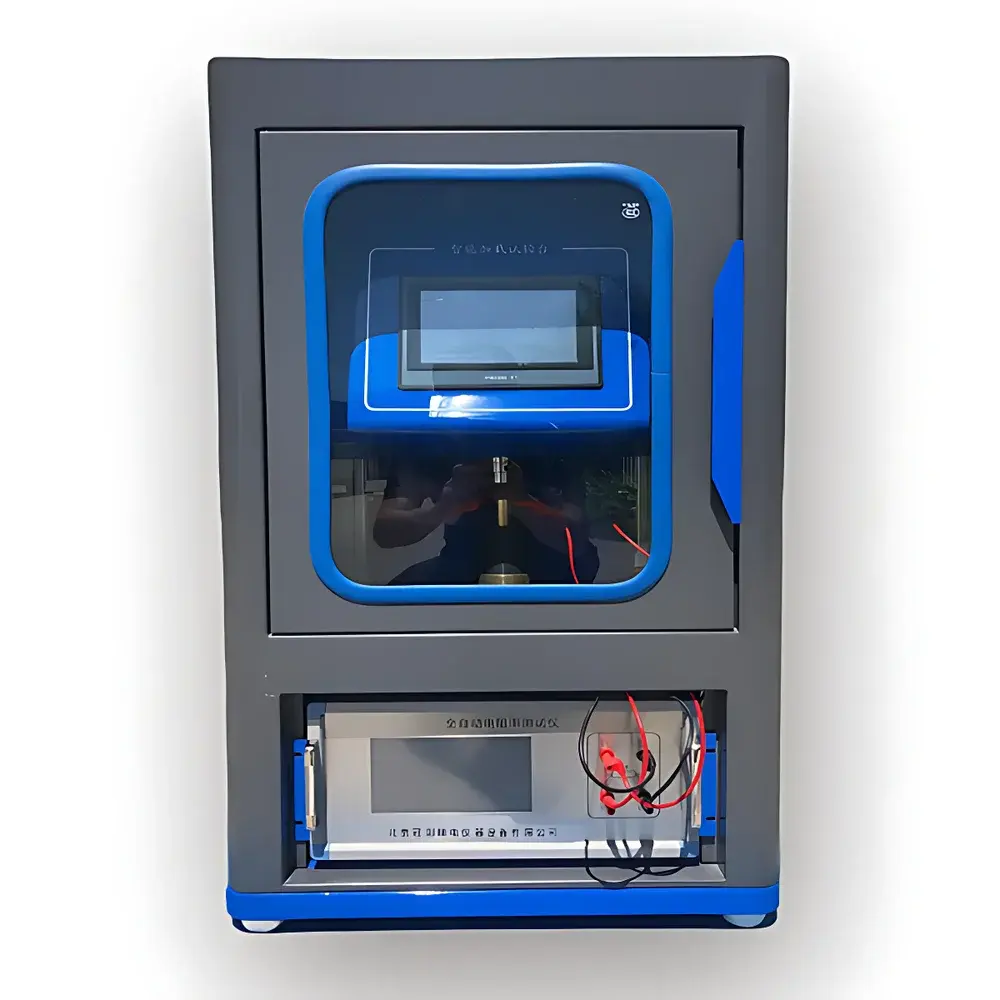
GuanCe FTDZS-I+ Powder Resistivity Tester (Four-Point Probe Method)
| Brand | GuanCe |
|---|---|
| Origin | Beijing, China |
| Manufacturer Type | Authorized Distributor |
| Country of Origin | China |
| Model | FTDZS-I+ |
| Price | USD 2,150 (FOB Beijing) |
Overview
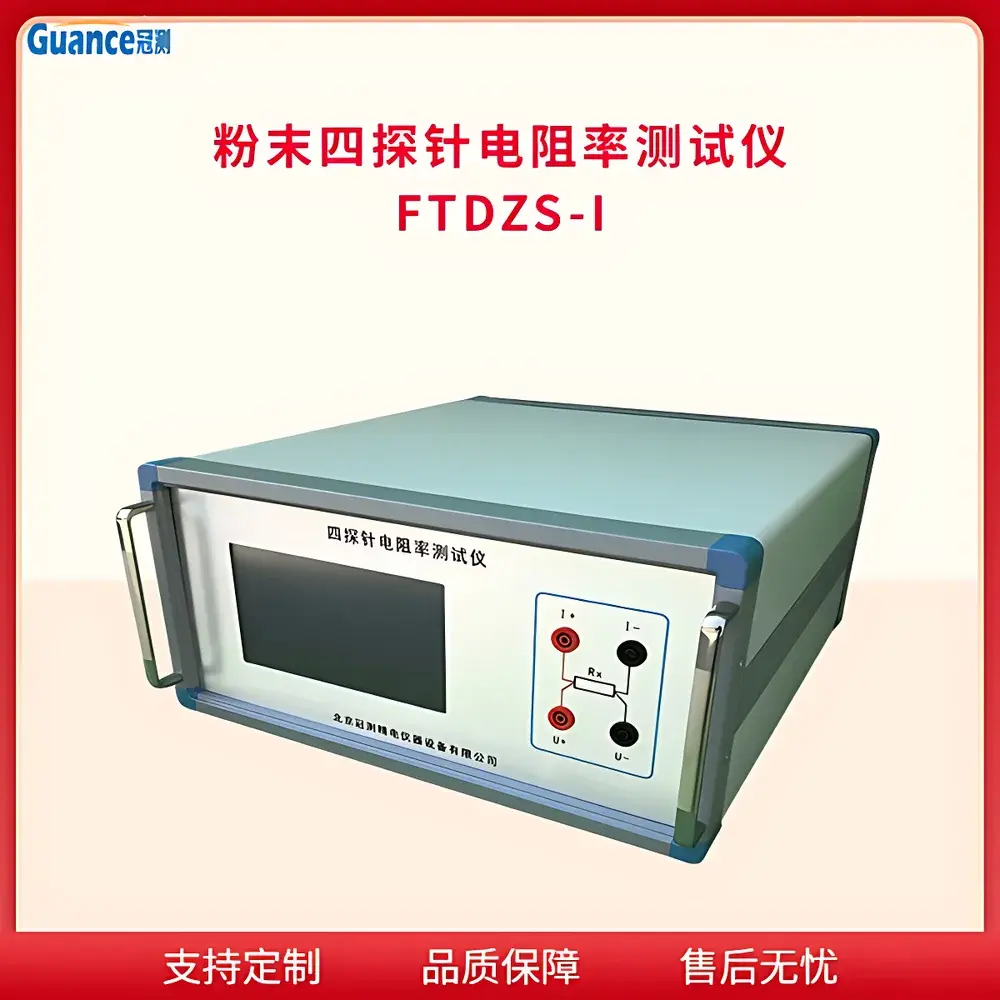
The GuanCe FTDZS-I+ Powder Resistivity Tester is a precision benchtop instrument engineered for the quantitative determination of electrical resistivity in granular and powdered materials using the four-point probe (4PP) method. Unlike bulk solid or thin-film measurements, powder resistivity is highly sensitive to interparticle contact resistance, packing density, and applied compaction pressure—factors that directly influence electron transport pathways within the powder bed. This instrument integrates a stabilized DC constant-current source and a high-resolution digital nanovoltmeter into a single compact chassis, enabling controlled current injection (typically 1 µA–100 mA) and accurate voltage drop measurement across two inner probes while minimizing lead resistance and contact potential errors. Designed for compliance with ASTM D3764, ISO 3915, and GB/T 3048.2–2007 standards, the FTDZS-I+ delivers traceable, reproducible results under defined mechanical consolidation conditions—critical for quality control in electrode material production, battery cathode/anode R&D, metallurgical powders, and conductive additive characterization.
Key Features
- Four-point probe configuration with guarded current/voltage leads to eliminate contact resistance artifacts and ensure true bulk resistivity extraction
- Programmable DC constant-current source (range: 1 µA to 100 mA, resolution: 0.1 µA, stability: ±0.05% over 8 hours)
- High-sensitivity digital voltmeter (measurement range: 0.1 µV to 2 V, resolution: 0.1 µV, input impedance >10 GΩ)
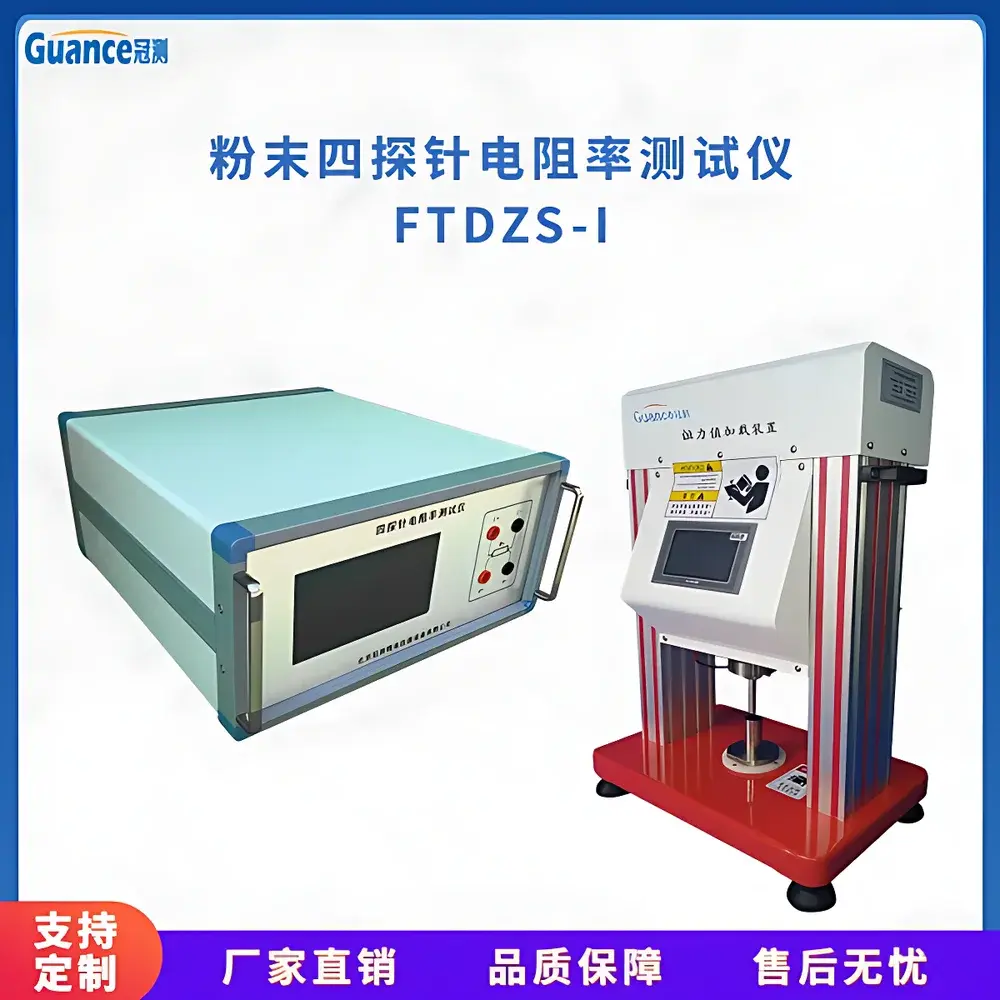
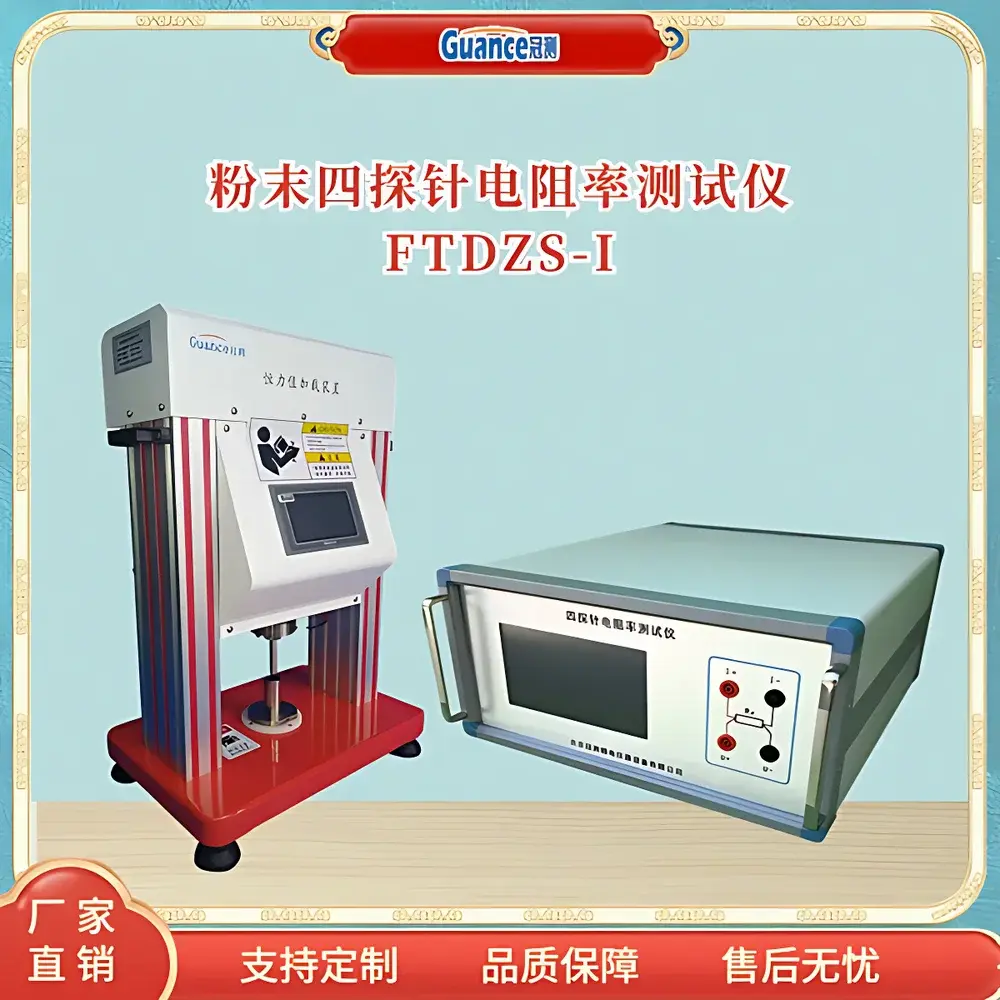
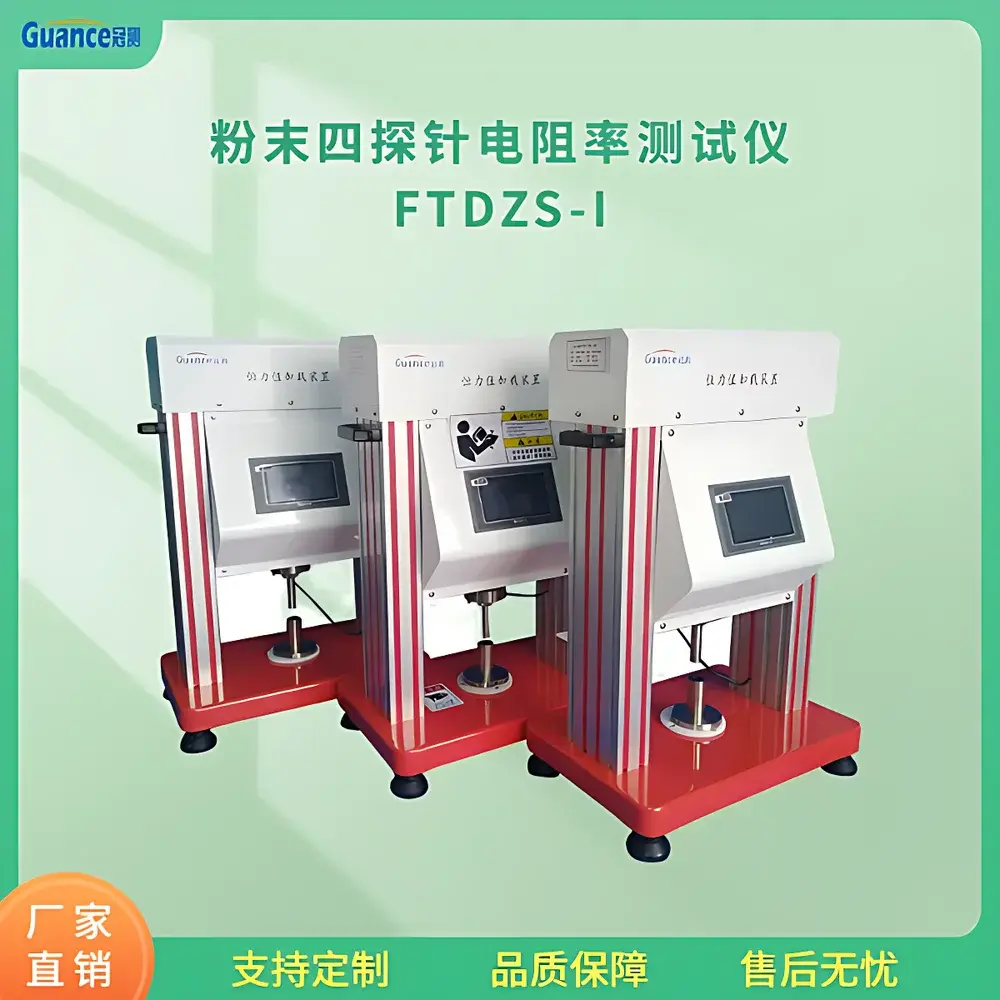
- Integrated powder compaction test stand with calibrated hydraulic or electromechanical press (adjustable load: 0–20 kN; force accuracy: ±0.5% FS)
- 7-inch capacitive touchscreen HMI with intuitive GUI for real-time parameter setting, data logging, and on-device statistical analysis (mean, SD, CV%)
- Auto-zeroing function, temperature compensation input (via optional PT100 sensor), and dual-range auto-scaling for optimal signal-to-noise ratio
- Rugged aluminum alloy chassis with ESD-safe surface treatment and CE-compliant electromagnetic shielding
Sample Compatibility & Compliance
The FTDZS-I+ accommodates powders with particle sizes ranging from 1 µm to 500 µm and bulk densities between 0.2 g/cm³ and 6.5 g/cm³. It supports standardized test geometries per ASTM D3764 Annex A1 (cylindrical die with 12.7 mm diameter and adjustable height) and allows user-defined consolidation protocols—including loose-fill, tapped density (ASTM D6393), and uniaxial cold pressing at fixed dwell time and load ramp rate. All firmware and calibration procedures adhere to ISO/IEC 17025:2017 requirements for testing laboratories. The system supports GLP-compliant operation through audit-trail-enabled user login, timestamped result export (CSV/PDF), and password-protected method storage. Calibration certificates are traceable to NIM (National Institute of Metrology, China) and include uncertainty budgets per GUM (JCGM 100:2008).
Software & Data Management
The embedded firmware includes a built-in data management module supporting up to 1,000 test records with metadata tagging (operator ID, sample ID, date/time, compaction pressure, ambient temperature/humidity). Export options include USB flash drive transfer and RS-232/USB-C serial output for integration with LIMS or MES platforms. Optional PC software (GuanCe LabLink v3.2) provides advanced features: multi-curve overlay plotting, resistivity vs. pressure trend modeling (log-log regression), batch statistical reporting, and automated generation of ASTM/ISO-formatted test reports. Software complies with FDA 21 CFR Part 11 requirements when configured with electronic signatures, role-based access control, and immutable audit logs.
Applications
- Quality assurance of lithium-ion battery active materials (e.g., LiCoO₂, NMC, graphite, silicon composites)
- Resistivity mapping of metal injection molding (MIM) feedstocks and sintered preforms
- Conductivity screening of carbon black, graphene nanoplatelet, and CNT-doped polymer powders
- R&D of thermoelectric oxide powders (e.g., Bi₂Te₃, SrTiO₃) under variable densification conditions
- Process validation of plasma-sprayed or atomized metallic powders for additive manufacturing (AM)
- Regulatory testing for IEC 62619 and UL 1642 safety certification of electrode formulations
FAQ
What compaction pressure range is supported for standardized testing?
The integrated test stand enables programmable uniaxial pressure application from 0.1 MPa to 500 MPa, with default presets aligned to ASTM D3764 (1.0 MPa, 2.5 MPa, 5.0 MPa) and ISO 3915 (10 MPa, 30 MPa).
Does the instrument support temperature-controlled resistivity measurements?
Yes—when paired with the optional environmental chamber interface (GuanCe TC-Kit), the system accepts external temperature feedback and adjusts current sourcing to maintain constant power dissipation during thermal sweeps from –20 °C to +120 °C.
How is probe alignment verified and maintained?
Each probe array undergoes factory laser alignment verification (±2.5 µm positional tolerance), and the test stand incorporates a self-centering die guide with tungsten-carbide bushings to ensure repeatable probe-to-powder contact geometry across >10,000 cycles.
Is third-party calibration service available?
GuanCe maintains ISO/IEC 17025-accredited calibration laboratories in Beijing and Shanghai; certified calibrations include current source linearity, voltmeter gain/offset, and force transducer traceability—with NIST-equivalent uncertainty statements provided.
Can the FTDZS-I+ be integrated into an automated production line?
Yes—the instrument supports Modbus RTU over RS-485 and Ethernet/IP protocols, enabling PLC-triggered test sequences, real-time pass/fail flagging via discrete I/O, and synchronized data streaming to SCADA systems.



