
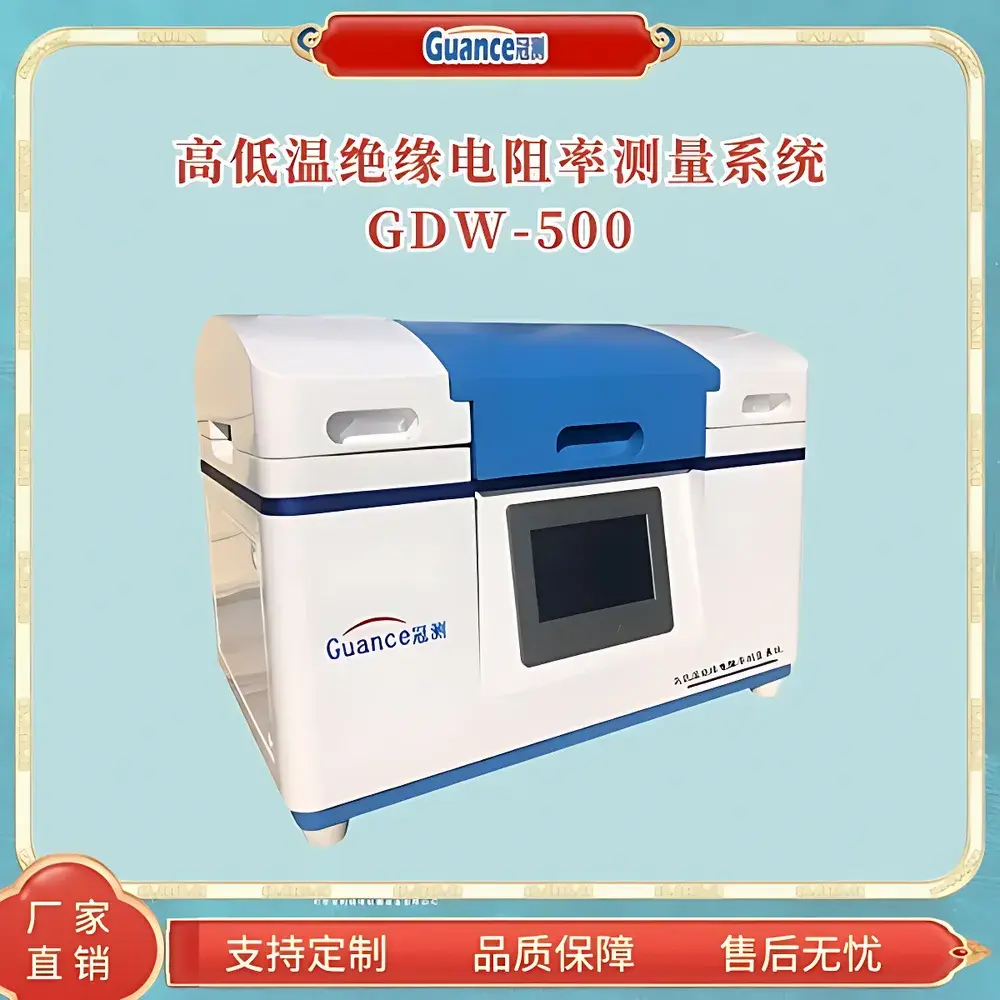
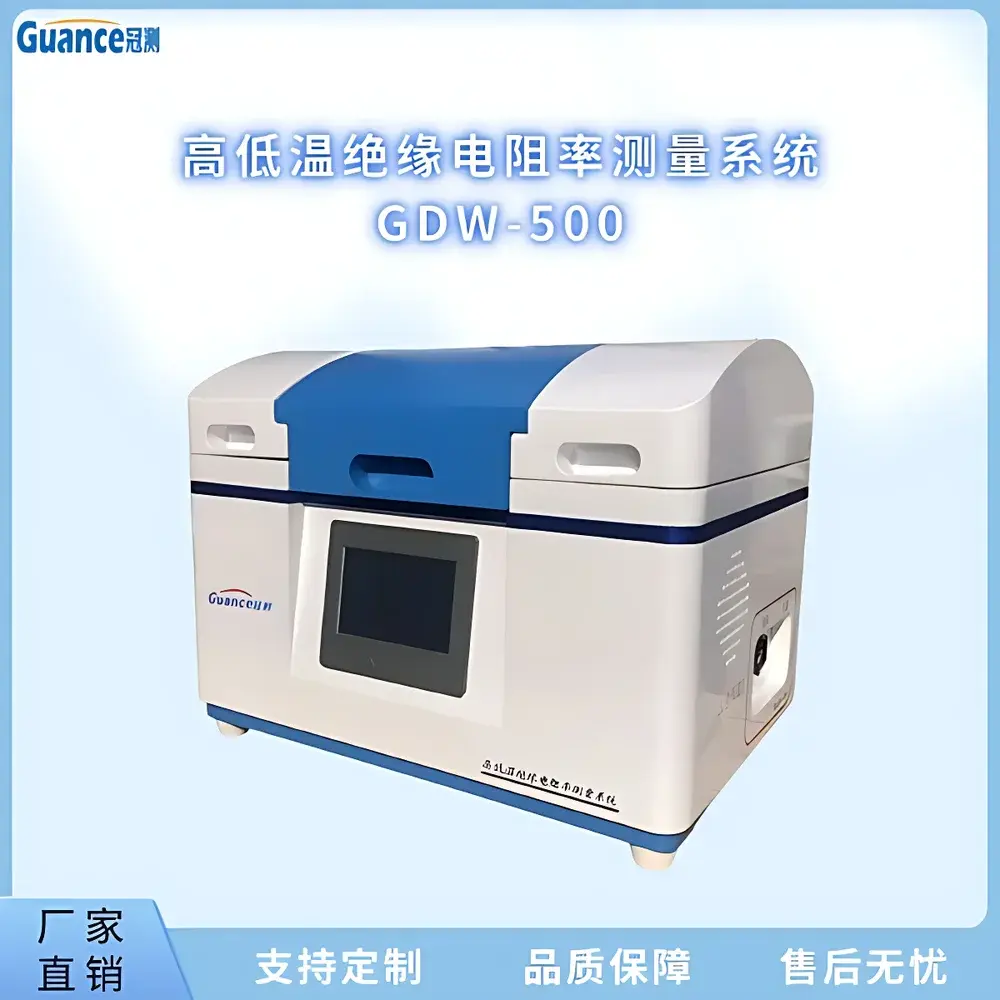
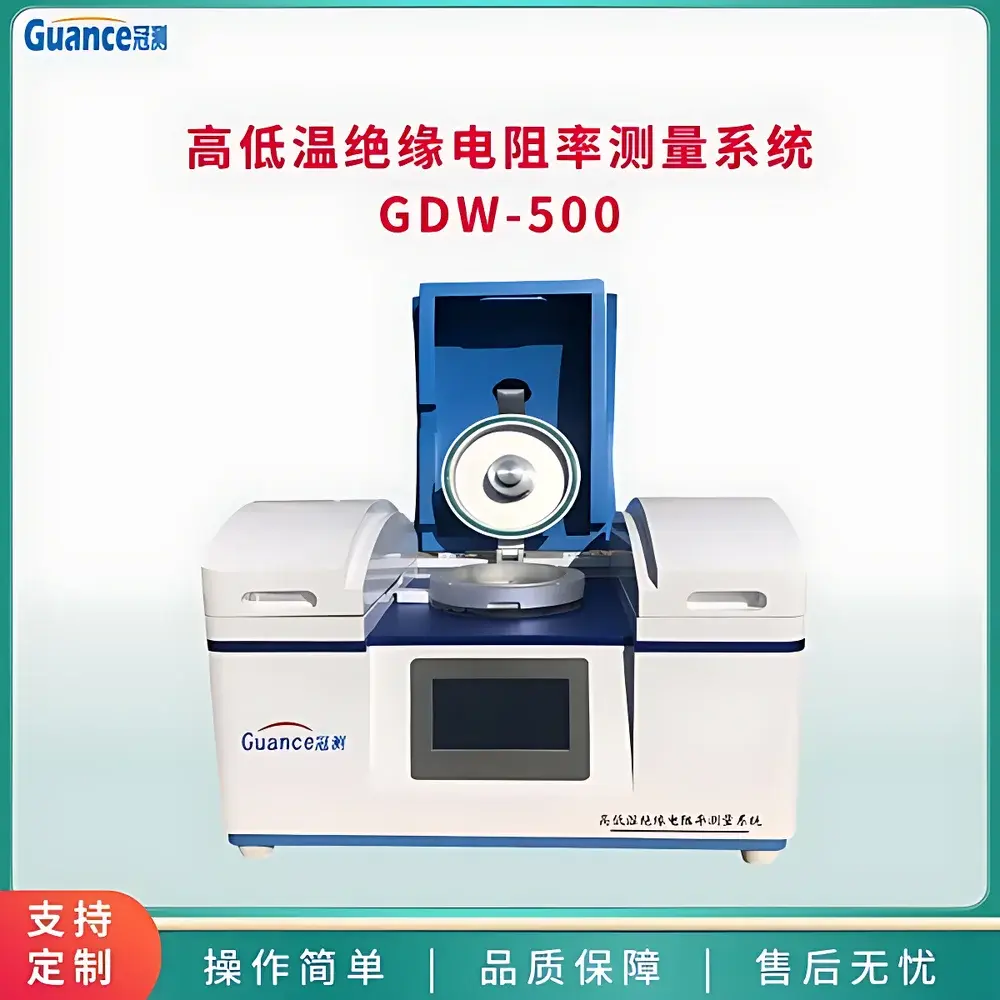
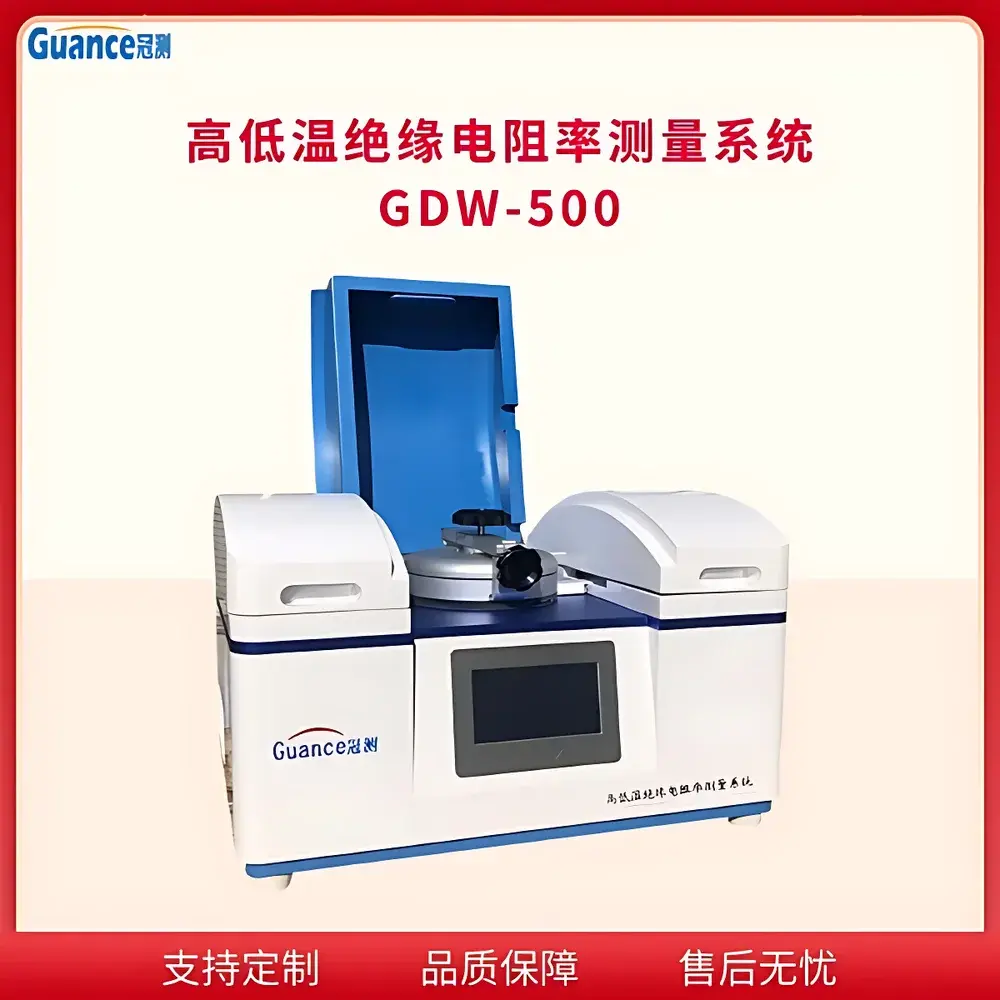
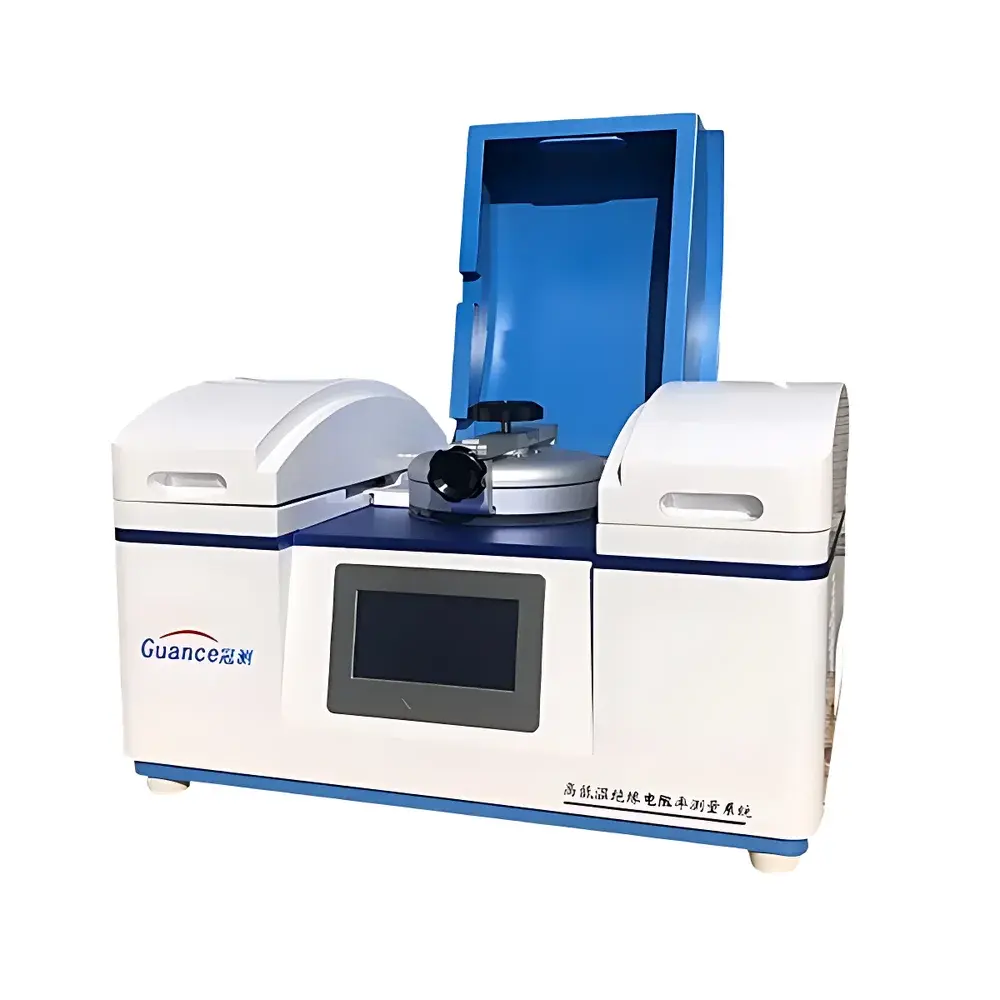
Guance Instruments GDW500.3 High-Low Temperature Dielectric Constant Test System
| Brand | Guance Instruments |
|---|---|
| Origin | Beijing, China |
| Manufacturer Type | Authorized Distributor |
| Country of Origin | China |
| Model | GDW500.3 |
| Price | USD 1,980 (FOB) |
| Temperature Range | −160 °C to +500 °C |
| Temperature Control Accuracy | ±0.5 °C |
| Cooling Method | Liquid Nitrogen |
| Heating Method | Resistive Electric Heating |
| Electrode Material | Brass |
| Electrode Diameter | 25 mm |
| Test Frequency Range | 20 Hz – 2 MHz |
Overview
The Guance Instruments GDW500.3 High-Low Temperature Dielectric Constant Test System is a precision-engineered platform for temperature-dependent dielectric characterization of solid and liquid dielectric materials under controlled thermal environments. It operates on the principle of impedance spectroscopy combined with guarded three-terminal capacitance measurement, enabling accurate determination of complex permittivity (ε* = ε′ − jε″), dielectric loss tangent (tan δ), volume resistivity (ρv), and capacitance (C) across a broad frequency spectrum (20 Hz–2 MHz) and extreme temperature range (−160 °C to +500 °C). The system integrates a cryogenic–high-temperature test chamber with a high-stability LCR meter and calibrated brass parallel-plate electrodes, facilitating standardized evaluation of polarization mechanisms—including dipolar, interfacial (Maxwell–Wagner), and ionic conduction effects—as functions of both temperature and frequency. Designed for rigorous materials R&D workflows, it supports fundamental studies of relaxation dynamics, phase transitions (e.g., ferroelectric Curie points), glass transitions in polymers, and degradation kinetics in ceramic and composite insulators.
Key Features
- Wide operational temperature range: −160 °C (liquid nitrogen cooling) to +500 °C (resistive heating), with real-time PID-controlled stability at ±0.5 °C
- High-precision brass parallel-plate electrode assembly (25 mm diameter, guarded geometry) ensuring uniform field distribution and minimizing fringing effects
- Full-frequency sweep capability (20 Hz–2 MHz) with selectable measurement speed modes (fast/medium/slow) to balance resolution, noise immunity, and data acquisition throughput
- Dual-mode operation: ambient-temperature scanning and programmable thermal ramping (isothermal or dynamic) for constructing dielectric temperature spectra (T-scan) and frequency spectra (f-scan)
- Integrated hardware synchronization between temperature controller and LCR meter, enabling time-stamped, phase-aligned acquisition of ε′, ε″, tan δ, C, and ρv
- Compliance-ready architecture supporting audit trails and user-access control—compatible with GLP/GMP documentation requirements when paired with validated software protocols
Sample Compatibility & Compliance
The GDW500.3 accommodates flat, rigid, or semi-rigid dielectric specimens—including ceramics (alumina, titanates), polymer films (polyimide, PET), oxide thin films (SiO2, HfO2), elastomers (silicone rubber, EPDM), glasses, and liquid electrolytes—provided they conform to standard electrode contact geometry and thermal expansion constraints. Sample thickness is determined via micrometer calibration prior to insertion; typical recommended thickness ranges from 0.1 mm to 5 mm depending on conductivity and loss characteristics. The system conforms to key international standards for dielectric measurement: ASTM D150 / IEC 60250 (ac loss and permittivity of solid insulating materials), GB/T 1409–2006 (capacitance and dissipation factor of electrical insulating materials at power/audio/radio frequencies), and GB/T 1693–2007 (dielectric properties of vulcanized rubber). All measurements adhere to four-terminal sensing principles to eliminate lead and contact resistance artifacts, ensuring traceability to SI units through NIST-traceable LCR calibration.
Software & Data Management
The proprietary GDW-ControlSuite software provides a unified interface for instrument orchestration, real-time visualization, and post-acquisition analysis. It supports automated thermal profiling (ramp-hold-cool sequences), multi-parameter synchronous logging (temperature, frequency, ε′, ε″, tan δ, C, Z, θ), and export of raw ASCII datasets compliant with ASTM E1318 and ISO/IEC 17025 reporting formats. Curve-fitting modules include Cole–Cole, Havriliak–Negami, and Arrhenius activation analysis for extracting relaxation times and activation energies. Data security features include role-based user accounts, electronic signatures, and optional 21 CFR Part 11–compliant audit trail generation (when deployed on validated Windows OS configurations). Export options include CSV, MATLAB (.mat), and PDF report templates with customizable metadata fields (sample ID, operator, lab ID, calibration date).
Applications
- Characterization of high-k and low-k dielectrics for semiconductor gate stacks and interlayer insulation
- Thermal stability assessment of polymer-based encapsulants and conformal coatings in aerospace electronics
- Phase transition detection in ferroelectric and relaxor materials (e.g., PZT, PMN-PT) via dielectric anomaly mapping
- Moisture ingress and aging studies in epoxy-matrix composites used in high-voltage insulation systems
- Quality control of ceramic capacitor dielectrics during sintering process development
- Fundamental research on ion conduction mechanisms in solid-state electrolytes for battery applications
FAQ
What sample preparation is required before testing?
Specimens must be polished to parallel surfaces, cleaned ultrasonically in anhydrous isopropanol, and dried under vacuum. Thickness must be measured at ≥3 locations using a digital micrometer; surface roughness should be <0.5 µm Ra for reliable contact.
Can the system perform simultaneous temperature–frequency sweeps?
Yes—software supports nested loops: e.g., hold at −80 °C while sweeping 20 Hz–1 MHz, then increment temperature by 10 °C and repeat, generating full 3D ε′(f,T) datasets.
Is liquid nitrogen handling training required for operation?
While the system includes insulated transfer lines and pressure-relief safeguards, users must complete institutional cryogen safety certification per OSHA 1910.101 prior to LN2 refilling.
How is electrode calibration performed?
A two-point open/short calibration is executed automatically at system startup; optional NIST-traceable air-dielectric calibration kits (with certified εr = 1.00054 ± 0.00002) are available for extended accuracy verification.
Does the system support third-party LCR meters?
Yes—the GDW500.3 chamber and temperature controller feature IEEE-488 (GPIB) and USB-TMC interfaces, enabling integration with Keysight, Wayne Kerr, or Zurich Instruments impedance analyzers via SCPI command scripting.



