
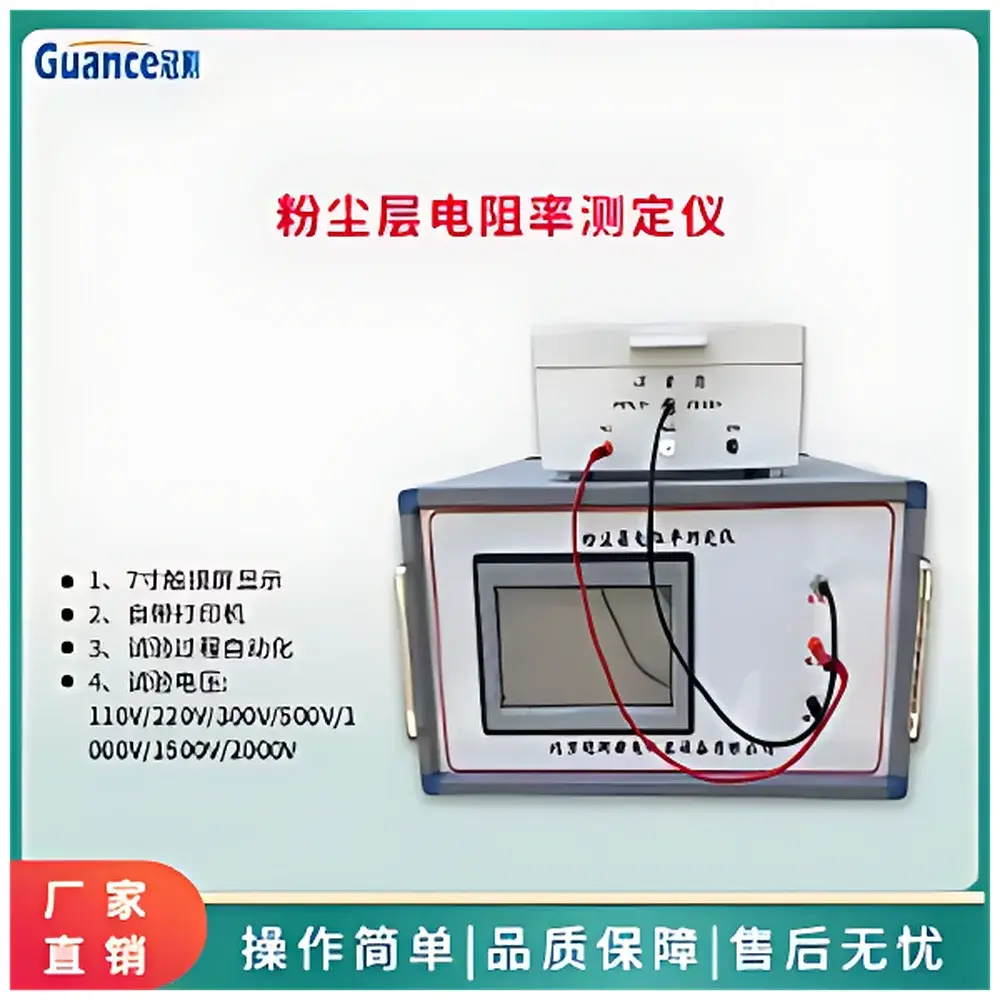
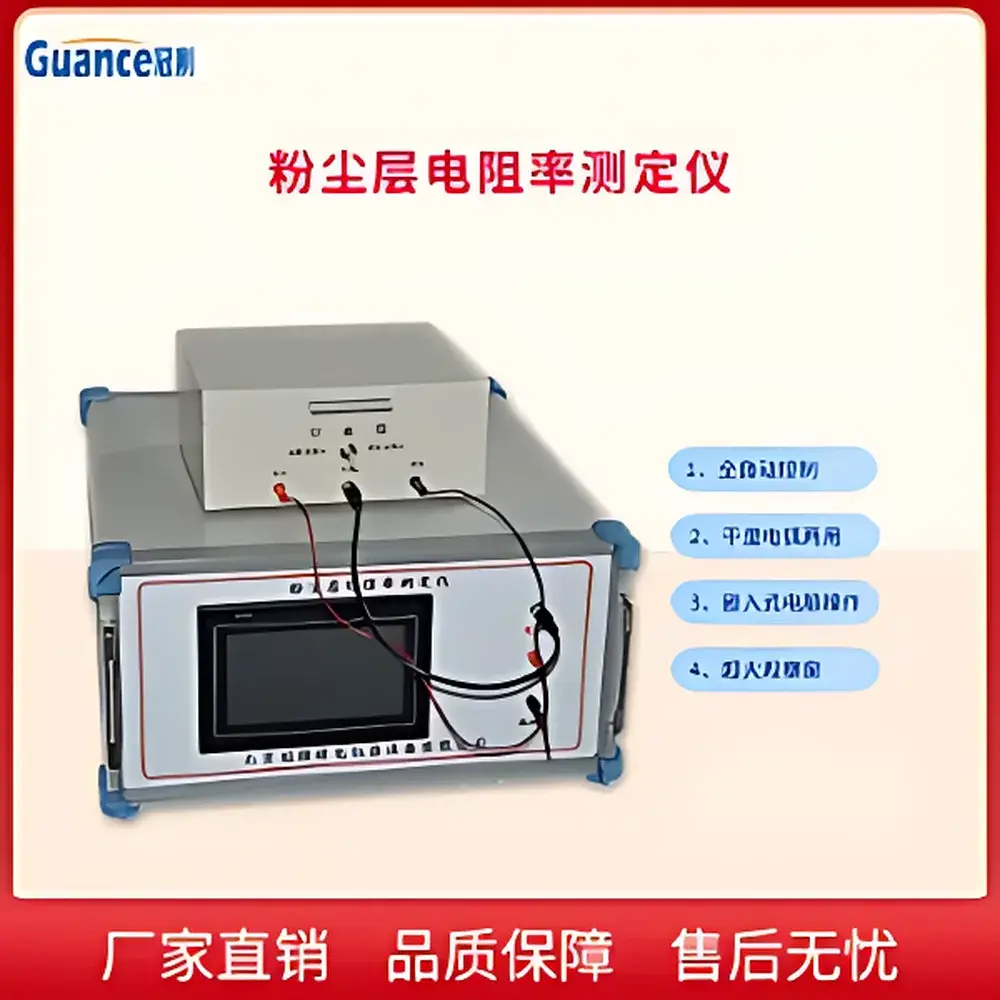
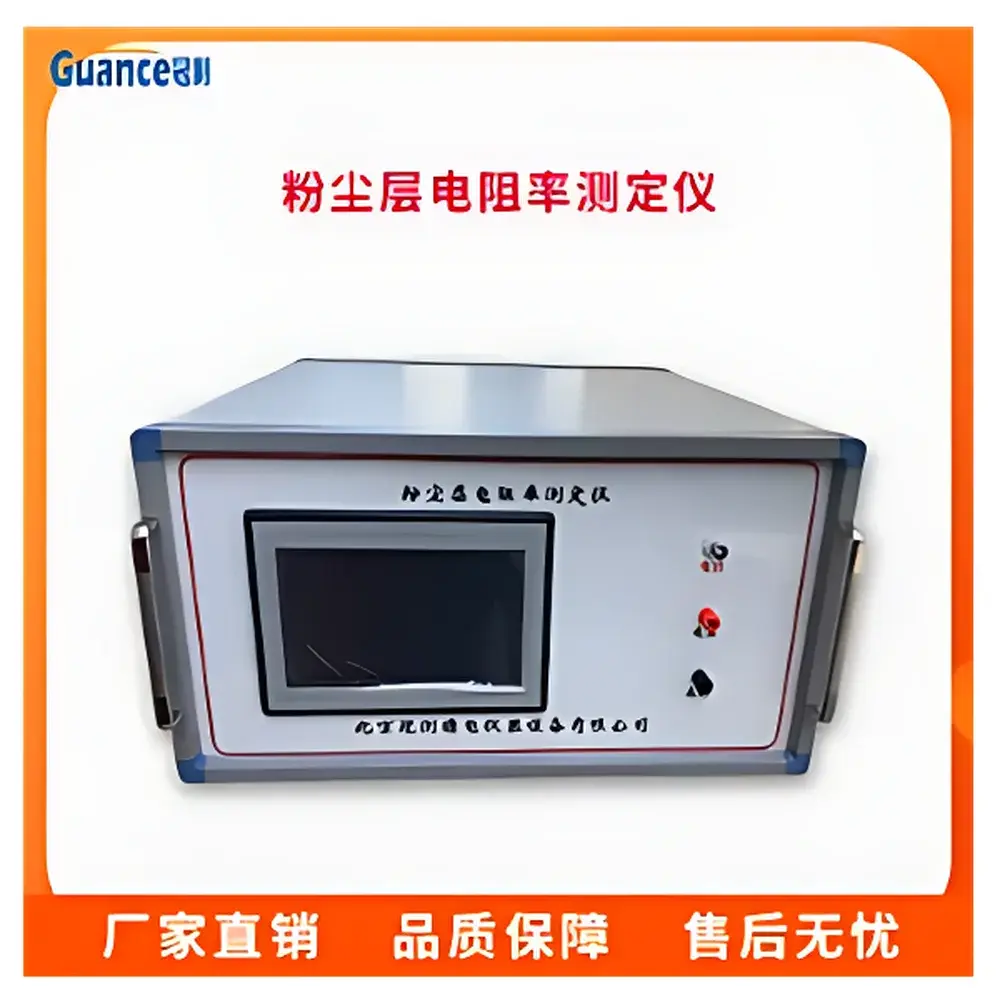
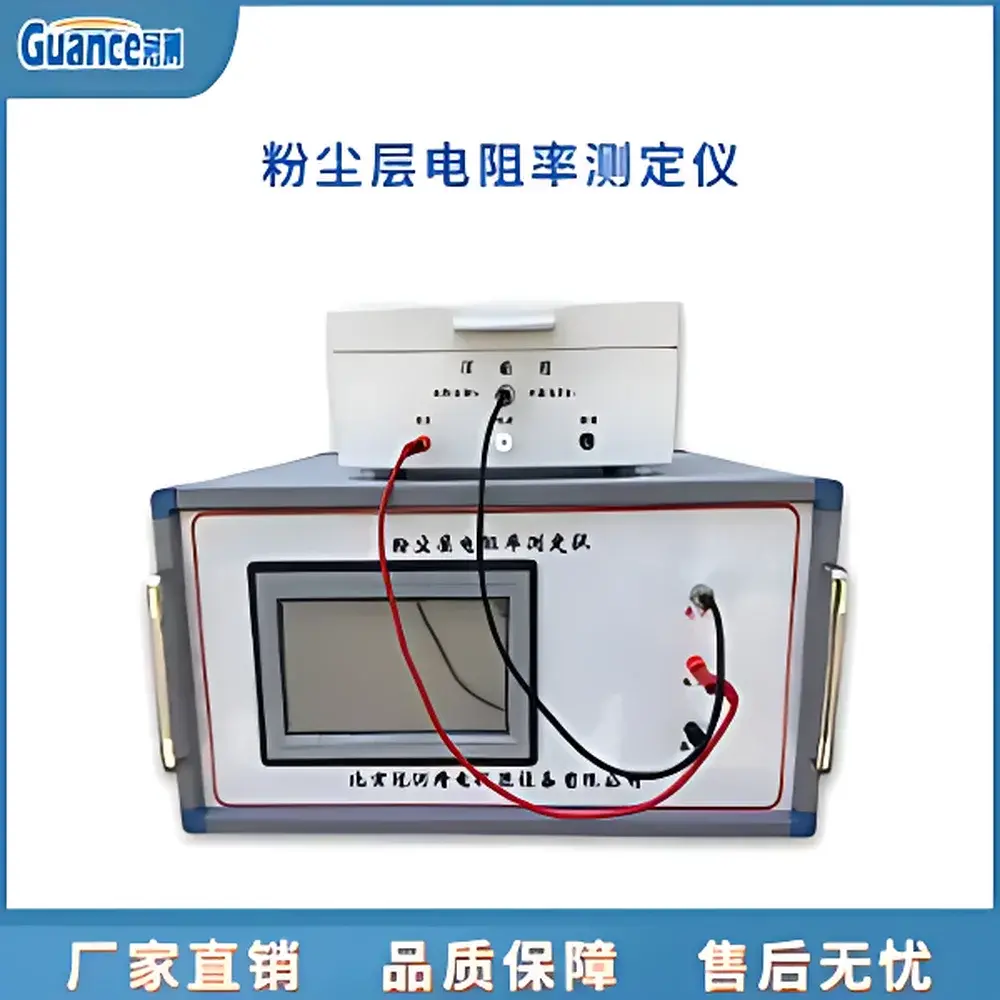
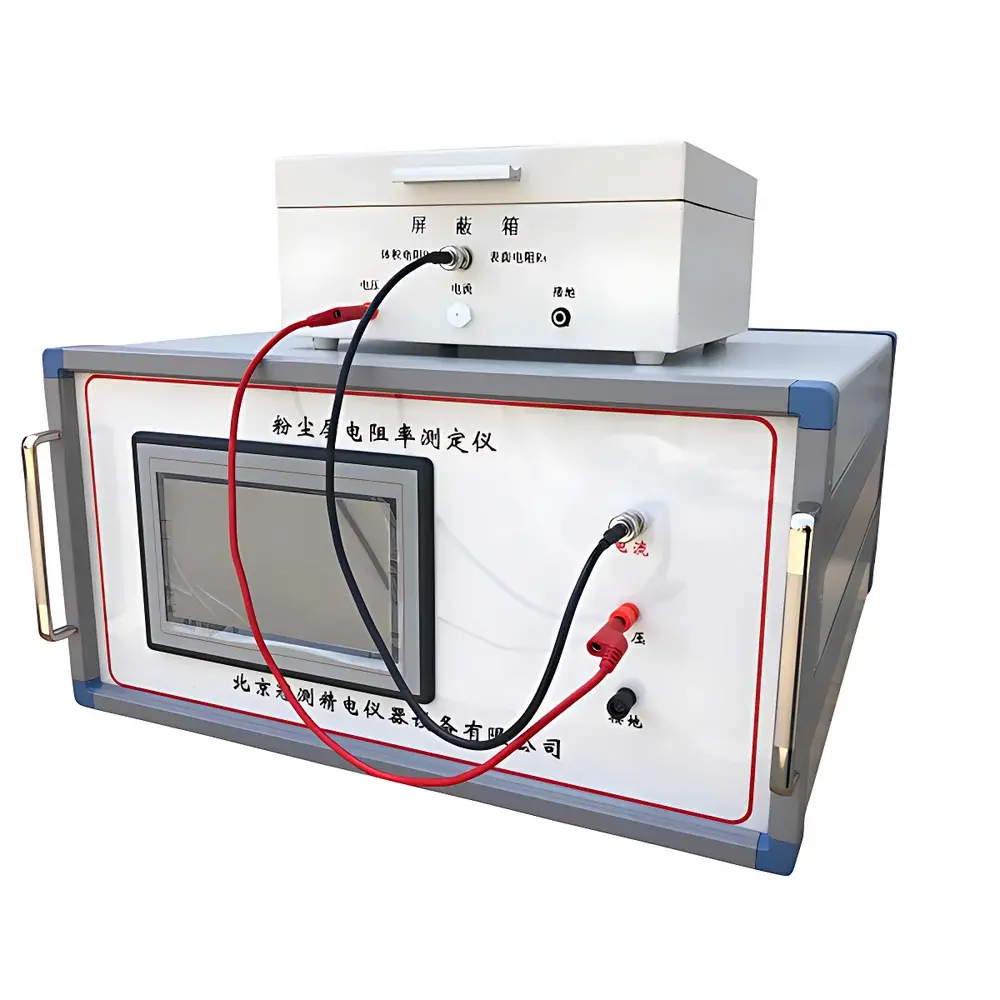
GuanCe Dust Layer Resistivity Tester GEST-126T
| Brand | GuanCe Instruments |
|---|---|
| Origin | Beijing, China |
| Manufacturer Type | Authorized Distributor |
| Country of Origin | China |
| Model | GEST-126T |
| Test Voltage Range | DC 110 V / 220 V / 300 V / 500 V / 1000 V / 1500 V / 2000 V |
| Series Resistor | 10 kΩ |
| Maximum Breakdown Current | 200 mA |
| Electrode Material | Stainless Steel (AISI 304) |
| Measurement Accuracy | ±1% of reading |
| Compliance | GB/T 12476.9–2010, GB/T 16427–2018 |
| Includes | Main Unit, Pair of Parallel-Plate Electrodes, Two Glass Rods (for compaction), USB Data Cable |
Overview
The GuanCe Dust Layer Resistivity Tester GEST-126T is a dedicated laboratory instrument engineered for the precise measurement of electrical resistivity in consolidated layers of combustible dusts under controlled compression conditions. It operates on the principle of direct-current (DC) two-terminal resistivity measurement using parallel-plate electrodes, in accordance with standardized test protocols defined in GB/T 12476.9–2010 and GB/T 16427–2018. These standards are aligned with international hazard classification frameworks for combustible dust environments, including IEC 60079-20-2 and NFPA 499. The device determines the volume resistivity (ρ, in Ω·m) of a dust layer by applying a calibrated DC voltage across a fixed electrode gap and measuring the resulting current through a known series resistance, enabling calculation via Ohm’s law and geometric correction factors.
Key Features
- Seven selectable DC test voltages (110 V to 2000 V) to accommodate varying dust conductivity ranges and regulatory testing requirements
- Integrated 10 kΩ series resistor to limit fault current and ensure operator safety during high-voltage operation
- Stainless steel (AISI 304) parallel-plate electrodes with precision-machined flat surfaces and repeatable spacing, minimizing contact resistance variability
- ±1% measurement accuracy over full voltage range, traceable to national metrological standards
- Compact benchtop design with built-in safety interlocks and visual status indicators for voltage activation and current monitoring
- No external power supply required—operates from standard AC mains input (100–240 VAC, 50/60 Hz) with internal regulated DC conversion
Sample Compatibility & Compliance
The GEST-126T supports standardized dust layer preparation per GB/T 16427–2018: samples are uniformly compacted into a cylindrical cavity (diameter 50 mm, height adjustable to 5–20 mm) between electrodes using provided glass rods. It accommodates dry, non-agglomerated powders with particle sizes typically ≤500 µm and moisture content 10³ Ω·m), a critical parameter for zone classification (e.g., Zone 20/21/22) in hazardous area certification. All test procedures comply with requirements for GLP-aligned documentation, supporting audit-ready records when paired with external data logging software. While not intrinsically safe, the instrument meets CE marking requirements for laboratory electrical equipment (EN 61010-1) and is suitable for use in non-explosive laboratory environments under ISO/IEC 17025-accredited quality systems.
Software & Data Management
The GEST-126T does not include embedded firmware-based data storage; instead, it outputs analog voltage and current signals via isolated USB interface (provided cable) for real-time acquisition using third-party software (e.g., LabVIEW, MATLAB, or Excel-compatible DAQ tools). Raw measurements—voltage applied, measured current, calculated resistivity—are timestamped and exportable as CSV files. For regulated environments, users may integrate the instrument into validated data acquisition workflows compliant with FDA 21 CFR Part 11 (electronic signatures, audit trails) via configurable external platforms. Calibration certificates—including verification at three voltage points (500 V, 1000 V, 2000 V)—are supplied with each unit and updated annually per ISO/IEC 17025 calibration schedules.
Applications
- Hazardous area classification for process equipment design and ATEX/IECEx certification support
- Material safety assessment of pharmaceutical excipients, metal powders, coal dust, grain flour, and polymer granules
- Quality control of antistatic additives in industrial powders
- Research into electrostatic charge dissipation mechanisms in bulk particulate systems
- Validation of grounding strategies for silos, hoppers, and pneumatic conveying lines
- Supporting NFPA 77 (Recommended Practice on Static Electricity) and IEC TR 60079-32-1 (Electrostatic Hazards Guidance)
FAQ
What standards does the GEST-126T directly support?
It implements test methods specified in GB/T 12476.9–2010 and GB/T 16427–2018, which are technically equivalent to IEC 60079-20-2 Annex D and ASTM E1221–19 (Standard Test Method for Determining the Resistivity of Dust Layers).
Can the instrument be used for wet or hygroscopic dusts?
No—testing must be performed on dried, free-flowing samples per standard requirements. Moisture content above 1.5% wt. invalidates results and risks surface conduction artifacts.
Is electrode cleaning required between tests?
Yes. Stainless steel electrodes must be cleaned with isopropyl alcohol and lint-free wipes after each test to remove residual dust films that affect contact resistance.
Does the GEST-126T provide automatic resistivity calculation?
No. Resistivity (ρ) is computed externally using the formula ρ = R × A / d, where R is measured resistance, A is electrode cross-sectional area (19.63 cm²), and d is layer thickness (in meters). Preconfigured spreadsheets are available upon request.
What safety certifications apply to this instrument?
It conforms to EN 61010-1:2010 for electrical safety in laboratory equipment. High-voltage sections are double-insulated and feature LED warning indicators. It is not certified for use inside classified explosive atmospheres.



