
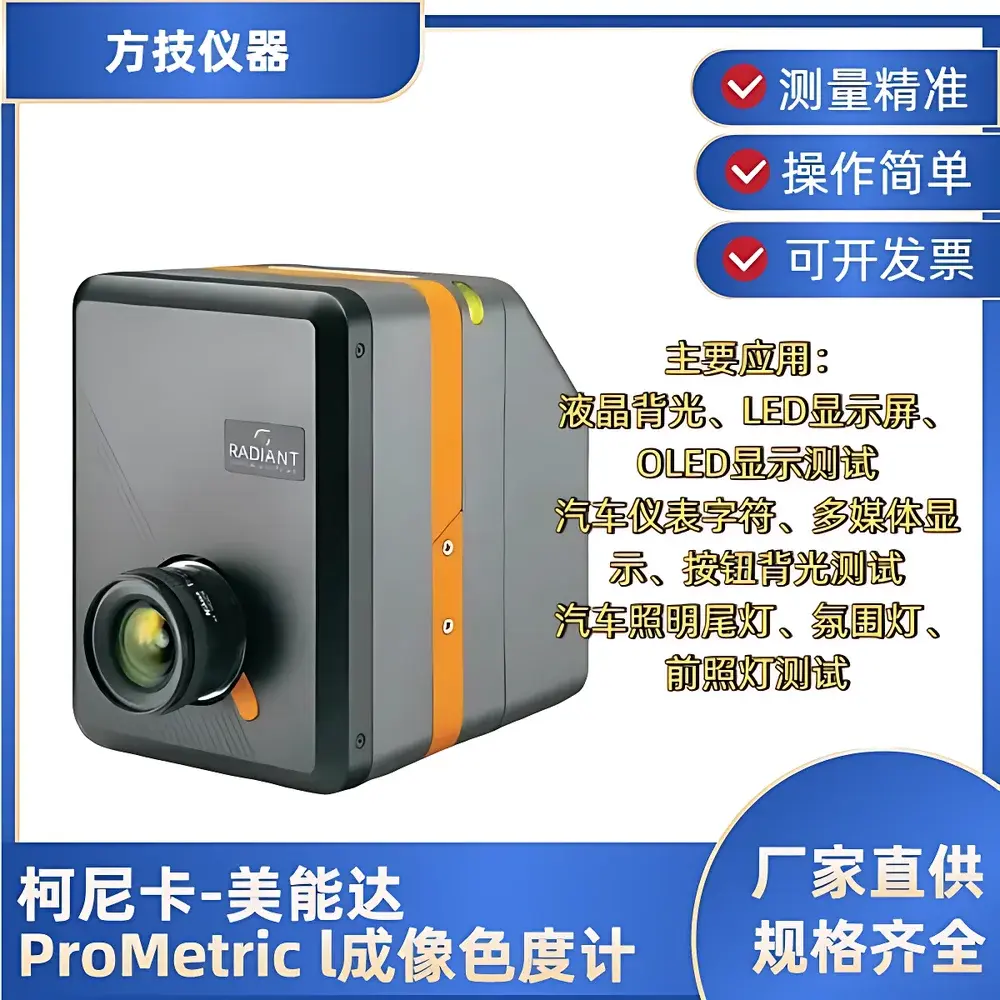
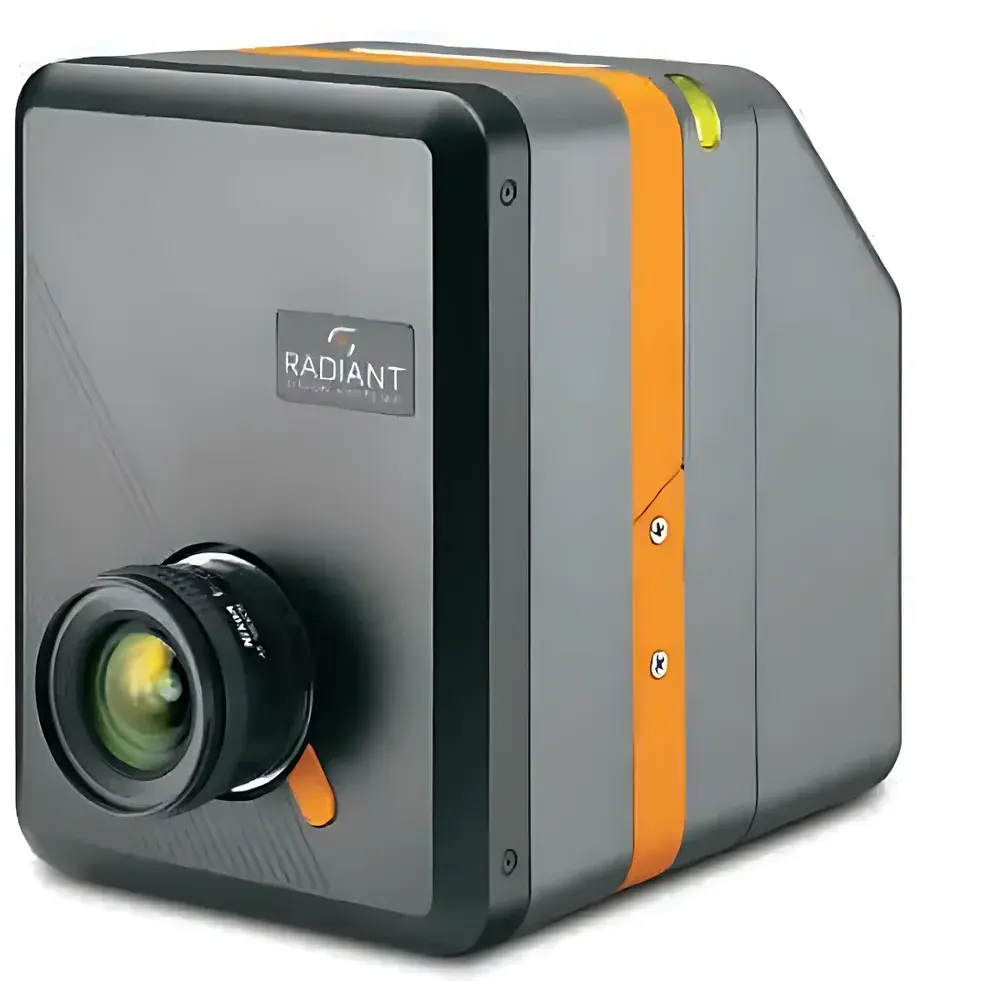
Konica Minolta ProMetric I Series Imaging Colorimeter for LCD Backlight, LED & OLED Display Measurement
| Brand | Konica Minolta |
|---|---|
| Origin | Japan |
| Model | ProMetric I (I2 to I29 variants) |
| Sensor Type | Scientific-grade CCD |
| Resolution Range | 2.0 MP (I2) to 29.0 MP (I29) |
| Measurement Units | cd/m², CIE x,y |
| Compliance | ISO/CIE-compliant photopic and colorimetric response |
| Interface | GigE Vision, USB 3.0, GenICam-compatible |
| Software Platform | TrueTest™ v7+ with automated pass/fail reporting, statistical process control (SPC), and audit trail (21 CFR Part 11 ready) |
Overview
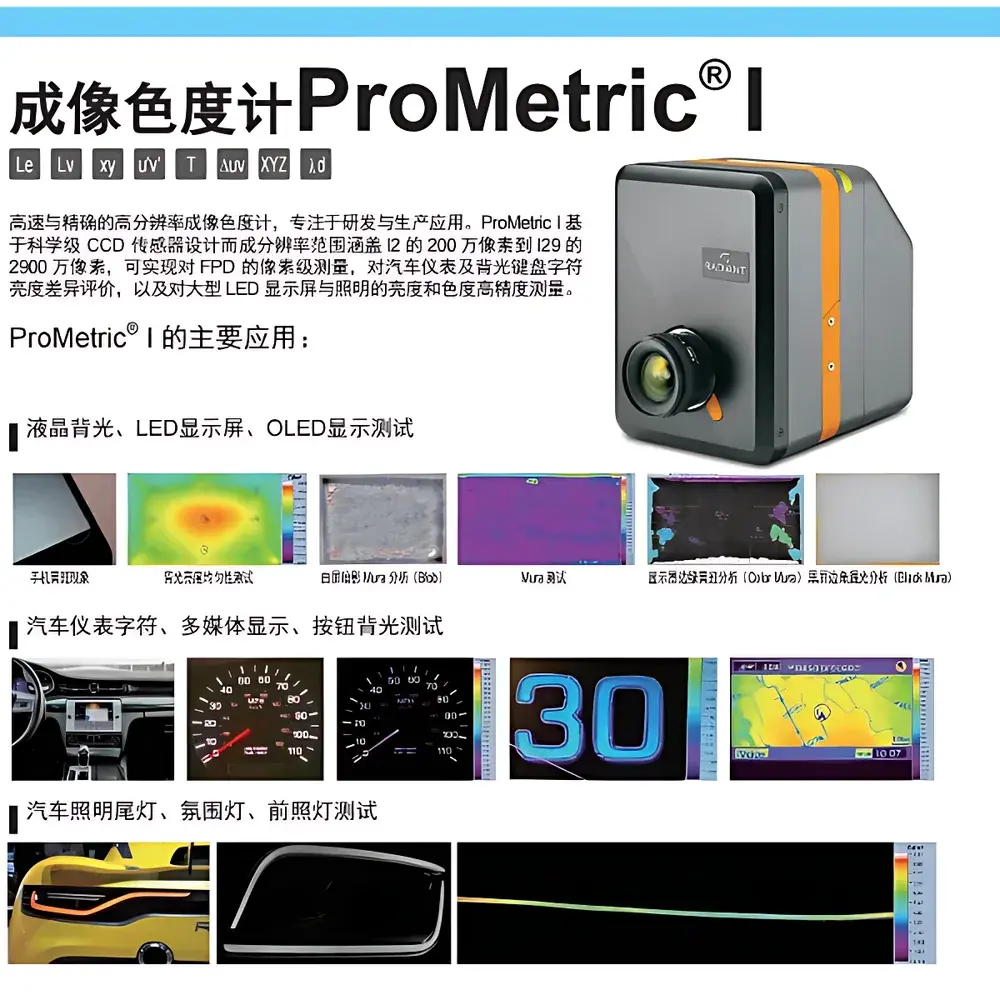
The Konica Minolta ProMetric I Series is a high-precision, scientific-grade imaging colorimeter engineered for pixel-level photometric and colorimetric evaluation of self-emissive and transmissive display technologies. Based on cooled, back-illuminated CCD sensors with calibrated f/2.8 lenses and integrated V(λ)-matched optical filters, the ProMetric I implements CIE 1931 and CIE 1976 u’v’ color spaces in hardware-level spectral response—ensuring traceable, repeatable luminance (cd/m²) and chromaticity (x,y; u’v’) measurements across flat panel displays (FPDs), automotive HMI clusters, OLED microdisplays, and large-area LED signage. Its architecture supports both R&D validation and high-throughput production line testing, delivering sub-1% photometric repeatability and <0.001 Δu’v’ chromaticity stability under controlled ambient conditions per ISO 13406-2 and CIE Publication 178.
Key Features
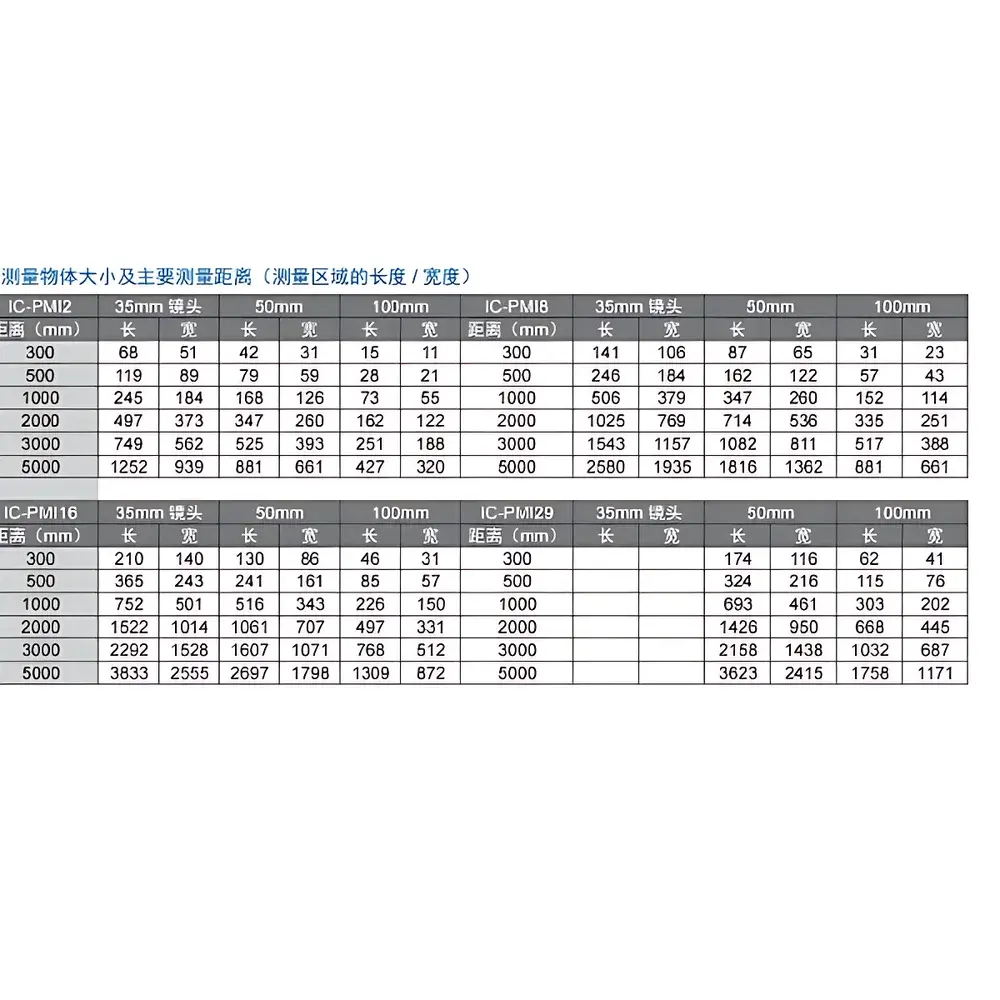
- Modular resolution scalability: Select from I2 (2.0 MP), I8 (8.1 MP), I16 (16.2 MP), or I29 (29.0 MP) sensor configurations—each optimized for specific field-of-view and pixel pitch requirements (e.g., sub-10 µm pixel analysis on AMOLED panels).
- TrueColor™ calibration engine: Factory-traceable, NIST-maintained reference standards applied at multiple luminance levels (0.01–10,000 cd/m²) and chromaticities ensure long-term measurement fidelity without user recalibration.
- Multi-parameter simultaneous capture: Single-exposure acquisition of luminance, CIE x,y, u’v’, correlated color temperature (CCT), dominant wavelength (λd), and color difference (Δu’v’) maps—enabling full spatial uniformity analysis per ISO 9241-307.
- Thermal-stabilized sensor housing: Active temperature regulation minimizes dark current drift and ensures <0.1% hour-to-hour photometric stability—critical for extended burn-in and aging studies.
- Integrated lens exchange system: Interchangeable fixed-focal-length lenses (24 mm to 100 mm) with motorized focus and aperture control enable rapid adaptation between near-field keyboard backlight inspection and far-field stadium LED wall characterization.
Sample Compatibility & Compliance
The ProMetric I is validated for quantitative evaluation of LCD with edge-lit or direct-lit LED backlights, RGBW and QD-enhanced LCDs, passive and active matrix OLEDs (PMOLED/AMOLED), microLED arrays, and transparent displays. It meets the optical geometry and spectral weighting requirements of IEC 62341-6-3 (OLED display measurements), ISO 5-4:2021 (photometry of self-luminous displays), and ASTM E308-22 (computation of CIE tristimulus values). All measurement reports include embedded metadata compliant with GLP/GMP documentation practices—including operator ID, instrument serial number, calibration certificate expiry, environmental temperature/humidity logging, and timestamped exposure parameters.
Software & Data Management
TrueTest™ software v7.2+ provides a deterministic workflow environment supporting automated test sequencing, statistical process control (SPC) charting (X-bar/R, Cp/Cpk), and configurable pass/fail criteria based on user-defined spatial zones (e.g., bezel regions, icon boundaries, or individual subpixels). The platform supports FDA 21 CFR Part 11 compliance via electronic signatures, role-based access control, and immutable audit trails for all measurement data, configuration changes, and report exports. Raw image data is stored in IEEE 1667-compliant .tiff format with embedded EXIF metadata; export options include CSV (per-pixel metrics), PDF (formatted compliance reports), and JSON (for integration into MES or factory automation systems).
Applications
- FPD manufacturing: Pixel defect detection, Mura quantification, grayscale tracking, and viewing angle dependency analysis per ISO 13406-2 Annex B.
- Automotive HMI validation: Instrument cluster readability under daylight and night conditions, symbol contrast verification against ISO 15008, and glare assessment per UNECE Regulation No. 121.
- Consumer electronics QA: Smartphone display uniformity mapping, HDR tone-mapping verification (PQ/EOTF), and blue-light hazard index (IEC/TR 62778) estimation.
- R&D labs: OLED lifetime degradation modeling, microLED binning correlation, and human visual system (HVS) model validation using measured u’v’ distributions.
- Lighting design: Spatial CCT variation analysis across architectural LED panels and tunable white luminaires per ANSI C78.377-2022.
FAQ
What display technologies does the ProMetric I support?
It supports LCD (with CCFL/LED backlights), OLED (PMOLED/AMOLED), microLED, Mini-LED, and emerging emissive technologies including QD-OLED and electroluminescent polymers.
Is the system compliant with FDA 21 CFR Part 11 for regulated environments?
Yes—TrueTest™ software includes electronic signature workflows, audit trail generation, and secure user authentication aligned with Part 11 requirements for pharmaceutical and medical device display validation.
Can the ProMetric I measure angular-dependent color shift?
Yes—when paired with Konica Minolta’s ARS-1000 automated rotation stage, it captures luminance and chromaticity vs. viewing angle (±85°) per CIE 127:2020 and IEC 62341-6-3 Annex A.
How often does the system require recalibration?
Factory calibration is valid for 12 months under normal operating conditions; annual recalibration against NIST-traceable standards is recommended for ISO/IEC 17025-accredited labs.
Does the system support custom measurement algorithms?
Yes—TrueTest™ SDK (C++ and Python APIs) enables integration of proprietary uniformity metrics, AI-driven defect classification models, or custom spatial weighting functions.




