
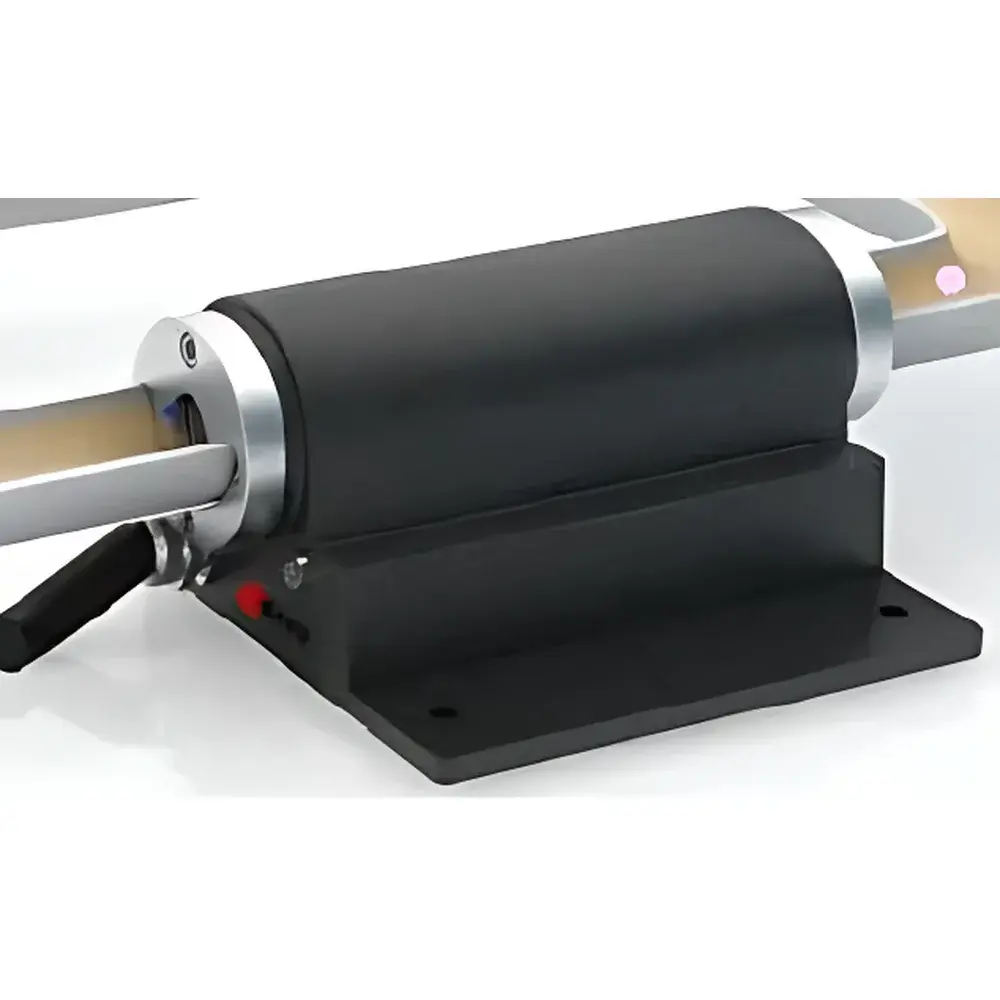
Kittiwake FG Online Ferrous and Non-Ferrous Particle Sensor
| Brand | Kittiwake |
|---|---|
| Origin | UK |
| Model | FG |
| Temperature Range | -20 to 65°C |
| Detection Threshold | 0.04 mm (ferrous), 0.135 mm (non-ferrous) |
| Output Signals | 2 × opto-isolated 4–20 mA, 1 × alarm contact (0.1 A max) |
| Communication Interfaces | RS232, RS485 (Ethernet optional) |
| Fluid Compatibility | Mineral oil, synthetic lubricants, emulsified oils |
| Max Operating Pressure | 10 bar |
| Power Supply | 18–30 VDC |
| Ingress Protection | IP65 |
| Weight | 1.5 kg (3.3 lb) |
Overview
The Kittiwake FG Online Ferrous and Non-Ferrous Particle Sensor is an industrial-grade, real-time condition monitoring instrument engineered for continuous in-line detection of wear debris in circulating lubrication systems. Based on dual-sensor electromagnetic induction and eddy-current principles, the FG sensor discriminates between ferromagnetic particles (e.g., iron, steel) and non-ferrous conductive contaminants (e.g., copper, aluminum, lead) without requiring fluid sampling or offline laboratory analysis. Its core measurement architecture employs calibrated magnetic field perturbation detection coupled with high-stability signal conditioning electronics, enabling reliable quantification of particle presence above defined size thresholds—0.04 mm for ferrous and 0.135 mm for non-ferrous species—within dynamic oil streams. Designed for integration into predictive maintenance programs across marine propulsion, power generation, wind turbine gearboxes, and heavy-duty hydraulic systems, the FG sensor delivers deterministic early-warning signals correlated with mechanical wear progression, supporting ISO 4406:2017 and ASTM D7684-22 compliant oil health assessments.
Key Features
- Dual-mode detection: Independent electromagnetic sensing channels for simultaneous ferrous and non-ferrous particle identification
- Robust 3/8” BSP threaded process connection ensures rapid installation and leak-tight integration into existing lube oil circuits
- IP65-rated aluminum alloy housing with integrated magnetic shielding minimizes external EMI interference and withstands vibration, dust, and moisture in harsh industrial enclosures
- Real-time local display via integrated LCD screen shows operational status, alarm state, and sensor health indicators without external instrumentation
- Opto-isolated 4–20 mA analog outputs provide galvanically separated, noise-immune transmission to PLCs, DCS, or SCADA systems for centralized asset monitoring
- Configurable relay alarm output (0.1 A max) supports fail-safe shutdown triggers or maintenance alert escalation per site-specific protocols
Sample Compatibility & Compliance
The FG sensor is validated for use with mineral-based petroleum oils, synthetic ester- and polyalphaolefin (PAO)-based lubricants, and water-in-oil emulsions commonly employed in turbines, compressors, and hydraulic power units. It operates continuously within a fluid temperature range of –20 to +65°C and up to 10 bar static pressure, making it suitable for both low-viscosity circulating systems and high-pressure servo applications. All wetted materials—including the sensor probe and housing seals—are chemically resistant to standard industrial lubricants and compatible with common cleaning solvents. The device conforms to EN 61000-6-2 (immunity) and EN 61000-6-4 (emission) for electromagnetic compatibility, and its electrical safety design meets IEC 61000-4-5 surge immunity requirements. While not certified for SIL or ATEX environments, its intrinsic safety profile supports deployment in non-hazardous Zone 2 areas under ISO 17359:2014 guidelines for machinery condition monitoring.
Software & Data Management
The FG sensor supports serial communication via RS232 (local configuration and diagnostics) and RS485 (multi-drop networked deployment). Optional Ethernet interface enables Modbus TCP integration for direct connectivity to cloud-based CMMS platforms such as SAP PM, IBM Maximo, or Siemens Desigo CC. Configuration and calibration parameters are stored in non-volatile memory with write-protection to prevent unauthorized modification. Data logging—when interfaced with a compatible gateway—is timestamped and supports audit-trail functionality aligned with GLP/GMP documentation expectations. Firmware updates are performed via secure UART bootload protocol, ensuring traceability and version control in regulated maintenance environments.
Applications
- Early-stage wear detection in main engine and auxiliary gearbox sumps aboard commercial vessels and naval platforms
- Condition-based monitoring of wind turbine pitch and yaw drive lubricants to reduce unplanned downtime
- Continuous surveillance of turbine bearing oil systems in combined-cycle and hydroelectric power plants
- Verification of filtration efficiency in high-value hydraulic circuits serving aerospace ground support equipment
- Trend analysis of particle accumulation rate to inform oil drain intervals per OEM-recommended maintenance schedules (e.g., Caterpillar SOS, MAN ES LubeCare)
FAQ
Can the FG sensor distinguish particle shape or composition beyond ferrous/non-ferrous classification?
No. It provides binary classification based on magnetic permeability and electrical conductivity; elemental analysis requires complementary techniques such as SEM-EDS or ICP-OES.
Is calibration required after installation?
Factory calibration is stable over time; however, zero-point verification using clean reference oil is recommended during commissioning and annually thereafter per ISO 18436-2 Category II practitioner guidance.
Does the sensor require flow conditioning or minimum velocity?
Yes. Optimal performance requires laminar flow at ≥0.3 m/s through the sensing zone; straight pipe runs of ≥5D upstream and ≥3D downstream are advised to avoid turbulence-induced signal noise.
Can it be installed vertically or only horizontally?
It is orientation-independent but must be mounted with the electrical connector facing upward to prevent condensate ingress in high-humidity environments.
What diagnostic data is available via RS232?
Live sensor status, raw channel voltage outputs, internal temperature, supply voltage, and error codes—including probe fouling detection and open-circuit alerts—are accessible via ASCII command set documented in the FG Technical Reference Manual Rev. 4.2.



