
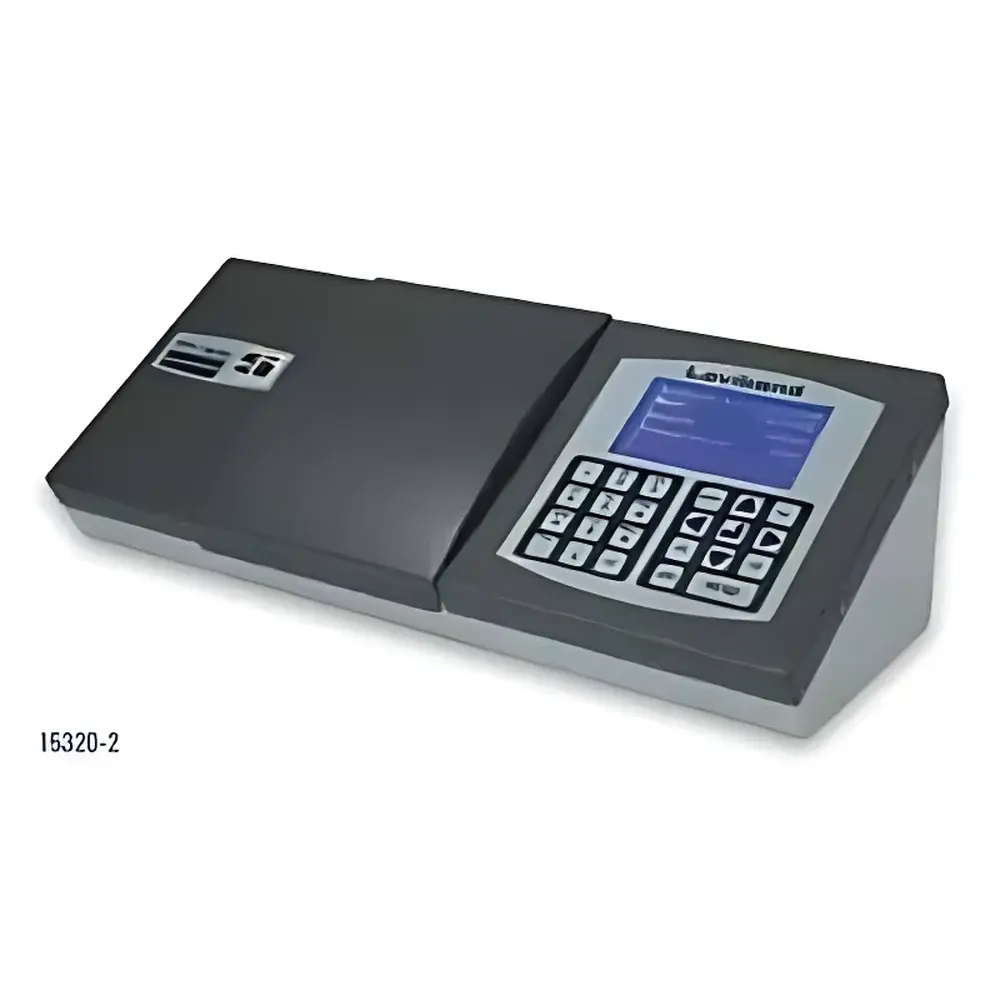
Tintometer PFXi-195/880/995 Automated High-Precision Colorimeter
| Brand | SETA |
|---|---|
| Origin | United Kingdom |
| Model | PFXi-195/880/995 |
| Measurement Method | 9 or 16 Interference Filters |
| Spectral Response | 420–710 nm |
| Bandwidth | 20 nm |
| Color Reproducibility | ±0.0004 / ±0.0002 |
| Transmittance Repeatability | ±0.5% / ±0.25% |
| Saybolt Color Accuracy | ±1 unit |
| Observer Angle | 2° and 10° CIE Standard |
| Measurement Time | ≤25 s |
| Path Length Range | 0.1–153 mm |
| Light Source | Halogen Tungsten Lamp |
| Heating Module (optional) | Up to 95 °C |
| Data Storage Capacity | 32 measurements |
| Dimensions | 17 × 52 × 20 cm |
| Weight | 7–8 kg |
Overview
The Tintometer PFXi-195/880/995 Automated High-Precision Colorimeter is an engineered solution for objective, traceable color assessment of petroleum products, lubricants, fuels, waxes, fats, and other translucent or transparent liquid and semi-solid materials. Based on the fundamental principle of spectrophotometric colorimetry using calibrated interference filters, this instrument delivers quantitative color values aligned with internationally recognized visual color scales—including ASTM D1500 (Petroleum Products), ASTM D1209 (Plastics & Clear Liquids), ASTM D1544 (Resins & Varnishes), ASTM D156 (Sulfuric Acid), ASTM D6045 (Motor Oils), IP 17 (Method A & B), IP 196, BS 5339, BS 5859, ISO 2049, DIN 51411, NF M07-003, JIS K2580, GB 6540, and GB 3555. Unlike subjective visual comparison methods, the PFXi series eliminates observer bias by digitally quantifying tristimulus values in CIE XYZ, CIELAB, and CIELCH spaces—while simultaneously reporting spectral transmittance data across the visible range (420–710 nm). Its dual-path-length design (0.1–153 mm) enables accurate measurement of both deeply colored and pale samples without dilution or path-length estimation errors.
Key Features
- Automated color evaluation compliant with 12+ international standards including ASTM, ISO, IP, DIN, and JIS methods
- Dual CIE observer angles (2° and 10°) supporting both standard and supplementary colorimetric assessments
- High-stability halogen tungsten light source with thermally regulated output for consistent spectral irradiance
- Precision-matched interference filter set (9- or 16-filter configurations depending on model) certified to NIST-traceable reference standards
- Long-path cuvette design (up to 153 mm) minimizing error propagation in low-absorbance measurements and extending dynamic range for light-colored samples
- Integrated heating module (optional) capable of controlled sample warming up to 95 °C—engineered with thermally insulated quartz cells to prevent premature solidification of waxes and fats during analysis
- Full automatic calibration routine with onboard reference validation—no manual adjustment required between measurements
- Rugged steel chassis with corrosion-resistant surface finish, rated for continuous operation in laboratory and production-floor environments
Sample Compatibility & Compliance
The PFXi-195/880/995 accommodates a broad range of sample types: clear to dark petroleum distillates (e.g., kerosene, diesel, base oils), refined mineral oils, synthetic lubricants, edible oils, paraffin wax melts, and hydrogenated fats. Sample handling is optimized for ASTM D1500-compliant glass tubes (100 mm path length) and custom cuvettes (0.1–153 mm). Instrument compliance extends beyond method adherence to operational integrity: all models support audit-ready data logging, time-stamped measurement records, and user-access control—facilitating alignment with GLP and GMP documentation requirements. While not inherently 21 CFR Part 11 compliant, the Windows-based software (supplied with RS232 interface) allows configuration of electronic signatures and change logs when deployed within validated IT infrastructure.
Software & Data Management
Data acquisition and reporting are managed via Tintometer’s proprietary Windows application, compatible with Windows 10/11. The software supports real-time display of CIE coordinates, spectral transmittance curves, and pass/fail thresholds against user-defined specification limits. All 32 internal memory records are exportable as CSV or PDF reports—including instrument ID, operator name, date/time stamp, path length, temperature (if heated), and full spectral data. RS232 connectivity permits direct printing to serial-compatible label printers or integration into LIMS via ASCII protocol. Firmware updates and calibration file management are performed offline to preserve data integrity during regulatory audits.
Applications
- Quality release testing of jet fuel (ASTM D156), gasoline (ASTM D1500), and transformer oil (IEC 60156 color index)
- Batch-to-batch consistency verification in lubricant blending operations
- Monitoring thermal oxidation stability in turbine oils via color drift trends
- Assessment of refining efficiency through naphtha and kerosene color progression
- Regulatory submission support for FDA-regulated edible oil producers requiring GB 6540 or ISO 2049 conformance
- Process troubleshooting in wax fractionation where subtle hue shifts indicate contaminant carryover
FAQ
Does the PFXi series require annual recalibration by the manufacturer?
No—routine recalibration is fully automated using internal reference standards; however, annual verification against NIST-traceable liquid or solid color standards is recommended per ISO/IEC 17025 guidelines.
Can the instrument measure opaque or turbid samples?
No—it is designed exclusively for transparent or translucent materials meeting ASTM D1209/D1500 clarity criteria; haze or particulate content must be below method-specified thresholds.
Is the heating module available as a field-upgrade option?
Yes—the PFXi-880 and PFXi-995 models support retrofitted heating units; the PFXi-195 requires factory integration.
What is the minimum detectable color difference (ΔE*ab) under standard conditions?
Instrument resolution supports ΔE*ab ≥ 0.05 for repeat measurements at fixed path length and temperature, verified per CIE Publication 170-2.
How is data security maintained during transfer from instrument to PC?
All RS232 transmissions use hardware handshaking (RTS/CTS) and checksum validation; no encryption is applied—secure transfer relies on network-level controls in validated environments.






