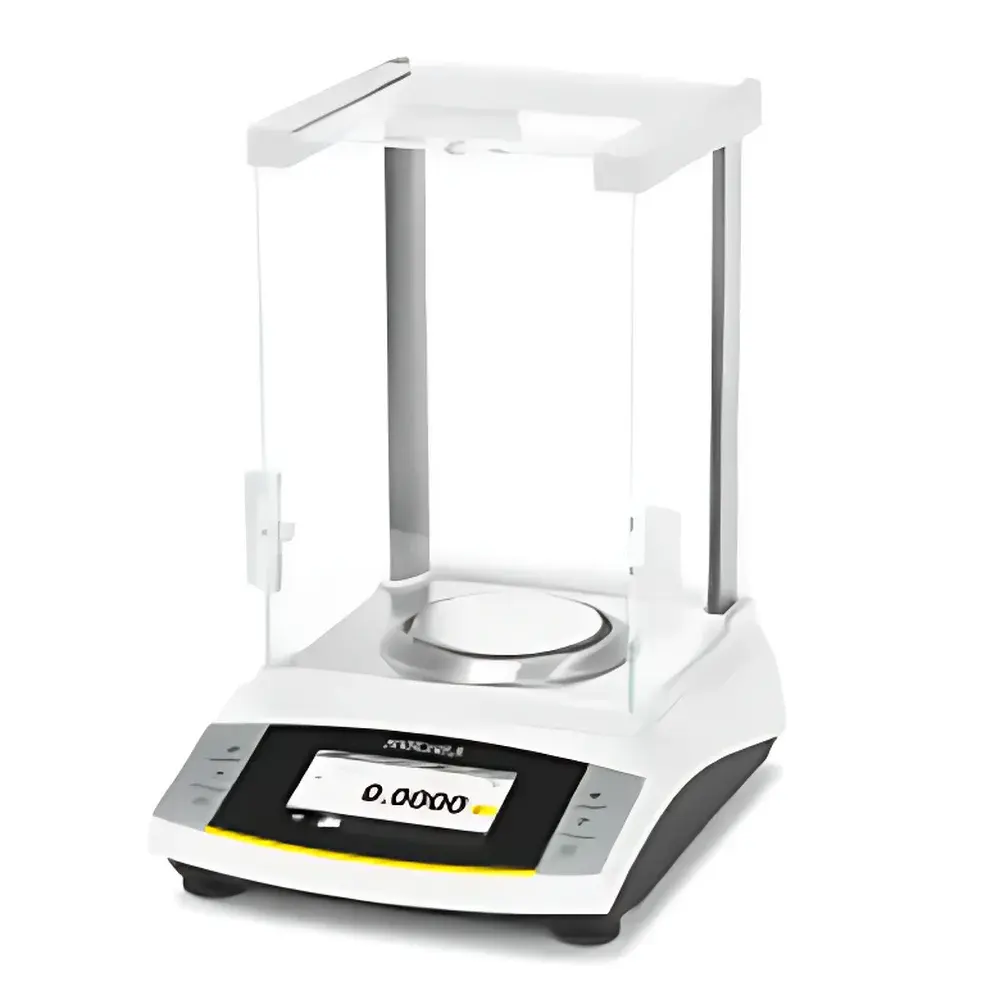
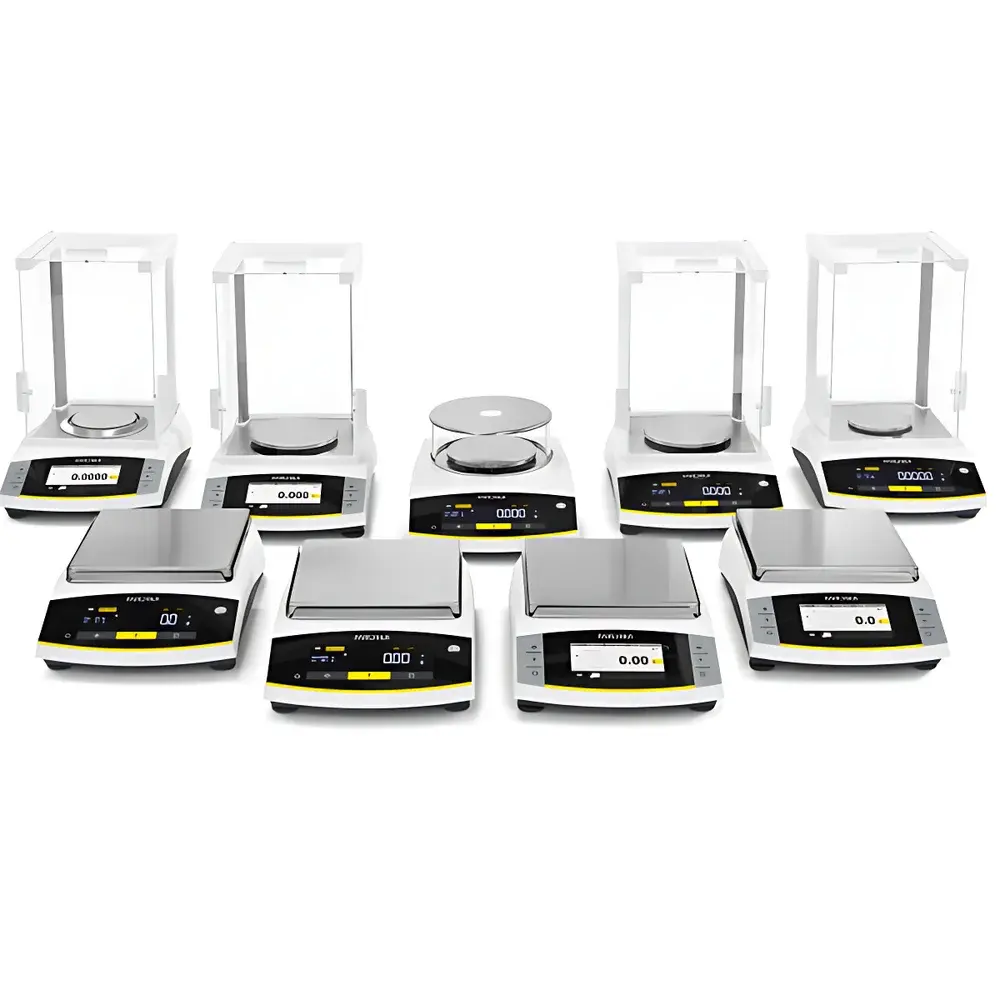
Sartorius BCA224i-1OCN Analytical Balance (0.1 mg readability)
| Brand | Sartorius |
|---|---|
| Origin | Shanghai, China |
| Manufacturer Type | Authorized Distributor |
| Product Category | Domestic |
| Model | BCA224i-1OCN |
| Maximum Capacity | 220 g |
| Readability | 0.1 mg |
| Repeatability | ≤ ±0.1 mg |
| Calibration | Internal (isoCAL®) |
| Leveling | Real-time electronic level monitoring with guided adjustment |
| Compliance | GLP/GMP-compliant data output, CalAuditTrail™, 21 CFR Part 11-ready audit trail support |
| Connectivity | Dual USB-C ports, RS-232 (9-pin), optional printer/U-disk data export |
| Display | Graphical touchscreen interface |
| Applications | Weighing, counting, percentage weighing, density determination, animal weighing, statistics, peak hold, checkweighing, unit conversion, below-balance weighing |
| Language Support | 13 languages including English, German, French, Spanish, Italian, Portuguese, Russian, Polish, Chinese, Japanese, Korean, Turkish, Hungarian |
| User Management | Up to 10 user profiles with multi-level password protection |
Overview
The Sartorius BCA224i-1OCN is a high-precision analytical balance engineered for routine and regulated laboratory environments requiring consistent 0.1 mg readability and traceable measurement integrity. Built upon Sartorius’ proprietary monolithic sensor technology—originally developed in Germany and refined over decades—the BCA224i-1OCN delivers exceptional stability, rapid stabilization times (<2 seconds typical), and long-term repeatability (≤ ±0.1 mg) across its full 220 g capacity range. Its measurement principle relies on electromagnetic force compensation (EMFC), where the restoring force required to maintain equilibrium is directly proportional to sample mass and digitally resolved with sub-microgram resolution. Designed for ISO/IEC 17025-accredited labs and GxP-compliant workflows, the balance integrates hardware- and software-level safeguards—including real-time leveling verification, overload protection, and anti-static glass draft shield coating—to minimize environmental influence and ensure metrological reliability under variable ambient conditions.
Key Features
- Monolithic EMFC sensor architecture for superior linearity, temperature drift resistance, and mechanical robustness
- Integrated electronic level sensor with on-screen interactive leveling guidance and audible/visual alerts for out-of-level conditions
- isoCAL® automatic internal calibration system—triggered by time intervals or temperature deviations (±1.5 °C)—ensuring continuous accuracy without manual intervention
- CalAuditTrail™: Tamper-resistant, time-stamped digital log of all calibration events, including operator ID, timestamp, calibration values, and deviation reports—exportable as PDF or CSV for regulatory review
- Graphical 4.3-inch capacitive touchscreen with intuitive icon-based navigation, haptic feedback, and adjustable brightness for glove-compatible operation
- Dual USB-C interfaces: One dedicated to host PC communication (virtual COM port), the other for direct U-disk data export (weight logs, calibration reports, application results)
- RS-232 (9-pin) legacy interface supporting bidirectional communication with LIMS, ERP, or custom lab software using ASCII protocol
- Chemically resistant housing constructed from PBT polymer, stainless steel, and coated borosilicate glass—validated for compatibility with common solvents and cleaning agents per ISO 14644-1 Class 5 cleanroom handling protocols
Sample Compatibility & Compliance
The BCA224i-1OCN accommodates diverse sample formats—from micro-vials and filter papers to standard crucibles and Petri dishes—thanks to its spacious weighing chamber (W × D × H: 180 × 190 × 220 mm) and fully removable sliding draft shield. Optional below-balance weighing hook enables density determination and suspended sample measurements. All firmware and data handling functions comply with key international standards: ISO 9001:2015 (quality management), ISO/IEC 17025:2017 (testing and calibration laboratories), and EU Annex 11 (computerized systems). Data output adheres to GLP/GMP documentation requirements, including mandatory metadata (date/time, operator ID, balance ID, environment temp/humidity if logged), and supports 21 CFR Part 11 readiness when deployed with validated third-party software platforms.
Software & Data Management
Data integrity is enforced at the firmware level: every weight reading, calibration action, and parameter change is timestamped, cryptographically signed, and stored in non-volatile memory. The balance supports 13 pre-installed applications—including statistical analysis (mean, SD, RSD, min/max), checkweighing with configurable tolerance bands, density calculation (with auxiliary density kit), and dynamic filling control—each generating structured output compatible with Sartorius LabX® Lite or full LabX® software. Export formats include .csv (for Excel/SPSS), .pdf (for audit-ready reports), and .txt (for legacy system ingestion). Multi-language UI (13 options) and role-based access control (10 users, 3 privilege tiers) ensure operational consistency across shifts and departments.
Applications
This balance serves critical functions across pharmaceutical QC (USP and compliance), chemical synthesis (reagent dispensing, stoichiometric verification), materials science (powder density, coating thickness validation), and academic research (isotope ratio sample prep, nanomaterial dosing). Its high repeatability and isoCAL® assurance make it suitable for reference standard preparation, volumetric flask calibration, and gravimetric titration. The integrated counting mode—with automatic piece-weight learning and statistical correction—supports manufacturing batch reconciliation. Animal weighing mode compensates for low-frequency motion, while peak-hold functionality captures transient mass changes during reaction monitoring.
FAQ
Does the BCA224i-1OCN meet USP and requirements for analytical balance verification?
Yes—its 0.1 mg readability, ≤ ±0.1 mg repeatability, and built-in isoCAL® with CalAuditTrail™ satisfy the performance and documentation criteria outlined in both chapters.
Can calibration data be exported in a format acceptable for FDA audit submission?
Yes—calibration reports are exportable as password-protected PDFs containing digital signatures, operator IDs, environmental conditions, and traceable reference weights per NIST-traceable hierarchy.
Is the balance compatible with LabX® software for centralized instrument management?
Yes—via USB-C or RS-232, the BCA224i-1OCN communicates natively with LabX® Lite (free) and full LabX® (licensed), enabling remote configuration, automated report generation, and electronic signature workflows.
What environmental conditions affect measurement stability, and how does the balance mitigate them?
Air currents, static charge, and thermal gradients are primary influences; mitigation includes anti-static coated glass, active leveling feedback, and temperature-compensated EMFC sensor design validated from 10–30 °C.
How is user access controlled to prevent unauthorized parameter changes?
Through hierarchical password protection: Operator (basic weighing), Supervisor (application setup), and Administrator (firmware update, CalAuditTrail™ export, user management).