
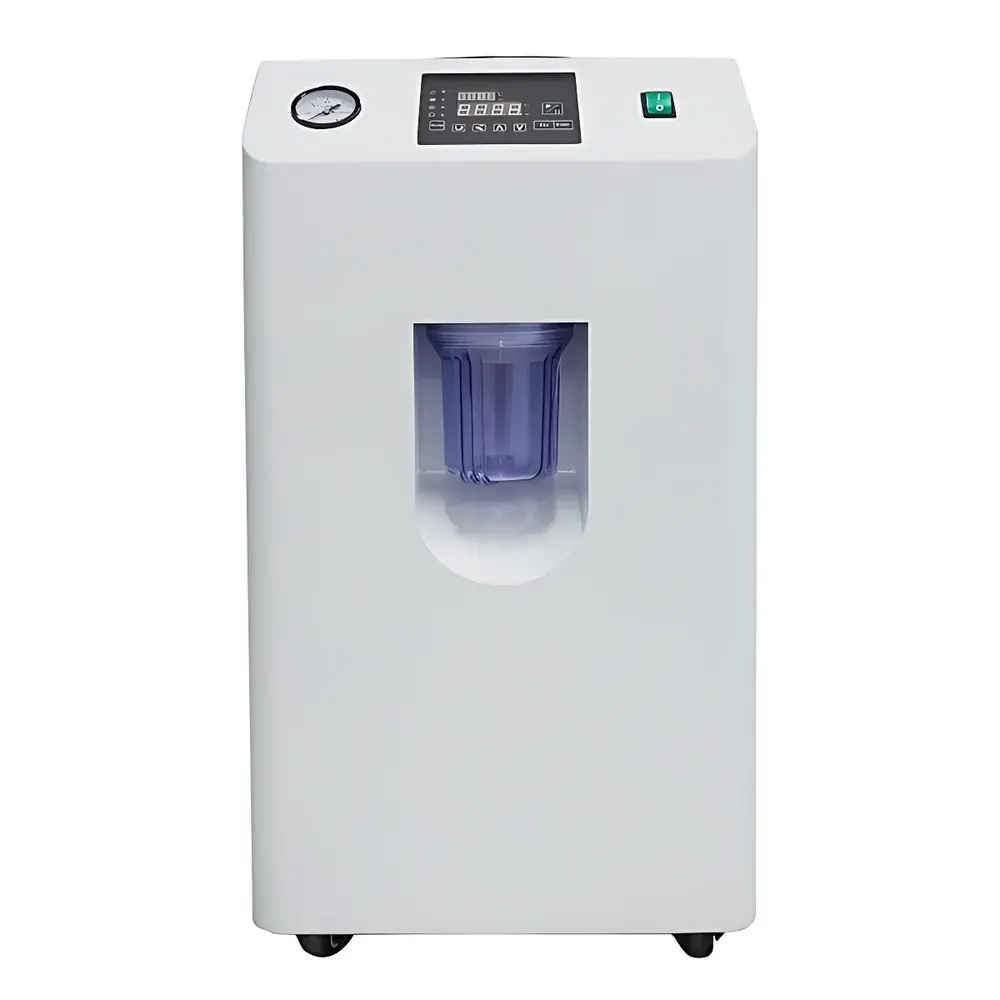
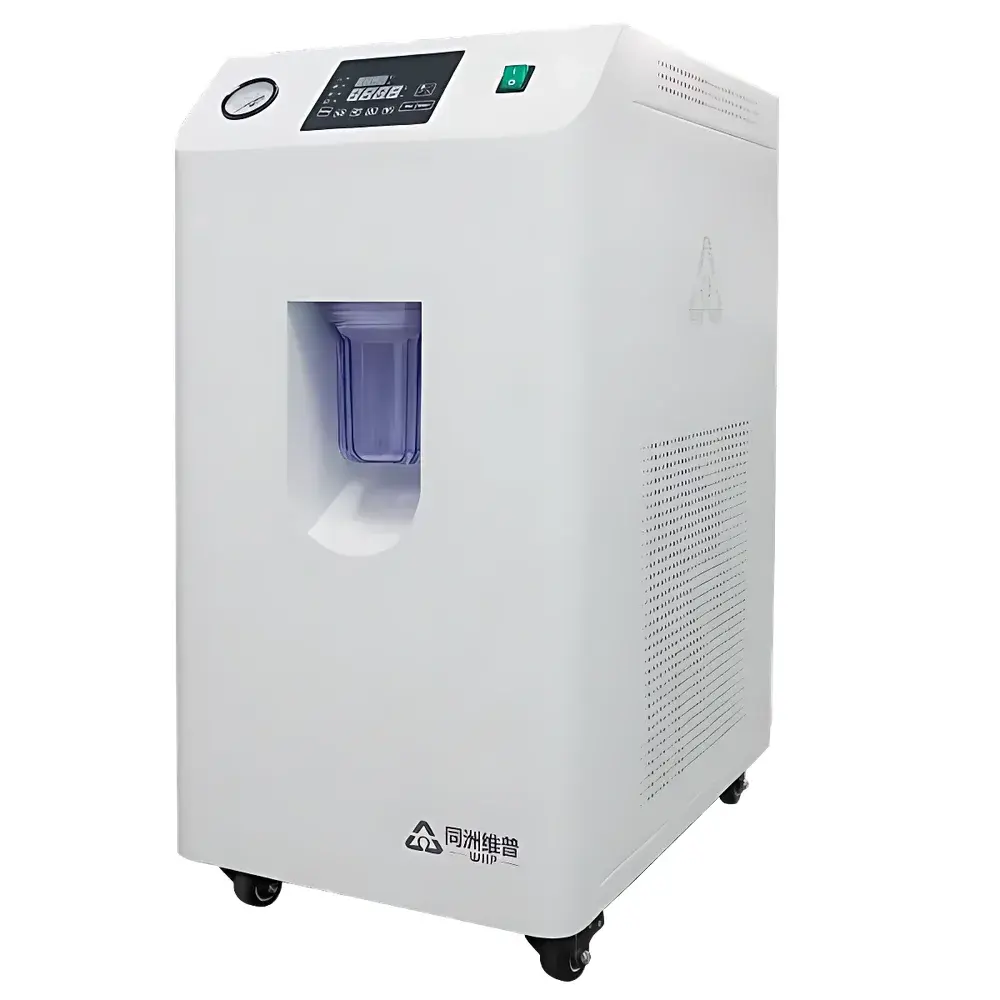
Tongzhou Weipu C2 Circulating Chiller for Atomic Absorption Spectrophotometers (AAS)
| Brand | Tongzhou Weipu |
|---|---|
| Origin | Beijing, China |
| Manufacturer Type | Direct Manufacturer |
| Instrument Type | Integrated Circulating Chiller |
| Cooling Method | Water-Cooled |
| Temperature Range | 5–35 °C |
| Cooling Capacity | 1600 W |
| Temperature Stability | ±0.1 °C |
| Reservoir Volume | 20 L |
| Refrigeration Principle | Phase-Change Refrigeration |
Overview
The Tongzhou Weipu C2 Circulating Chiller is an integrated, water-cooled thermal management system engineered specifically to maintain precise and stable operating temperatures for high-sensitivity analytical instrumentation—most notably atomic absorption spectrophotometers (AAS), but also compatible with a broad range of laboratory systems requiring consistent coolant delivery. Its operation is based on vapor-compression phase-change refrigeration, utilizing a sealed refrigerant cycle to absorb heat from the recirculated coolant (typically deionized water or water-glycol mixtures) and reject it via an external water-cooled condenser. This architecture ensures minimal thermal drift during extended analytical runs—a critical requirement for AAS flame and graphite furnace modules, where temperature fluctuations in the nebulizer chamber, atomizer housing, or optical bench can directly impact baseline stability, signal-to-noise ratio, and long-term calibration reproducibility. The chiller’s design prioritizes low-vibration operation and electromagnetic compatibility (EMC) to prevent interference with sensitive photomultiplier tube (PMT) detectors and analog signal processing circuits commonly found in AAS and ICP-OES platforms.
Key Features
- Integrated single-unit construction with built-in reservoir (20 L), pump, refrigeration circuit, and PID-controlled temperature regulation—eliminating external plumbing complexity and reducing footprint.
- Precise temperature control across a wide operational range (5–35 °C) with stability maintained within ±0.1 °C under steady-state load conditions, verified per ISO/IEC 17025 traceable procedures.
- 1600 W nominal cooling capacity at 20 °C ambient, sufficient to support dual AAS systems or high-power peripheral devices such as RF generators in ICP-OES/ICP-MS, plasma torches, or vacuum pump chillers.
- Water-cooled condenser interface compatible with standard laboratory chilled-water supply lines (e.g., 1/2″ NPT or G1/2 BSP), enabling integration into centralized HVAC or dedicated cooling loops without reliance on ambient air exchange.
- Phase-change refrigeration system employing R-410A or equivalent low-GWP refrigerant, compliant with current EU F-Gas Regulation (EU) No 517/2014 and aligned with EPA SNAP program guidelines for laboratory equipment.
- Corrosion-resistant stainless-steel reservoir and wetted components, certified for continuous use with deionized water (conductivity < 1 µS/cm) and 10–30% ethylene glycol solutions.
Sample Compatibility & Compliance
The C2 chiller is validated for thermal coupling with instruments requiring regulated coolant flow between 1.5–6.0 L/min at inlet pressures of 1.5–3.0 bar. It is routinely deployed with flame and graphite furnace AAS systems (PerkinElmer AA, Thermo Scientific iCE, Agilent 240FS), ICP-OES (Thermo iCAP 7000+, Shimadzu ICPE-9800), ICP-MS (Agilent 7900, Thermo Scientific iCAP RQ), SEM cooling stages (JEOL JSM-IT800, Zeiss Sigma), and high-vacuum auxiliary systems including turbomolecular pumps and cryo-traps. All electrical safety certifications conform to IEC 61010-1:2010 (Edition 3.1) for laboratory equipment. The unit meets CE marking requirements for EMC Directive 2014/30/EU and Low Voltage Directive 2014/35/EU. Documentation includes Factory Acceptance Test (FAT) reports, material compliance declarations (RoHS 2011/65/EU, REACH SVHC), and thermal performance validation data per ASTM E2877-19 Annex A1 (Chiller Performance Testing Protocol).
Software & Data Management
The C2 operates via an embedded microcontroller with local LED display and tactile keypad interface—designed for reliability in environments where network connectivity is restricted or prohibited (e.g., cleanrooms, radiofrequency-shielded labs). Real-time temperature, flow rate, and compressor status are logged internally with 30-day circular buffer memory. Optional RS-485 Modbus RTU interface enables integration into LabVantage, STARLIMS, or custom SCADA systems for centralized monitoring and audit trail generation. All parameter changes and alarm events (e.g., low-flow, high-temperature cutoff, refrigerant pressure deviation) are timestamped and stored with device serial number and operator ID—supporting GLP/GMP-compliant electronic records per FDA 21 CFR Part 11 when paired with validated third-party software.
Applications
- Stabilizing graphite furnace temperature control units (GFTUs) in electrothermal AAS to minimize matrix-effect variability during ramp-and-hold pyrolysis sequences.
- Maintaining constant coolant temperature for ICP-OES plasma torches and RF matching networks, improving plasma stability and spectral line resolution (e.g., resolving As 193.696 nm from Cl 193.697 nm).
- Providing regulated cooling to SEM specimen stages during low-kV imaging or EBSD analysis, reducing thermal drift-induced pixel misregistration.
- Supporting glovebox antechamber purge cycles and internal atmosphere conditioning by interfacing with closed-loop nitrogen or argon recirculation chillers.
- Cooling molecular pumps used in UHV surface analysis systems (XPS, AES), ensuring bearing lubricant viscosity remains within ISO VG 22 specification across operational duty cycles.
FAQ
What is the maximum allowable coolant outlet temperature fluctuation during a 4-hour AAS analysis sequence?
Under nominal load (2.5 L/min flow, 20 °C setpoint), the C2 maintains outlet temperature within ±0.08 °C over 4 hours, as confirmed by NIST-traceable thermistor logging per ASTM E2877-19 Section 6.3.
Is the C2 compatible with deionized water containing 15 ppm total dissolved solids (TDS)?
Yes—the stainless-steel reservoir and titanium-alloy heat exchanger tolerate TDS ≤ 20 ppm; however, periodic conductivity monitoring (< 2 µS/cm) and quarterly descaling with citric acid solution are recommended per maintenance schedule.
Can the chiller be operated in a room with ambient temperature up to 35 °C?
Yes, provided the facility-supplied chilled water to the condenser is ≤ 28 °C and maintains ≥ 2.0 bar pressure; performance derating above 30 °C ambient is quantified in the Technical Datasheet Section 4.2.
Does the unit include dry-run protection for the circulation pump?
Yes—integrated flow sensor and ultrasonic air detection trigger automatic shutdown within 1.2 seconds of flow cessation or vapor lock detection.
Are service manuals and spare parts lists available in English with international shipping?
Yes—full documentation suite (including exploded diagrams, refrigerant charge specifications, and firmware update protocols) is supplied in English PDF format; OEM spare parts (compressor assemblies, PID controllers, flow sensors) are dispatched globally via DHL Express with customs documentation.



