
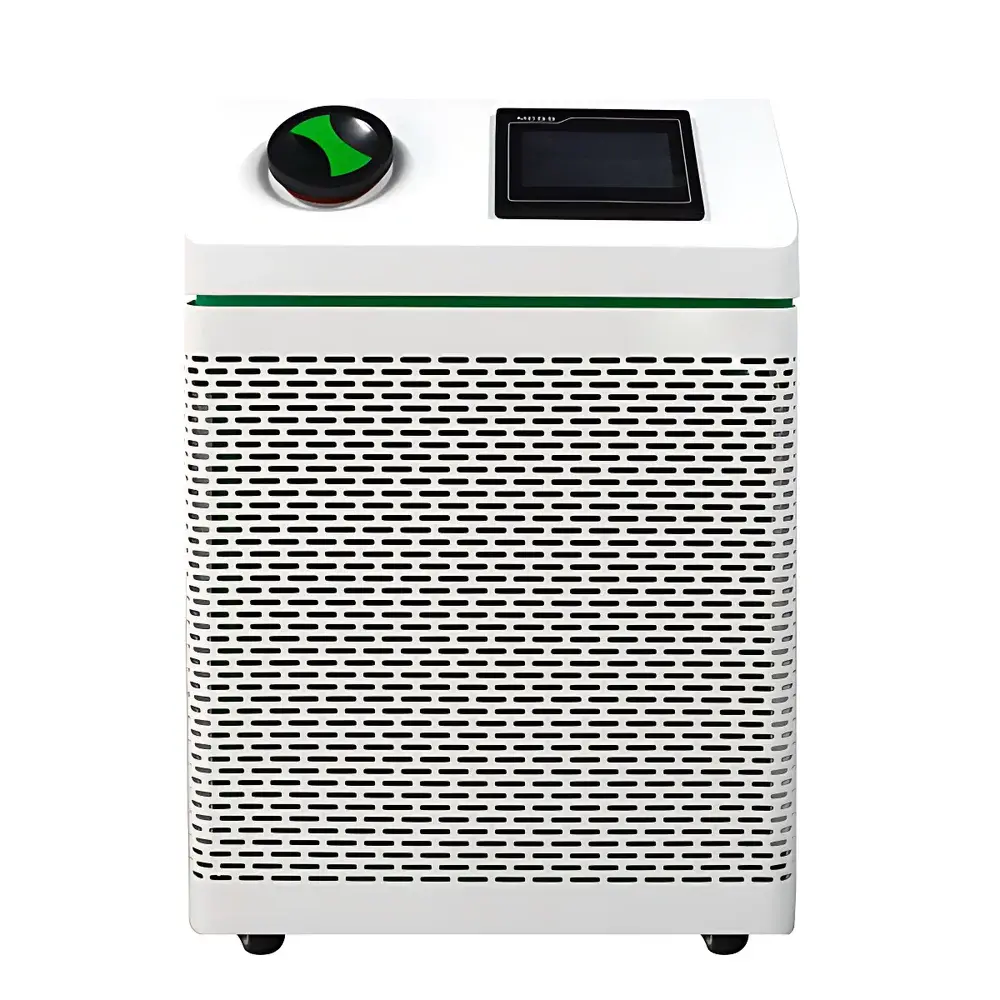
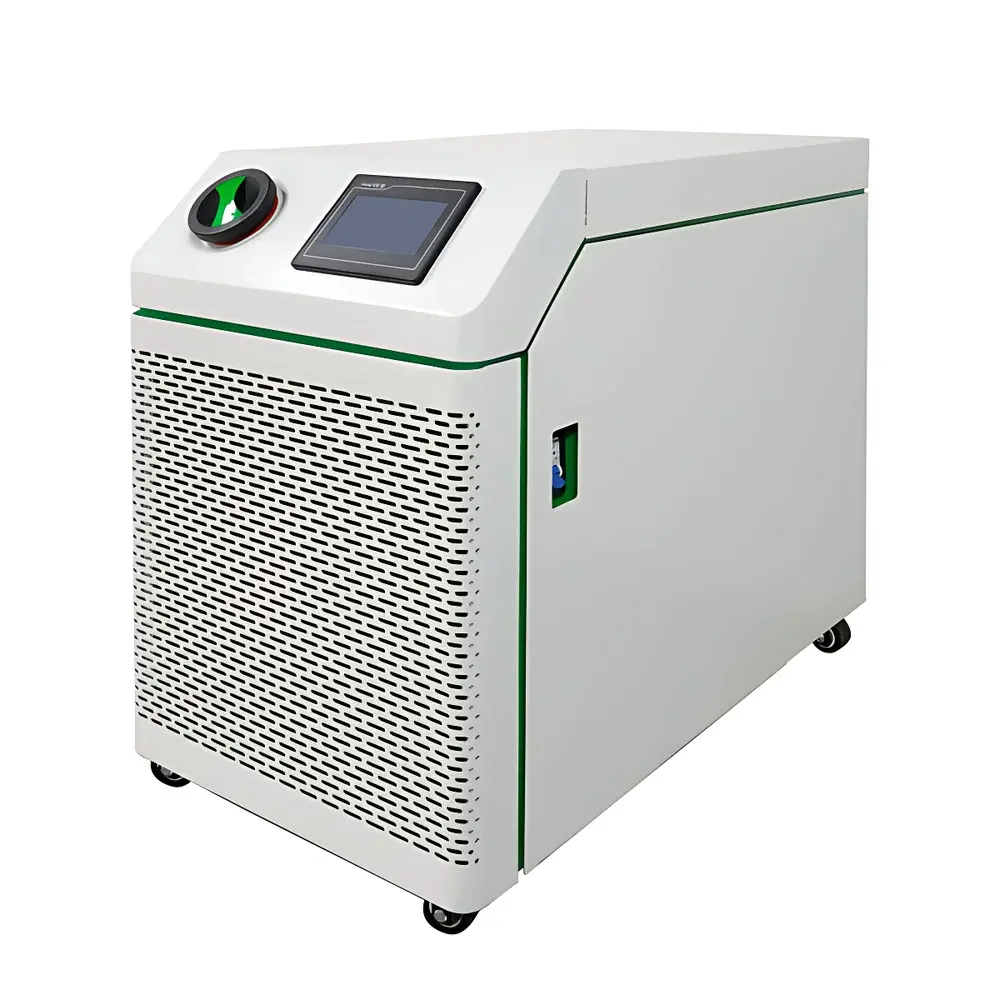
Tongzhou Weipu D2 Circulating Chiller for Atomic Absorption Spectrophotometers (AAS)
| Brand | Tongzhou Weipu |
|---|---|
| Origin | Beijing, China |
| Manufacturer Type | Direct Manufacturer |
| Product Type | Integrated Circulating Chiller |
| Cooling Method | Water-Cooled |
| Temperature Control Range | −40 °C to 95 °C |
| Refrigeration Capacity | 800 W to 7200 W |
| Form Factor | Horizontal Benchtop/Under-Counter Design |
| Power Compatibility | Universal Input (100–240 V AC, 50/60 Hz) |
| Refrigerant | Environmentally Compliant (R-404A or R-507 Equivalent) |
Overview
The Tongzhou Weipu D2 Circulating Chiller is an integrated, horizontal-format refrigerated recirculating system engineered specifically to support high-precision analytical instrumentation requiring stable, low-noise thermal management. Designed as a dedicated cooling solution for atomic absorption spectrophotometers (AAS), the D2 operates on a closed-loop thermodynamic cycle utilizing a compression-based refrigeration system with dual-stage heat exchange and PID-controlled fluid temperature regulation. Its compact low-profile chassis enables under-bench or in-cabinet installation—minimizing laboratory footprint while maintaining full accessibility for service and maintenance. The chiller delivers continuous, vibration-damped coolant circulation to maintain instrument source temperatures within tight tolerances, directly supporting measurement stability, lamp lifetime extension, and detector thermal drift suppression in AAS systems. Unlike generic chillers, the D2 incorporates flow-rate optimization algorithms calibrated for the typical thermal load profiles of flame and graphite furnace AAS modules—including nebulizer gas pre-cooling, graphite tube furnace jacketing, and optical compartment thermal stabilization.
Key Features
- Horizontal benchtop/under-counter form factor (height ≤ 240 mm) for seamless integration beneath AAS workstations or within instrument cabinets
- Precision temperature control across a broad operational range: −40 °C to +95 °C, with ±0.1 °C stability at setpoint (typical, load-dependent)
- Adjustable refrigeration capacity from 800 W to 7200 W (at 20 °C ambient), scalable via variable-speed compressor and electronic expansion valve
- Universal power input (100–240 V AC, 50/60 Hz) with built-in surge protection and EMI filtering compliant with IEC 61000-4 standards
- Environmentally responsible refrigerant charge meeting current EU F-Gas Regulation and EPA SNAP criteria (R-404A or R-507 equivalent)
- Stainless steel reservoir and corrosion-resistant fluid path components compatible with deionized water, 30% ethylene glycol/water, and other common heat-transfer fluids
- Integrated flow monitoring with pressure differential sensing and automatic low-flow alarm shutdown to prevent dry-run damage
Sample Compatibility & Compliance
The D2 chiller is validated for continuous-duty operation with major AAS platforms including PerkinElmer PinAAcle, Thermo Scientific iCE 3000, Agilent 240FS, and Shimadzu AA-7000 series instruments. It also supports ancillary thermal loads from ICP-OES, ICP-MS torch interface cooling, SEM stage temperature control, and laser ablation systems. All electrical design complies with IEC 61010-1 (Safety Requirements for Electrical Equipment for Measurement, Control, and Laboratory Use) and carries CE marking for EMC and LVD directives. Fluid circuit materials meet USP Class VI biocompatibility requirements, and the unit is suitable for GLP/GMP environments where documented thermal traceability is required. Optional RS485 Modbus RTU or Ethernet TCP/IP interfaces enable integration into centralized lab infrastructure monitoring systems.
Software & Data Management
The D2 features an embedded 3.5-inch TFT LCD touchscreen interface with multilingual support (English, German, French, Chinese) and intuitive menu navigation. Real-time display includes setpoint/actual temperature, flow rate (L/min), refrigeration load (%), compressor status, and system fault codes. All operational parameters—including temperature ramp profiles, hold times, and alarm history—are logged internally with timestamping (≥10,000 event capacity). Data export is supported via USB flash drive (CSV format) or optional network connectivity for remote configuration and audit-trail generation compliant with FDA 21 CFR Part 11 requirements when paired with validated LIMS or ELN software. Firmware updates are performed via secure HTTPS download and digital signature verification.
Applications
- Thermal stabilization of hollow cathode lamps and deuterium background correction sources in AAS
- Cooling of graphite furnace atomizers during pyrolysis and atomization cycles to improve reproducibility and reduce memory effects
- Condensation control in flame AAS nebulizer chambers and spray chambers to minimize aerosol droplet size variation
- Secondary cooling loop support for ICP-OES plasma torch interfaces and RF generator heat sinks
- Temperature regulation of sample introduction systems in hyphenated techniques (e.g., HPLC-AAS, GC-AAS)
- General-purpose recirculating cooling for laser systems, vacuum pumps, and electrophoresis power supplies
FAQ
What is the minimum flow rate required for safe operation with an AAS system?
The D2 maintains stable control down to 0.8 L/min; however, optimal performance with most AAS instruments is achieved at 1.5–3.0 L/min. Flow rate must be verified against the host instrument’s OEM specification.
Can the D2 operate continuously at −40 °C ambient temperature?
No—the stated −40 °C to +95 °C range refers to coolant setpoint temperature, not ambient operating envelope. Ambient operating limits are 5 °C to 35 °C per IEC 61010-1.
Is the refrigerant charge serviceable in the field?
Refrigerant servicing requires certified HVAC-R technicians and adherence to local regulations (e.g., EPA Section 608 in the U.S.). The system includes service valves and pressure ports for diagnostics.
Does the D2 support external temperature feedback from the AAS instrument?
Yes—via optional analog 0–10 V or 4–20 mA input, enabling cascade control where the AAS provides primary temperature feedback to the chiller’s PID loop.
What documentation is provided for IQ/OQ validation?
Factory test reports, calibration certificates (NIST-traceable PT100 sensor), and a complete User Requirement Specification (URS)-aligned Validation Support Package are available upon request.



