
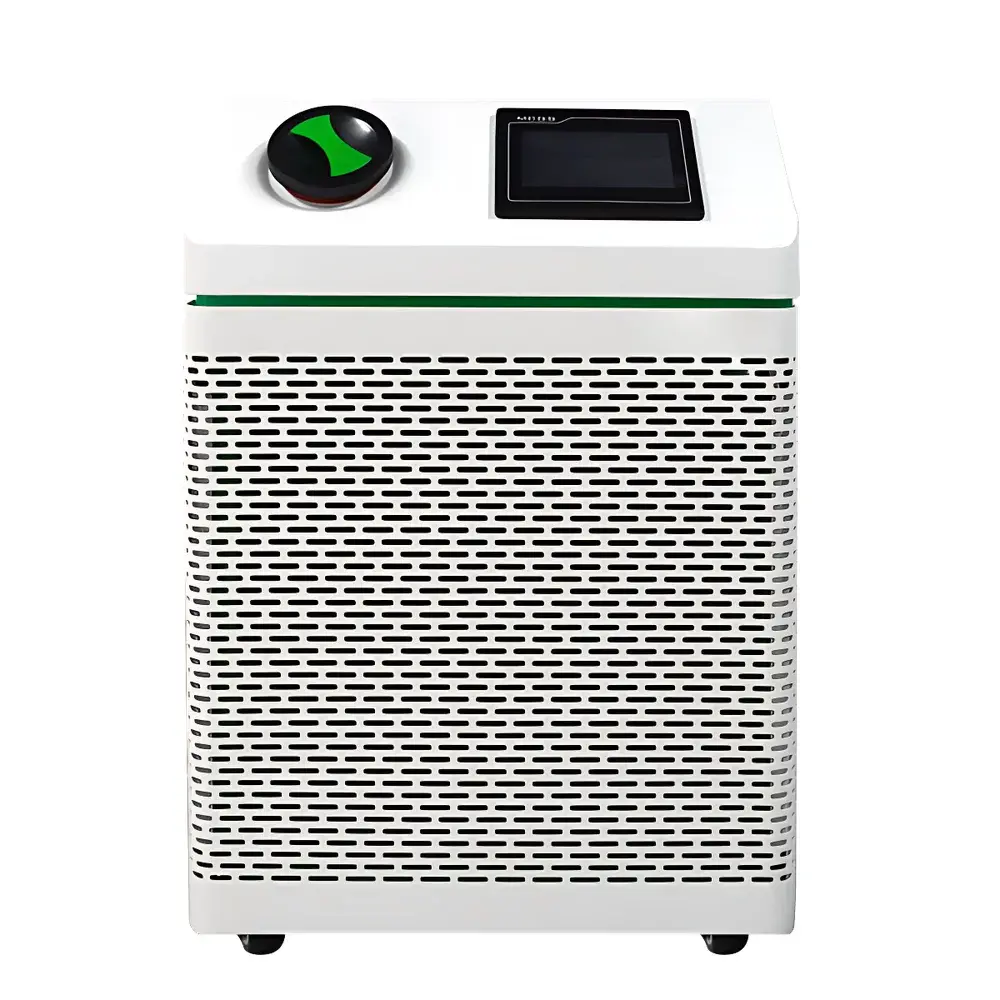
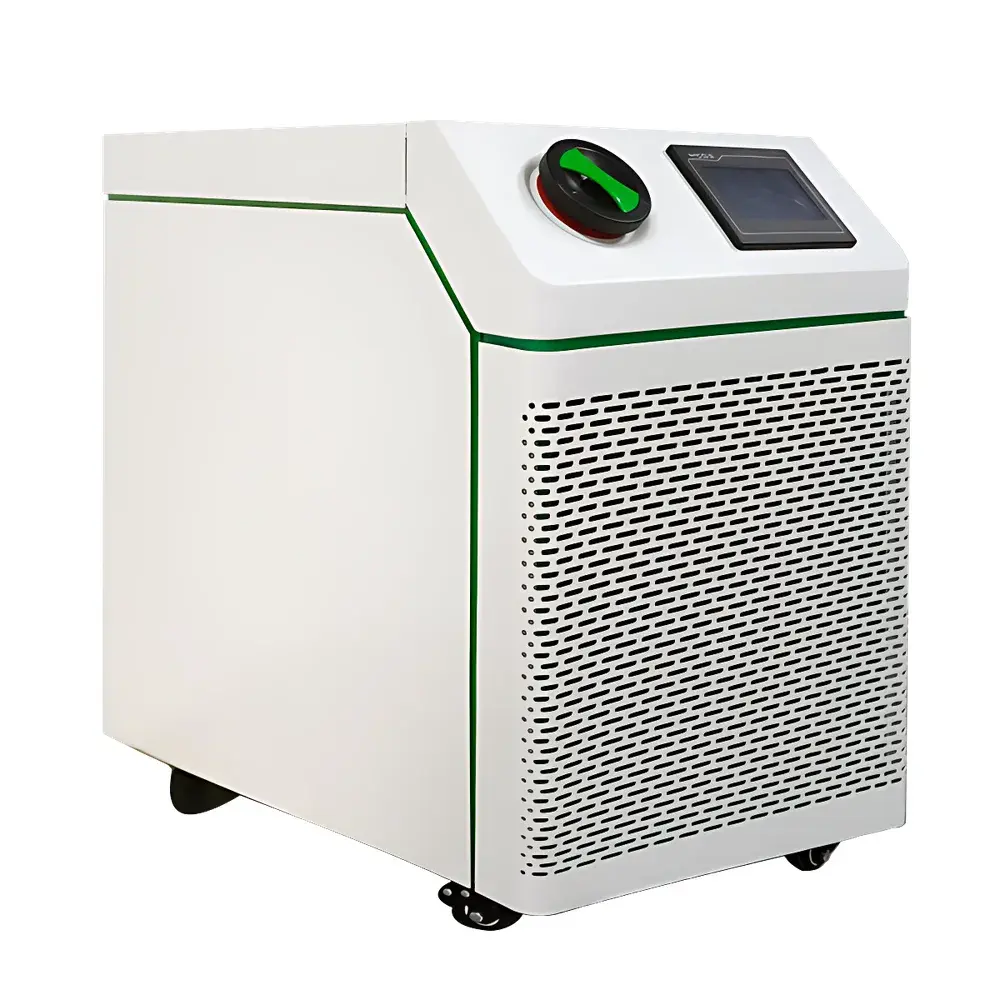
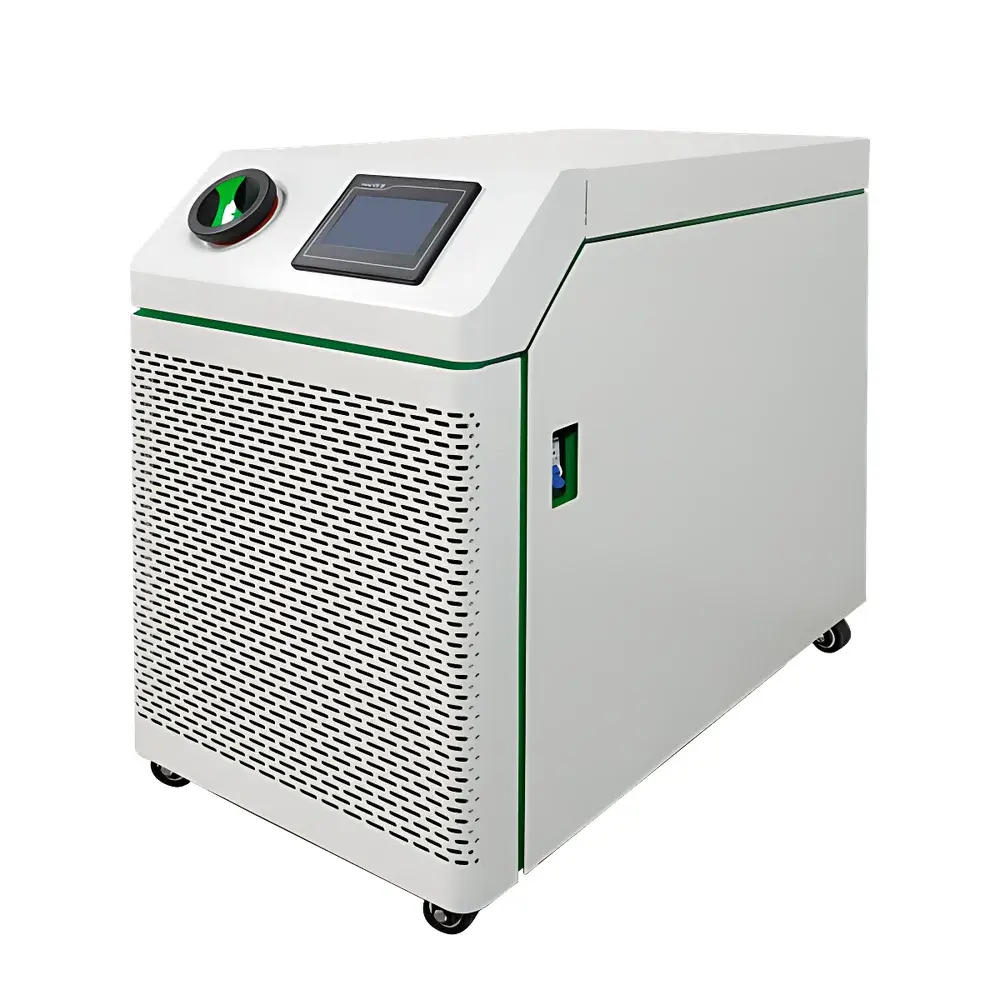
Tongzhou Weipu D2 Integrated Circulating Chiller for Agilent ICP-OES Systems
| Brand | Tongzhou Weipu |
|---|---|
| Origin | Beijing, China |
| Manufacturer Type | Direct Manufacturer |
| Regional Classification | Domestic (China) |
| Model | D2 |
| Instrument Type | Integrated Circulating Chiller |
| Cooling Method | Water-Cooled |
| Temperature Control Range | −40 °C to +95 °C |
| Refrigeration Capacity | 800 W to 7200 W |
| Temperature Stability | ±0.1 °C |
| Circulating Pump Pressure | 1.5–3.6 bar |
| Circulating Pump Flow Rate | 15–40 L/min |
| Reservoir Volume | 3–6 L |
| Operating Principle | Compressor-Based Refrigeration |
| Power Supply Compatibility | Multi-Voltage Global Input (100–240 VAC, 50/60 Hz) |
| Refrigerant | R-410A (ODP = 0, GWP < 2100) |
Overview
The Tongzhou Weipu D2 Integrated Circulating Chiller is an engineered thermal management solution specifically designed to meet the stringent cooling demands of high-performance analytical instrumentation—including Agilent ICP-OES (Inductively Coupled Plasma Optical Emission Spectrometry) systems. Built upon a robust compressor-based refrigeration architecture, the D2 delivers precise, stable, and continuous temperature control across a wide operational range (−40 °C to +95 °C), enabling reliable operation of plasma torches, RF generators, detector housings, and optical benches under varying ambient and load conditions. Its low-profile horizontal chassis allows seamless integration beneath standard laboratory workbenches—minimizing footprint while maintaining full accessibility for service and fluid maintenance. The unit employs R-410A refrigerant, compliant with current global environmental regulations (Montreal Protocol Annex A, EU F-Gas Regulation No. 517/2014), and supports multi-voltage input (100–240 VAC, 50/60 Hz), facilitating deployment in international laboratories without voltage conversion hardware.
Key Features
- Integrated design with built-in reservoir (3–6 L), circulation pump, refrigeration circuit, and PID-controlled temperature interface—no external components required.
- High-precision temperature regulation with ±0.1 °C stability over extended runtime, critical for minimizing spectral drift and maintaining long-term calibration integrity in ICP-OES applications.
- Variable-speed circulation pump delivering 15–40 L/min flow at adjustable pressure (1.5–3.6 bar), ensuring consistent coolant delivery across complex instrument manifolds and parallel cooling loops.
- Scalable refrigeration capacity (800–7200 W) matched to dynamic thermal loads—from low-power auxiliary optics cooling to full-torch and RF generator thermal dissipation.
- Corrosion-resistant stainless-steel reservoir and fluid pathways compatible with deionized water, 30% ethylene glycol/water mixtures, and other non-aggressive heat-transfer fluids recommended by Agilent and other OEMs.
- Real-time monitoring via backlit LCD interface showing setpoint, actual temperature, flow rate, system pressure, refrigerant saturation temperature, and fault diagnostics.
Sample Compatibility & Compliance
The D2 chiller is validated for use with Agilent 5100/5110/5800/5900 series ICP-OES instruments and aligns with Agilent’s thermal interface specifications for coolant inlet temperature (typically 15–25 °C), flow rate (≥20 L/min), and pressure (≥2.0 bar). It also supports ancillary equipment requiring stable thermal conditioning—including ICP-MS sample introduction systems, AAS flame atomizers, SEM stage coolers, glovebox antechamber chillers, and plasma etch chamber baseplates. All electrical components conform to IEC 61010-1:2010 (Safety Requirements for Electrical Equipment for Measurement, Control, and Laboratory Use), and the unit carries CE marking for EMC Directive 2014/30/EU and Low Voltage Directive 2014/35/EU. Fluid pathway materials comply with USP Class VI biocompatibility standards, supporting GLP/GMP environments where trace metal contamination must be minimized.
Software & Data Management
While the D2 operates as a standalone unit, its RS-485 (Modbus RTU) and optional Ethernet (TCP/IP) interfaces enable integration into centralized laboratory infrastructure monitoring platforms (e.g., LabVantage, Thermo Fisher SampleManager, or custom SCADA systems). Logged parameters—including real-time temperature, flow, pressure, compressor run time, and alarm history—are timestamped and exportable in CSV format. Audit-trail functionality meets FDA 21 CFR Part 11 requirements when deployed with validated third-party data acquisition software, supporting electronic record retention for regulated QC/QA workflows. Remote setpoint adjustment and alarm threshold configuration are supported via secure HTTP API or Modbus register mapping.
Applications
- Primary cooling for Agilent ICP-OES plasma torch assemblies, RF matching networks, and spectrometer detectors to suppress thermal noise and stabilize emission line intensities.
- Thermal stabilization of high-resolution monochromators and CCD/CMOS detectors in UV-Vis and atomic spectroscopy platforms.
- Cooling support for laser ablation systems (LA-ICP-MS), high-frequency fusion fluxers, and vacuum chamber cold traps in materials science labs.
- Temperature-controlled environment generation for inert-atmosphere gloveboxes used in air-sensitive sample preparation prior to ICP analysis.
- Process cooling for small-scale catalytic reactors and photochemical flow cells where precise exotherm management is required.
FAQ
Is the D2 chiller compatible with Agilent’s factory-specified coolant requirements?
Yes—the D2 maintains inlet temperature stability within ±0.1 °C and delivers flow rates and pressures aligned with Agilent’s published thermal interface specifications for all current ICP-OES models.
Can the unit operate continuously at sub-zero temperatures?
Yes—its dual-stage refrigeration architecture and insulated reservoir support uninterrupted operation down to −40 °C when using appropriate antifreeze coolant mixtures (e.g., 30% ethylene glycol/water).
Does the chiller support remote monitoring and alarm notification?
Yes—via RS-485 (Modbus) or optional Ethernet, enabling integration with lab-wide monitoring systems and automated email/SMS alerts through compatible middleware.
What maintenance intervals are recommended for long-term reliability?
Annual inspection of refrigerant charge, condenser coil cleaning, and pump impeller inspection is advised; fluid replacement every 12 months (or per OEM coolant specification) ensures corrosion protection and thermal efficiency.
Is validation documentation available for GxP-regulated environments?
Yes—IQ/OQ protocols, calibration certificates traceable to NIST standards, and material compliance reports (RoHS, REACH, USP Class VI) are provided upon request for audit readiness.



