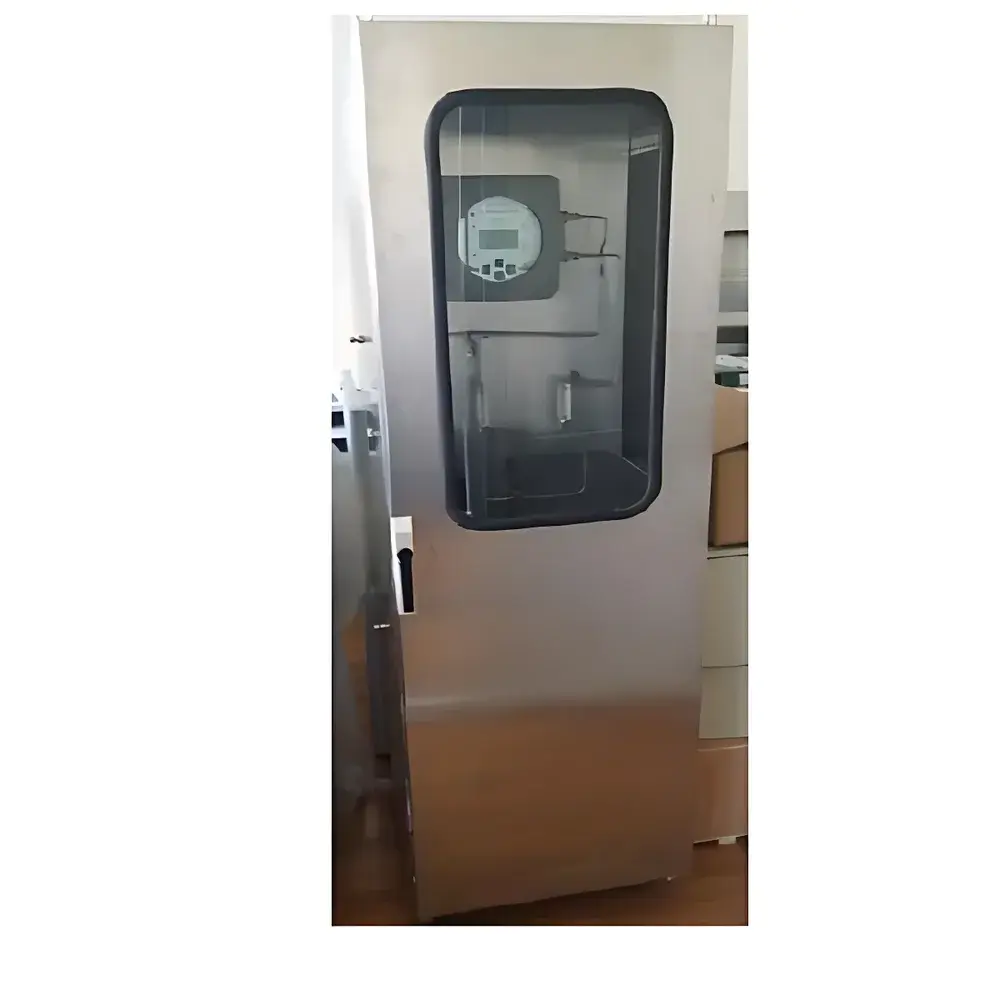
ZQ-3200 Hydrogen Production Plant In-Line Oxygen Analyzer (ADEV EC2000D-Based)
| Origin | Italy |
|---|---|
| Manufacturer Type | Authorized Distributor |
| Origin Category | Imported |
| Model | ZQ-3200 |
| Pricing | Upon Request |
| Measurement Ranges | 0.00–1%, 0–2%, 0–5%, 0–10%, 0–25%, 0–100% O₂ |
| Accuracy | ≤±1% FS |
| Repeatability | ≤±1% FS |
| Resolution | 0.01% O₂ |
| Stability | ±1% FS/30 days |
| Response Time (T90) | ≤10 s |
| Gas Temperature Range | −5 to +45 °C |
| Ambient Temperature Range | −5 to +45 °C |
| Relative Humidity | 0–90% RH (non-condensing) |
| Power Supply | 220 VAC ±10%, 50 Hz ±10% |
| Sample Inlet Pressure | 0.003–0.1 MPa (requires external conditioning) |
| Sample Flow Rate | 100–1000 mL/min (requires external conditioning) |
| Explosion Protection | II 2G D Ex d IIB T6 Gb / Ex tD A21 IP65 T85°C |
| Certification | ATEX Directive 2014/34/EU |
| Hazardous Area Classification | Zone 1, Zone 21 |
Overview
The ZQ-3200 Hydrogen Production Plant In-Line Oxygen Analyzer is an industrial-grade, intrinsically robust oxygen monitoring system engineered for continuous, real-time measurement of trace to high-concentration oxygen in hydrogen-rich process streams. Built upon the ADEV EC2000D platform, it integrates a high-stability, galvanic electrochemical oxygen sensor specifically optimized for operation in H₂-dominant environments. Unlike paramagnetic or zirconia-based analyzers, this electrochemical cell operates without cross-sensitivity to CO₂, H₂, hydrocarbons (including C₂H₂), or other common process gases—eliminating the need for complex gas-specific compensation algorithms. Its measurement principle relies on the diffusion-controlled reduction of O₂ at a catalyzed cathode, generating a linear current proportional to partial pressure. Designed for integration into PEM and alkaline electrolyzer skids, hydrogen purification units, and compression station safety loops, the ZQ-3200 delivers reliable O₂ detection from 0.00% up to 100% by volume—critical for maintaining hydrogen purity per ISO 8573-1 Class 1 (≤100 ppm O₂) and preventing explosive mixtures below the 4.0–75.0 vol% H₂ flammability envelope.
Key Features
- Intrinsically safe, ATEX-certified enclosure (II 2G D Ex d IIB T6 Gb / Ex tD A21 IP65) rated for Zone 1 and Zone 21 hazardous locations—enabling direct installation in hydrogen generation, storage, and loading areas.
- Galvanic electrochemical sensor with >24-month typical service life, zero internal power requirement for sensing element, and immunity to background gas interference (no drift induced by 100% H₂, 5% CO₂, or 1% C₂H₂).
- Multi-range configurable output: six factory-set spans (0.00–1%, 0–2%, 0–5%, 0–10%, 0–25%, 0–100% O₂) selected via DIP switch or software—supporting both safety interlock (e.g., <2% O₂ trip threshold) and purity verification (e.g., <100 ppm) applications.
- Fast T90 response time ≤10 seconds ensures timely detection of air ingress during electrolyzer startup, membrane failure, or valve leakage events.
- Integrated temperature-compensated electronics maintain accuracy across −5 to +45 °C ambient and sample gas conditions—no external thermostatic housing required.
- Field-calibratable using ambient air (20.95% O₂) or certified span gas; no tools or disassembly needed—reducing maintenance downtime and technician exposure in classified zones.
Sample Compatibility & Compliance
The ZQ-3200 is validated for use with dry, non-corrosive hydrogen process streams containing up to 100% H₂ and typical balance gases encountered in green hydrogen facilities—including residual water vapor (<90% RH), N₂, Ar, and trace CO/CH₄. Sample conditioning (particulate filtration, moisture removal, and pressure regulation) is mandatory when inlet pressure exceeds 0.1 MPa or flow deviates from 100–1000 mL/min. The analyzer complies with ATEX 2014/34/EU for equipment placed in potentially explosive atmospheres and meets EMC Directive 2014/30/EU. It supports implementation under ISO 50001 energy management systems and aligns with functional safety requirements for SIL 2-capable architectures when integrated with certified PLCs (IEC 61511). Documentation includes full EU Declaration of Conformity, test reports from notified body SGS, and traceable calibration certificates compliant with ISO/IEC 17025.
Software & Data Management
The ZQ-3200 provides analog 4–20 mA output (HART-enabled optional) and RS-485 Modbus RTU interface for seamless integration into DCS, SCADA, or MES platforms. Local display shows real-time O₂ concentration, sensor status, fault codes (e.g., low electrolyte, open circuit), and calibration history. All configuration parameters—including range selection, damping factor, alarm thresholds (high/low), and zero/span dates—are accessible via front-panel keypad or remote Modbus register mapping. Audit trails are retained onboard for ≥12 months and include timestamped calibration events, parameter changes, and alarm activations—supporting GLP/GMP documentation requirements and FDA 21 CFR Part 11 compliance when paired with validated data acquisition software.
Applications
- Real-time O₂ monitoring at PEM electrolyzer stack outlet and hydrogen dryer exit to ensure ISO 8573-1 Class 1 purity prior to compression.
- Safety interlock in hydrogen buffer tanks and filling stations—triggering automatic shutdown if O₂ exceeds 2.0 vol% (per CGA G-5.4 and NFPA 2).
- Leak detection in hydrogen piping networks and valve manifolds via continuous background O₂ trend analysis.
- Quality assurance in hydrogen refueling stations (HRS) per SAE J2601 and ISO 14687-2 specifications.
- Process optimization in ammonia synthesis feed gas preparation where O₂ must remain <1 ppm to protect catalyst integrity.
FAQ
Can the ZQ-3200 measure oxygen in 100% hydrogen without sensor poisoning?
Yes. The galvanic electrochemical sensor is chemically inert to pure H₂ and does not require oxygen co-reactants or reference air—unlike fuel-cell or optical sensors. Long-term exposure to 100% H₂ has no measurable effect on baseline stability or response kinetics.
Is periodic calibration required—and how is it performed?
Calibration is recommended every 3–6 months depending on operating conditions. A two-point calibration (zero using nitrogen or argon, span using certified air or O₂ standard) is executed via front-panel menu or Modbus command—no hardware access needed.
Does the analyzer support integration with Siemens PCS7 or Emerson DeltaV systems?
Yes. Native Modbus RTU protocol enables direct integration; HART-enabled 4–20 mA output supports FDT/DTM and EDDL device descriptions for full asset visibility in DeltaV and PCS7 engineering stations.
What pre-conditioning is mandatory for wet hydrogen streams from alkaline electrolyzers?
A coalescing filter (0.1 µm), refrigerated dryer (dew point ≤−20 °C), and pressure regulator (to 0.05 MPa) are required upstream. Condensate traps must be installed to prevent liquid ingress, which may damage the sensor’s hydrophobic membrane.
Is the ZQ-3200 suitable for outdoor installation in temperate climates?
Yes. Its IP65-rated aluminum housing and extended −5 to +45 °C operational envelope permit wall-mount or panel-mount deployment in unheated shelters, provided solar radiation and rain exposure are mitigated per IEC 60529 environmental class ratings.
Related Products