
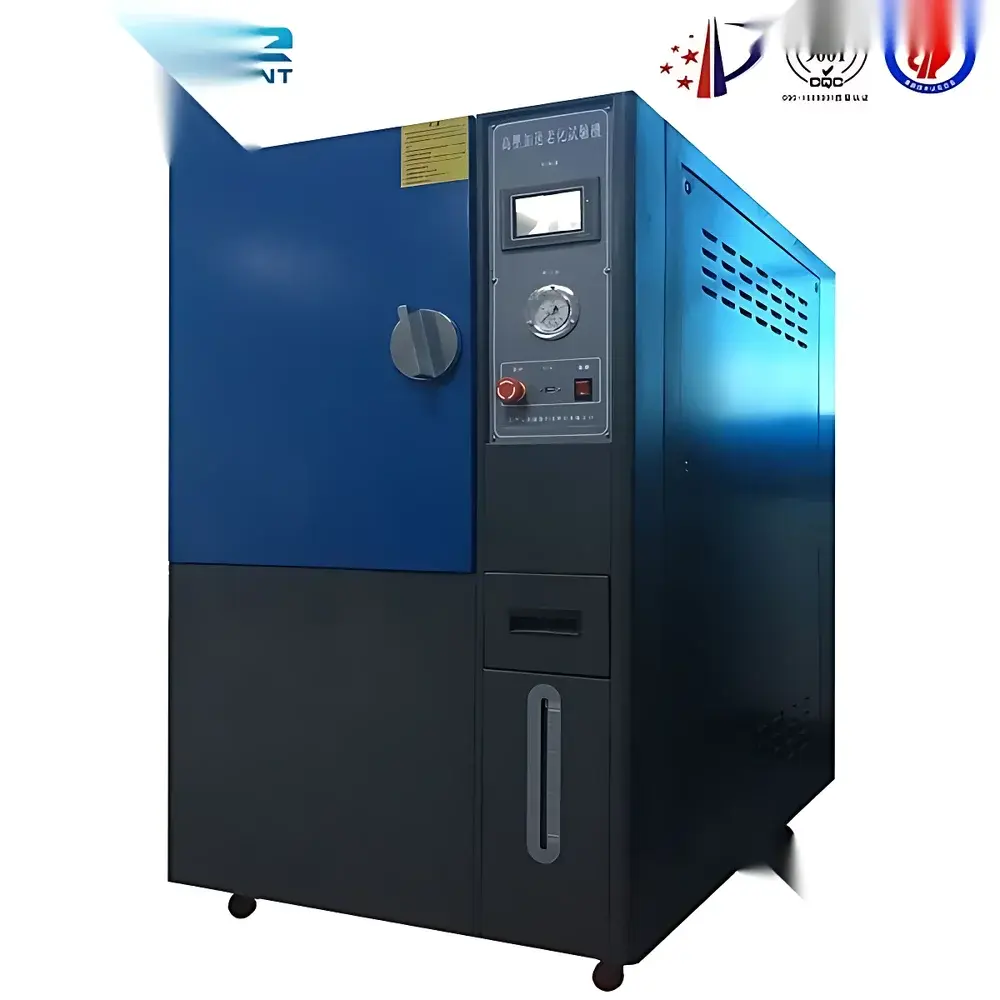
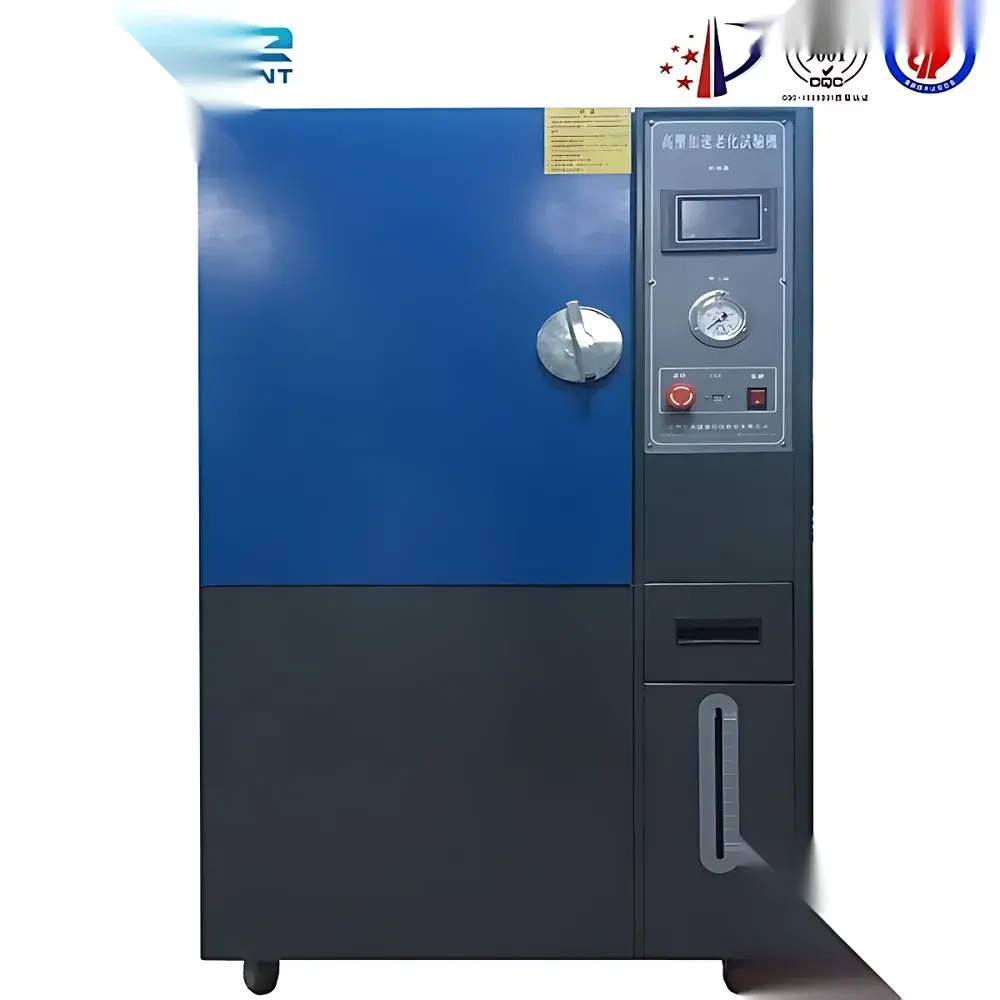
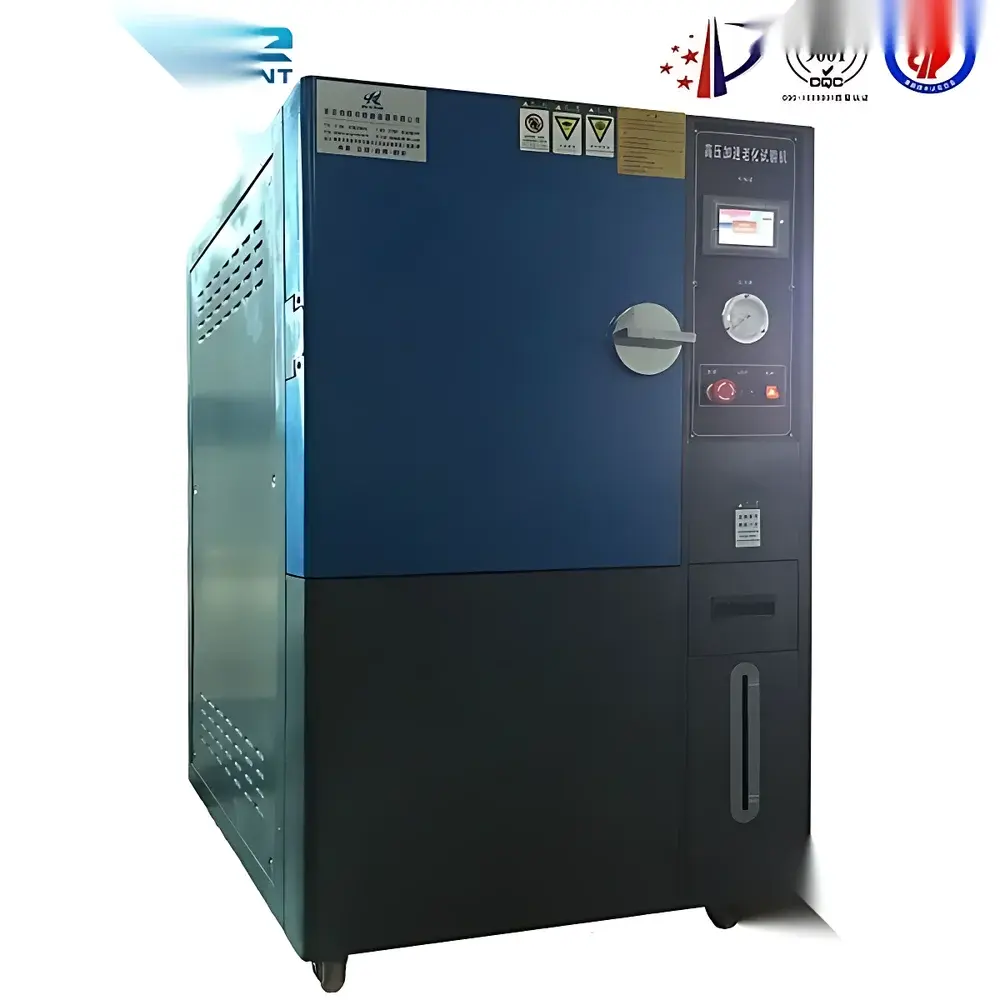
Fiber Optic PCT Aging Test Chamber
| Brand | Other Brands |
|---|---|
| Origin | Imported |
| Manufacturer Type | General Distributor |
| Price | USD 4,100 (approx.) |
Overview
The Fiber Optic PCT Aging Test Chamber is a precision-engineered pressure cooker-type environmental stress test system designed to accelerate moisture ingress and degradation mechanisms in fiber optic components, hermetic packages, and microelectronic assemblies. It operates on the principle of saturated steam pressurization under elevated temperature and humidity conditions—commonly referred to as Pressure Cooker Test (PCT) per JEDEC JESD22-A102 and IPC-9701 standards. Unlike standard humidity chambers, this chamber maintains controlled saturated steam environments at pressures up to 3 atm (absolute) and temperatures up to 130 °C, enabling rapid diffusion of water vapor into encapsulated materials. The system is specifically configured for evaluating long-term reliability of fiber optic connectors, ferrules, epoxy-bonded assemblies, and passive optical components subjected to harsh operational environments—including datacenter interconnects, aerospace avionics, and 5G infrastructure modules.
Key Features
- Automated test cycle execution—from chamber pressurization and temperature ramping to depressurization and cooling—with programmable sequence logic ensuring repeatability across qualification lots.
- Dual independent overtemperature protection circuitry: primary PID-controlled heating cutoff and secondary mechanical thermal fuse, both triggering audible alarm and immediate power isolation.
- PID-based digital temperature controller with ±0.1 °C stability and real-time display; integrated pressure transducer with dual-scale analog/digital readout (kPa and psi) for simultaneous monitoring of thermodynamic state variables.
- Steam quality optimization via automatic condensate purge: unsaturated vapor is continuously vented during pressurization to maintain >99% saturation ratio—critical for reproducible moisture diffusion kinetics.
- Auto-refill water reservoir system with level sensors and solenoid-controlled deionized water injection, preventing test interruption due to evaporation loss during extended cycles (e.g., 96–168 hr).
- Interlocked safety door mechanism: chamber cannot initiate pressurization unless ABS-insulated door is fully latched and torque-verified; door remains mechanically locked until internal pressure drops below 0.05 MPa.
- Pressure relief valve calibrated to ISO 4126-1 specifications, set to activate at 110% of maximum rated working pressure (MRWP), with certified traceability documentation supplied.
Sample Compatibility & Compliance
The chamber accommodates standard fiber optic sample trays (up to 300 mm × 300 mm × 150 mm usable volume) and supports heterogeneous loading—including bare fibers, terminated patch cords, MPO/MTP assemblies, and hybrid optoelectronic modules. It complies with multiple international test standards including GB/T 10586–1989 (Chinese national standard for humid heat chambers), GB/T 2423.3–2016 (IEC 60068-2-3 equivalent), MIL-STD-810G Method 502.5 (damp heat, cyclic), GJB 150.9A–2009 (Chinese military standard for humidity testing), and JEDEC JESD22-A102D (PCT for plastic-encapsulated microcircuits). All control firmware and calibration records adhere to GLP and ISO/IEC 17025 requirements for laboratory accreditation.
Software & Data Management
Equipped with embedded RS-485 and Ethernet interfaces, the chamber supports Modbus TCP protocol for integration into centralized test management systems. Optional PC-based software provides full-cycle logging (temperature, pressure, time, water level), exportable in CSV and PDF formats compliant with FDA 21 CFR Part 11 Annex 11 audit trail requirements. Data integrity safeguards include timestamped event logs, user-access authentication, and write-protected historical archives—suitable for regulated industries including medical device optics and automotive ADAS sensor validation.
Applications
This PCT chamber is deployed during design verification, process qualification, and lot acceptance testing for fiber optic hardware where moisture-induced failure modes are critical: delamination at glass-epoxy interfaces, hydrolysis of acrylate coatings, corrosion of metalized ferrule end-faces, and leakage current rise in high-voltage isolators. It is routinely used by Tier-1 telecom suppliers to validate MSA-compliant transceivers, by aerospace subcontractors for DO-160 Section 10 compliance, and by semiconductor foundries conducting wafer-level reliability screening prior to burn-in. The accelerated stress profile enables identification of latent defects—such as voids in underfill or incomplete curing—that would otherwise manifest only after years of field operation.
FAQ
What is the maximum allowable test duration per cycle?
Standard configuration supports continuous operation up to 168 hours; extended-duration testing requires optional high-capacity water reservoir and reinforced gasket set.
Does the chamber support ramp-hold-ramp temperature profiles?
No—it is optimized for isothermal, isobaric PCT conditions per JEDEC A102; non-standard thermal cycling must be performed using separate environmental chambers.
Can I monitor real-time pressure and temperature remotely?
Yes—via Modbus TCP or optional OPC UA server module, with configurable polling intervals down to 1 second.
Is calibration certification included with delivery?
A factory-issued NIST-traceable calibration report for temperature and pressure sensors is provided; annual recalibration services are available under ISO/IEC 17025 scope.
What maintenance is required for steam quality assurance?
Quarterly inspection of steam separator internals and annual replacement of silicone diaphragm in pressure relief valve are recommended per OEM service manual.
Related Products



