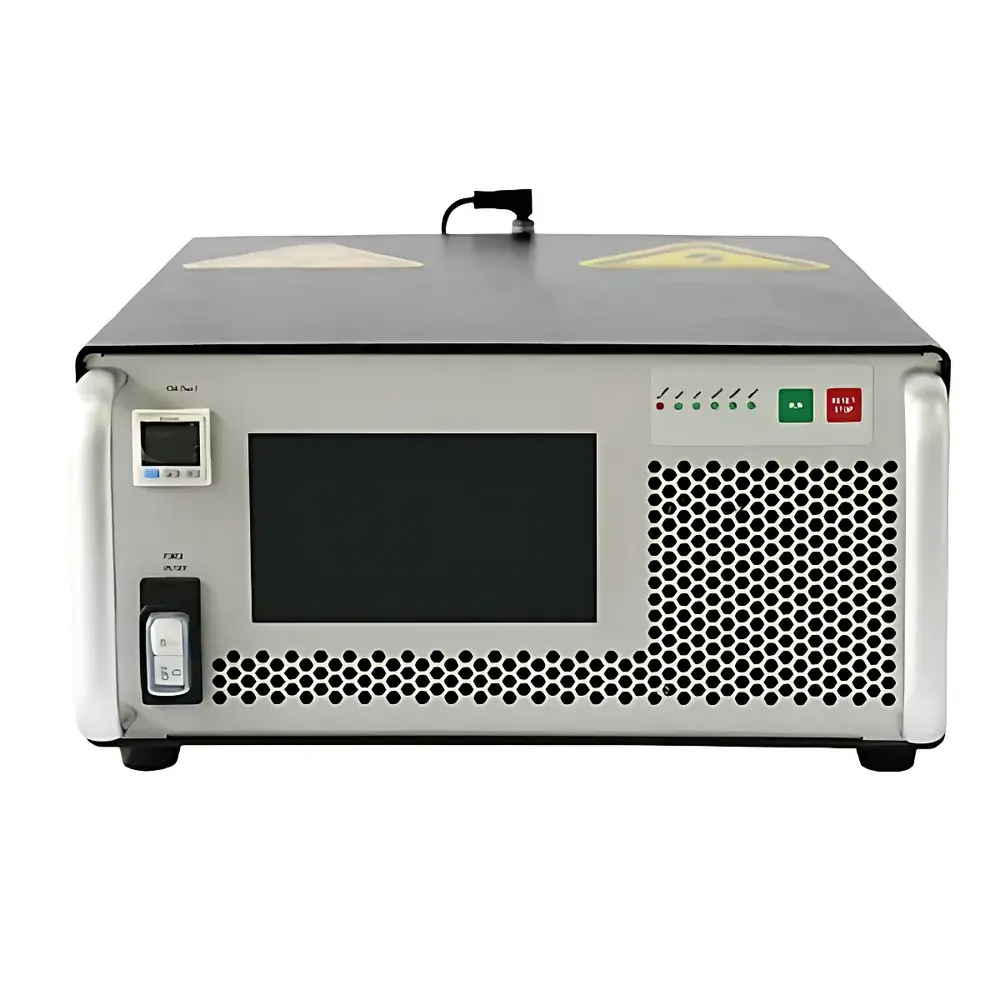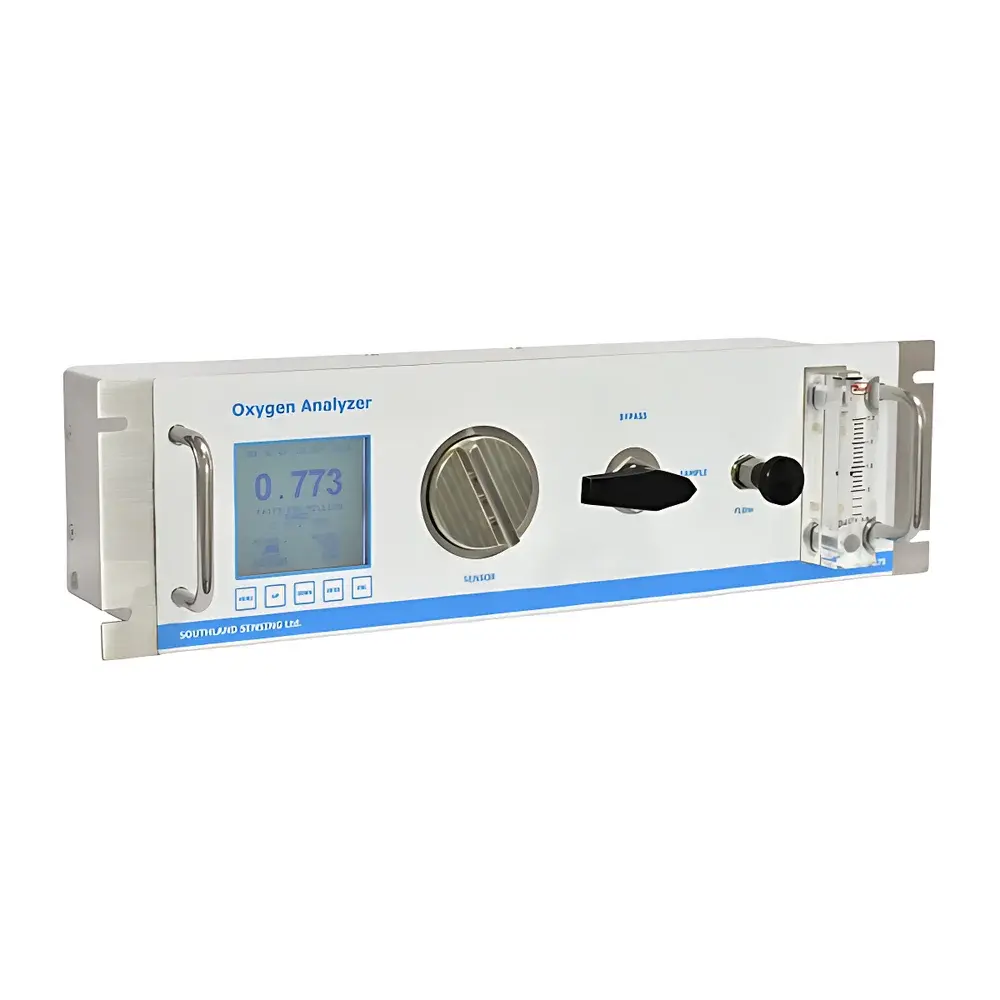
Southland OMD-675-1 Trace Oxygen Analyzer
| Origin | USA |
|---|---|
| Manufacturer Type | Authorized Distributor |
| Origin Category | Imported |
| Model | OMD-675 |
| Price Range | USD 4,200 – 7,000 |
Overview
The Southland OMD-675-1 is a high-stability, electrochemical trace oxygen analyzer engineered for continuous, real-time measurement of oxygen concentrations in inert, reducing, and process gases. It employs a proprietary micro-fuel-cell oxygen sensor — a galvanic cell technology that generates an electrical current proportional to the partial pressure of molecular oxygen (O₂) diffusing across a selective membrane. Unlike paramagnetic or zirconia-based analyzers, this fuel-cell design delivers exceptional long-term stability, negligible drift, and zero power consumption at the sensing element itself. The instrument is optimized for applications demanding sub-ppm detection limits and robust performance in challenging gas matrices including N₂, Ar, He, H₂, CO₂, and hydrocarbon streams — with optional acid-resistant sensor variants available for environments containing H₂S, SO₂, or acidic CO₂ blends. Its Class 1, Div 2, Groups B, C, D certification confirms suitability for hazardous locations where flammable gases may be present under normal operating conditions.
Key Features
- Electrochemical micro-fuel-cell sensor with proven >24-month operational life under typical industrial conditions
- Multi-range auto-switching capability: 0–1 ppm, 0–10 ppm, 0–100 ppm, 0–1000 ppm, and 0–25% O₂ — configured via front-panel menu or remote command
- Measurement resolution down to 0.01 ppm with accuracy better than ±1% of full scale (FS) across all ranges
- Integrated temperature compensation circuitry ensuring stable output across -10°C to +50°C ambient operating range
- Dual programmable alarm relays (SPDT, 5 A @ 250 VAC) with configurable setpoints and hysteresis
- Standard analog outputs: isolated 4–20 mA and 0–10 VDC, plus bidirectional MODBUS RTU over RS-485 (ASCII protocol)
- Backlit LCD display with intuitive navigation interface; supports English-language menu and real-time diagnostics
- Low-power operation: 12–24 VDC input, <25 mA typical current draw — suitable for battery-backed or field-mounted installations
- Compact IP65-rated enclosure (241 × 165 × 96 mm) designed for panel mounting or direct pipe integration
Sample Compatibility & Compliance
The OMD-675-1 is validated for use with non-corrosive and mildly acidic process streams. Standard sensor configurations are compatible with nitrogen, argon, helium, hydrogen, methane, ethane, and carbon dioxide. For applications involving elevated concentrations of H₂S, SO₂, or wet CO₂, the optional acid-resistant sensor variant must be specified — it features a chemically stabilized electrolyte and corrosion-inhibiting electrode architecture. The analyzer complies with CE marking requirements (EMC Directive 2014/30/EU and Low Voltage Directive 2014/35/EU) and meets ANSI/UL 1203 and CSA C22.2 No. 30 standards for Class I, Division 2 hazardous area instrumentation. While not intrinsically safe (IS), its Class 1, Div 2 rating permits deployment in Zone 2 equivalent environments per IEC 60079-0 and IEC 60079-15.
Software & Data Management
Configuration, calibration, and diagnostic functions are accessible via the front-panel interface or remotely through MODBUS RTU commands. The device supports full audit trail logging of calibration events, alarm activations, and range changes — essential for GLP and GMP-aligned operations. When integrated into SCADA or DCS platforms, the 4–20 mA output provides seamless analog integration, while MODBUS enables digital readout of live concentration values, sensor health status, temperature reading, and fault codes. Firmware updates are performed via serial interface using standard terminal emulation software. No proprietary PC software is required, minimizing IT validation burden in regulated environments.
Applications
- Inert gas blanketing and purge monitoring in semiconductor fabrication tools, gloveboxes, and vacuum deposition chambers
- Oxygen impurity control in LNG transfer lines, natural gas transmission pipelines, and biogas upgrading units
- Process gas purity verification in hydrogen production (PSA, electrolysis), ammonia synthesis loops, and syngas conditioning
- Residual oxygen monitoring in metallurgical annealing furnaces, sintering atmospheres, and heat-treating endothermic gas mixtures
- Quality assurance testing in pharmaceutical nitrogen generators and medical-grade gas production systems
- Research applications requiring trace O₂ quantification in controlled atmosphere reactors and catalytic studies
FAQ
What is the recommended sample flow rate for optimal sensor response?
The specified flow range is 230–2500 mL/min; a stable flow of 500–1000 mL/min is recommended to ensure consistent diffusion-limited response and minimize pressure-induced zero shifts.
Can the OMD-675-1 measure oxygen in 100% CO₂?
Yes — when equipped with the optional acid-resistant sensor variant, the analyzer maintains accuracy and longevity in high-CO₂ environments, including those with up to 10% H₂S or SO₂.
Is temperature compensation applied automatically?
Yes — internal thermistor feedback continuously adjusts the sensor signal and span calibration coefficients across the full -10°C to +50°C operating range.
Does the unit support FDA 21 CFR Part 11 compliance?
While the OMD-675-1 itself does not include electronic signature or role-based access controls, its MODBUS register map and analog outputs are fully compatible with Part 11-compliant DCS/SCADA systems that implement audit trail, electronic signature, and data integrity protocols at the system level.
What is the expected service life of the fuel-cell sensor?
Under typical operating conditions (clean, dry gas, ambient temperature), the sensor demonstrates >24 months of functional stability; replacement intervals are determined by calibration drift verification per ASTM D3176 or internal QA procedures.