
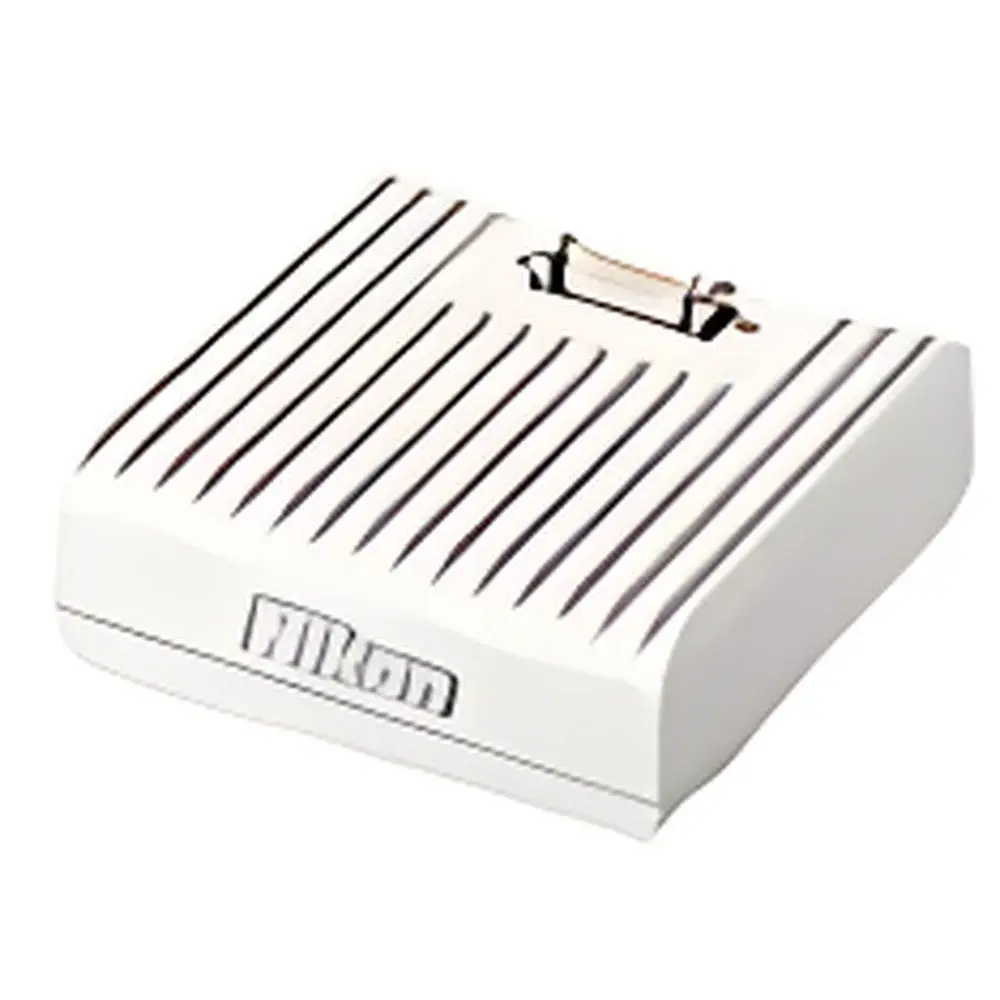
Narishige DS-Fi1 Digital Microscope Camera
| Brand | Narishige |
|---|---|
| Origin | Japan |
| Model | DS-Fi1 |
| Sensor Type | CCD |
| Resolution | 2560 × 1290 (≈5.0 MP) |
| Frame Rate | Real-time (optimized for live microscopy imaging) |
| Color Fidelity | Enhanced via proprietary Nikon imaging pipeline and IR-cut filter |
| Noise Reduction | Integrated circuit-level noise suppression |
| Controller Compatibility | DS-L2 or DS-U2 digital camera controllers |
| Application Domain | Brightfield, Phase Contrast, DIC, Darkfield, Color Fluorescence, Archival Imaging, Publication-Grade Documentation |
Overview
The Narishige DS-Fi1 Digital Microscope Camera is a high-fidelity, research-grade imaging solution engineered for integration with upright and inverted optical microscopes—particularly those in the Nikon Eclipse platform ecosystem. Built upon a progressive-scan 5.0-megapixel CCD sensor, the DS-Fi1 delivers native output resolution of 2560 × 1290 pixels, enabling precise capture of subcellular morphology, metallurgical grain structures, and industrial surface topography without interpolation artifacts. Its core architecture leverages Nikon’s proprietary image signal processing (ISP) pipeline, incorporating real-time gamma correction, white balance calibration, and dynamic range optimization to preserve linear photometric response across intensity gradients. Unlike CMOS-based alternatives, the DS-Fi1’s global shutter CCD design eliminates rolling-shutter distortion—critical for quantitative time-series acquisition in phase contrast and DIC applications where mechanical stage movement or specimen drift must not compromise spatial fidelity.
Key Features
- True 5.0-megapixel CCD sensor with 2560 × 1290 pixel native resolution—no binning or resampling required for full-frame acquisition
- Dedicated infrared-cut filter integrated into the optical path to suppress near-infrared leakage (700–1100 nm), preserving accurate red-channel reproduction essential for hematoxylin-eosin (H&E) and immunohistochemical (IHC) staining evaluation
- Low-noise analog front-end and correlated double sampling (CDS) circuitry minimize readout noise (<12 e⁻ RMS at 12-bit ADC), supporting high signal-to-noise ratio (SNR) even under low-light phase contrast illumination
- Real-time streaming capability at ≥15 fps (full resolution, 12-bit depth) via high-bandwidth USB 2.0 interface—optimized for synchronized focus stacking and multi-plane acquisition workflows
- Modular controller compatibility: fully functional with both DS-L2 (standalone LCD monitor interface) and DS-U2 (PC-hosted control unit), allowing seamless transition between benchtop preview and automated acquisition environments
Sample Compatibility & Compliance
The DS-Fi1 is validated for use across standardized light microscopy modalities defined in ISO 8578:2017 (Microscopy — Nomenclature for optical components) and ASTM E2864-22 (Standard Guide for Digital Imaging in Light Microscopy). It supports objective-corrected imaging across magnifications from 2× to 100× (oil immersion), maintaining MTF consistency within ±3% across the field of view. For regulated environments—including clinical pathology labs operating under CLIA or ISO 15189—image metadata (exposure time, gain, white balance settings, timestamp, microscope model/serial number) is embedded in TIFF/OME-TIFF headers compliant with NIH OME data model specifications. While the DS-Fi1 itself is not FDA 510(k)-cleared as a medical device, its output meets the technical requirements for inclusion in GLP-compliant study reports when paired with validated microscope systems.
Software & Data Management
The DS-Fi1 operates natively with Nikon NIS-Elements C (v5.0+), providing calibrated intensity measurement tools, multi-channel overlay registration, and batch export to FAIR-aligned formats (OME-TIFF, HDF5). All acquired images retain embedded EXIF and custom metadata fields—including exposure history, lens correction profiles, and user-defined annotation tags—enabling traceable audit trails per 21 CFR Part 11 requirements when deployed with NIS-Elements’ optional electronic signature module. Raw sensor data is accessible via SDK for integration into custom Python (OpenCV, scikit-image) or MATLAB-based analysis pipelines, supporting reproducible quantification of colorimetric indices (e.g., H-score, IHC membrane scoring).
Applications
- Brightfield histopathology: High-fidelity RGB capture of tissue sections stained with H&E, Masson’s trichrome, or PAS—preserving chromatic separation critical for diagnostic interpretation
- Phase contrast live-cell imaging: Low-noise performance enables long-duration time-lapse of unstained mammalian cells without phototoxicity-induced artifacts
- DIC (Differential Interference Contrast): Accurate edge enhancement and pseudo-3D rendering of transparent specimens such as neurons, protozoa, and polymer films
- Industrial metrology: Surface defect mapping on semiconductor wafers, printed circuit boards, and precision machined components using calibrated pixel-to-micron scaling
- Academic publication archiving: Native TIFF export with embedded ICC profiles ensures color consistency across journal submission platforms (e.g., Nature Portfolio, Elsevier, Springer)
FAQ
Is the DS-Fi1 compatible with non-Nikon microscope systems?
Yes—the DS-Fi1 uses standard C-mount threading (17.526 mm flange distance) and supports third-party adapters for Zeiss, Olympus, Leica, and custom optical benches. Mechanical and optical alignment must be verified per ISO 10110-7.
Does it support hardware-triggered acquisition?
Yes—via TTL input on the DS-U2 controller, enabling synchronization with motorized stages, shutters, or external stimulus generators (e.g., electrophysiology rigs).
What bit depth is supported in live mode versus captured images?
Live preview operates at 12-bit dynamic range; saved images are stored at full 12-bit depth in uncompressed TIFF or losslessly compressed OME-TIFF.
Can color calibration be performed per microscope configuration?
Yes—NIS-Elements includes a built-in color calibration workflow using NIST-traceable X-Rite ColorChecker SG targets, generating per-objective, per-illumination spectral correction matrices.
Is firmware upgradable in the field?
Firmware updates are delivered via Nikon’s official support portal and applied through the DS-U2 controller GUI—no disassembly or service center visit required.




