
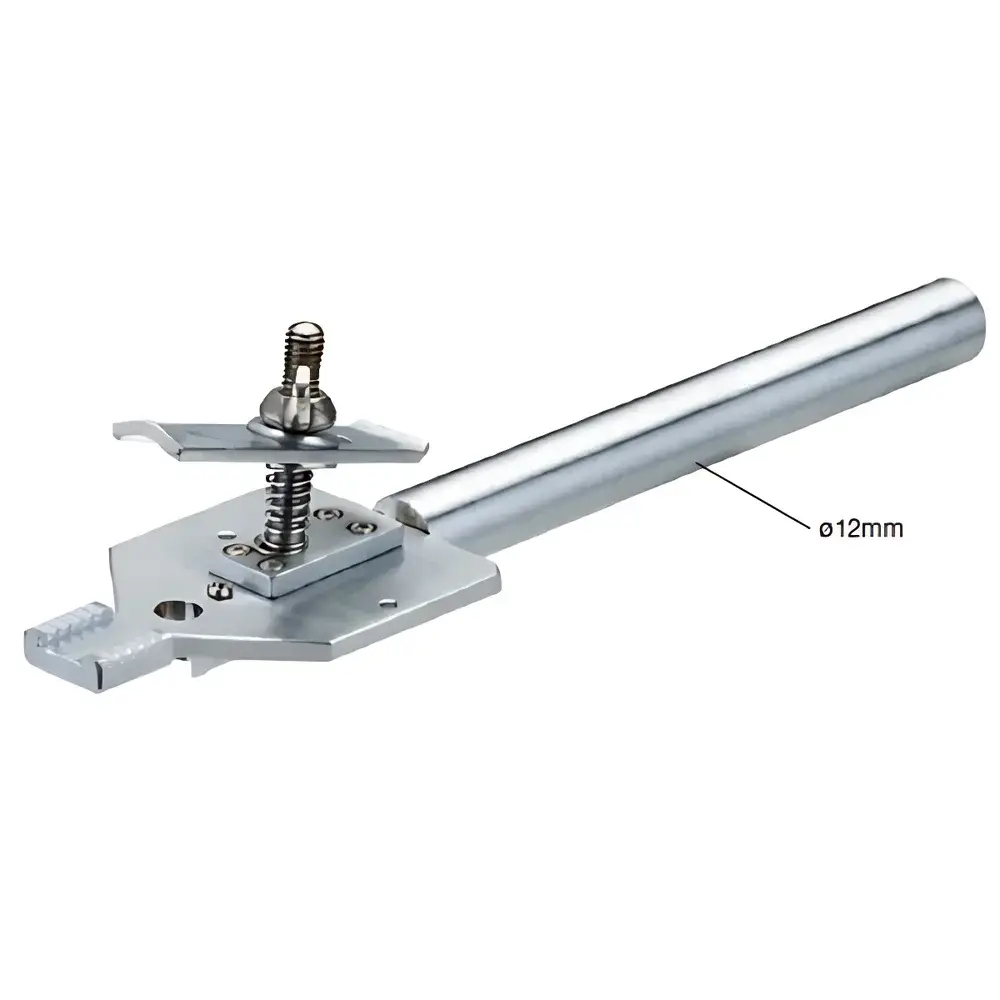
Narishige SH-8 Non-Invasive Rat Head Holder
| Brand | Narishige |
|---|---|
| Origin | Japan |
| Model | SH-8 |
| Dimensions | 170 × 40 × 40 mm (W × D × H) |
| Weight | 200 g |
| Mounting | Compatible with magnetic base (e.g., X-block) and 12 mm diameter rod attachment |
| Material | Medical-grade elastomeric polymer, biocompatible and non-abrasive |
| Compliance | Designed for adherence to ARRIVE guidelines and institutional animal care protocols |
Overview
The Narishige SH-8 Non-Invasive Rat Head Holder is an ergonomically engineered restraint device designed specifically for conscious or lightly sedated rat neurophysiology and pharmacology experiments. Unlike conventional stereotaxic frames that rely on skull-mounted screws or ear bars—procedures requiring surgical implantation—the SH-8 operates on a non-invasive mechanical stabilization principle. It utilizes gentle, distributed contact pressure along the natural cranial curvature of the rat’s head, minimizing stress-induced physiological artifacts while maintaining precise head positioning. The device functions as a passive support interface: its contoured cradle engages the occipital and parietal regions without compressing the temporalis muscle or obstructing the external auditory meatus, thereby preserving normal respiration, thermoregulation, and neural baseline stability. This design aligns with the 3Rs framework (Replacement, Reduction, Refinement), supporting refinement of in vivo rodent procedures through elimination of invasive fixation.
Key Features
- Ergonomic anatomical contouring: Curved cradle geometry replicates the dorsal–lateral profile of adult Sprague-Dawley or Wistar rat skulls (approx. 250–400 g body weight), ensuring uniform load distribution across the occipital bone and zygomatic arches.
- Multi-axis adjustability: Integrated micrometer-driven vertical lift (±15 mm range), tilt (±12°), and lateral translation (±8 mm) enable sub-millimeter repositioning to accommodate inter-individual cranial variability and experimental alignment requirements (e.g., electrode trajectory, optical window placement).
- Modular mounting architecture: Standardized 12 mm diameter cylindrical stem allows secure coupling to Narishige X-block magnetic bases or custom-built vibration-isolated platforms; compatible with standard stereotaxic accessories including manipulators and micromanipulators.
- Biocompatible material system: Constructed from medical-grade thermoplastic elastomer (Shore A 40–45), certified per ISO 10993-5 for cytotoxicity and ISO 10993-10 for skin sensitization—non-porous, autoclavable (up to 121°C, 20 min), and resistant to ethanol, isopropanol, and common disinfectants.
- Low-mass structural design: At 200 g, the SH-8 minimizes inertial coupling during behavioral assays or simultaneous electrophysiological recordings, reducing motion artifact propagation into high-impedance signal chains.
Sample Compatibility & Compliance
The SH-8 is validated for use with adult rats (200–500 g), including both male and female cohorts across common strains (Sprague-Dawley, Long-Evans, Wistar, and transgenic lines such as APP/PS1). Its non-invasive operation eliminates the need for pre-surgical recovery periods, enabling longitudinal within-subject designs with reduced inter-session variability. The device conforms to institutional animal care and use committee (IACUC) standards and supports compliance with NIH Guide for the Care and Use of Laboratory Animals, European Directive 2010/63/EU, and AAALAC International accreditation criteria. It facilitates implementation of GLP-aligned documentation workflows when paired with electronic lab notebooks (ELNs) that log operator ID, session timestamp, and positional calibration settings.
Software & Data Management
While the SH-8 is a purely mechanical device and requires no firmware or embedded electronics, its dimensional repeatability (±0.1 mm positional accuracy after 100+ cycles) enables integration into digital experimental pipelines. When used with Narishige’s MO-10 micromanipulator or third-party motorized stages (e.g., Scientifica PatchStar), coordinate data can be exported via RS-232 or USB-serial interfaces into MATLAB, Python (via PySerial), or LabVIEW environments for automated protocol sequencing. Positional metadata—including tilt angle, height offset, and lateral shift—is recorded alongside electrophysiological or imaging datasets to support FAIR (Findable, Accessible, Interoperable, Reusable) data principles in publications and repository submissions (e.g., CRCNS, DANDI Archive).
Applications
- In vivo extracellular single-unit and LFP recordings under awake, head-fixed conditions
- Chronic intracerebroventricular (ICV) or intraparenchymal drug microinjection with real-time behavioral monitoring
- Two-photon calcium imaging through cranial windows with minimal motion drift
- Functional ultrasound (fUS) or laser Doppler flowmetry targeting cortical vasculature
- Combined EEG/EMG acquisition during sleep-wake cycle analysis
- Optogenetic stimulation protocols requiring stable optical fiber alignment over extended durations (≥2 h)
FAQ
Is the SH-8 suitable for juvenile rats or mice?
No—the cradle geometry and clamping force profile are optimized for adult rat cranial dimensions (≥200 g). For mice, Narishige offers the SR-8 model; for sub-adult rats (<180 g), custom shims or supplemental padding may be required under IACUC approval.
Can the SH-8 be sterilized between subjects?
Yes—autoclaving at 121°C for 20 minutes is validated; ethylene oxide (EtO) and hydrogen peroxide plasma sterilization are also compatible. Avoid dry-heat sterilization above 130°C.
Does it interfere with MRI or CT imaging?
The polymer composition is non-ferromagnetic and produces negligible RF attenuation; however, users must confirm compatibility with specific scanner bore constraints (minimum internal diameter ≥180 mm) and gradient coil clearance.
How is head orientation referenced for stereotaxic coordinate mapping?
The SH-8 includes engraved bregma-lambda alignment marks and a detachable reference plate compatible with Narishige’s SM-19 stereotaxic atlas adapter, enabling direct conversion to Paxinos & Watson coordinates without recalibration.
What maintenance is required?
Routine inspection of elastomer integrity every 50 uses; replacement recommended after 200 sessions or visible surface microcracking. No lubrication or calibration is needed.



