
RELION EDS Cathodoluminescence-Enhanced Energy Dispersive X-ray Spectrometer
| Brand | RELION |
|---|---|
| Origin | USA |
| Manufacturer Type | Authorized Distributor |
| Origin Category | Imported |
| Model | RELION EDS |
| Pricing | Upon Request |
Overview
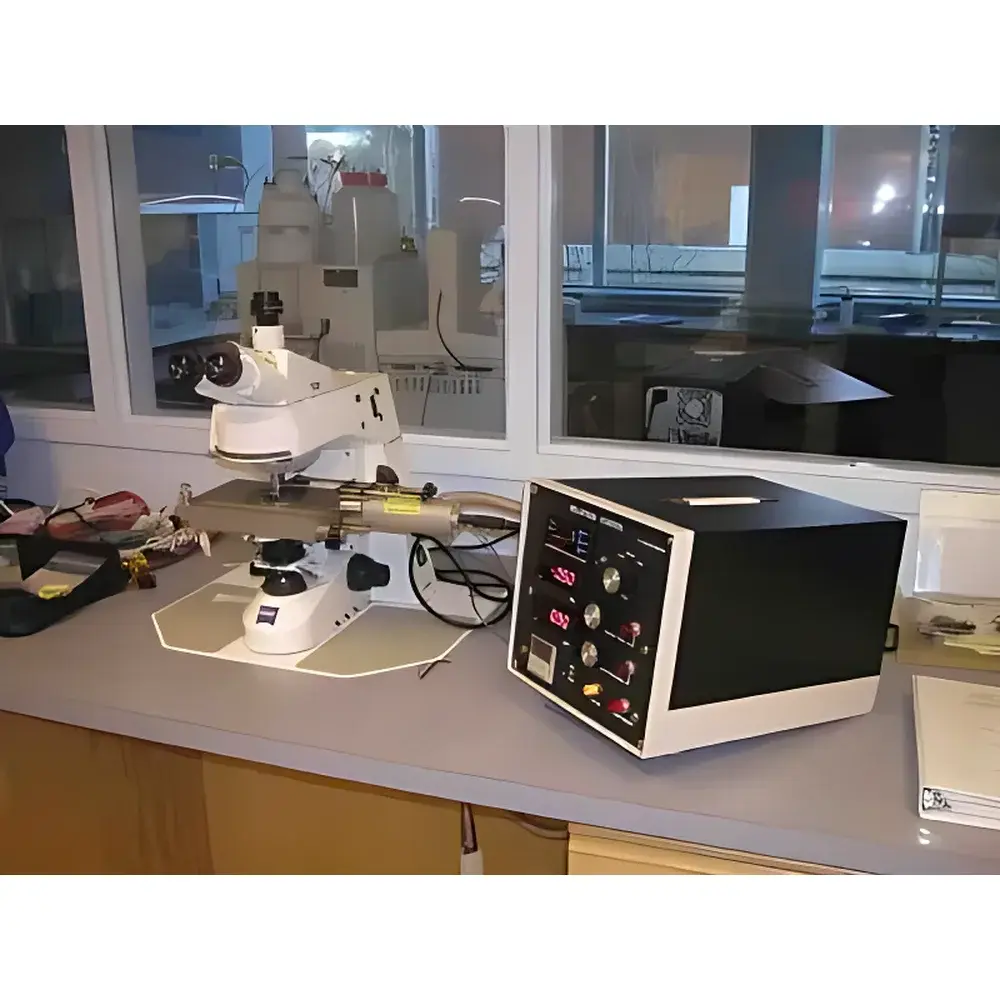
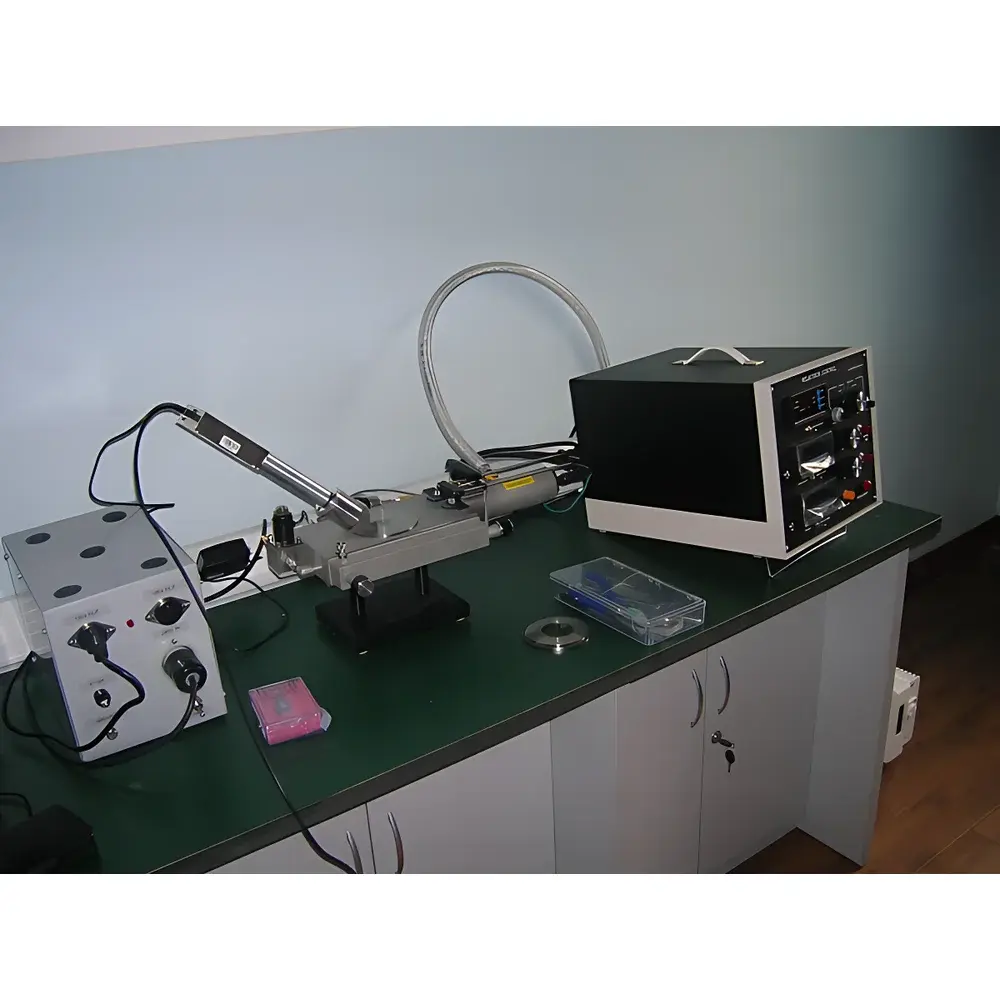
The RELION EDS Cathodoluminescence-Enhanced Energy Dispersive X-ray Spectrometer is a modular, vacuum-compatible analytical platform engineered for correlative microstructural and elemental characterization of geological, ceramic, and semiconductor specimens. It integrates cathodoluminescence (CL) imaging with energy-dispersive X-ray spectroscopy (EDS) within a single optical microscope-based workflow. Unlike conventional SEM- or EMPA-coupled EDS systems, this instrument employs a horizontal cold-cathode electron gun operating under moderate vacuum (40–100 mTorr), enabling stable electron beam generation without thermal load on the sample or detector—eliminating the need for conductive coatings and preserving native surface morphology. The system excites characteristic X-ray fluorescence via electron bombardment (5–25 kV, 0.15–2 mA), while simultaneously collecting CL emission through an integrated CCD acquisition module. This dual-signal acquisition—CL luminescence and EDS spectra—is synchronized via digital pulse processing hardware and controlled through dedicated spectral analysis software, supporting qualitative and semi-quantitative elemental mapping with spatial correlation to luminescent features.
Key Features
- Cold-cathode electron gun: Horizontal configuration, adjustable acceleration voltage (0–30 kV) with overvoltage protection; optimized operational range 5–25 kV for carbonate, quartz, zircon, hydrocarbon inclusions, and evaporite minerals.
- Beam flexibility: Continuously tunable focus from defocused (~10 mm spot) to micro-focused (<0.5 mm diameter), enabling both wide-field CL survey and targeted EDS point analysis.
- High-efficiency SDD detector: 10 mm² active area, 500 µm silicon thickness; optional Be window (12.5 µm or 25 µm); energy resolution ≤145 eV (Mn Kα, FWHM); signal-to-noise ratio 8200:1.
- Vacuum architecture: Dual-stage pumping system achieving ultimate pressure ≤0.25 Pa, minimizing hydrocarbon contamination and ensuring long-term detector stability.
- Multi-modal optical integration: Fully compatible with standard upright optical microscopes; supports concurrent observation in transmitted light (TRL), polarized light (POL), cathodoluminescence (CL), and EDS spectral acquisition.
- Modular design: Detector attachment mounts directly to vacuum chamber viewport; digital pulse processor interfaces with PC via USB or Ethernet; no proprietary bus architecture required.
Sample Compatibility & Compliance
The RELION EDS CL system accommodates polished thin sections, grain mounts, and bulk mineral fragments up to 50 mm in diameter. Its low-beam-energy operation and absence of charge buildup enable direct analysis of non-conductive geological specimens—including silicates, carbonates, phosphates, and organic-rich sediments—without carbon or gold sputtering. The system complies with ASTM E1508 (Standard Guide for Quantitative Analysis by Energy-Dispersive Spectrometry) and ISO 22309:2021 (Electron probe microanalysis — Quantitative analysis using wavelength- and energy-dispersive X-ray spectrometry). Data acquisition logs include timestamped metadata, operator ID, and instrument parameters, supporting GLP/GMP audit trails per FDA 21 CFR Part 11 when configured with validated software modules.
Software & Data Management
Acquisition and processing are performed using RELION’s cross-platform spectral analysis suite, which provides real-time spectrum display, peak identification (based on IUPAC-referenced X-ray line databases), background subtraction (Shirley or Tougaard models), and matrix correction (ZAF or φ(ρz)). Spectral data are stored in standardized .spc and .eds formats compliant with DTSA-II and NIST SRD-133 conventions. Batch processing supports automated region-of-interest (ROI) extraction across multi-image CL/EDS datasets. Export options include CSV, HDF5, and TIFF stacks with embedded calibration metadata. Software updates follow ISO/IEC 17025 traceable validation protocols for laboratory information management system (LIMS) integration.
Applications
- Geochronology & provenance studies: Zircon and monazite CL zoning correlated with U–Th–Pb chemistry.
- Diagenetic fluid history: CL intensity variations in carbonate cements linked to trace-element distributions (e.g., Mn²⁺/Fe²⁺ ratios).
- Hydrocarbon reservoir characterization: CL response of bitumen inclusions paired with sulfur and oxygen quantification.
- Materials science: Defect-related luminescence in GaN, SiC, and perovskite thin films mapped against dopant segregation (e.g., Mg, Ni, Cl).
- Museums & heritage science: Non-destructive pigment identification in archaeological ceramics and stained-glass fragments.
FAQ
What vacuum level is required for stable operation?
The system operates continuously at 40–100 mTorr (5–13 Pa); ultimate vacuum ≤0.25 Pa is achieved during pump-down for optimal detector performance and reduced hydrocarbon deposition.
Can the system be retrofitted onto existing optical microscopes?
Yes—mechanical mounting kits are provided for Leica, Zeiss, Nikon, and Olympus upright platforms; alignment requires standard optical centering procedures and vacuum feedthrough installation.
Is the cold-cathode electron gun compatible with beam-sensitive biological samples?
No—this system is designed for inorganic, radiation-tolerant materials; electron doses exceed thresholds for polymer or hydrated biological specimens.
How is spectral calibration maintained over time?
Automated daily calibration uses Mn Kα (5.895 keV) from a built-in reference source; drift correction is applied during acquisition using internal Si Kα (1.740 keV) monitoring.
Does the software support quantitative standardless analysis?
Yes—standardless quantification is available using fundamental parameter (FP) algorithms; accuracy is ±5% relative for major elements (wt%) in homogeneous geological matrices when validated against certified reference materials (CRMs).




