
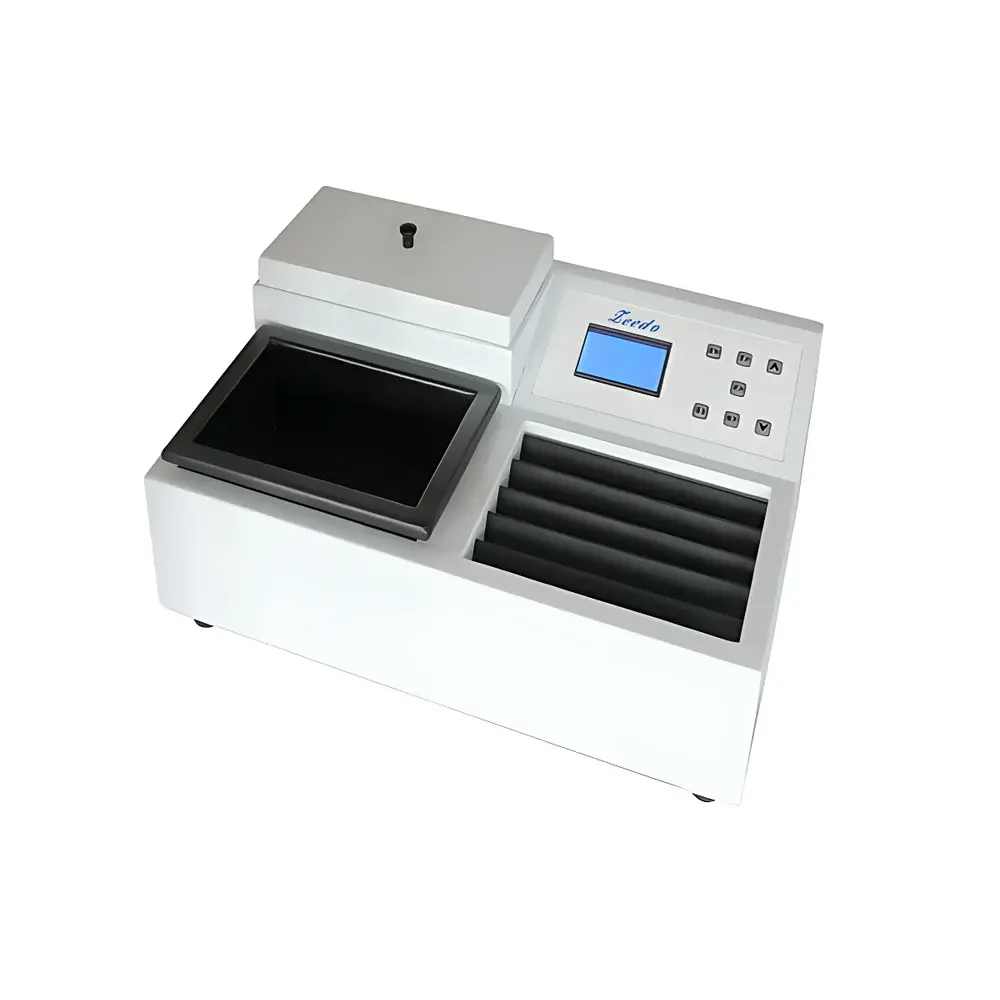
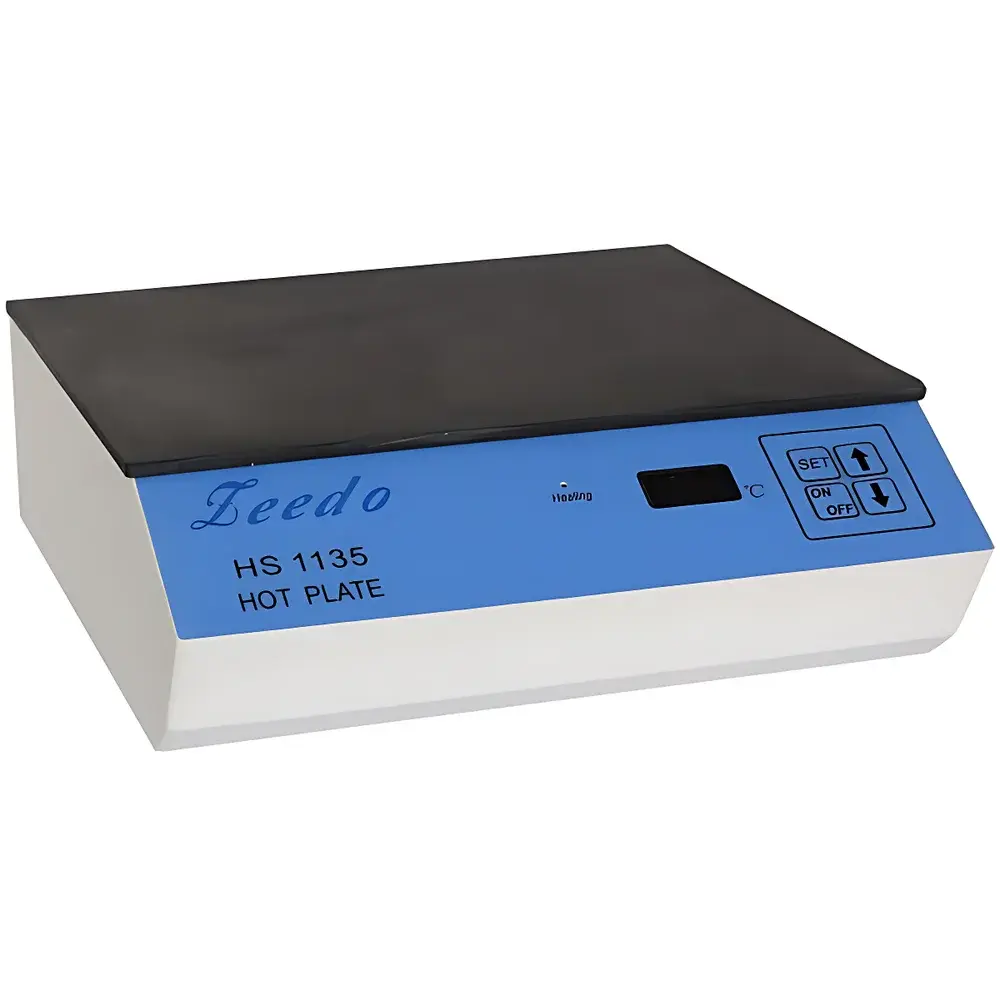
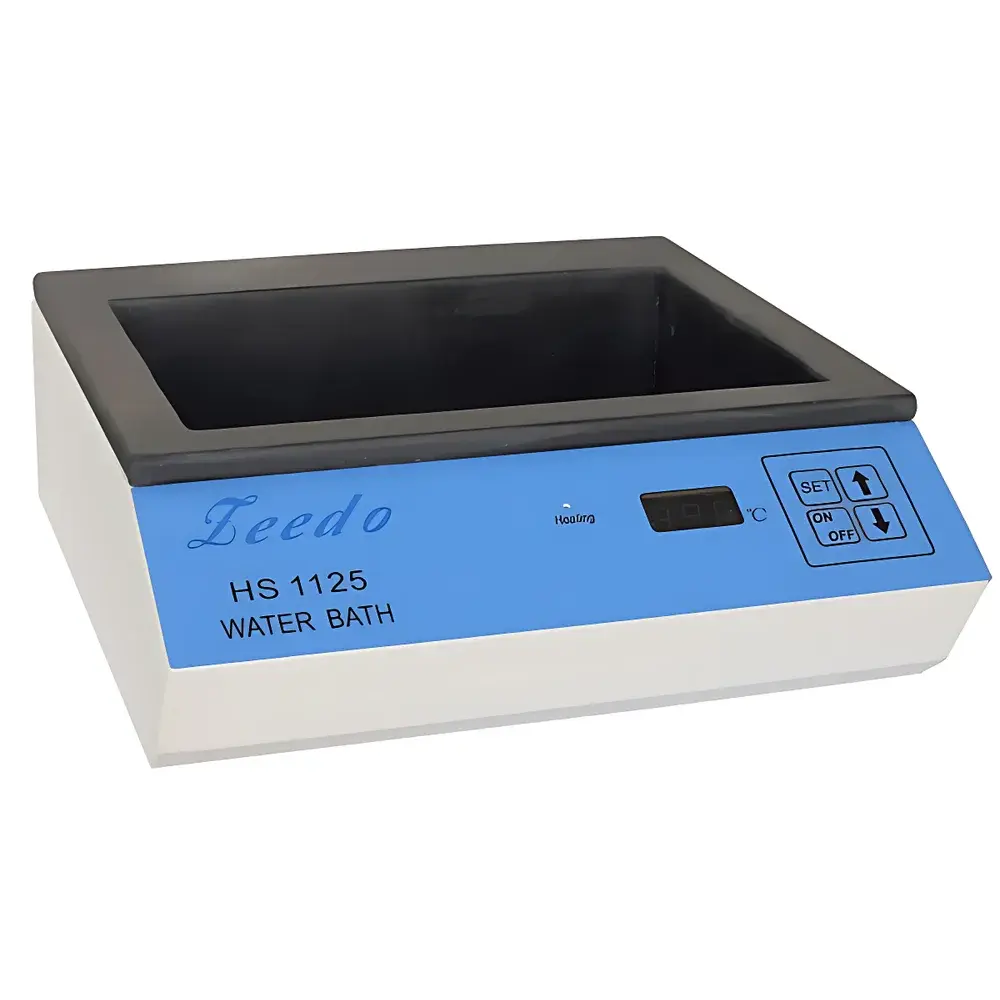
ZEEDO HS-1145 Integrated Tissue Floating, Drying & Baking Station
| Origin | Zhejiang, China |
|---|---|
| Manufacturer Type | Authorized Distributor |
| Origin Category | Domestic (PRC) |
| Model | HS-1145 |
| Price | USD 1,320 (FOB) |
| Temperature Range | Ambient to 90 °C (independent control for floating, drying, and baking zones) |
| Floating Bath Volume | 135 mm × 185 mm × 80 mm |
| Dimensions (W×D×H) | 510 mm × 340 mm × 220 mm |
| Weight | 16 kg |
| Power Supply | 220 V, 50 Hz |
| Rated Power | 1000 W |
| Drying Rack Capacity | 70 microscope slides (60° inclined insertion) |
| Baking Chamber Capacity | 3 standard staining racks (30–40 slides each) or two 250 mL beakers for paraffin melting |
Overview
The ZEEDO HS-1145 Integrated Tissue Floating, Drying & Baking Station is a purpose-engineered instrument for histopathological sample preparation in clinical laboratories, academic research facilities, and contract pathology service providers. Designed around the standardized workflow of tissue sectioning and slide mounting, it consolidates three critical pre-staining steps—tissue floating (water bath spreading), slide drying (controlled dehydration), and paraffin baking (adhesion fixation)—into a single, space-efficient platform. The device operates on thermally regulated convection and conductive heating principles, with independent PID-controlled thermal zones ensuring precise, repeatable temperature management across all functional modules. Its architecture supports GLP-compliant workflows by enabling operator-defined thermal profiles, consistent dwell times, and traceable process conditions—essential for reproducible immunohistochemistry (IHC), in situ hybridization (ISH), and routine H&E staining protocols.
Key Features
- Triple-zone independent temperature control: Each module—floating bath, drying rack, and baking chamber—is equipped with a dedicated digital thermostat (range: ambient to 90 °C, ±0.5 °C stability), allowing simultaneous yet distinct thermal conditioning for optimized tissue morphology preservation.
- Ergonomic floating bath: Features a black enameled polymer tank (135 mm × 185 mm × 80 mm) that enhances visual contrast during section retrieval, minimizing operator fatigue and improving section alignment accuracy under stereomicroscopic observation.
- Inclined drying rack system: Patented corrugated aluminum rack holds up to 70 standard glass slides at a fixed 60° angle, promoting uniform air circulation and preventing water pooling while facilitating rapid, residue-free drying without manual repositioning.
- High-capacity baking chamber: Accommodates either three full-size staining racks (30–40 slides per rack) or dual 250 mL beakers for paraffin wax melting—enabling concurrent slide adhesion and reagent preparation within a single thermal enclosure.
- Programmable time-based baking cycles: Users define dwell duration per temperature setpoint; an audible alert signals cycle completion, reducing reliance on manual monitoring and supporting unattended overnight processing.
- Robust industrial-grade construction: Stainless steel housing, reinforced thermal insulation, and EMI-shielded power circuitry ensure long-term reliability in high-throughput laboratory environments with continuous daily operation.
Sample Compatibility & Compliance
The HS-1145 is validated for use with standard 1 mm-thick, 25 mm × 75 mm microscope slides and common embedding media including paraffin, low-melting-point paraffin, and hydrophilic wax formulations. It complies with ISO 15189:2022 requirements for pre-analytical equipment qualification and meets mechanical safety standards per IEC 61010-1:2010. While not FDA-cleared as a medical device, its operational parameters align with CAP (College of American Pathologists) checklist ANP.42500 (Tissue Processing Equipment) and CLSI document H26-A3 (Procedures for Histologic Processing). The instrument supports audit-ready documentation when integrated with laboratory information systems (LIS) via external logging interfaces.
Software & Data Management
The HS-1145 operates via an embedded microcontroller with non-volatile memory storing up to 10 user-defined thermal protocols. Although it lacks built-in networking or touchscreen GUI, its analog/digital I/O ports support external data acquisition systems for temperature logging (e.g., compliant with 21 CFR Part 11 when paired with validated third-party software). All parameter changes are timestamped and retained in internal memory for GLP traceability. Optional RS-485 Modbus RTU interface enables integration into centralized lab automation platforms for remote status monitoring and preventive maintenance scheduling.
Applications
- Routine histology laboratories performing >500 slides/week requiring standardized float-dry-bake sequences prior to automated stainer loading.
- Research cores preparing serial sections for multiplex IHC, where consistent slide adhesion prevents antigen loss during extended antibody incubation.
- Teaching hospitals training pathology residents in manual tissue handling techniques, leveraging the visual clarity of the black floating bath for real-time technique assessment.
- Biobanks implementing long-term archival slide stabilization protocols, utilizing programmable low-temperature baking (58–62 °C) to minimize RNA degradation in FFPE-derived specimens.
- Contract diagnostic labs fulfilling CAP-accredited turnaround time SLAs, where parallel processing of multiple racks reduces total cycle time versus sequential benchtop units.
FAQ
Does the HS-1145 support programmable ramp-and-soak temperature profiles?
No—each zone maintains a single user-set temperature; ramping requires manual adjustment between stages.
Can the floating bath accommodate cryosections or delicate frozen tissue sections?
Yes, provided water temperature is maintained at 37–42 °C and sections are transferred promptly after thawing to prevent ice crystal artifact formation.
Is calibration documentation provided with the unit?
A factory calibration certificate (traceable to NIM, China) is included, covering thermal sensor accuracy verification at 45 °C and 65 °C points.
What maintenance is required for sustained performance?
Monthly descaling of the floating bath using 5% citric acid solution and biannual inspection of thermal gaskets in the baking chamber door seal.
Are replacement parts such as drying racks or floating bath liners available separately?
Yes—original ZEEDO part numbers for consumables and wear components are listed in the technical manual and supplied through authorized global distributors.



