
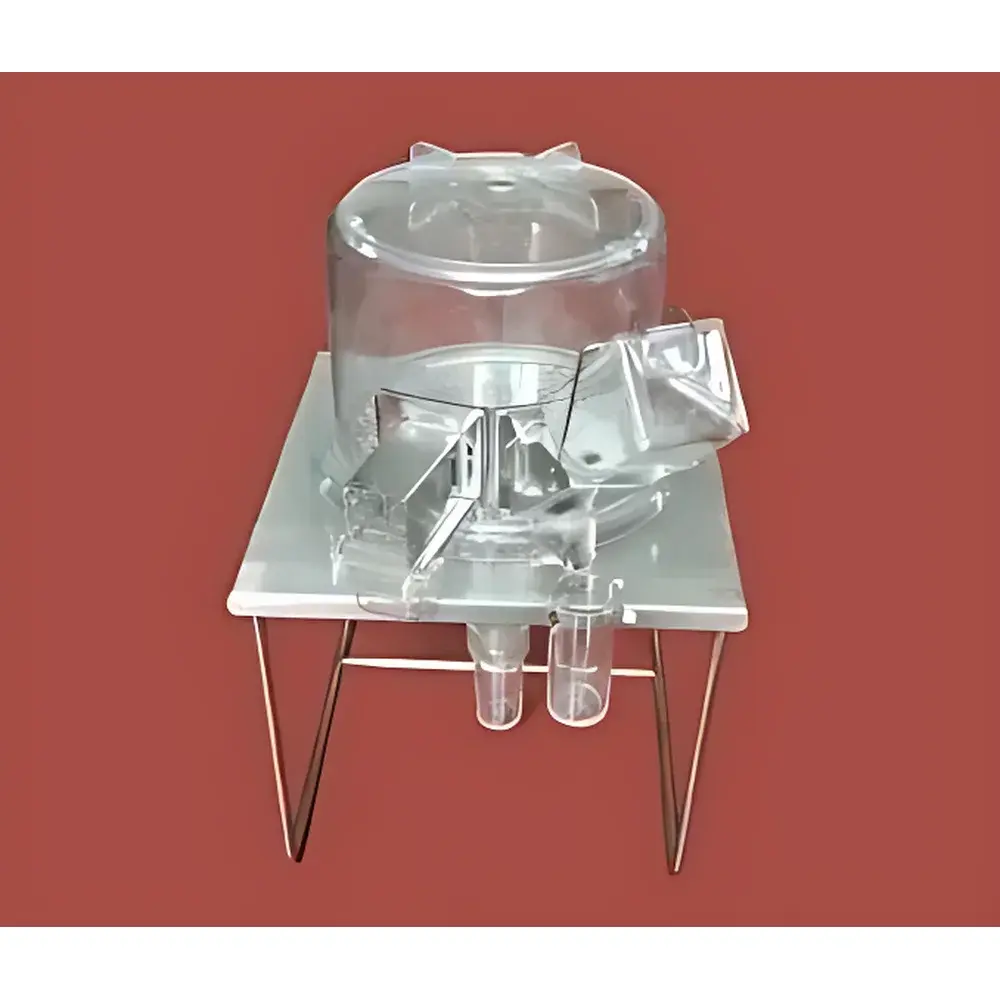
DS DXL-X Mouse Metabolic Cage
| Brand | DS |
|---|---|
| Origin | Beijing, China |
| Model | DXL-X |
| Animal Type | Laboratory mouse (Mus musculus) |
| Capacity | 1–5 mice per cage |
| Temperature Range | Ambient (optional 4 °C refrigerated urine/feces collection module available) |
| Material | Polycarbonate (PC) or Polyphenylsulfone (PSU) |
| Cage Dimensions | Ø170 mm × 220 mm (cage body) |
| Overall | 210 mm × 210 mm × 400 mm |
| Urine Collection Vessel | 15 mL |
| Water Bottle Capacity | 880 mL |
| Filtration Mesh Aperture | 0.1 mm |
| Urine/Fecal Separation | Dual-compartment gravity-driven separation system |
| Compliance | Designed for GLP-aligned preclinical metabolic studies |
Overview
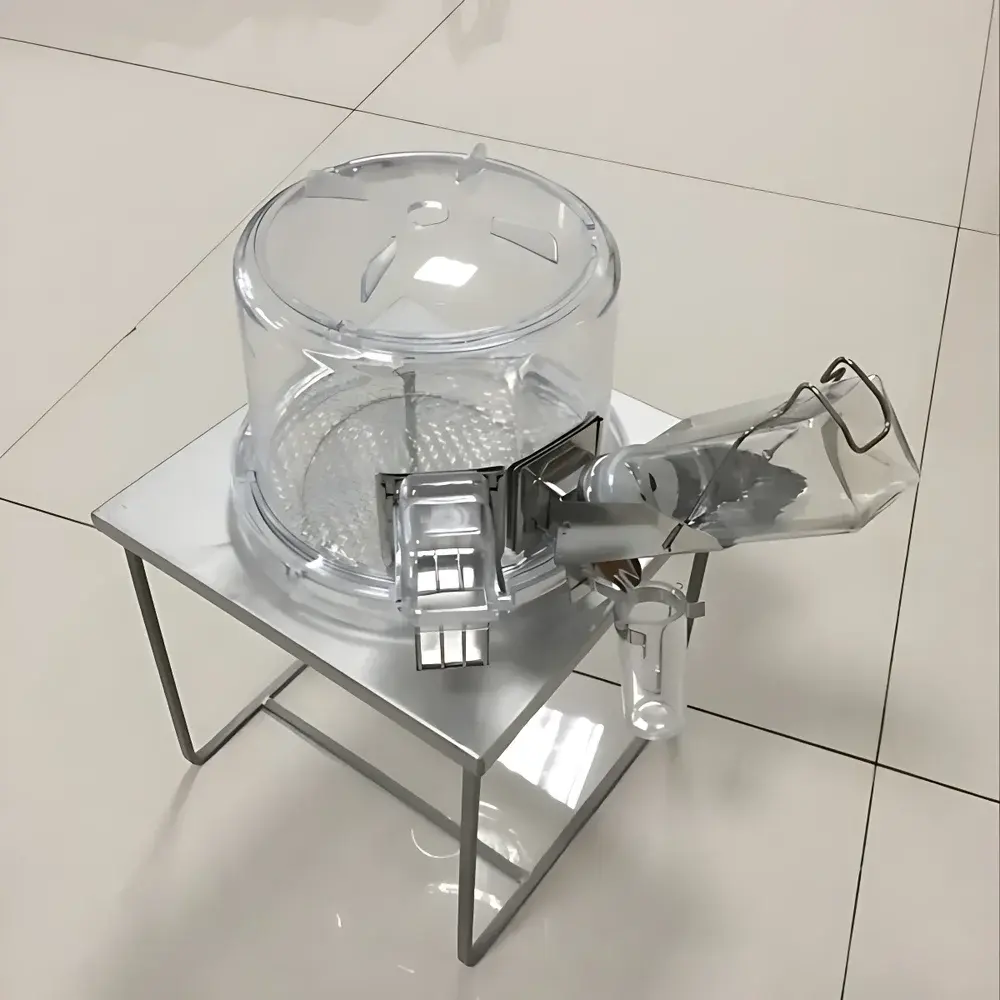
The DS DXL-X Mouse Metabolic Cage is an engineered platform for longitudinal, non-invasive monitoring of metabolic outputs in laboratory mice. It operates on a validated gravity-based dual-compartment separation principle: urine drains through a precision-engineered 0.1 mm stainless-steel filtration mesh into a dedicated 15 mL conical collection vessel, while fecal pellets are retained on a ventilated PC/PSU support grid and collected separately in the lower chamber. This physical separation—free of pumps, valves, or active fluid handling—ensures minimal animal stress, eliminates cross-contamination risk, and preserves sample integrity for downstream analysis (e.g., urinary creatinine, electrolytes, metabolomics; fecal bile acids, microbiota DNA). The cage is designed for continuous 24–48 h collection cycles under standard vivarium conditions (ambient temperature, 20–25 °C), with optional integration of a low-noise (<10 dB), 12 V DC-powered refrigerated collection module maintaining urine at 4 °C ±0.1 °C to inhibit enzymatic degradation and bacterial proliferation.
Key Features
- Gravity-driven, passive urine/feces separation architecture—no moving parts, no power dependency for core function
- Modular polycarbonate (PC) or polyphenylsulfone (PSU) construction: autoclavable (121 °C, 20 min), chemical-resistant, and optically transparent for behavioral observation
- Ergonomic feed drawer (Item #4) slides smoothly into the feed housing (Item #3), enabling food replenishment without opening the main cage or disturbing animal behavior
- Integrated 880 mL water bottle with silicone-tipped sipper tube and drip-control funnel assembly—prevents leakage and ensures consistent hydration
- Standardized 15 mL conical urine collection vial with leak-proof threaded seal and calibrated volume markings for precise volumetric quantification
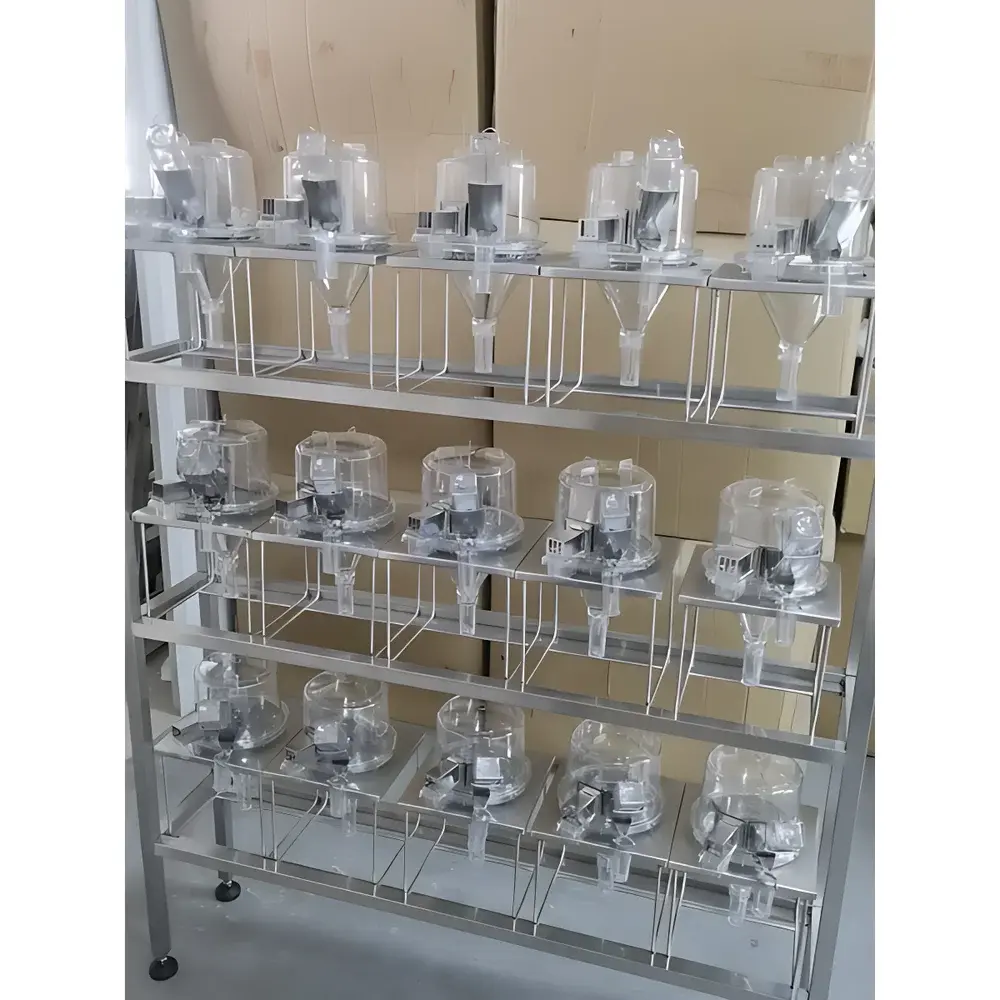
- Compact footprint (210 mm × 210 mm base) supports high-density housing in IVC racks or climate-controlled cabinets
- Tool-free assembly/disassembly using keyed alignment slots and rotational locking mechanisms—reduces setup time and operator error
Sample Compatibility & Compliance
The DXL-X accommodates 1–5 adult C57BL/6, BALB/c, or CD-1 mice (20–35 g) per unit, with adjustable grid spacing to prevent limb entrapment. All wetted surfaces contact only USP Class VI-certified PC or PSU—non-leaching, extractables-tested, and compliant with ISO 10993-5 (cytotoxicity) requirements. The system supports regulatory-grade study execution: urine and fecal fractions are physically isolated at point-of-collection, enabling traceable, audit-ready sample chains-of-custody. When used with the optional 4 °C refrigerated module, it aligns with CLSI GP26-A3 recommendations for urine stabilization and meets foundational criteria for GLP-compliant metabolic phenotyping per OECD Test Guideline 407 (Repeated Dose 28-Day Oral Toxicity) and FDA Guidance for Industry on Nonclinical Safety Studies.
Software & Data Management
The DXL-X is a hardware-only platform requiring no embedded firmware or proprietary software. All collected samples are manually logged using standardized lab notebooks or LIMS-integrated electronic data capture (EDC) templates. For longitudinal studies, users commonly pair the cage with third-party analytical instruments (e.g., LC-MS/MS, ion chromatography, ELISA readers) whose output files (CSV, .xlsx, .cdf) integrate directly into statistical platforms such as GraphPad Prism or R. Optional barcode-labeled collection vials (sold separately) support 2D-scanned sample tracking compatible with LabWare LIMS and Benchling ELN systems. No FDA 21 CFR Part 11 electronic signature functionality is built-in—as intended for manual sample handling workflows in academic and contract research settings.
Applications
- Pharmacokinetic/pharmacodynamic (PK/PD) profiling: Quantifying drug excretion kinetics and metabolite ratios in urine over defined intervals
- Dietary intervention studies: Monitoring nitrogen balance, calcium/magnesium excretion, and short-chain fatty acid profiles in feces
- Diabetes and obesity models: Assessing glucosuria, ketonuria, and fecal energy loss in db/db or diet-induced obese (DIO) mice
- Nephrotoxicity screening: Detecting albuminuria, NAG enzyme activity, and electrolyte imbalances following compound exposure
- Microbiome–host interaction research: Collecting sterile-feces for gnotobiotic transfer or metagenomic sequencing
- Behavioral–metabolic coupling: Correlating locomotor activity (via optional IR beam integration) with diurnal feeding/urination patterns
FAQ
Can the DXL-X be used for long-term (>72 h) metabolic collection?
Yes—provided animals receive adequate food and water replenishment via the slide-out drawer and bottle system, and ambient humidity and temperature remain within NIH-recommended ranges (30–70% RH, 20–26 °C). Prolonged use requires daily visual health checks per IACUC protocols.
Is the 0.1 mm filtration mesh reusable?
Yes—the stainless-steel mesh is ultrasonically cleanable and withstands ≥50 autoclave cycles without aperture deformation or metal fatigue.
Does the refrigerated module require external plumbing or condensate drainage?
No—it uses solid-state thermoelectric (Peltier) cooling with passive heat dissipation; no water lines, compressors, or drain trays are needed.
Can the cage be sterilized in ethylene oxide (EtO)?
PC components are EtO-compatible per ISO 11135; PSU offers superior resistance to EtO residuals and is recommended for repeated sterilization cycles.
Are replacement parts available for individual components (e.g., mesh, bottles, grids)?
Yes—DS provides a full spare parts catalog including OEM-specified 0.1 mm mesh inserts, 15 mL conical vials, and PC feed drawers, all traceable to lot-specific QC documentation.




