
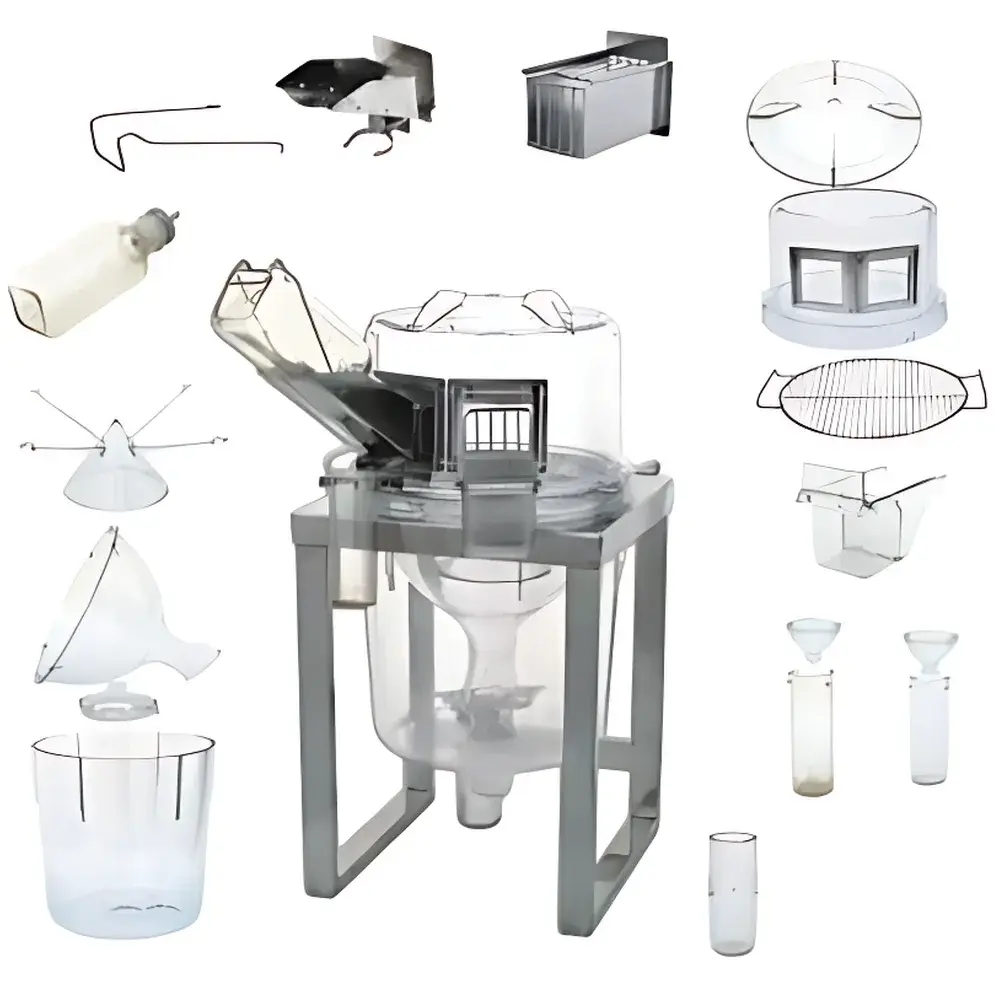
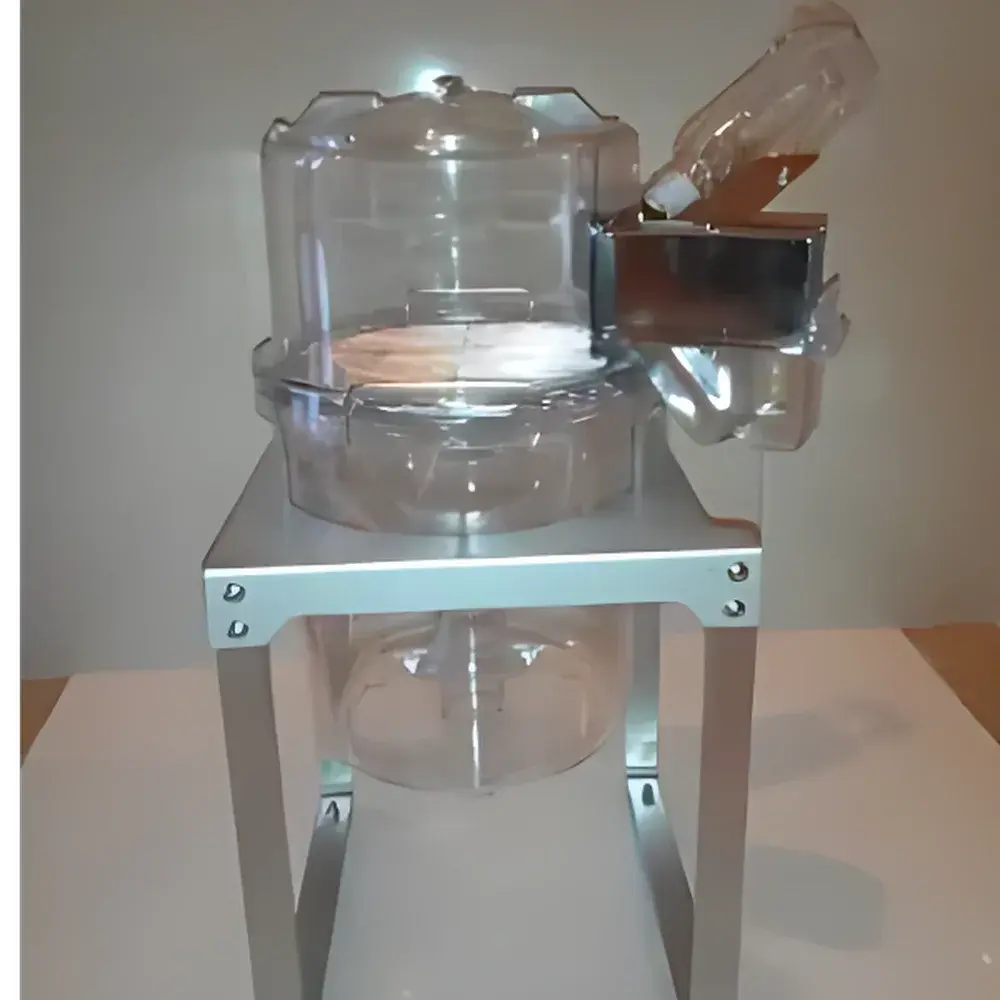
DS DXL-D Advanced Rat Metabolic Cage
| Brand | DS |
|---|---|
| Origin | Beijing, China |
| Manufacturer Type | Authorized Distributor |
| Product Category | Rat Metabolic Cage |
| Model | DXL-D |
| Dimensions (L×W×H) | 300 × 300 × 650 mm |
| Material | Medical-grade Polycarbonate (PC) |
| Urine/Feces Separation | Dual-channel conical funnel system with anti-evaporation urine collector and non-adhesive fecal collection tube |
| Assembly | 15 modular components, tool-free disassembly |
| Compliance | Designed for GLP-compliant preclinical studies in pharmacology, endocrinology, and nutrition research |
Overview
The DS DXL-D Advanced Rat Metabolic Cage is an engineered solution for quantitative, non-invasive collection of urine and feces from conscious, unrestrained rats over extended periods (24–72 hours). Based on gravity-driven phase separation principles, the cage employs a precision-machined conical partitioning assembly that directs urine through a central funnel into a sealed, evaporation-resistant collection vessel, while fecal matter is channeled laterally via a sloped grid and retained in a separate, removable container. This physical separation mechanism eliminates cross-contamination—critical for accurate metabolite profiling, renal function assessment, and pharmacokinetic analysis. Constructed entirely from medical-grade polycarbonate, the DXL-D meets stringent requirements for chemical resistance, optical clarity, and low leachability—ensuring sample integrity during chronic dosing or dietary intervention studies. Its modular architecture supports repeatable setup across multi-site preclinical trials and aligns with OECD Test Guidelines 407, 408, and 422 for repeated-dose toxicity and reproductive toxicity studies.
Key Features
- Conical dual-path separation system: Patented geometry ensures >99.2% urinary/fecal isolation efficiency under standard housing conditions (22 ± 2°C, 50 ± 10% RH)
- Evaporation-suppressed urine collector: Integrated silicone-sealed cap and graduated 250 mL PC bottle with calibrated scale (±0.5 mL accuracy)
- Non-adhesive fecal transport: Smooth-surface conical chute minimizes residue retention; compatible with lyophilization and mass spectrometry sample prep
- Modular 15-component design: Enables rapid sterilization (autoclavable up to 121°C, 15 psi), full traceability of parts, and replacement of individual assemblies without system downtime
- Secondary feed tray with anti-drag lip: Prevents food spillage into waste channels; drawer-style loading maintains animal behavioral continuity during feeding
- Drip-calibrated water delivery: Precision-bore stainless steel sipper tube with volumetric markings (1 mL increments) and leak-proof mounting interface
- Structural rigidity: Reinforced base plate and interlocking cage tiers ensure stability during locomotor activity; compliant with AAALAC International caging standards for rat weight class (200–500 g)
Sample Compatibility & Compliance
The DXL-D is validated for use with Sprague-Dawley, Wistar, and Long-Evans rat strains across standard and high-fat diet regimens. Urine volumes ≥15 mL and fecal output ≥2.5 g per 24 h are reliably captured without degradation or adsorption artifacts. All wetted surfaces comply with USP Class VI biocompatibility testing and ISO 10993-5 cytotoxicity requirements. The cage design facilitates adherence to FDA 21 CFR Part 11 data integrity protocols when paired with DS-LogTrack™ software (optional), enabling electronic audit trails for urine volume, feeding time stamps, and cleaning cycle logs. It satisfies institutional animal care and use committee (IACUC) criteria for metabolic monitoring in GLP and non-GLP toxicology studies, including those supporting IND submissions.
Software & Data Management
While the DXL-D operates as a standalone mechanical system, it integrates seamlessly with DS-LogTrack™ v3.2—a validated laboratory information management system (LIMS) module designed for longitudinal metabolic data capture. The software supports barcode-scanned cage assignment, automated calculation of urine-specific gravity (via refractometer input), fecal moisture content estimation (based on gravimetric dry/wet ratios), and export to CSV/Excel formats compatible with SAS JMP and GraphPad Prism. All user actions—including cage calibration, maintenance records, and operator authentication—are logged with timestamped, immutable entries meeting ALCOA+ (Attributable, Legible, Contemporaneous, Original, Accurate, Complete, Consistent, Enduring, Available) data governance principles.
Applications
- Pharmacokinetic/pharmacodynamic (PK/PD) studies: Quantitative excretion profiling of parent drugs and metabolites in urine and feces
- Diabetic and obesity research: Longitudinal monitoring of glucosuria, ketonuria, and fecal short-chain fatty acid (SCFA) output
- Nephrotoxicity screening: Early detection of albuminuria, enzymuria (e.g., NAG, GGT), and electrolyte imbalance
- Gut-microbiome interventions: Paired collection for 16S rRNA sequencing of fecal pellets and metabolomic analysis of urine supernatants
- Endocrine disruption assays: Measurement of urinary corticosterone, testosterone, or estradiol metabolites following chemical exposure
- Nutritional metabolism: Nitrogen balance calculations, calcium/magnesium excretion ratios, and bile acid profiling
FAQ
What rat weight range is the DXL-D cage rated for?
The DXL-D is optimized for rats weighing 200–500 g, with floor grid spacing (12 mm) preventing limb entrapment and ensuring unimpeded locomotion.
Can the cage be autoclaved?
Yes—all polycarbonate components withstand standard autoclaving cycles (121°C, 15 psi, 20 min); stainless steel water tubes and silicone seals require separate low-temperature sterilization.
Is the urine collector truly evaporation-resistant?
The 250 mL collection vessel features a dual-seal lid with silicone gasket and threaded locking ring, validated to limit evaporation loss to <1.2% over 48 h at 25°C/60% RH.
How frequently must the fecal collection tube be replaced during a 72-hour study?
Under standard chow-fed conditions, replacement is required every 36–48 h; high-fiber or liquid-diet protocols may necessitate 24-h intervals—guided by real-time visual inspection through the transparent PC housing.
Does the DXL-D meet ISO 5971 or ASTM F2136 standards for metabolic caging?
While no single ISO/ASTM standard governs metabolic cages comprehensively, the DXL-D conforms to the functional performance benchmarks outlined in ISO 5971 (rodent housing ergonomics) and ASTM F2136 (materials biocompatibility for in vivo devices), as verified by third-party test reports available upon request.
Related Products




