
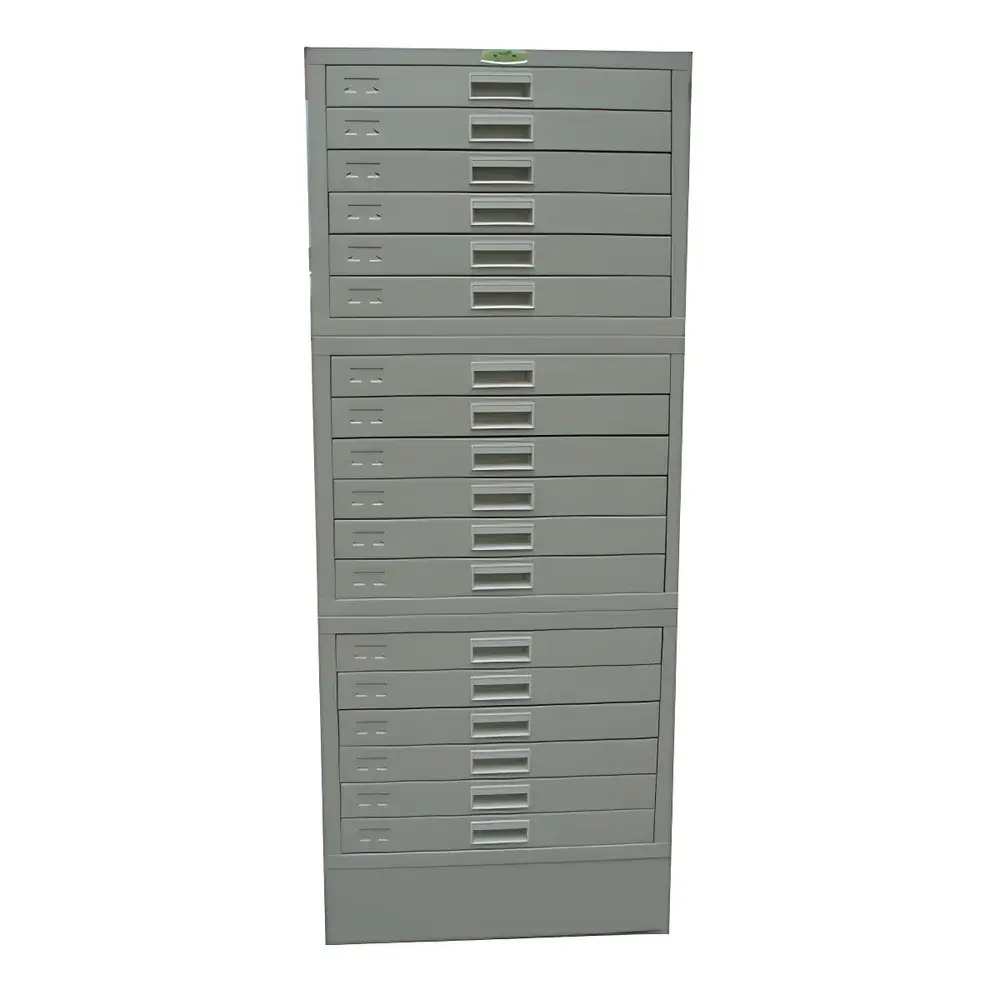
ZEEDO HS-CC01 Paraffin Block Storage Cabinet
| Brand | ZEEDO |
|---|---|
| Model | HS-CC01 |
| Construction | 0.8 mm cold-rolled steel (Baosteel) |
| Finish | Electrostatic powder coating with anti-rust pretreatment |
| Drawer System | 4 modular units × 5 full-extension drawers = 20 drawers total |
| Capacity | ~16,000 paraffin blocks (standard 30 × 25 × 5 mm) |
| Drawer Guidance | Heavy-duty槽-type roller track system with dual-position high-strength nylon rollers |
| Safety Features | Auto-return drawer mechanism, integrated high-elasticity shock-absorbing pads at drawer front edge |
| Dimensions (W × D × H) | 480 × 515 × 1510 mm per unit |
| Origin | Beijing, China |
| Compliance | Designed for GLP-compliant histopathology laboratories |
Overview
The ZEEDO HS-CC01 Paraffin Block Storage Cabinet is an engineered solution for high-density, long-term archival storage of formalin-fixed, paraffin-embedded (FFPE) tissue blocks in clinical pathology, research histology, and biobanking environments. Unlike general-purpose shelving or non-ventilated cabinets, the HS-CC01 is purpose-built to maintain physical integrity and labeling legibility of wax-embedded specimens under ambient laboratory conditions—minimizing thermal cycling, mechanical stress, and environmental exposure that may compromise block morphology or sectioning quality. Its structural design adheres to ISO 15189:2022 requirements for specimen handling infrastructure, supporting traceability and chain-of-custody protocols through standardized drawer organization and consistent labeling zones.
Key Features
- Robust cabinet architecture constructed from 0.8 mm Baosteel cold-rolled steel, providing dimensional stability and resistance to deformation under repeated loading cycles.
- Electrostatic powder-coated finish applied after multi-stage phosphating and anti-rust pretreatment—ensuring corrosion resistance in humid or reagent-exposed lab environments (e.g., near embedding stations or xylene hoods).
- Four independent modular units, each containing five full-extension drawers with precision-engineered槽-type roller guidance—enabling smooth, low-friction operation even when fully loaded with 800+ blocks per drawer.
- Auto-return drawer mechanism prevents over-extension beyond safe travel limits, eliminating risk of accidental disengagement or floor impact during routine access.
- Integrated high-elasticity polymer damping pads mounted at drawer leading edges absorb kinetic energy upon closure—reducing mechanical wear on drawer rails and lowering operational noise to ≤38 dB(A), critical in shared diagnostic workspaces.
- Standardized drawer depth (515 mm) accommodates industry-standard cassette trays and custom block racks; drawer fronts feature recessed label holders compatible with thermal-transfer or laser-printed adhesive tags meeting ANSI/AAMI ST79:2017 labeling durability criteria.
Sample Compatibility & Compliance
The HS-CC01 supports storage of all common FFPE block formats—including standard 30 × 25 × 5 mm cassettes, large-format blocks (up to 50 × 40 × 8 mm), and microtome-ready embedded specimens mounted on aluminum bases. It is not intended for refrigerated, frozen, or humidity-controlled storage; rather, it functions as a passive ambient-storage platform aligned with CAP (College of American Pathologists) checklist ANP.42500 and UK NEQAS Histopathology guidelines for room-temperature block archiving. Cabinet layout enables spatial segregation by accession date, department, or study ID—facilitating audit-ready retrieval without cross-contamination risk. No electrical components or ventilation systems are integrated, ensuring compliance with IEC 61010-1:2010 safety standards for non-powered laboratory furniture.
Software & Data Management
As a mechanical storage system, the HS-CC01 does not incorporate embedded electronics or proprietary software. However, its modular drawer configuration is fully interoperable with third-party laboratory information management systems (LIMS) and digital pathology workflows. Each drawer is labeled with a unique alphanumeric identifier (e.g., “UNIT-A-DRW-3”) that maps directly to LIMS inventory records. Barcode/RFID label fields on drawer fronts support integration with scanners compliant with ISO/IEC 15424 (Data Matrix) and ISO/IEC 15415 (2D symbol grading), enabling automated inventory reconciliation during QA audits. Audit trails generated via LIMS remain independent of cabinet hardware—preserving data integrity under FDA 21 CFR Part 11 requirements when paired with validated electronic signature modules.
Applications
- Clinical pathology departments requiring scalable, space-efficient archival of surgical biopsy blocks for statutory retention periods (e.g., ≥10 years per EU Directive 2011/24/EU).
- Academic core histology facilities managing longitudinal cohort studies where block provenance and chronological access must be preserved across decades.
- Contract research organizations (CROs) conducting GLP-compliant toxicological studies—where physical block storage infrastructure must align with OECD Principles of Good Laboratory Practice (Annex V, Section 2.2.3).
- Biorepositories implementing FAIR (Findable, Accessible, Interoperable, Reusable) data principles—using the HS-CC01’s deterministic drawer addressing to link physical specimens to metadata schemas such as MIABIS 2.0.
- Hospital-based tumor banks maintaining parallel storage of matched FFPE blocks and frozen tissue aliquots—where cabinet placement adjacent to cryo-storage rooms minimizes transport distance without introducing thermal instability.
FAQ
Is the HS-CC01 suitable for storing unstained glass slides or dewaxed sections?
No. The cabinet is structurally optimized for rigid paraffin blocks only. Slides require dedicated slide storage systems with vertical orientation and anti-static features to prevent adhesion or scratching.
Can drawers be locked for secure access control?
The base model does not include locking mechanisms; however, third-party drawer-lock kits compatible with 12 mm rail spacing can be retrofitted without compromising auto-return functionality.
Does the cabinet meet fire-resistance standards for laboratory use?
It complies with EN 14470-1:2013 Class 15 for flammable substance storage cabinets only when used in conjunction with certified fire-rated enclosures—not as a standalone fire-rated unit.
What maintenance is required for long-term performance?
Annual inspection of roller tracks for particulate accumulation and replacement of damping pads every 5 years (or after 50,000 drawer cycles) is recommended per manufacturer service bulletin ZEEDO-SV-HS-CC01-2023.



