
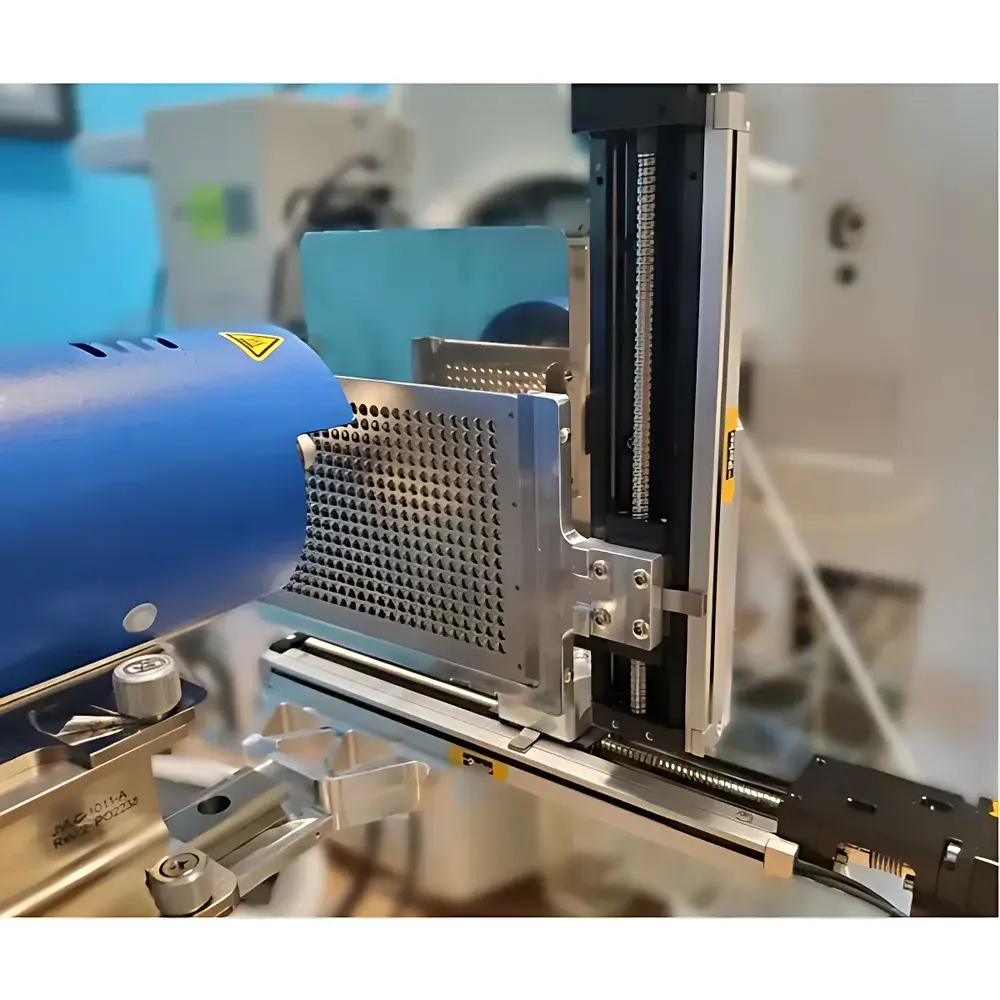
IonSense DART JS High-Throughput Direct Analysis in Real Time Mass Spectrometry Ion Source
| Brand | IonSense |
|---|---|
| Origin | USA |
| Manufacturer Type | Authorized Distributor |
| Origin Category | Imported |
| Model | DART JS |
| Instrument Type | Atmospheric Pressure Ion Source |
| Application Scope | Universal |
| Mass Range | 15–6000 Da |
| Sensitivity | Low-ppt (liquid samples) |
| Resolution | Determined by coupled mass spectrometer |
| Accurate Mass Capability | Dependent on host MS platform |
| Operating Pressure | Ambient (atmospheric pressure) |
Overview
The IonSense DART® JS is a high-throughput, ambient ionization source engineered for real-time, direct analysis of solid, liquid, and gaseous samples without chromatographic separation or chemical derivatization. Based on the patented Direct Analysis in Real Time (DART®) principle, it operates at ambient pressure and temperature, using metastable helium or nitrogen atoms generated via dielectric barrier discharge to desorb and ionize analytes from surfaces or vapors. Unlike electrospray ionization (ESI) or matrix-assisted laser desorption/ionization (MALDI), DART® requires no solvent, matrix, or vacuum-compatible sample introduction—enabling contactless, non-destructive interrogation of intact materials including tablets, plant tissues, packaging films, forensic evidence, and food commodities. Its compatibility with all major commercial mass spectrometers—including triple quadrupole (QqQ), ion trap, time-of-flight (TOF), orbitrap, and hybrid platforms—makes it a modular, vendor-agnostic enhancement to existing LC-MS, GC-MS, or standalone MS infrastructure.
Key Features
- High-throughput scanning mode with pulsed gas control for improved peak shape, enhanced chromatographic resolution, and automated peak detection
- 90–95% reduction in helium consumption versus legacy DART sources—maintaining analytical performance while significantly lowering operational cost and environmental footprint
- Suppressed background ion generation through optimized plasma geometry and gas flow dynamics, minimizing matrix-derived chemical noise
- Three-parameter optimization interface (gas temperature, grid voltage, and gas flow rate) for rapid method development and robust inter-laboratory reproducibility
- iPad-based graphical user interface supporting fully automated sample positioning, sequence-driven acquisition, and real-time spectral preview
- Native compatibility with industry-standard MS platforms from Thermo Fisher Scientific, Sciex, Agilent Technologies, Waters Corporation, Bruker Daltonics, Shimadzu, and JEOL
Sample Compatibility & Compliance
DART® JS supports direct analysis of diverse sample forms—including powders, films, leaves, pills, polymers, oils, aerosols, and volatile organics—without extraction, dilution, or derivatization. It demonstrates minimal susceptibility to ion suppression from salts, proteins, or polar matrices, enabling reliable detection across polarity ranges (polar, mid-polar, and non-polar compounds). The system adheres to ambient ionization best practices outlined in ASTM E3182-21 and ISO/IEC 17025:2017 for method validation in regulated environments. When integrated into GLP- or GMP-compliant workflows, DART® JS data acquisition complies with FDA 21 CFR Part 11 requirements when paired with validated software platforms supporting electronic signatures, audit trails, and secure data archiving.
Software & Data Management
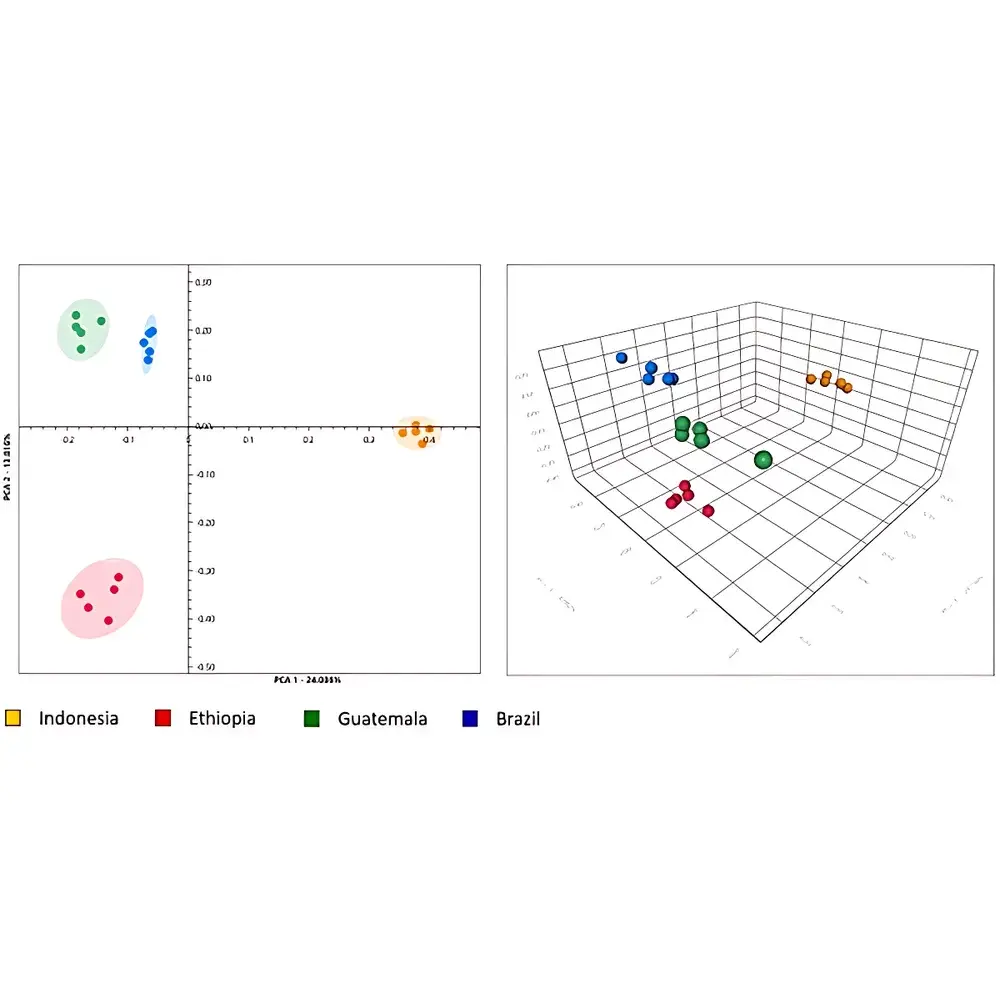
The AnalyzerPro™ software suite provides automated peak detection, batch processing, and multivariate statistical analysis—including principal component analysis (PCA), hierarchical clustering, and heat map visualization—for untargeted screening and comparative metabolomics. Raw data files are exported in open formats (e.g., mzML) compatible with third-party tools such as XCMS Online, MZmine, and Compound Discoverer. All acquisition parameters—including gas temperature ramp profiles, dwell times, and scan ranges—are stored with metadata in a structured SQLite database, ensuring full traceability for regulatory submissions and peer-reviewed publication.
Applications
- Food Safety: Rapid screening of >500 pesticide residues in fruits and vegetables (FDA CFSAN validated protocols); detection of mycotoxins, adulterants, and packaging migrants
- Pharmaceutical QA/QC: Identity confirmation of APIs and excipients; counterfeit drug detection; stability-indicating analysis of degradation products
- Forensic Toxicology: On-site identification of illicit drugs, explosives, and chemical warfare agent markers on currency, documents, or clothing
- Clinical Research: Direct profiling of biomarkers in dried blood spots, saliva swabs, and tissue sections without homogenization
- Environmental Monitoring: Field-deployable detection of PAHs, PCBs, and flame retardants in soil, water, and air particulates
- Materials Science: Surface characterization of polymers, coatings, and nanocomposites; additive identification in 3D-printed resins
FAQ
Is DART® JS a standalone mass spectrometer?
No—it is an atmospheric pressure ion source designed exclusively for coupling with external mass spectrometers. It does not include mass analyzers, detectors, or vacuum systems.
Can DART® JS be used with high-resolution mass spectrometers?
Yes. It is fully compatible with HRMS platforms (e.g., Q-TOF, Orbitrap, FT-ICR) and delivers accurate mass measurements consistent with the resolving power and mass accuracy of the host instrument.
Does DART® require method development for each new sample type?
Minimal optimization is required—typically only gas temperature and grid voltage adjustments. Predefined application methods are available for pharmaceuticals, pesticides, forensics, and food matrices.
How is calibration performed?
Calibration is conducted using standard tuning solutions introduced via direct infusion or static probe. Internal lock-mass correction is supported when enabled by the host MS vendor’s software.
What safety certifications does the DART® JS system hold?
It meets UL 61010-1 and IEC 61010-1 standards for laboratory electrical equipment, with CE marking for EMC and low-voltage directive compliance.



