
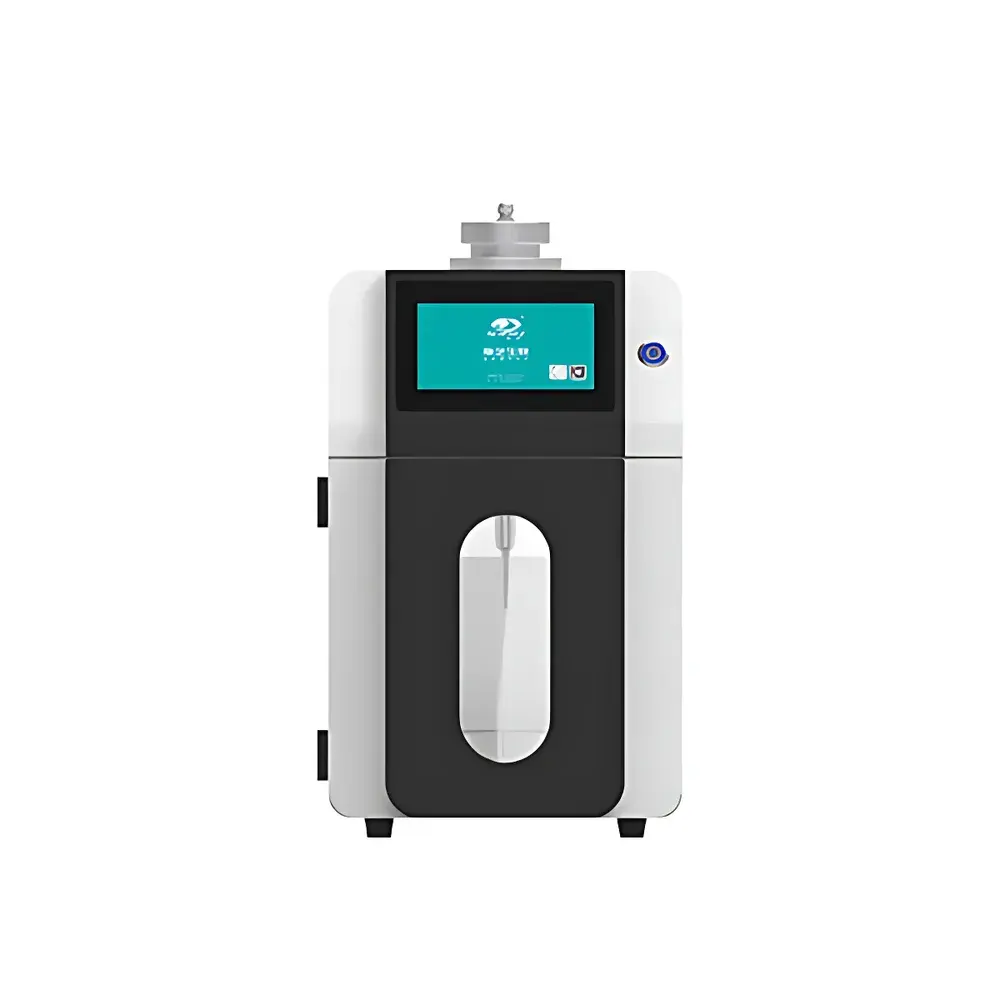
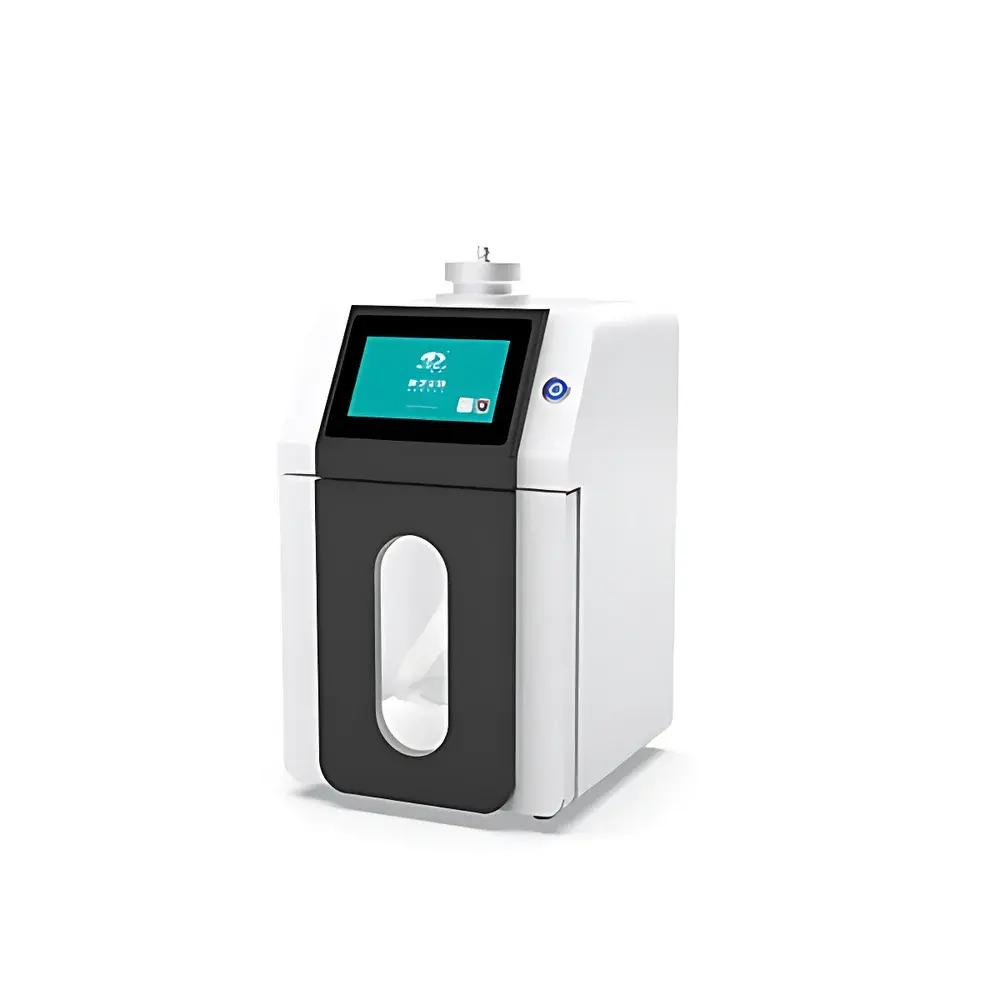
Ningbo Scientz SCIENTZ-650J Integrated Ultrasonic Cell Disruptor
| Brand | Scientz |
|---|---|
| Origin | Zhejiang, China |
| Manufacturer Type | Direct Manufacturer |
| Instrument Type | Ultrasonic Cell Disruptor |
| Model | SCIENTZ-650J |
| Design | Integrated Benchtop System |
| Transducer Material | TC4 Titanium Alloy (Grade 5 Ti-6Al-4V) |
| Power Adjustment | 1–100% in 1% increments |
| Time Resolution | 0.1 s (ultrasonication & interval) |
| Operating Modes | Continuous & Pulse (duty cycle programmable) |
| Safety Features | Overload, overtemperature, and timeout alarms |
| Acoustic Enclosure | Multi-layer acoustic damping panels (STC-rated) |
| Control Interface | Programmable digital controller with remote lift actuation |
Overview
The Ningbo Scientz SCIENTZ-650J Integrated Ultrasonic Cell Disruptor is an engineered benchtop solution for controlled mechanical lysis of biological cells, subcellular organelles, and microbial suspensions. It operates on the principle of high-intensity ultrasonic cavitation—where rapid pressure oscillations generate transient microbubbles in liquid media that collapse violently, producing localized shear forces, microstreaming, and thermal transients sufficient to disrupt membranes and release intracellular components. Designed for reproducible sample preparation in molecular biology, protein biochemistry, and biopharmaceutical R&D labs, the SCIENTZ-650J integrates transducer, generator, and acoustic shielding into a single compact footprint—eliminating inter-unit cabling and alignment variability common in modular ultrasonic systems. Its fixed-frequency operation at 20 kHz (±500 Hz) ensures stable energy delivery across diverse viscosities and suspension densities, while the TC4 titanium alloy probe (horn) provides exceptional fatigue resistance and corrosion immunity in aqueous and mildly acidic/basic buffers.
Key Features
- Integrated Architecture: All core subsystems—including ultrasonic generator, piezoelectric transducer, adjustable vertical lift mechanism, and acoustic enclosure—are co-located within a single stainless-steel chassis, minimizing vibration coupling and optimizing energy transfer efficiency.
- Motorized Probe Positioning: Precision stepper-motor-driven vertical lift enables repeatable immersion depth control (±0.5 mm accuracy) and remote actuation via front-panel interface or external trigger signal—critical for multi-sample workflows and integration with automated liquid handlers.
- Acoustic Noise Suppression: Triple-layer sound-dampening enclosure—comprising mass-loaded vinyl, viscoelastic polymer, and perforated stainless steel—achieves ≥35 dB(A) noise reduction at operator position (measured per ISO 3744), enabling safe extended use in shared laboratory environments.
- Programmable Ultrasonic Parameters: Full digital control of amplitude (1–100% in 1% steps), pulse duration (0.1–999.9 s), interval time (0.1–999.9 s), and total treatment duration (0.1–999.9 min), with up to 20 user-defined protocols stored in non-volatile memory.
- Real-Time Monitoring & Safety Interlocks: Internal thermistor array monitors transducer temperature; current-sensing circuitry detects load impedance shifts indicative of probe wear or sample boiling. Automatic shutdown triggers upon exceedance of preset thresholds for temperature (>60 °C), current draw (>110% nominal), or elapsed time.
- TC4 Titanium Alloy Sonotrode: Probe manufactured from ASTM F136-grade Ti-6Al-4V (TC4), offering superior tensile strength (≥895 MPa), low thermal expansion coefficient (8.6 × 10⁻⁶ /°C), and resistance to erosion under prolonged cavitation stress—validated for >5,000 operating hours in standard buffer conditions.
Sample Compatibility & Compliance
The SCIENTZ-650J accommodates sample volumes from 0.5 mL to 500 mL using interchangeable probes (standard 6 mm, optional 3 mm and 10 mm diameters) and compatible cup horns for sealed-vessel processing. It supports aqueous buffers (PBS, Tris-HCl), chaotropic agents (urea, guanidine HCl), and organic-aqueous mixtures below 30% v/v ethanol or acetone. While not certified for IEC 61000-6-3 EMC compliance or UL/CSA listing, its design adheres to general laboratory safety principles outlined in ANSI Z9.7 and ISO 15190:2020 (Laboratory Safety). Documentation includes traceable calibration records for amplitude linearity and timer accuracy (NIST-traceable stopwatch and oscilloscope verification), supporting GLP-aligned recordkeeping.
Software & Data Management
The embedded controller logs timestamped operational data—including actual delivered amplitude (%), real-time temperature, cumulative sonication time, and alarm events—to internal flash memory (16 MB). Data export is supported via USB 2.0 port in CSV format for post-acquisition analysis in Excel or Python-based workflow tools. Though no proprietary PC software is bundled, the device accepts TTL-level external start/stop commands and outputs status signals (RS-232 optional), facilitating integration into LIMS-controlled environments where audit trails must comply with FDA 21 CFR Part 11 requirements (when paired with validated third-party data acquisition platforms).
Applications
- Preparation of native protein extracts from E. coli, yeast, mammalian cell lines, and plant tissues without denaturation
- Shearing chromatin for ChIP-seq and ATAC-seq library construction
- Disruption of Gram-positive bacteria (e.g., Bacillus subtilis) and fungal cell walls
- Nanoparticle dispersion in biopolymer matrices (e.g., chitosan, alginate)
- Exosome isolation from cell culture supernatants and plasma
- Accelerated solvent extraction of secondary metabolites from botanical samples
FAQ
What is the maximum recommended sample volume for continuous operation?
For optimal heat dissipation and cavitation efficiency, continuous-mode operation is validated for volumes ≤200 mL with active cooling (ice-water bath). Volumes up to 500 mL require pulsed mode (e.g., 5 s on / 10 s off) to prevent thermal degradation.
Can the SCIENTZ-650J be used with corrosive solvents like chloroform or TFA?
TC4 titanium resists most aqueous acids and bases but is not compatible with halogenated solvents, strong oxidizers (e.g., nitric acid >20%), or hydrofluoric acid. Consult the material compatibility chart before exposure.
Is probe calibration required between experiments?
No routine recalibration is needed; however, amplitude linearity verification using a calibrated laser vibrometer is recommended quarterly or after probe replacement.
Does the system support GMP-compliant electronic signatures?
The standalone unit does not include electronic signature capability; integration with validated third-party software (e.g., LabArchives, Dotmatics) is required to meet 21 CFR Part 11 requirements.
What maintenance intervals are specified for the transducer and generator?
Visual inspection of probe threads and horn tip erosion every 200 hours; full transducer performance validation (impedance sweep, output amplitude) annually or after 1,000 operating hours.




