
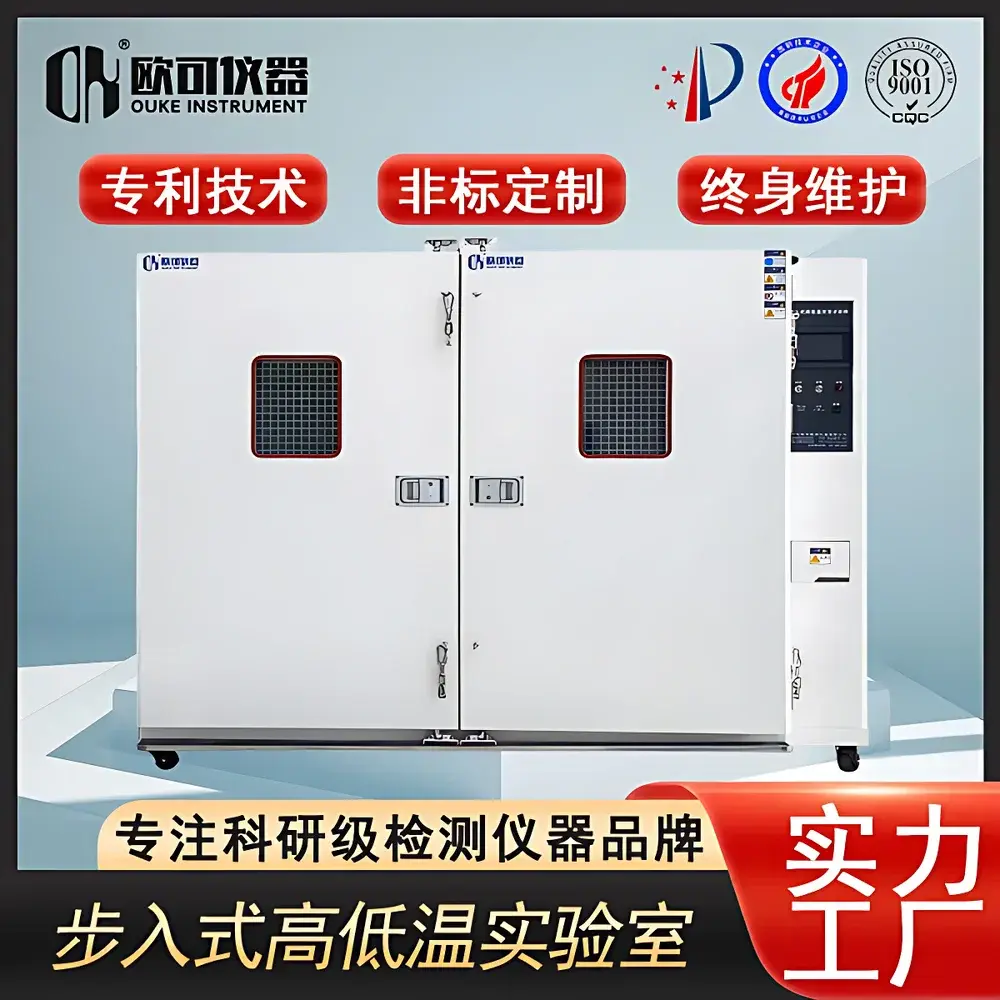
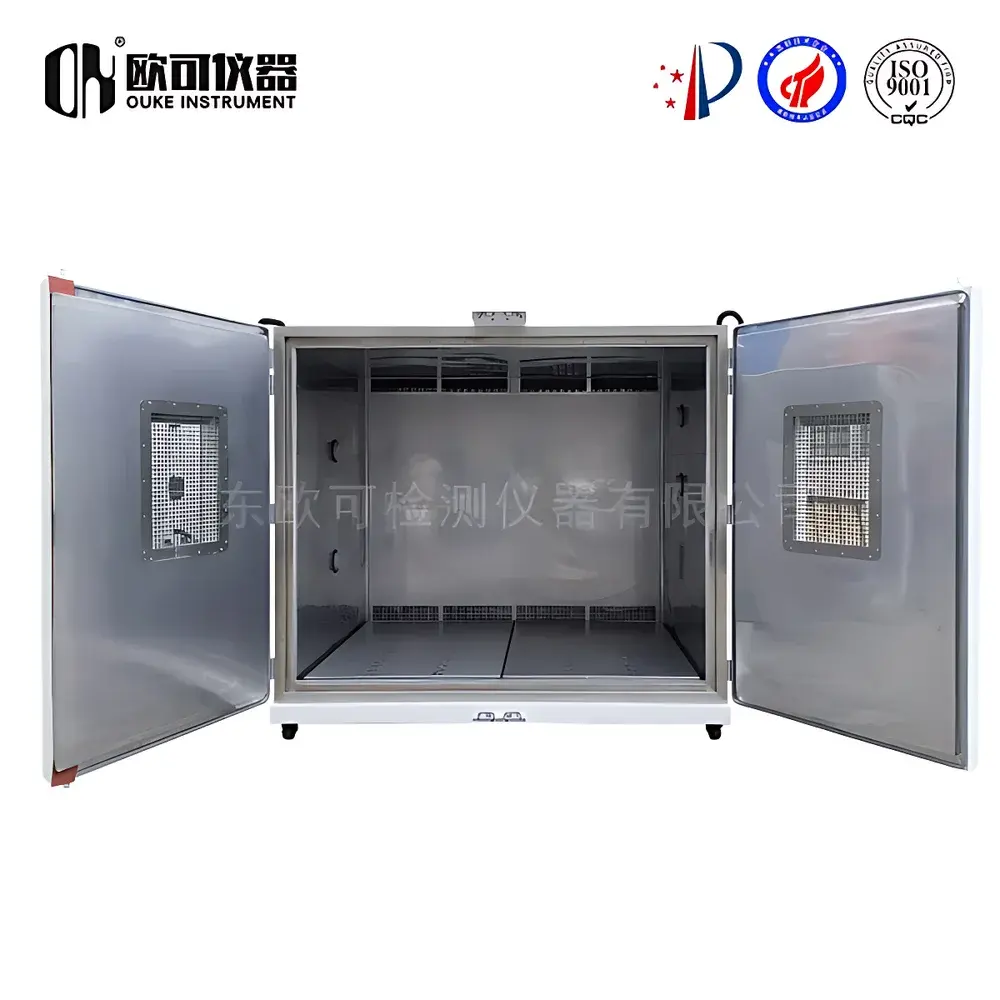
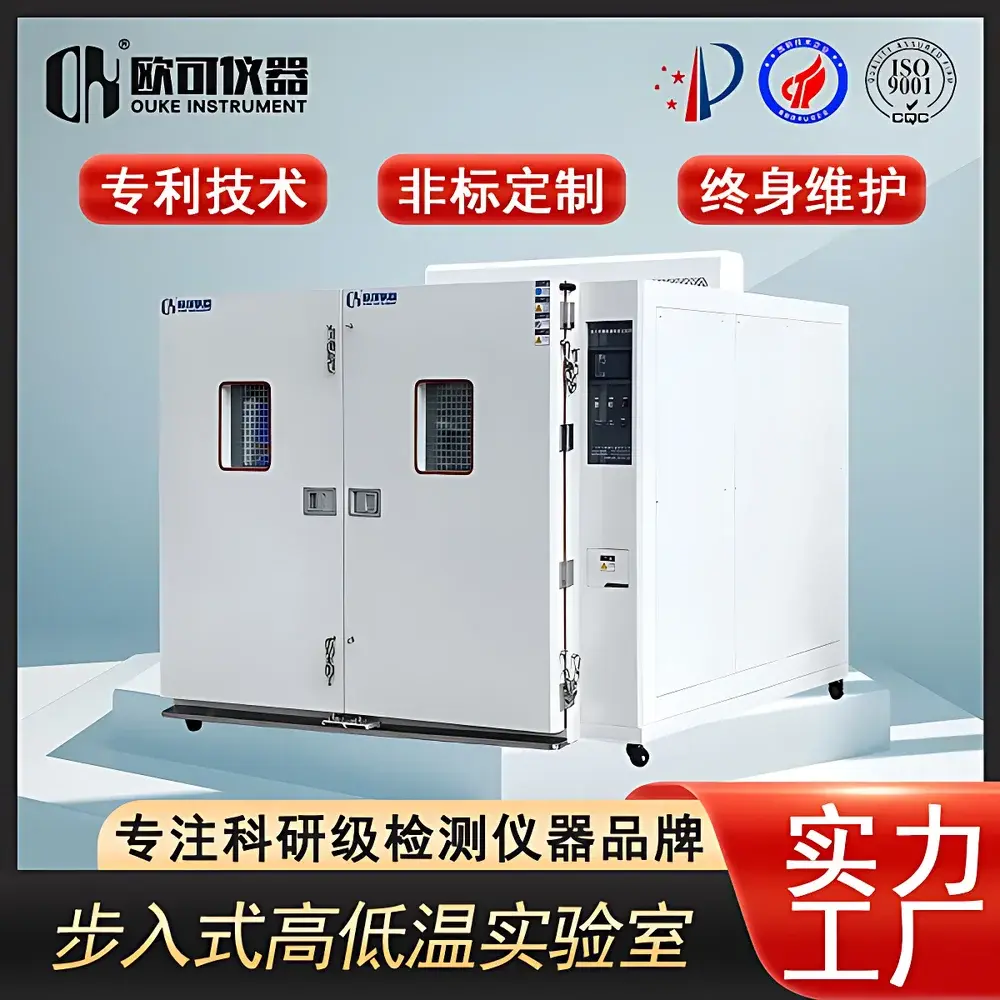
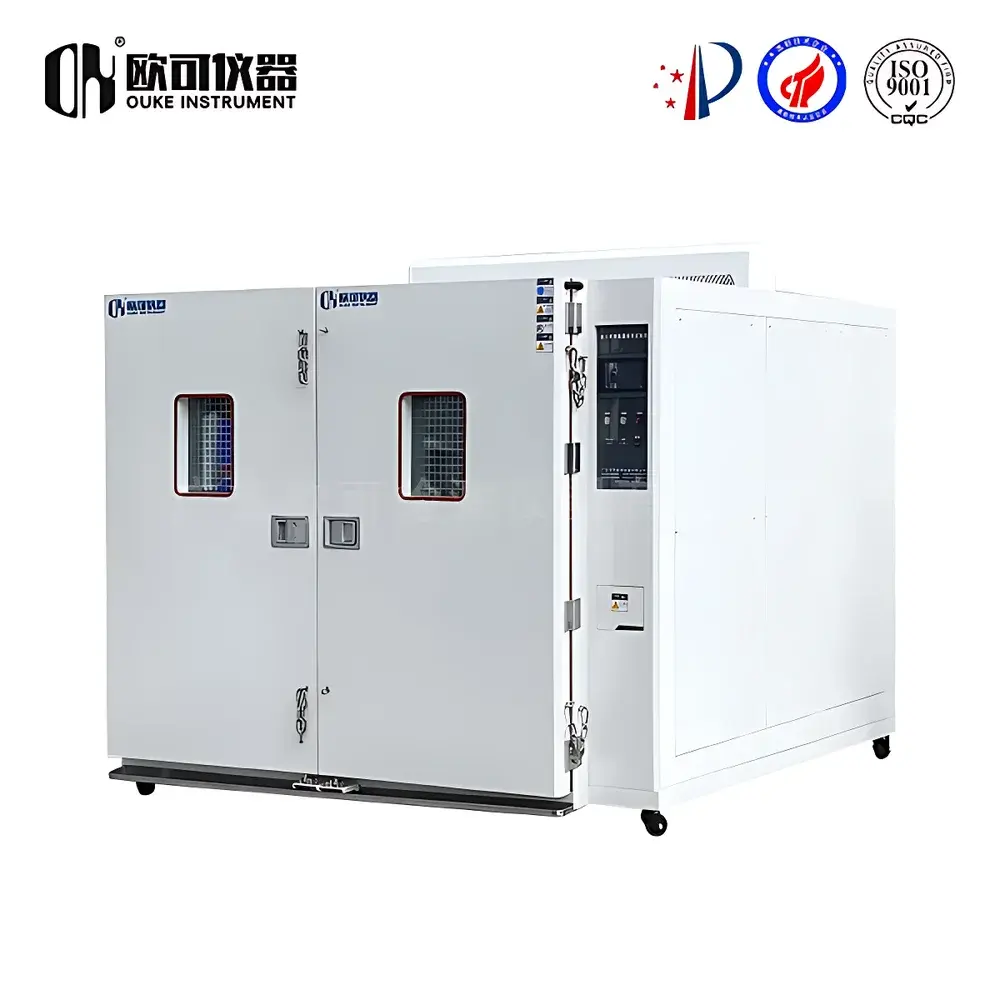
OK OK-STH Series Walk-in High-Temperature Aging Chamber
| Brand | OK Instruments |
|---|---|
| Origin | Guangdong, China |
| Manufacturer Type | Direct Manufacturer |
| Country of Origin | China |
| Model | OK-STH-Series (Custom Volume) |
| Temperature Range | A: 0°C |
| B | −20°C |
| C | −40°C |
| D | −60°C |
| E | −70°C |
| Temperature Uniformity | ±3°C |
| Temperature Control Accuracy | ±1°C |
| Heating Rate | 1.0–4.0°C/min |
| Internal Dimensions | Custom-Designed per Client Specification (D×W×H) |
Overview
The OK OK-STH Series Walk-in High-Temperature Aging Chamber is an engineered environmental test system designed for accelerated life testing, burn-in validation, and thermal stress screening of electronic components, PCB assemblies, power modules, telecom equipment, and industrial control systems. Unlike benchtop thermal chambers, this walk-in solution operates on a project-based engineering framework—integrating structural thermodynamics, high-power electrical distribution, and real-time energy telemetry into a unified reliability verification platform. Its core measurement principle relies on precise, spatially uniform temperature control within a thermally insulated enclosure, coupled with programmable thermal ramping profiles compliant with industry-standard aging protocols (e.g., JEDEC JESD22-A108, MIL-STD-810H Method 502.6). The chamber is not a generic “oven” but a calibrated, auditable test environment where temperature homogeneity, power delivery integrity, and data traceability are jointly validated to support GLP-compliant qualification workflows.
Key Features
- Modular polyurethane-insulated chamber construction with stainless steel or color-coated steel cladding, rated for continuous operation up to +85°C (optional extended range down to −70°C with dual-stage refrigeration)
- High-efficiency air circulation system featuring heavy-duty centrifugal fans and optimized ductwork, ensuring ±3°C temperature uniformity across the full working volume per IEC 60068-3-5
- Multi-zone heating architecture using Ni-Cr alloy resistive elements, dynamically scaled to achieve user-specified ramp rates (1.0–4.0°C/min) without thermal overshoot
- Integrated centralized power distribution cabinet supporting configurable AC (220 V / 380 V) and DC output channels, each equipped with independent on/off sequencing, voltage/current monitoring, and kWh logging
- Industrial-grade PLC-based controller with Ethernet/IP interface, supporting Modbus TCP, OPC UA, and optional FDA 21 CFR Part 11-compliant audit trail functionality
- Structural adaptability: internal dimensions, door configuration (including double-leaf heavy-duty access), observation windows, emergency exhaust, and fire-rated interior finishes are fully customizable
Sample Compatibility & Compliance
The OK-STH accommodates heterogeneous sample loads—including rack-mounted servers, chassis-level telecom units, automotive ECUs, and stacked PCB trays—via reinforced steel shelving systems rated for ≥150 kg/m² loading. All configurations comply with ISO/IEC 17025:2017 requirements for test environment control and are suitable for use in GMP-aligned manufacturing facilities. Optional integration with UL 61010-1 certified power distribution and EN 61326-1 EMC-compliant instrumentation ensures safe operation in regulated production environments. When configured with low-temperature capability (−20°C and below), the system meets ASTM E145 Class B performance criteria for forced-air thermal chambers.
Software & Data Management
The standard control software provides real-time visualization of chamber temperature profiles, power consumption per circuit, and alarm event logs. Historical datasets are stored locally (SD card or internal SSD) and exportable in CSV or XML format for downstream analysis in MATLAB, Python, or enterprise MES platforms. Optional firmware packages enable scheduled test execution, remote parameter adjustment via secure HTTPS, and automated report generation aligned with ISO/IEC 17025 documentation requirements. Audit trails record operator ID, timestamp, parameter changes, and calibration events—fully traceable for internal QA reviews or external regulatory audits.
Applications
- Pre-production burn-in screening of semiconductor devices and embedded controllers
- Thermal endurance validation of lithium-ion battery management systems (BMS) under sustained elevated temperatures
- Reliability assessment of 5G base station RF modules subjected to cyclic thermal stress (with optional low-temperature extension)
- Quality assurance for aerospace avionics undergoing DO-160 Section 4 thermal conditioning
- Process validation of conformal coating curing and adhesive bonding stability
- Accelerated aging studies for medical device electronics per IEC 60601-1 Clause 11.1.3
FAQ
Does the quoted price include installation, commissioning, and on-site validation?
Yes—our standard quotation covers engineering design review, factory acceptance testing (FAT), site preparation guidance, on-site mechanical/electrical installation, functional commissioning, and temperature mapping per ISO/IEC 17025 Annex A. Travel and accommodation for field engineers are itemized separately.
Can the power distribution system be integrated with our existing MES or SCADA platform?
Yes—Modbus TCP, OPC UA, and RESTful API interfaces are available as factory-installed options. We provide protocol documentation and assist with tag mapping during integration.
What is the warranty coverage, and which components are excluded?
We offer a 24-month comprehensive warranty covering all structural, thermal, and control subsystems. Exclusions include consumables (e.g., fan belts), damage from improper utility supply (voltage spikes, phase imbalance), and modifications performed outside authorized service channels.
How is temperature uniformity verified, and is a calibration certificate provided?
Temperature uniformity is validated using a 9-point sensor grid per IEC 60068-3-5. A NIST-traceable calibration certificate (including uncertainty budget) is issued post-commissioning and included in the final handover package.
Is remote diagnostics supported, and what cybersecurity measures are implemented?
Remote diagnostics are enabled via encrypted TLS tunneling. The controller firmware complies with IEC 62443-4-2 SL2 requirements, including role-based access control, firmware signature verification, and disabled default credentials.



