
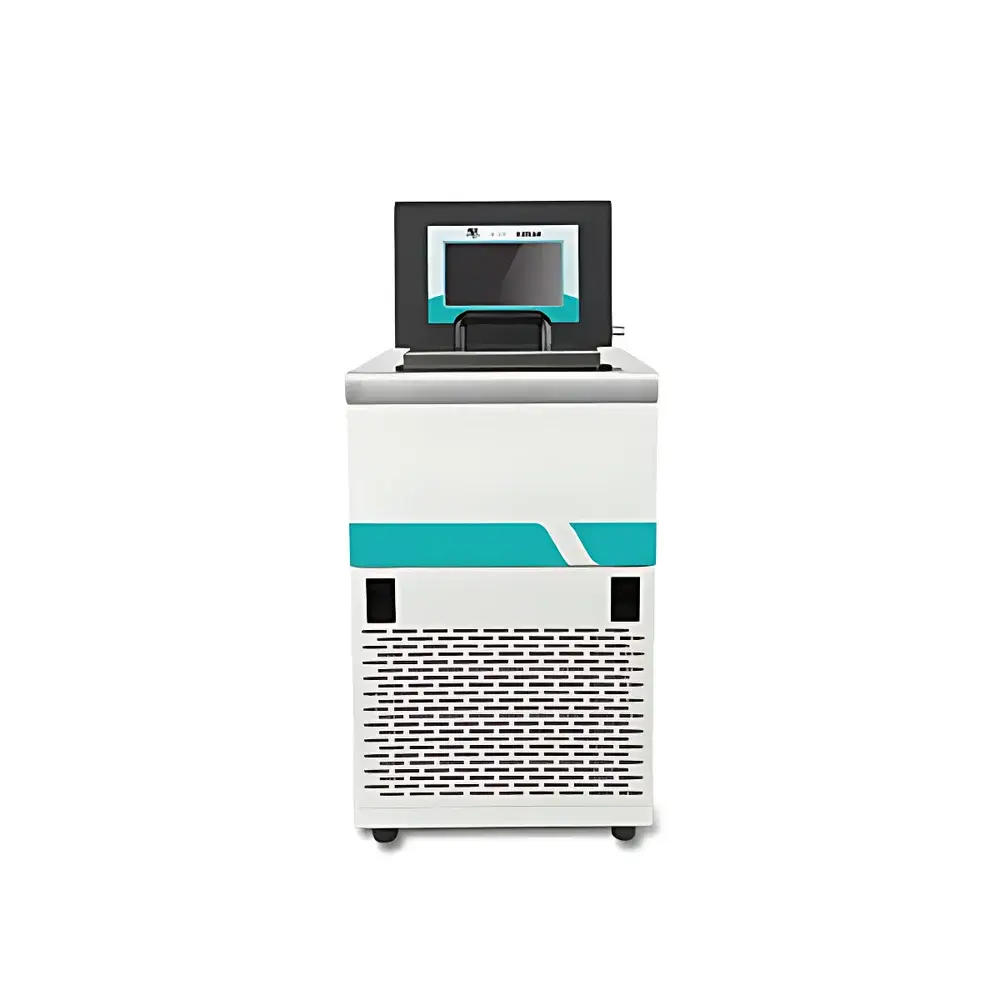
Scientz GDH-2010 High-Precision Low-Temperature Circulating Bath (Heating & Cooling)
| Brand | Scientz |
|---|---|
| Origin | Zhejiang, China |
| Manufacturer Type | Direct Manufacturer |
| Instrument Type | Circulating Temperature Bath |
| Circulation Mode | Internal & External |
| Temperature Control | Dual-mode (Heating & Refrigeration) |
| Bath Dimensions (L×W×H) | 260 × 200 × 200 mm |
| Temperature Range | −20 °C to +100 °C |
| Temperature Stability | ±0.005 °C to ±0.02 °C |
Overview
The Scientz GDH-2010 is a high-precision, dual-function circulating bath engineered for laboratory environments requiring tightly regulated thermal conditions across a broad operational range (−20 °C to +100 °C). It operates on the principle of forced liquid circulation—using a thermally stable fluid medium (water or silicone oil)—to deliver uniform, reproducible temperature control via integrated heating and refrigeration subsystems. Unlike basic immersion baths, the GDH-2010 features both internal circulation (for bath homogeneity) and external circulation (for remote temperature conditioning of auxiliary equipment such as spectrophotometer cells, viscometer jackets, or reaction blocks). Its core architecture integrates a hermetically sealed, imported Scroll-type compressor (Secop, Germany), eco-friendly R-134a refrigerant, and a microprocessor-based PID controller with adaptive tuning algorithms—ensuring minimal thermal overshoot and rapid setpoint recovery under dynamic load conditions.
Key Features
- High-stability temperature control: Achieves ±0.005 °C stability at mid-range setpoints (e.g., 25 °C), degrading gradually to ±0.02 °C at extreme endpoints (−20 °C or +100 °C), validated per ISO/IEC 17025-compliant calibration protocols.
- Dual-circulation architecture: Switchable internal recirculation (for bath uniformity) and external pumping (max. flow rate 18 L/min, pressure head up to 0.3 bar) with adjustable flow control for compatibility with diverse external thermal loads.
- Intelligent power management: Auto-restart function preserves user-defined parameters—including setpoint, ramp rate, hold time, and pump speed—after power interruption; no manual reconfiguration required.
- Programmable timing: Digital timer supports up to 99 hours 59 minutes of continuous operation, with automatic shutdown upon completion—critical for unattended overnight calibration cycles.
- Compressor safety system: Integrated thermal overload protection, high-pressure cut-off, and phase-loss detection prevent hardware failure during extended operation or ambient temperature fluctuations.
- Low-noise design: Acoustic emission <45 dB(A) at 1 m distance, achieved through vibration-dampened mounting, insulated compressor housing, and optimized fan blade geometry—suitable for quiet laboratory zones and shared instrumentation rooms.
Sample Compatibility & Compliance
The GDH-2010 accommodates aqueous and low-viscosity organic media (e.g., water, ethylene glycol/water mixtures, silicone oils up to 50 cSt). Its stainless-steel 304 bath chamber and PTFE-coated pump wetted parts ensure chemical resistance against common laboratory solvents and buffer solutions. The unit complies with IEC 61010-1:2010 (Safety Requirements for Electrical Equipment for Measurement, Control, and Laboratory Use) and meets CE marking requirements for EMC (EN 61326-1) and low-voltage directives. While not certified for GMP production environments, its stable thermal output and parameter retention support GLP-aligned calibration workflows per ASTM E2251 (Standard Practice for Calibration of Thermometers) and ISO 17025 Clause 5.5.2 (Equipment Verification).
Software & Data Management
The GDH-2010 operates via an embedded 4.3-inch TFT-LCD interface with real-time graphical display of setpoint, actual temperature, pump status, and error codes. Optional RS485 communication port enables integration into centralized lab monitoring systems using Modbus RTU protocol. When connected to Scientz’s optional LabControl Suite (v3.2+), users gain access to audit-trail-enabled logging (time-stamped temperature records, operator ID, parameter changes), exportable CSV reports, and remote setpoint adjustment—facilitating compliance with FDA 21 CFR Part 11 requirements where electronic records are mandated.
Applications
- Primary and secondary thermometer calibration against reference standards (e.g., PRTs, thermistors, liquid-in-glass thermometers) in metrology labs.
- Temperature sensor validation for process analytical technology (PAT) deployments in pharmaceutical manufacturing.
- Thermal conditioning of optical components (e.g., laser diodes, interferometer stages) requiring sub-0.02 °C stability.
- Viscometer and rheometer bath coupling for ASTM D445/D2161 viscosity testing under controlled thermal gradients.
- Cell culture incubator pre-conditioning and bioreactor jacket temperature referencing in life science research.
- Material property testing—such as coefficient of thermal expansion (CTE) determination—where thermal soak uniformity directly impacts measurement fidelity.
FAQ
What fluids are compatible with the GDH-2010 bath chamber?
Deionized water, 30–50% ethylene glycol/water mixtures, and silicone oils with kinematic viscosity ≤50 cSt at 25 °C. Avoid halogenated solvents, strong acids/bases, or fluids with flash points below 60 °C.
Can the GDH-2010 maintain stability at −20 °C with external circulation active?
Yes—stability of ±0.02 °C is maintained at −20 °C under full external load (≤10 L/min flow), provided ambient room temperature remains between 15–30 °C and ventilation clearance ≥15 cm on all sides.
Is the unit suitable for USP or compounding environment use?
It is not classified as cleanroom-rated equipment; however, its non-shedding stainless-steel chamber and absence of internal lubricants make it suitable for adjacent support roles (e.g., coolant supply for isolator glove port temperature control) when housed outside ISO Class 5/7 zones.
Does the GDH-2010 support ramp-and-soak temperature profiles?
No—the standard controller supports only single-point setpoint control with hold timing. Multi-step profiling requires integration with external programmable logic controllers (PLCs) via the RS485 interface.
How often should the refrigerant circuit be serviced?
Under normal laboratory use (8 hrs/day, 5 days/week), no scheduled refrigerant servicing is required. Annual inspection of condenser coil cleanliness and compressor current draw is recommended per manufacturer maintenance guidelines.



