
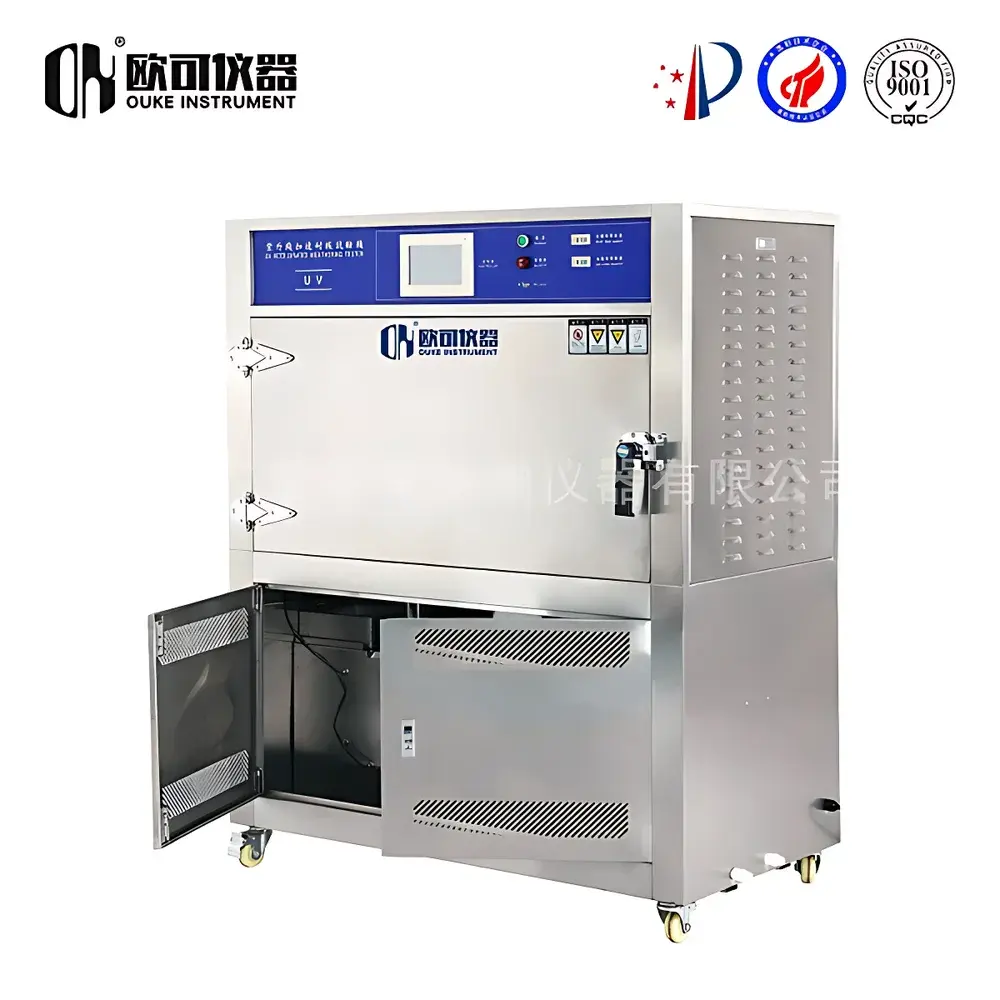
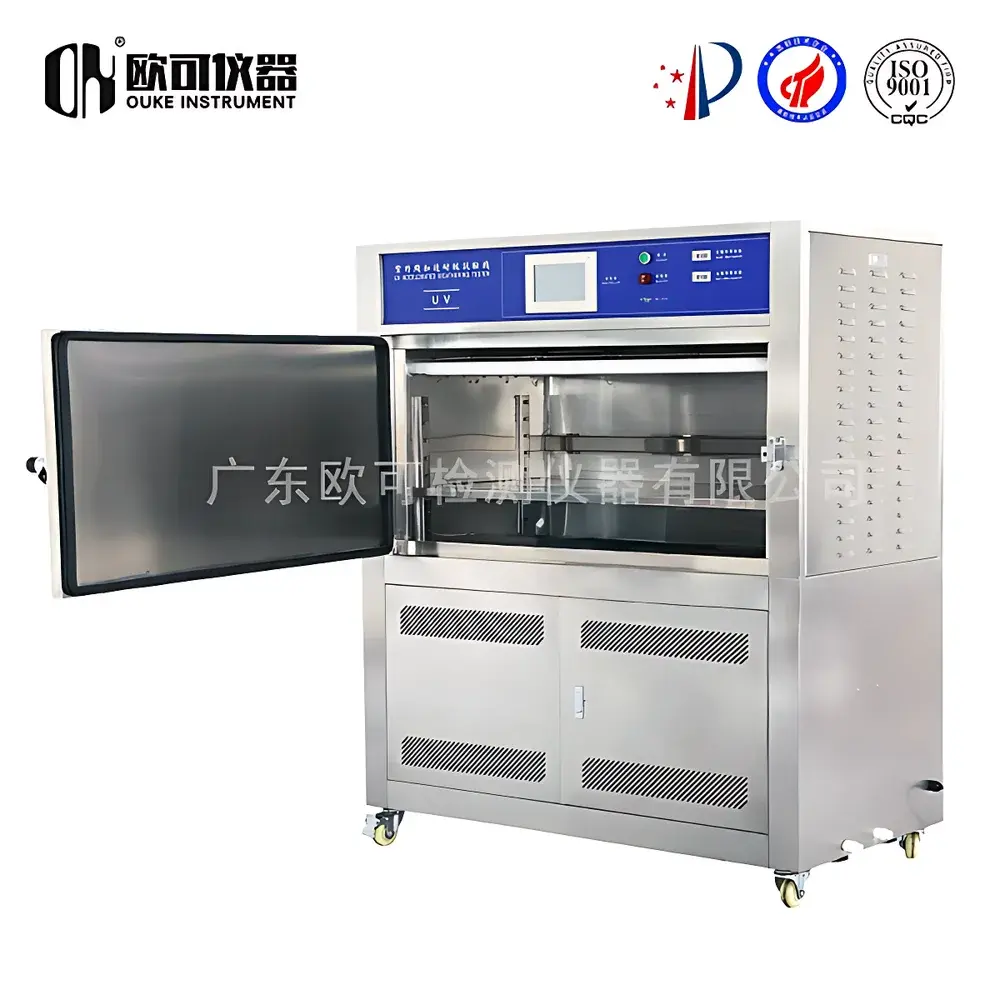
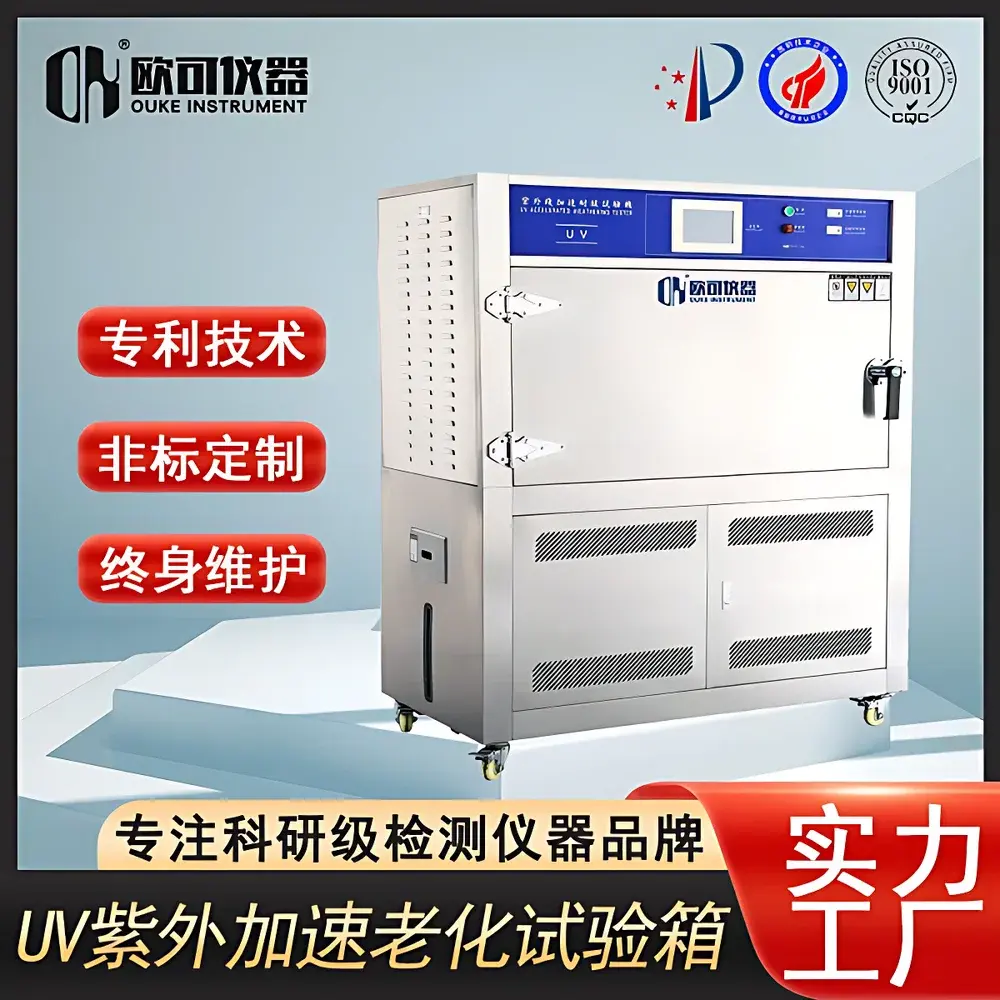
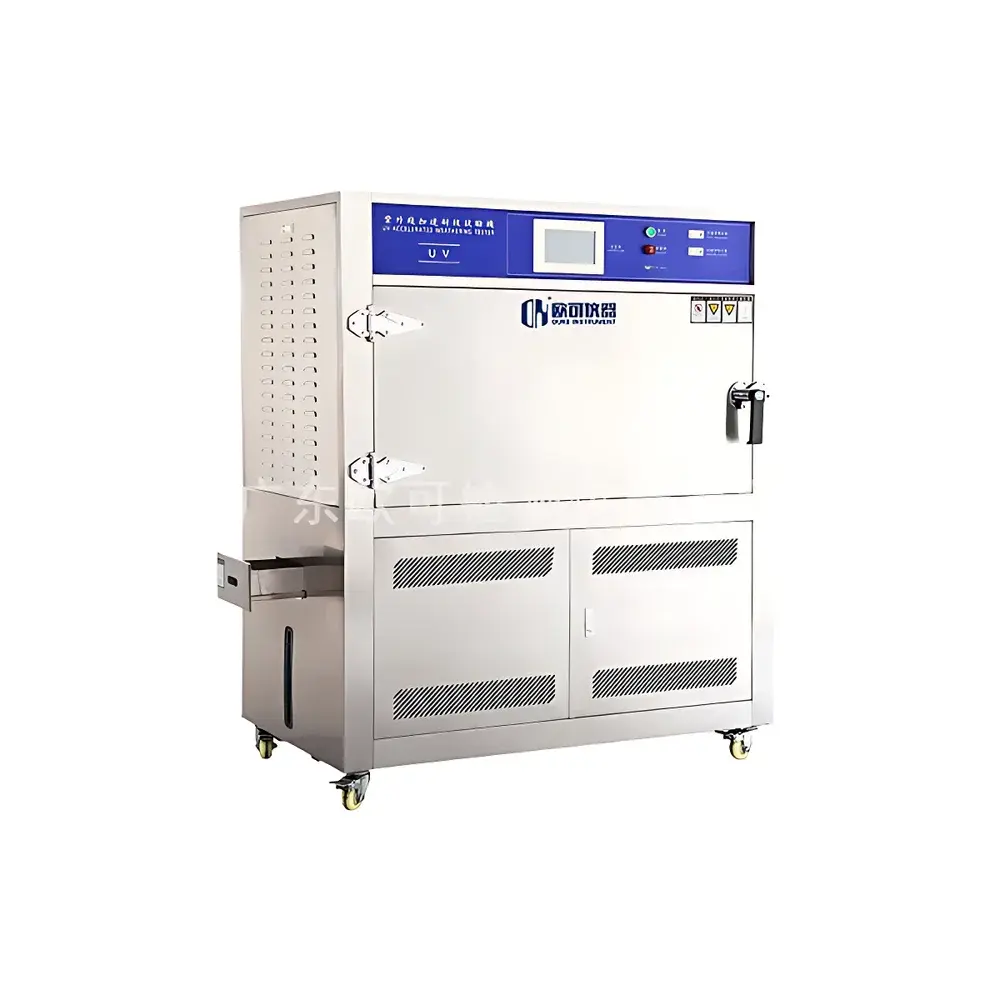
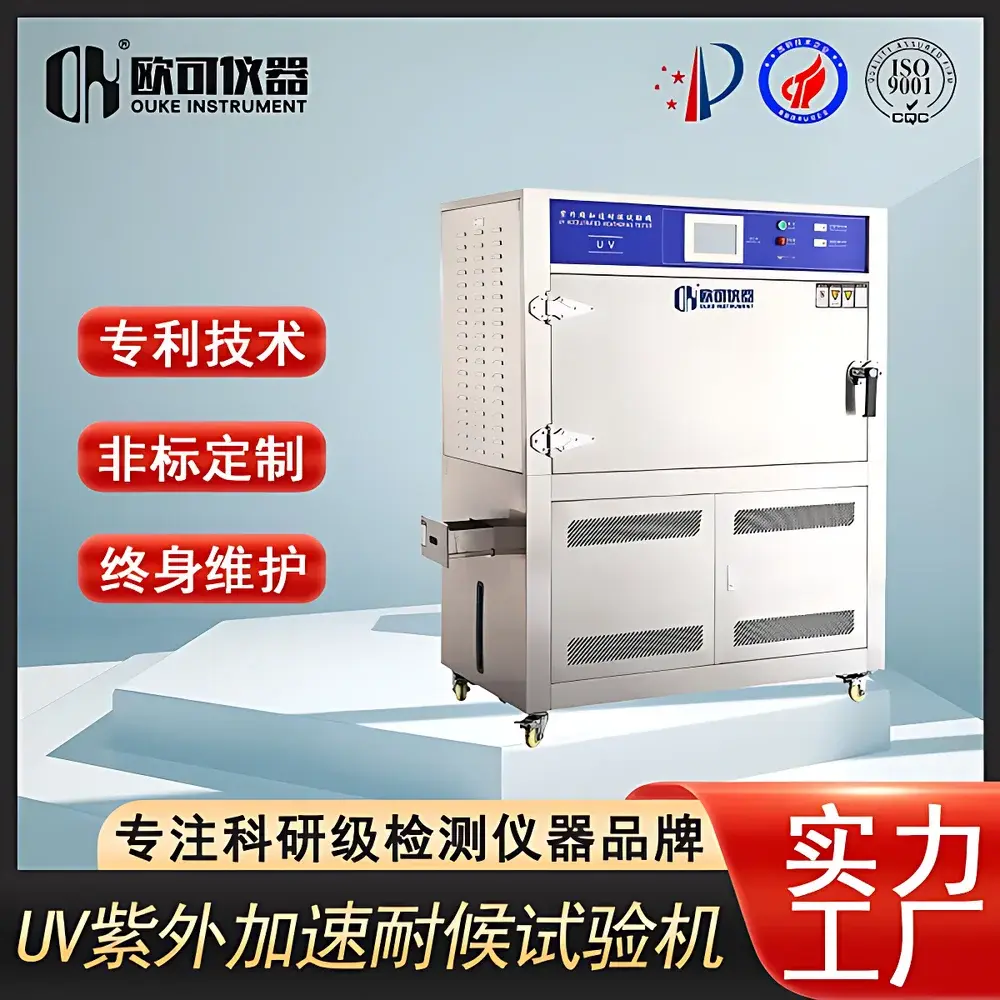
OK Instruments OK-UV-290.0.00 UV Aging Test Chamber for Cosmetics
| Brand | OK Instruments |
|---|---|
| Origin | Guangdong, China |
| Manufacturer Type | Direct Manufacturer |
| Model | OK-UV-290.0.00 |
| Humidity Range | ≥95% RH (in-chamber actual value) |
| Lamp Power | 40 W per tube |
| Irradiance Range | 0.72 W/m² |
| Exposure Time | 1–9999 h (adjustable) |
| Illumination Temperature Range | RT to 70 °C |
| UV Wavelength Range | 280–400 nm |
| Chamber Dimensions (L×W×H) | 1170 × 400 × 400 mm |
Overview
The OK Instruments OK-UV-290.0.00 UV Aging Test Chamber is an engineered environmental test system designed specifically for photostability evaluation of cosmetic formulations and packaging under controlled ultraviolet radiation. It operates on the principle of accelerated UV exposure—mimicking the photochemical degradation mechanisms induced by solar UVA (315–400 nm) and UVB (280–315 nm) irradiation in real-world storage and usage conditions. Unlike general-purpose weathering chambers, this model integrates precise spectral output control within the 280–400 nm range, thermally regulated black-panel or chamber-air temperature control (RT to 70 °C), and high-humidity capability (≥95% RH), enabling reproducible simulation of tropical or high-sunlight climatic stressors. Its architecture supports both continuous irradiation and cyclic exposure protocols (e.g., light/dark or light/condensation cycles), aligning with internationally recognized acceleration methodologies used in regulatory stability testing.
Key Features
- UVA/UVB-capable lamp array with standardized 280–400 nm spectral output—compatible with ISO 4892-3 and ASTM G154 Class I/II irradiance profiles
- Precise irradiance control at 0.72 W/m² (measured at specimen plane), ensuring inter-laboratory repeatability and compliance with internal QC protocols
- Stable thermal management system maintaining chamber air temperature from ambient (RT) up to 70 °C ±2.5 °C, with optional black-panel sensor integration
- High-humidity environment generation (≥95% RH), critical for evaluating hydrolytic-photolytic synergy in emulsions and water-based actives
- Adjustable exposure duration (1–9999 hours) with programmable timer and non-volatile memory retention
- Robust stainless-steel interior chamber (1170 × 400 × 400 mm) optimized for uniform irradiance distribution and corrosion resistance
- 40 W UV fluorescent lamps (T8 or T5 format), field-replaceable and compliant with IEC 61215 UV preconditioning lamp specifications
Sample Compatibility & Compliance
The OK-UV-290.0.00 accommodates full-packaged commercial units—including glass dropper bottles, PET/PP tubes, aluminum-laminated sachets, and transparent acrylic display containers—as well as open-dish formulations for bulk stability screening. Its chamber geometry allows simultaneous placement of reference controls and multiple test variants without shadowing artifacts. The system supports alignment with major regulatory frameworks: it facilitates testing per ISO 24444 Annex C (photostability of sunscreen products), ISO 11607-1 (packaging validation under UV stress), and ICH Q5C (stability of biotechnological/biological products). While not certified to FDA 21 CFR Part 11 out-of-the-box, its operational logs and parameter settings are fully exportable for GLP/GMP audit trails when integrated with validated laboratory information management systems (LIMS).
Software & Data Management
The chamber features a microprocessor-based controller with LCD interface, supporting manual parameter entry and pre-programmed cycle templates. All setpoints—including irradiance level, temperature ramp rate, exposure time, and humidity hold duration—are stored with timestamped event logging. Data export is available via USB port in CSV format for post-test analysis in Excel, JMP, or statistical process control (SPC) platforms. Optional RS-485 or Ethernet connectivity enables remote monitoring and integration into centralized facility monitoring systems (FMS), supporting electronic record integrity per ALCOA+ principles when paired with appropriate validation documentation.
Applications
- Photostability assessment of light-sensitive actives: retinoids, ascorbic acid derivatives, niacinamide, ferulic acid, and botanical extracts
- Evaluation of colorant fade resistance in foundations, lipsticks, and tinted moisturizers using ΔE* measurements post-exposure
- Package integrity testing—monitoring yellowing index (YI), haze increase, tensile strength loss, and seal delamination in plastic and laminated structures
- Accelerated shelf-life modeling for new product launches, particularly for transparent or semi-transparent packaging formats
- Comparative benchmarking against competitive products or legacy formulations under identical irradiance/temperature/humidity stress profiles
- Supporting regulatory submissions requiring photostability data per ASEAN Cosmetic Directive Annex 5 or EU Cosmetics Regulation (EC) No 1223/2009, Article 8
FAQ
Does this chamber comply with ISO 4892-3 for xenon-arc equivalence?
No—it is a fluorescent UV-only chamber, aligned with ISO 4892-3 Method A (UV fluorescent lamps), not xenon-arc (Method B). For spectral match to daylight, xenon-arc systems are required.
Can UVB lamps (313 nm) be installed in place of standard UVA tubes?
Yes—the chamber accepts interchangeable UV-B313 or UV-A340 lamps per ASTM G154, provided electrical ballast compatibility is confirmed during installation.
Is calibration traceable to NIST or other national standards?
Lamp irradiance calibration requires periodic verification using a calibrated UV radiometer (e.g., ILT950 or EIT PowerMap); OK Instruments provides lamp aging curves and recommended recalibration intervals but does not supply NIST-traceable certificates.
What maintenance is required for long-term operational reliability?
Lamp replacement every 1,600–2,000 operating hours, quarterly cleaning of reflectors and viewport quartz, and annual verification of temperature/humidity sensor accuracy using reference probes.
Can this unit be used for non-cosmetic applications such as polymer film or adhesive testing?
Yes—its irradiance, temperature, and humidity parameters meet ASTM D4329 and ISO 4892-3 requirements for plastics, making it suitable for cross-industry material degradation studies.
Related Products



