
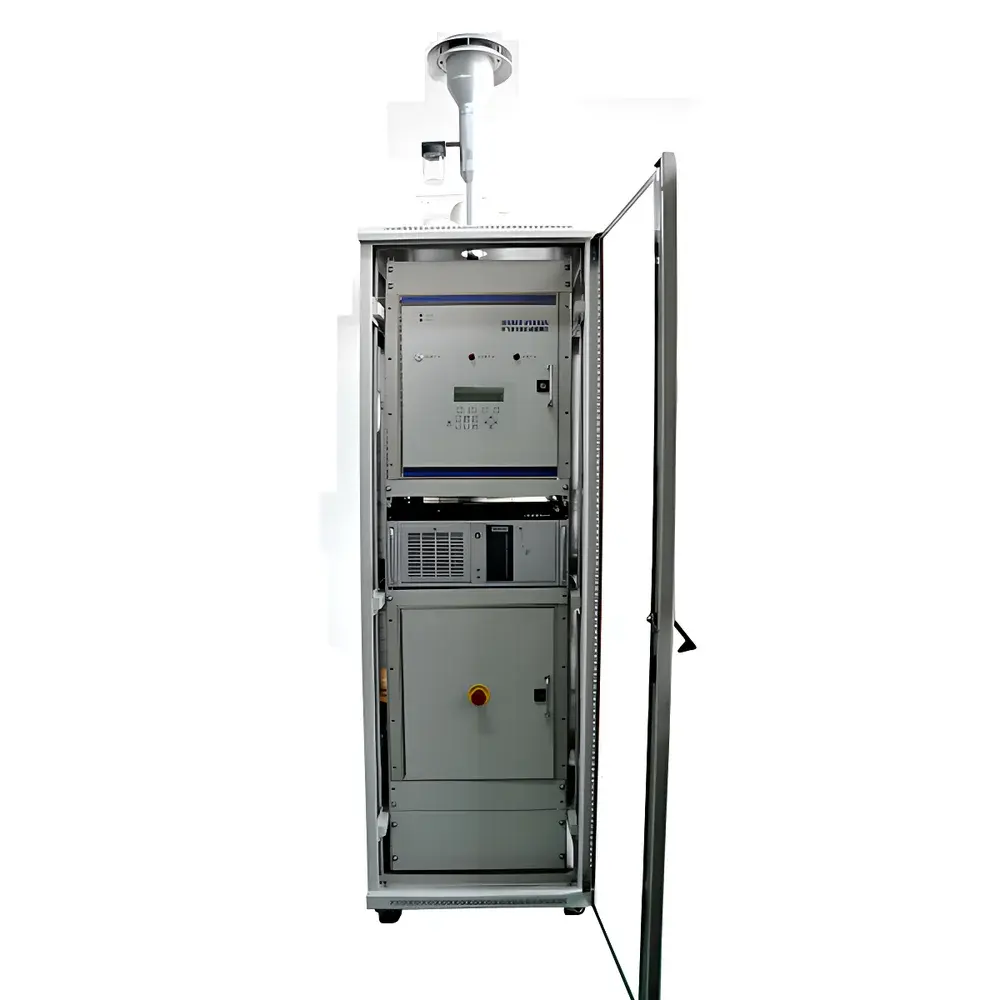
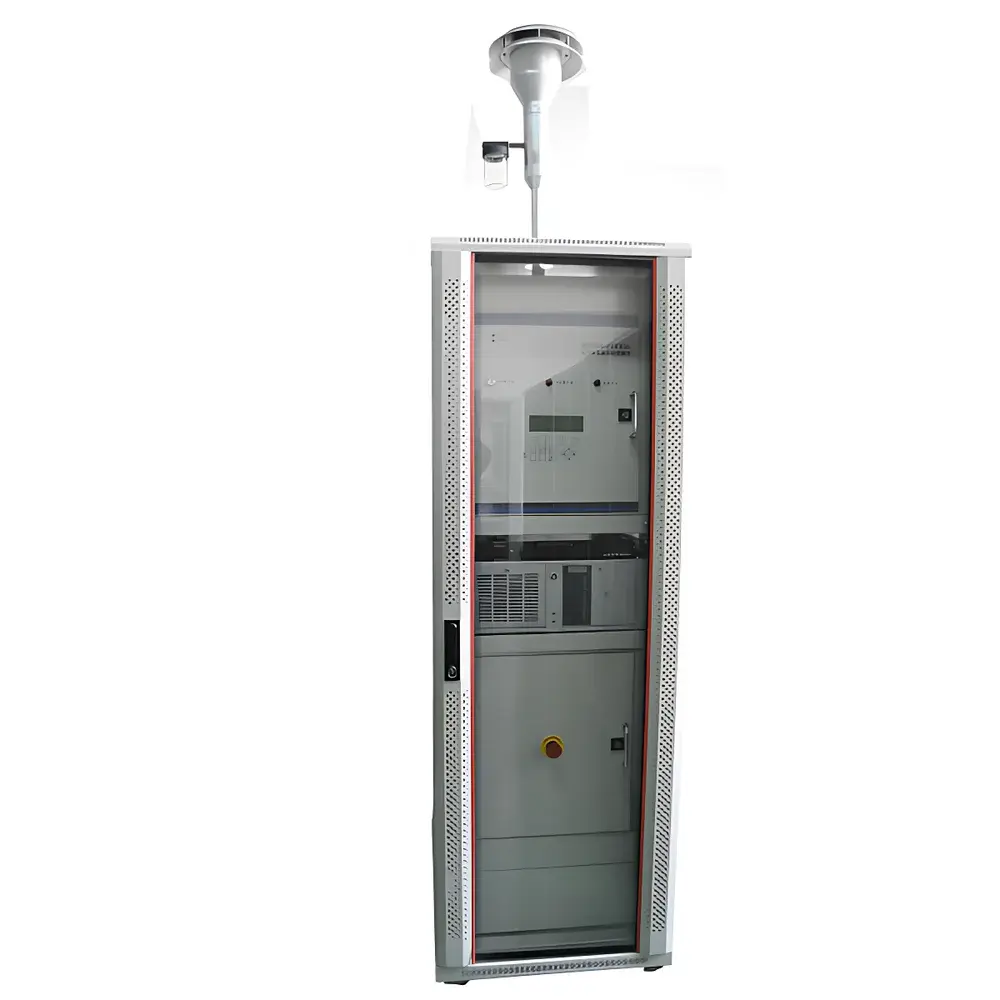
SAIL HERO XHAM-2000A Atmospheric Heavy Metal Online Analyzer
| Brand | SAIL HERO |
|---|---|
| Origin | Hebei, China |
| Manufacturer Type | Direct Manufacturer |
| Country of Origin | China |
| Model | XHAM-2000A |
| Product Category | Atmospheric Heavy Metal Analyzer |
| Measurement Principle | X-ray Fluorescence (XRF) Spectrometry |
| Measurement Range | 0–100 µg/m³ |
| Filter Tape Replacement Interval | 15, 30, 60, 120, 180, or 240 minutes (user-selectable, dependent on sampling volume) |
| Ambient Temperature Range | 20 ± 3 °C |
| Ambient Humidity Range | 0–85 %RH |
| Ambient Pressure Range | 70–106 kPa |
Overview
The SAIL HERO XHAM-2000A Atmospheric Heavy Metal Online Analyzer is an industrial-grade, fully automated continuous monitoring system engineered for real-time quantification of trace heavy metals in ambient airborne particulate matter (PM). It employs energy-dispersive X-ray fluorescence (ED-XRF) spectrometry — a non-destructive, element-specific analytical technique — to identify and quantify metallic elements deposited on a moving filter tape. Airborne particles are size-segregated using a certified PM10 or PM2.5 cyclone inlet, drawn onto a precision-engineered reel-to-reel (RTR) filter tape at a controlled volumetric flow rate. After defined accumulation intervals, the loaded tape segment is automatically indexed into the measurement chamber, where high-resolution XRF detection occurs without chemical digestion or sample preparation. Concurrently, the next sampling cycle proceeds uninterrupted — enabling true sequential, near-continuous operation with minimal dead time (<20 s per tape advance).
Key Features
- True dual-mode operation: Simultaneous sampling and analysis — only interrupted briefly during tape advancement and routine QA/QC checks.
- Multi-element capability: Quantitative detection of ≥23 regulated and toxic metals (e.g., Pb, As, Cd, Cr, Ni, Mn, Zn, Cu, Hg, V, Co, Se, Sb, Tl, Mo, Sn, Ba, Sr, Ca, K, Ti, Fe, Al), with spectral library expandability for site-specific analytes.
- Onboard calibration architecture: Daily automatic energy calibration using internal reference standards; integrated mass flow controller verification ensures long-term volumetric accuracy per ISO 12103-1 and EPA Method IO-3.2.
- Adaptive sampling protocol: User-configurable integration periods (15–240 min) optimized for regulatory compliance (e.g., EU Directive 2004/107/EC, US EPA Toxic Metals Rule) or transient emission characterization.
- Robust environmental tolerance: Stable operation within 20 ± 3 °C, 0–85 %RH, and 70–106 kPa — validated for unattended deployment in industrial fence-line and urban ambient monitoring stations.
- Non-destructive analysis: Preserves archived tape segments for forensic re-analysis, method validation, or regulatory audit trails.
Sample Compatibility & Compliance
The XHAM-2000A accepts standard 47-mm or 50-mm diameter quartz or PTFE-coated glass fiber filter tapes compatible with gravimetric and elemental analysis protocols. Its design conforms to key international performance criteria: EN 14211 (ambient air quality — specifications for automated measuring systems), ISO 14956 (evaluation of air quality measurement results), and supports data traceability requirements under ISO/IEC 17025. The system’s XRF quantification algorithm incorporates matrix correction for particle loading effects and adheres to ASTM D6902–22 for XRF-based particulate metal analysis. All firmware and data handling routines support audit-ready logging aligned with GLP principles.
Software & Data Management
The embedded Linux-based control software provides local touchscreen interface and remote web access via HTTPS. Raw XRF spectra, calibrated concentration time-series, QA/QC logs (including blank checks, reference standard recoveries, and flow verification reports), and environmental metadata are stored in SQLite databases with optional export to CSV, NetCDF, or EPA-compatible AQS format. Data integrity is enforced through timestamped digital signatures and configurable retention policies. Optional cloud synchronization enables centralized fleet management across multi-site networks, with role-based access control and TLS 1.2 encryption. Full data provenance — from raw counts to final µg/m³ values — is retained for regulatory review or third-party validation.
Applications
- Fence-line monitoring at smelters, coal-fired power plants, waste incinerators, and electroplating facilities to verify compliance with local emission limits and community exposure thresholds.
- Source apportionment modeling via chemical mass balance (CMB) using concurrent multi-element profiles and meteorological co-variates (wind speed/direction, temperature inversion layers).
- Baseline establishment for brownfield redevelopment and pre-construction health risk assessments (HRAs) per WHO/IPCS frameworks.
- Identification and spatial mapping of localized hotspots using mobile deployments on vehicle-mounted platforms or temporary tripod installations.
- Rapid response during accidental releases (e.g., furnace rupture, spill events) to track plume evolution and inform protective action decisions.
- Long-term trend analysis for regulatory reporting (e.g., EU National Emission Ceilings Directive, US Clean Air Act Section 112).
FAQ
What detection limits does the XHAM-2000A achieve for common toxic metals?
Detection limits vary by element, matrix, and integration time — typically ranging from low pg/m³ (e.g., Cd, As) to sub-ng/m³ (e.g., Pb, Ni) over 60-min sampling cycles, as verified per ISO 11843-1.
Is the system compliant with U.S. EPA or European reference methods?
While not designated a Federal Reference Method (FRM), its performance meets or exceeds the comparability criteria outlined in EPA IO-3.2 and EN 14211 Annex B for automated XRF-based metal monitoring systems.
Can the analyzer operate unattended for extended periods?
Yes — designed for >30-day autonomous operation with scheduled tape replacement, self-diagnostic routines, and remote alarm notification via SNMP or email upon fault conditions.
How is spectral interference managed during multi-element analysis?
The onboard spectrum deconvolution engine applies fundamental parameter (FP) modeling with empirical peak overlap correction, validated against NIST SRM 2783 and custom multi-metal aerosol standards.
Does the system support integration with existing SCADA or air quality management platforms?
Yes — Modbus TCP, OPC UA, and RESTful API interfaces are available for seamless integration into enterprise-level environmental data management systems (EDMS) and regulatory reporting gateways.
Related Products







