
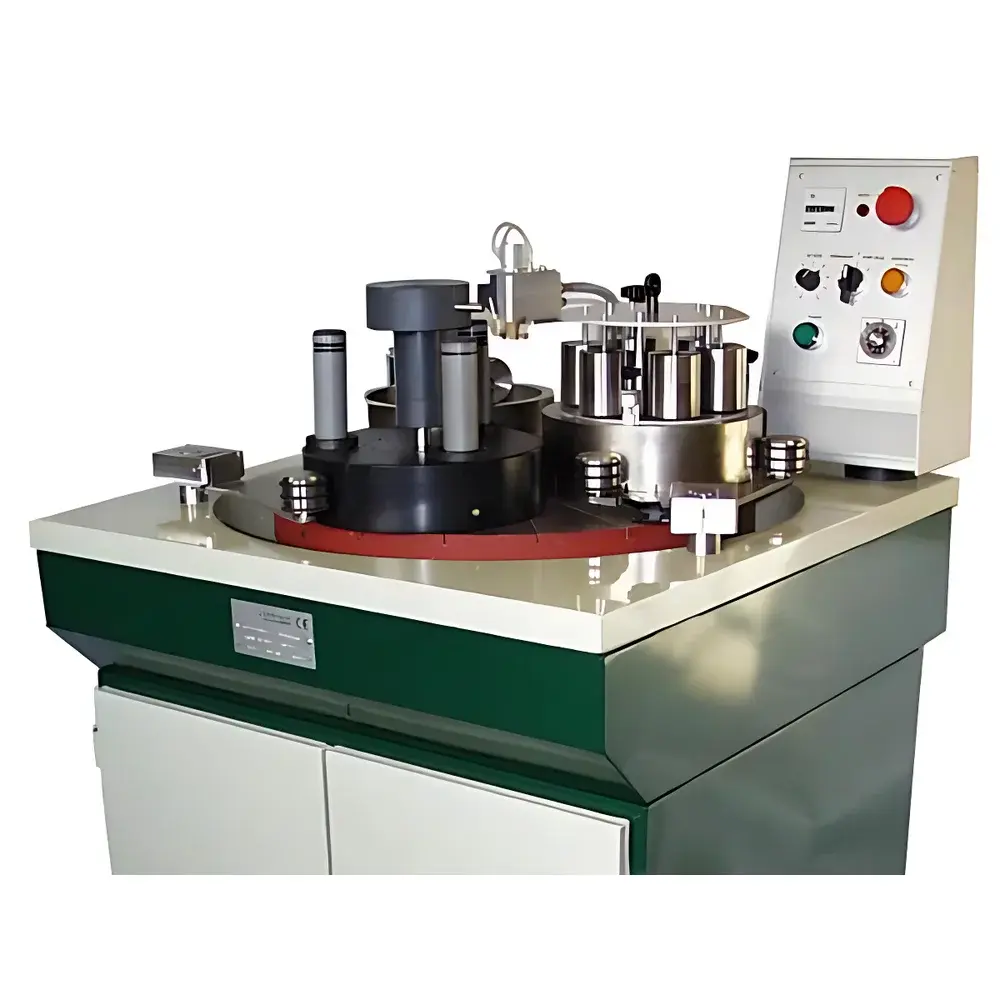
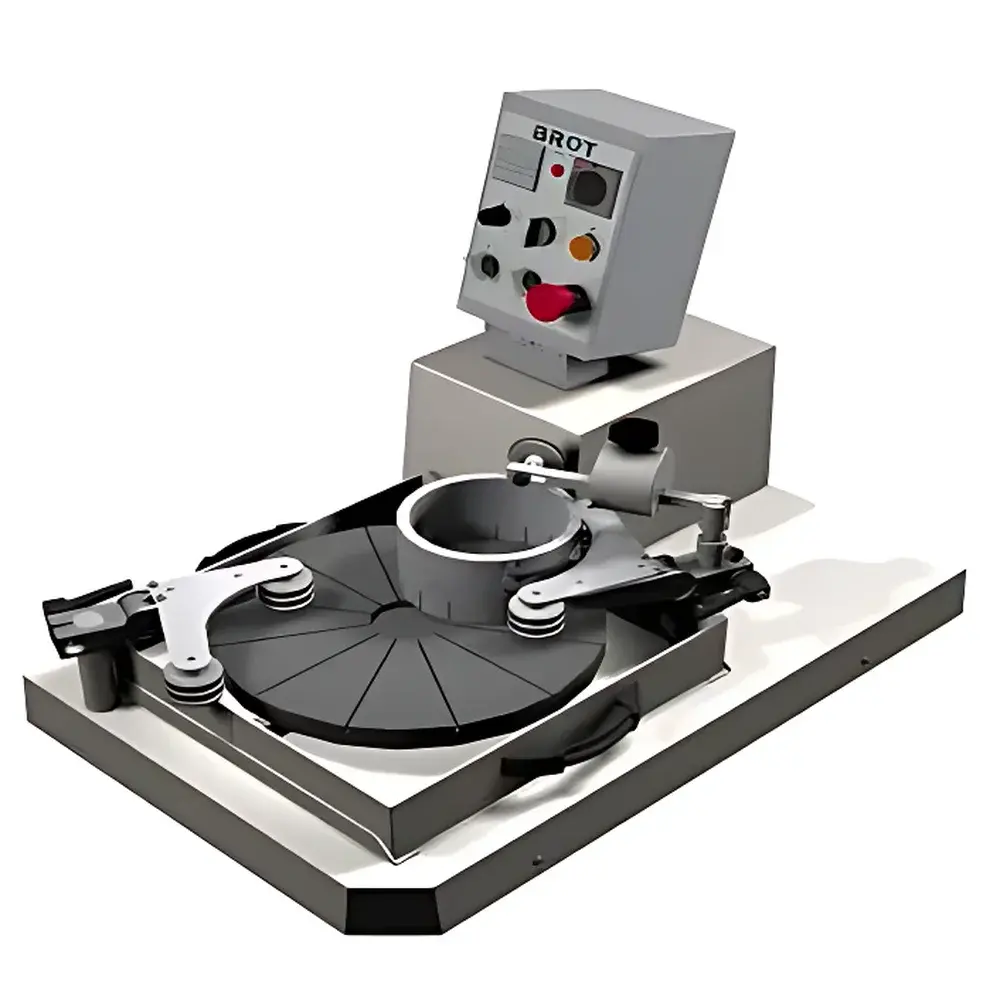
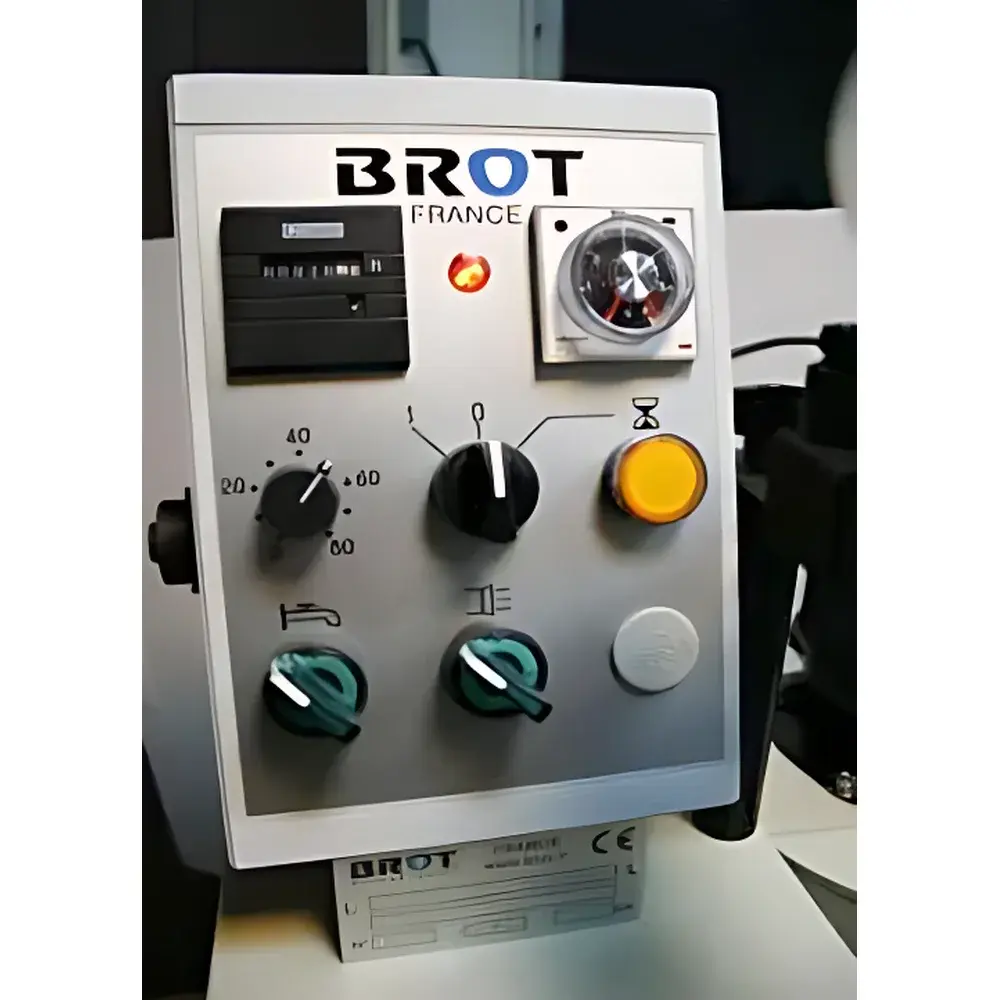
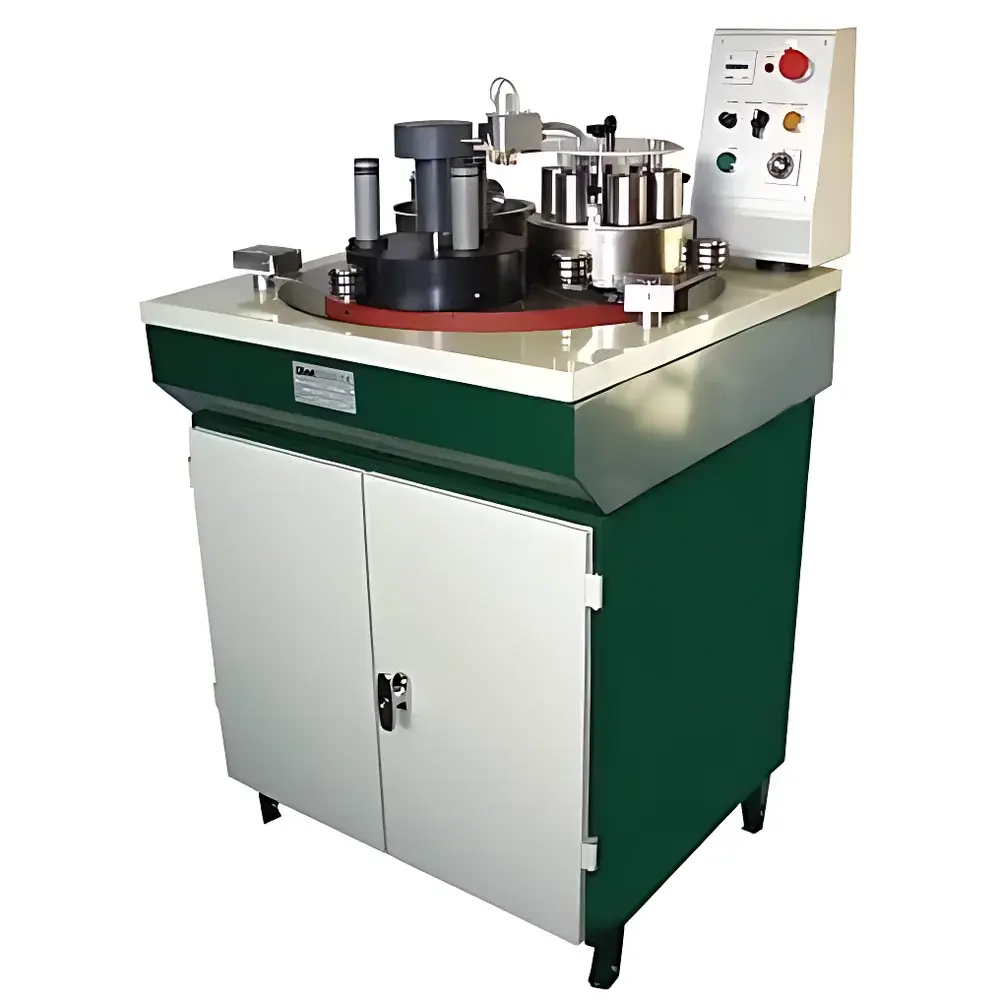
BROT-LAB J0316 Precision Lapping and Polishing System
| Brand | French BROT-LAB |
|---|---|
| Origin | France |
| Model | J0316 |
| Sample Holder Capacity | 6 × 30×45 mm or 3 × 60×45 mm thin sections |
| Vacuum Chuck Type | Vertical |
| Max. Simultaneous Samples (Rock Thin Sections) | 6 end-face preparations |
| Abrasive Delivery | Motor-synchronized auto-drip SiC slurry system |
| Platen Speed | Adjustable |
| Thickness Control Mechanism | Micrometer-driven, resolution: 0.01 mm |
| Platen Surface Treatment | Proprietary long-life hardened coating (20-year warranty) |
| Primary Application | Precision lapping of geological thin sections to target thickness ≤30 µm from ~150 µm starting thickness |
| Surface Finish Objective | Planar, scratch-free surface suitable for optical microscopy and fluid inclusion analysis |
Overview
The BROT-LAB J0316 Precision Lapping and Polishing System is an engineered solution for the reproducible, thickness-controlled preparation of geological thin sections—particularly critical for petrographic, microthermometric, and Raman spectroscopic analysis of fluid inclusions. Based on controlled abrasive lapping under vacuum fixation, the system employs a rotating platen with synchronized silicon carbide (SiC) slurry delivery and micrometer-actuated vertical sample descent. Unlike conventional grinding systems relying on manual feed or time-based termination, the J0316 integrates real-time mechanical displacement feedback via its calibrated micrometric drive, enabling deterministic endpoint control at sub-30 µm final thicknesses. The instrument is purpose-built for laboratories requiring high batch consistency in first-surface preparation of rock chips, mineral separates, and epoxy-embedded specimens prior to standard polishing protocols.
Key Features
- Vertical vacuum chuck architecture ensures uniform pressure distribution across up to six 30×45 mm or three 60×45 mm thin sections—minimizing edge lift and thickness gradient during lapping.
- Proprietary hardened platen surface, chemically and mechanically stabilized for dimensional stability over 20 years of routine use under abrasive loading.
- Micrometer-based thickness control with 0.01 mm resolution enables precise pre-set target thickness; integrated mechanical stop prevents over-lapping beyond user-defined endpoints.
- Motor-coupled abrasive drip mechanism synchronizes slurry flow rate with platen rotational speed, maintaining optimal abrasive concentration and hydrodynamic film formation.
- Dual-mode operation: configurable for either single-side lapping of rock chip end-faces (up to six specimens) or standardized thin section lapping—supporting both initial rough lapping and fine finish stages.
- Compact benchtop footprint (W×D×H: 420×380×310 mm) with CE-compliant electrical safety and low-noise brushless motor drive.
Sample Compatibility & Compliance
The J0316 accommodates brittle, heterogeneous, and composite samples common in geoscience workflows—including quartz-rich granitoids, carbonate sequences, metamorphic schists, and epoxy-impregnated ore samples. Its vacuum fixation system achieves >85 kPa holding force on flat, non-porous surfaces and maintains secure adhesion even during high-slurry-flow lapping cycles. All wet components are chemically resistant to aqueous SiC slurries and standard cleaning agents (e.g., isopropanol, dilute HCl). The system conforms to ISO 9001-certified manufacturing practices and meets EN 61000-6-3 (EMC) and EN 61000-6-2 (immunity) requirements. While not intrinsically certified for GLP/GMP environments, its repeatable mechanical endpoint control supports audit-ready documentation when paired with external thickness verification (e.g., digital micrometer or interferometric measurement).
Software & Data Management
The J0316 operates as a fully mechanical, analog-controlled system with no embedded firmware or digital interface. All operational parameters—including platen speed, slurry feed timing, and target thickness—are set manually via calibrated dials and micrometer scales. This design eliminates software validation burdens under FDA 21 CFR Part 11 or EU Annex 11 while ensuring long-term operational transparency and serviceability. Users maintain traceability through logbook entries documenting initial thickness (measured with calibrated micrometer), target thickness, platen RPM, and total lapping duration per batch. Optional integration with external digital calipers or laser displacement sensors allows automated thickness logging into laboratory information management systems (LIMS) via RS-232 or USB-serial adapters.
Applications
- Preparation of fluid inclusion thin sections requiring ≤30 µm uniform thickness for microthermometry and UV-vis transmission analysis.
- First-surface lapping of rock chip end-faces prior to double-sided polishing for cathodoluminescence (CL) and electron backscatter diffraction (EBSD) sample mounting.
- Routine thickness reduction of mineral separates (e.g., zircon, apatite) embedded in epoxy mounts for U–Pb geochronology sample preparation.
- Controlled lapping of ceramic and glass reference materials used in quantitative EDS calibration workflows.
- Standardized sample thinning for transmission X-ray microscopy (TXM) and synchrotron-based tomography where planarity and thickness homogeneity directly impact reconstruction fidelity.
FAQ
What is the minimum achievable thickness tolerance across a single thin section?
Typical thickness variation across a 30×45 mm section is ±1.2 µm when using calibrated micrometer descent and optimized slurry flow—verified by post-lap interferometric profiling.
Can the J0316 be used with diamond slurries instead of SiC?
Yes—provided slurry viscosity and particle size distribution are adjusted to match the drip system’s flow dynamics; however, SiC remains the recommended abrasive for initial lapping due to its controlled removal rate and compatibility with epoxy-resin matrices.
Is vacuum pump included with the system?
No—the J0316 requires connection to an external oil-free vacuum source delivering ≥85 kPa at ≥15 L/min; compatible pumps are listed in the installation manual.
How is platen wear monitored over time?
A reference gauge block and surface plate are supplied for quarterly flatness verification; deviation exceeding 2 µm over 100 mm requires professional resurfacing per BROT-LAB service protocol.
Does the 20-year platen warranty cover abrasive-induced topography degradation?
Yes—the warranty guarantees maintenance of specified surface hardness (≥850 HV) and flatness tolerance (≤3 µm over 150 mm diameter) under normal operating conditions using approved abrasives and maintenance intervals.



