
Dia-stron BOLERO SHUFFLE Hair Bundle Fluffiness & Morphology Analysis System
| Brand | Dia-stron |
|---|---|
| Origin | United Kingdom |
| Manufacturer Type | Authorized Distributor |
| Import Status | Imported |
| Model | BOLERO SHUFFLE |
| Pricing | Available Upon Request |
Overview
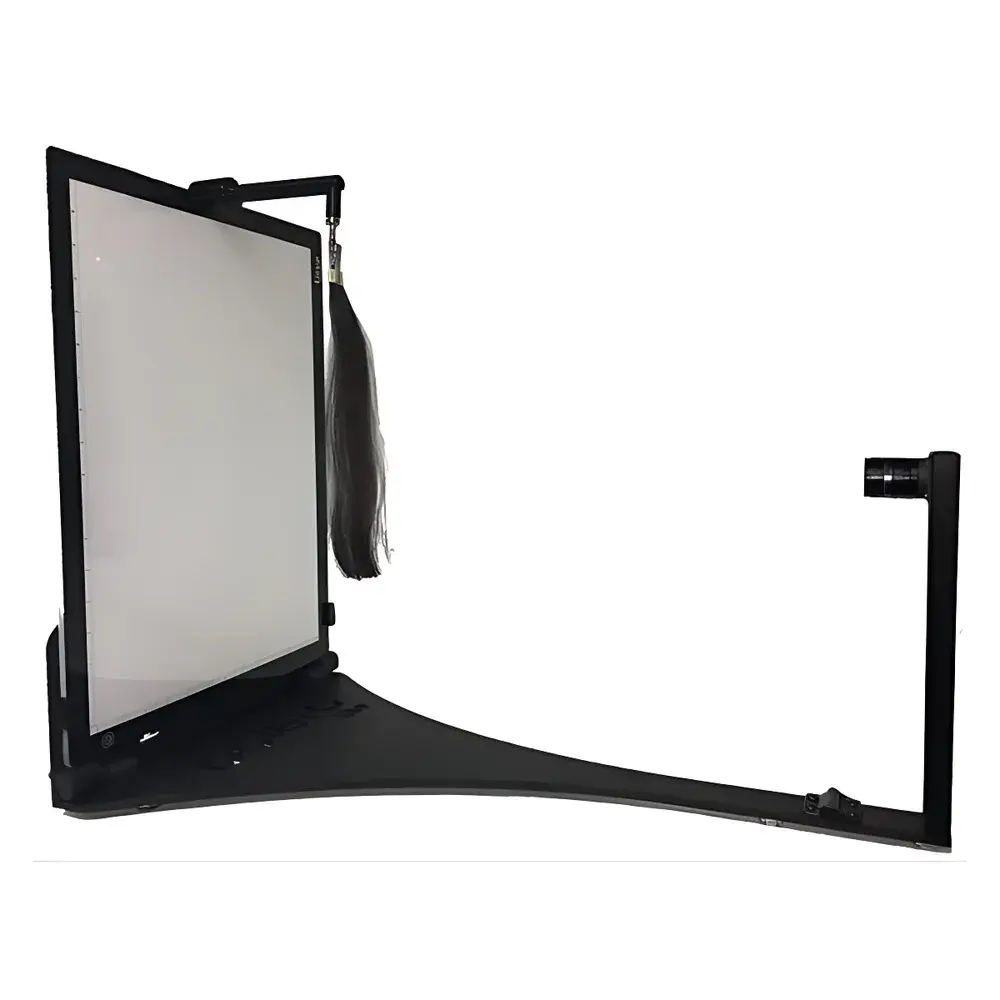
The Dia-stron BOLERO SHUFFLE is a dedicated, non-contact optical imaging system engineered for quantitative 2D and 3D morphological characterization of hair bundles. It operates on the principle of multi-angle silhouette imaging under controlled, uniform backlight illumination—leveraging geometric projection and pixel-based transmittance analysis to reconstruct spatial structure without mechanical deformation or sample preparation artifacts. Unlike conventional tensile or combing assays, the BOLERO SHUFFLE captures intrinsic structural parameters—including cross-sectional area distribution, volumetric occupancy, and angular dispersion of individual filaments—enabling objective quantification of “fluffiness” as a function of fiber alignment, curl retention, and inter-filament separation. This measurement paradigm aligns with internationally recognized physical descriptors of hair bulk behavior used in cosmetic science, particularly for substantiating claims related to volume, body, anti-flattening, and humidity resistance in rinse-off and leave-on formulations.
Key Features
- Motorized, software-synchronized rotational stage (SHUFFLE control engine) enabling precise angular positioning from 0° to 360° in user-defined increments (e.g., 5°, 10°, or 15° steps)
- High-resolution monochrome CMOS camera with macro lens optimized for edge contrast and sub-pixel silhouette detection
- Uniform LED-backlit panel (6000 K CCT, ±5% irradiance homogeneity over 150 × 150 mm field) ensuring consistent transmittance measurement across all orientations
- Real-time image acquisition and on-the-fly centroid tracking for dynamic bundle drift compensation
- Calibrated pixel-to-micron mapping using NIST-traceable stage micrometers, supporting absolute dimensional reporting in µm and mm²
- Modular hardware design compliant with ISO/IEC 17025 laboratory environmental requirements (operating temperature: 18–25°C; RH: 30–60%)
Sample Compatibility & Compliance
The system accommodates hair bundles ranging from 20 to 100 mg in mass and 50–150 mm in length, secured via standardized stainless-steel clamps with adjustable tension (0.1–1.0 N pre-load). Human, synthetic, and hybrid fiber samples—including bleached, permed, heat-damaged, and keratin-treated specimens—are routinely analyzed. All measurement protocols are compatible with OECD TG 439 and ISO 10993-10 guidelines for non-invasive biological material assessment. Data output formats (CSV, TIFF, JSON) support traceability in GLP-regulated environments, and audit trails—including operator ID, timestamp, instrument calibration status, and raw image metadata—are embedded per FDA 21 CFR Part 11 requirements when integrated with validated LIMS platforms.
Software & Data Management
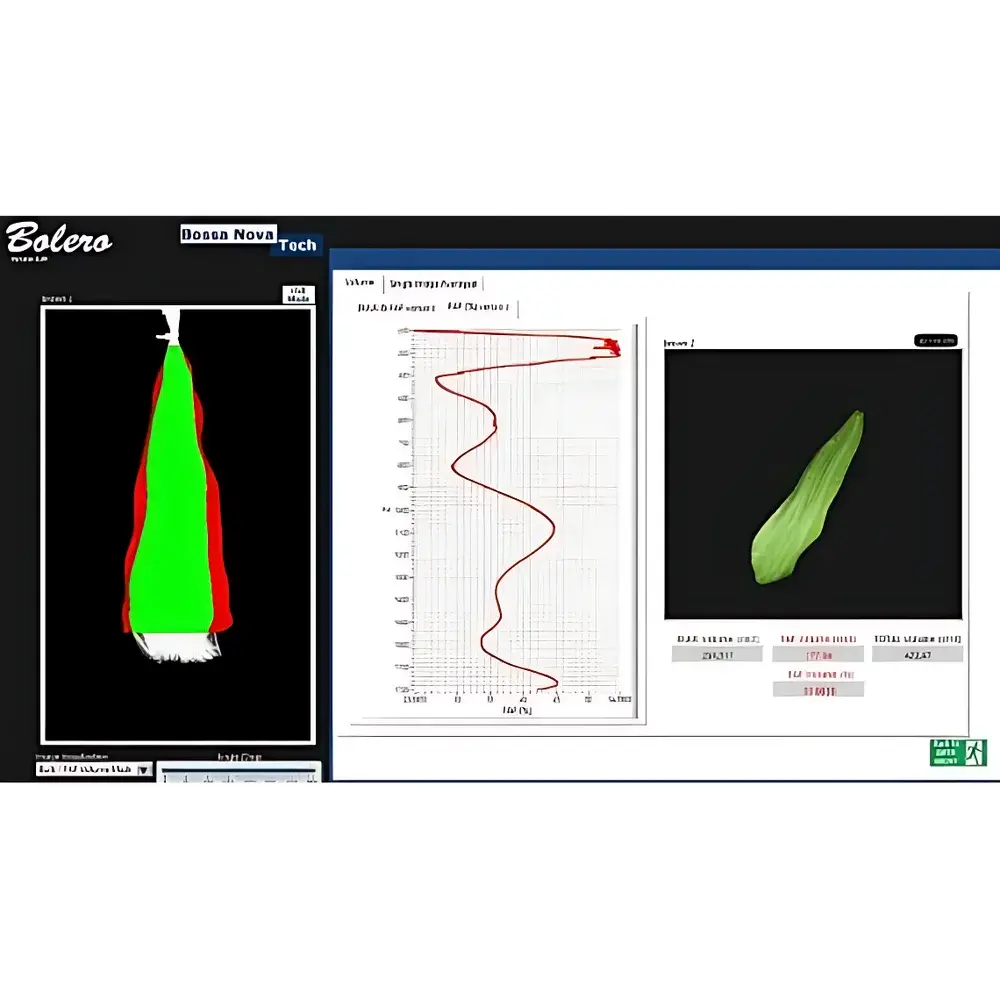
The SHUFFLE software suite (v4.2+, Windows 10/11 64-bit) provides full control over acquisition, reconstruction, and statistical reporting. Core modules include: (i) Auto-Alignment Engine for bundle centering and orientation normalization; (ii) Transmittance Threshold Optimizer that dynamically adjusts segmentation thresholds based on local histogram entropy; (iii) 3D Volume Reconstruction Algorithm generating voxel-based models from orthographic projections; and (iv) Longitudinal Change Analyzer enabling time-series comparison across up to 12 treatment conditions (e.g., pre-wash, post-rinse, 24h air-dry, 48h humidity exposure). Exported metrics include projected area (mm²), estimated volume (mm³), fluffiness index (FI = dispersed-volume / total-volume × 100), curl dispersion angle (standard deviation in filament orientation), and inter-filament gap density (µm⁻¹). All reports comply with ISO/IEC 17025 clause 7.8.2 for uncertainty-aware result presentation.
Applications
- Quantitative evaluation of volumizing shampoos, conditioners, and mousse formulations under controlled humidity (e.g., 40% vs. 80% RH)
- Comparative assessment of thermal protection claims by measuring pre- and post-blow-dry morphology retention
- Stability testing of hair serums and oils through 7-day time-lapse fluffiness decay profiling
- Supporting regulatory submissions (EU Cosmetics Regulation EC No. 1223/2009, US FTC Green Guides) with instrumentally derived efficacy endpoints
- Correlation studies between fluffiness indices and consumer-perceived volume scores (via paired sensory panels)
- Raw material screening—e.g., cationic polymer efficacy, silicone deposition uniformity, or hydrolyzed protein film integrity
FAQ
What sample preparation is required prior to analysis?
Hair bundles must be washed per ISO 20444:2017 (standardized shampoo cycle), air-dried at 22 ± 2°C/50 ± 5% RH for 16 h, and mounted without twisting or compression.
Can the system differentiate between static and dynamic fluffiness changes?
Yes—time-resolved acquisitions (up to 1 frame/sec over 10-min sequences) enable kinetic modeling of humidity-induced expansion or surfactant-mediated collapse.
Is calibration traceable to national standards?
Camera pixel calibration uses NIST SRM 2036 (line-pair gauge); rotational stage accuracy is verified annually against Renishaw XL-80 laser interferometer data.
Does SHUFFLE software support automated pass/fail decision logic for QC release?
Yes—customizable threshold rules can trigger alerts or export flags for batch-level compliance against internal specifications or ISO 15197:2013 Annex D-derived acceptance criteria.
How is data integrity maintained during multi-user lab deployment?
Role-based access control (RBAC), electronic signatures, and SHA-256 hashing of raw image stacks ensure ALCOA+ compliance (Attributable, Legible, Contemporaneous, Original, Accurate).







