
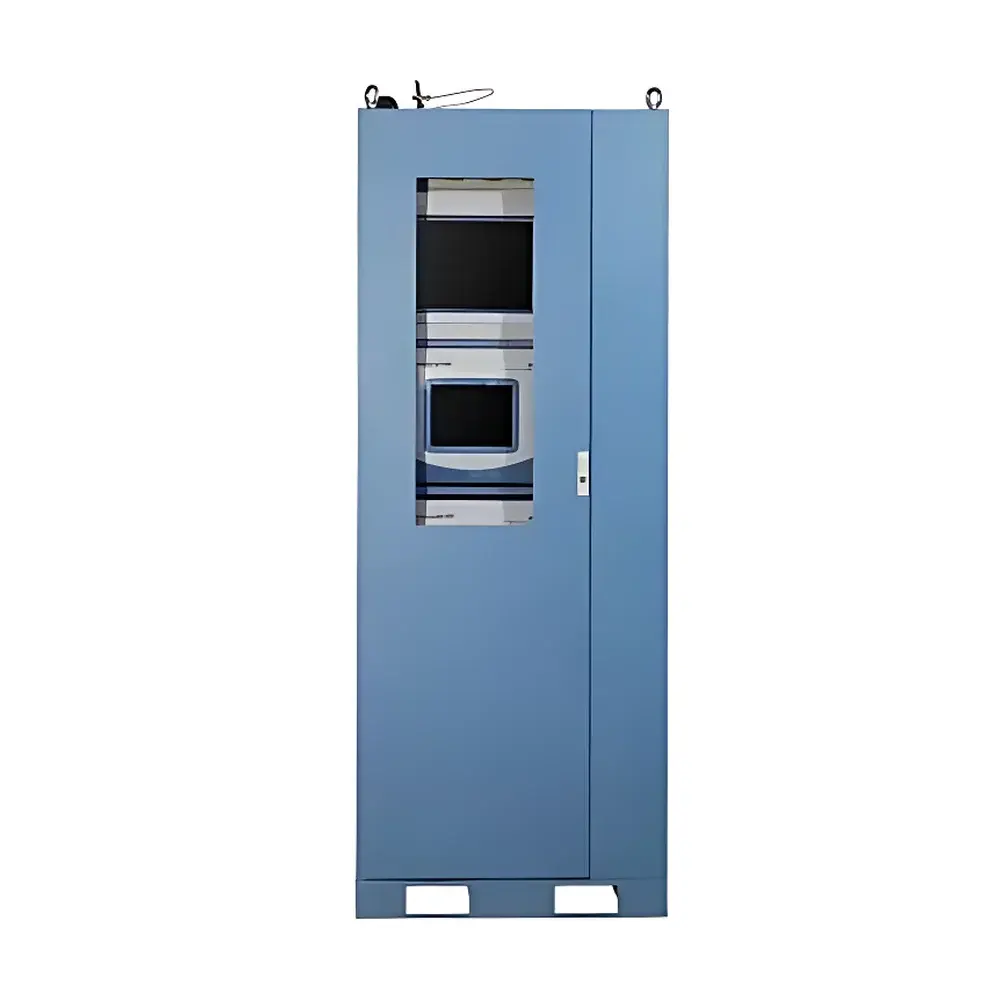
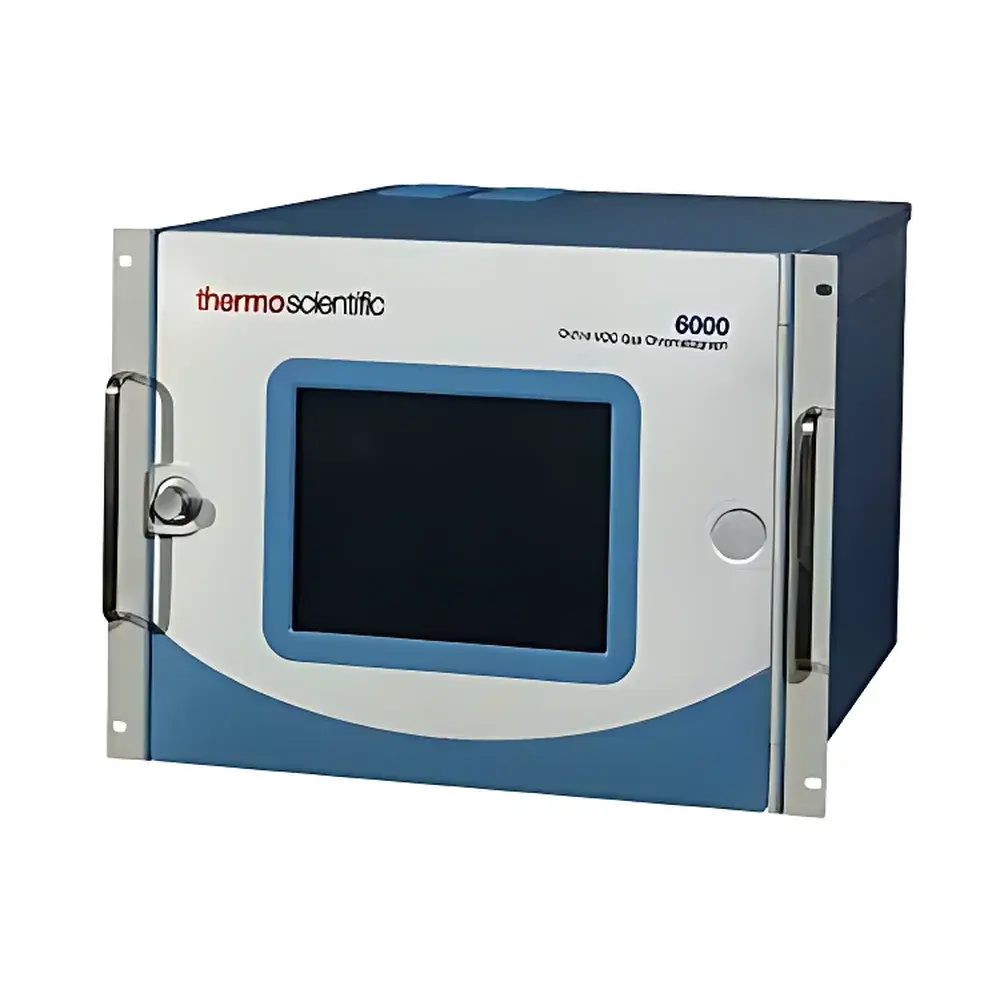
Thermo Scientific 6000 Fixed Source VOC Continuous Emission Monitoring System (CEMS)
| Brand | Thermo Fisher |
|---|---|
| Origin | Shanghai, China |
| Manufacturer Type | Manufacturer |
| Product Origin | Domestic (China) |
| Model | 6000 VOC |
| Detection Principle | Flame Ionization Detection (FID) |
| Instrument Type | Online Analyzer |
| Typical Configuration | Multi-component VOC CEMS |
| Measurement Range | 0–5000 ppm (as methane or NMHC) |
| Accuracy | ±1% F.S. or ±0.1 ppm |
| Response Time | ≤60 s (for NMHC) |
Overview
The Thermo Scientific™ 6000 Fixed Source Volatile Organic Compounds (VOC) Continuous Emission Monitoring System (CEMS) is an industrial-grade, regulatory-compliant online analytical platform engineered for real-time, high-reliability quantification of total hydrocarbons (THC), non-methane hydrocarbons (NMHC), benzene, toluene, xylene (BTX), and other targeted aromatic and aliphatic VOCs in flue gas streams from stationary emission sources. Built upon flame ionization detection (FID) — a universally accepted, linear, and robust detection principle per EPA Method 25A, ISO 12039, and HJ 1013–2018 — the system delivers trace-level sensitivity with inherent immunity to water vapor interference and minimal matrix effects. Its fully heated architecture — from probe to detector — eliminates condensation, adsorption, and catalytic loss of reactive or polar VOCs, ensuring measurement integrity across diverse thermal and compositional flue gas conditions (e.g., high humidity, variable O₂, particulate-laden streams up to 10 g/m³). Designed for unattended operation over extended duty cycles, the 6000 CEMS meets the functional and performance requirements of China’s HJ 1013–2018, EU EN 15267–3, and U.S. EPA Performance Specification 8 (PS-8) for FID-based VOC CEMS.
Key Features
- Fully heated sampling train: Electrically heated probe (up to 200 °C), stainless-steel heated sample line (120–180 °C), and hot-gas path to detector — eliminating cold spots and preserving volatile analyte integrity
- Upgraded FID detector with enhanced signal-to-noise ratio, mechanical shock resistance, and thermal stability across ambient temperatures ranging from −20 °C to +50 °C
- Electronic Pressure Control (EPC) with pressure accuracy better than ±1%, enabling precise carrier and makeup gas regulation for reproducible retention and quantification
- Integrated auto-ignition sequence with flame monitoring and fail-safe shutdown logic, compliant with IEC 61508 SIL 2 functional safety principles
- Particulate and tar filtration via high-efficiency 0.5 µm sintered stainless-steel filter upstream of the analyzer — compatible with high-dust applications (≤10 g/m³)
- No refrigerated dryer or permeation dryer used; sample remains above dew point throughout conditioning to prevent aqueous-phase partitioning of water-soluble VOCs (e.g., formaldehyde, acetaldehyde)
- Remote operation capability via secure Ethernet interface supporting Modbus TCP and OPC UA protocols — enabling closed-door monitoring and reducing on-site intervention
Sample Compatibility & Compliance
The 6000 CEMS is validated for use with complex, high-temperature, humid, and particulate-rich flue gases typical of combustion, chemical synthesis, coating, and semiconductor fabrication processes. It supports simultaneous measurement of VOC mass concentration (as methane or NMHC), plus optional integrated parametric modules for stack gas velocity, temperature, static/total pressure, relative humidity, and O₂ content — all traceable to NIST standards. The system conforms to Chinese national standard HJ 1013–2018 for fixed-source VOC CEMS performance evaluation and quality assurance. It also satisfies key elements of ISO 14001 environmental management system auditing, EU Industrial Emissions Directive (IED) reporting requirements, and U.S. EPA PS-8 validation criteria for FID-based systems. Data acquisition and storage comply with GLP/GMP-aligned audit trail functionality, including user login logging, method change history, calibration event timestamps, and alarm event capture — supporting 21 CFR Part 11 readiness when deployed with validated software configuration.
Software & Data Management
The embedded Thermo CEMS Manager software provides intuitive configuration, real-time trend visualization, automated calibration scheduling (span/zero), and compliance reporting templates aligned with local regulatory formats (e.g., HJ 75–2017 data validity rules). All raw analog/digital signals, diagnostic statuses, and environmental parameters are time-stamped with millisecond precision and archived locally on redundant industrial SSDs (≥30 days of continuous data). Export options include CSV, PDF, and XML formats compatible with enterprise-level EMS/EHS platforms. Cybersecurity features include TLS 1.2 encryption for remote access, role-based user permissions (admin/operator/auditor), and firmware signature verification to prevent unauthorized modification. Optional cloud integration enables centralized fleet monitoring and predictive maintenance analytics using anonymized operational metadata.
Applications
The 6000 CEMS is deployed across regulated industrial sectors where VOC abatement efficiency and emission accountability are mandated, including:
- Petrochemical and refinery process heaters, catalytic crackers, and flare stacks
- Semiconductor wafer fabrication cleanrooms and etch tool exhaust ducts
- PCB lamination and solder mask application lines
- Pharmaceutical active pharmaceutical ingredient (API) synthesis and solvent recovery units
- Rubber vulcanization and plastic extrusion exhaust streams
- Automotive paint booths, e-coat ovens, and wheel coating lines
- Furniture surface finishing and wood composite manufacturing
- Printing press dryers, ink mixing rooms, and laminating exhausts
- Steel sintering plants and coke oven gas cleaning systems
FAQ
What detection principle does the 6000 CEMS use, and why is it preferred for regulatory VOC monitoring?
It employs flame ionization detection (FID), which offers near-universal response to hydrocarbons, excellent linearity over six orders of magnitude, and insensitivity to water vapor — making it the reference method for THC/NMHC in EPA, ISO, and Chinese national standards.
Can the system measure individual VOC compounds like benzene or toluene, or only total hydrocarbons?
With optional GC-FID configuration (add-on module), it supports speciated analysis of BTX and other priority VOCs; the base FID configuration reports total VOC as methane or NMHC equivalents.
Is the system suitable for high-humidity flue gas without condensation-related bias?
Yes — the entire sample path is actively heated above the dew point, and no condensative drying is applied, preventing loss of water-soluble VOCs and avoiding positive/negative artifacts from phase separation.
How does the system ensure long-term calibration stability in harsh industrial environments?
Through EPC-controlled gas flows, thermal mass flow sensors with automatic temperature compensation, and scheduled multi-point calibrations traceable to NIST-certified standard gases.
Does the 6000 CEMS support integration with existing plant DCS or environmental data management systems?
Yes — it provides native Modbus TCP, OPC UA, and 4–20 mA analog outputs, with configurable alarm relay contacts and digital I/O for interlock signaling to scrubber or RTO control systems.
Related Products







