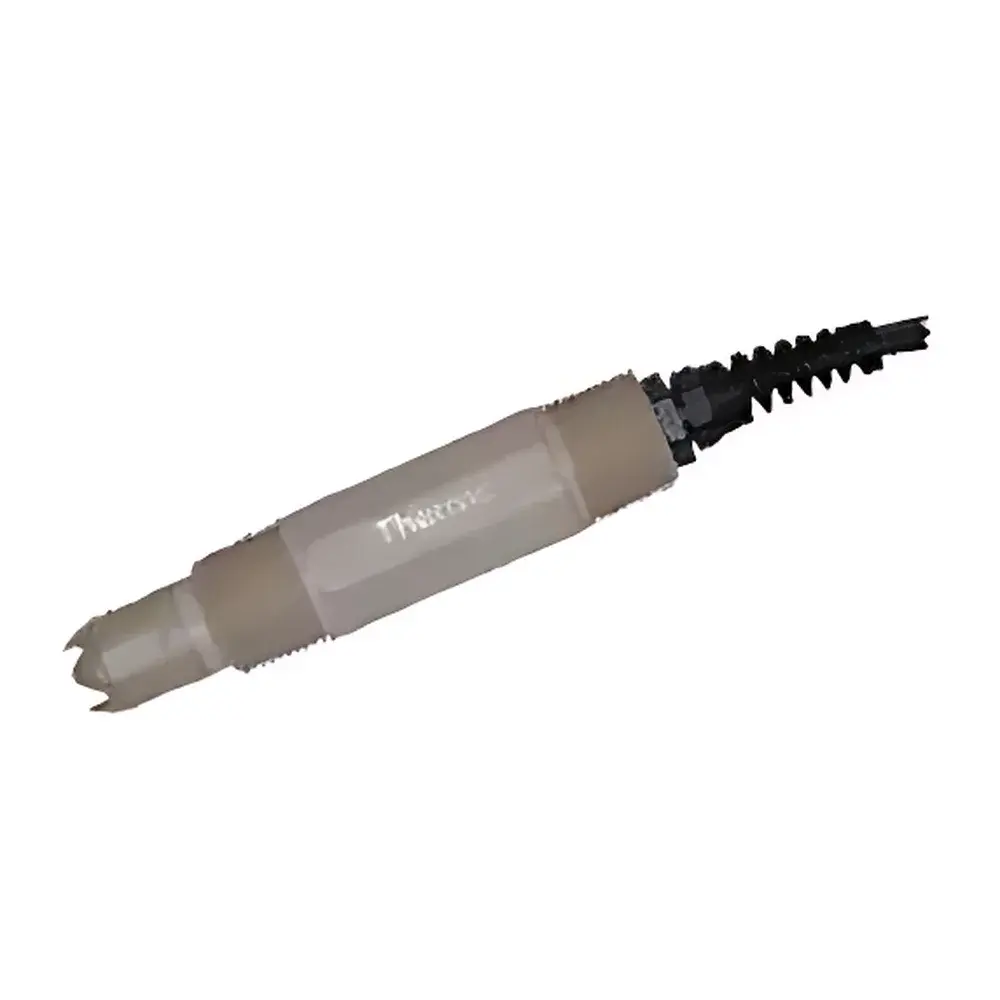
Thermo Scientific Orion ROSS Online pH Electrode
| Brand | Thermo Fisher |
|---|---|
| Origin | USA |
| Manufacturer Type | Original Equipment Manufacturer (OEM) |
| Origin Category | Imported |
| Model | ROSS pH |
| Pricing | Available Upon Request |
Overview
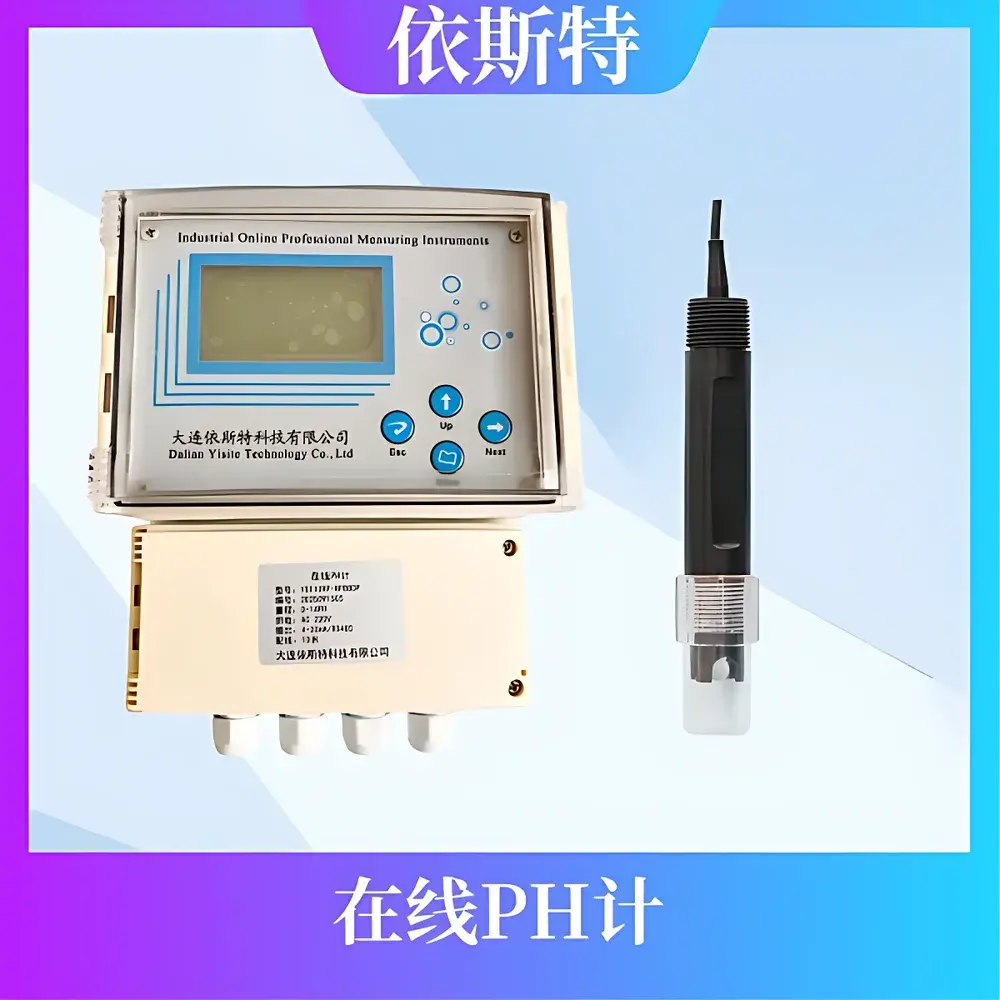
The Thermo Scientific Orion ROSS Online pH Electrode is an industrial-grade, process-integrated pH sensing system engineered for continuous, high-reliability measurement in demanding aqueous environments. Based on the proprietary ROSS (Reference Oxide Solid State) electrochemical architecture, this electrode employs a stable, crystalline Ag/AgCl reference system coupled with a pH-sensitive glass membrane optimized for low-drift performance across wide temperature and ionic strength gradients. Unlike conventional gel-filled or liquid-junction electrodes, the ROSS design eliminates liquid junction potential instability by utilizing a solid-state reference element and a replaceable double-junction salt bridge—ensuring consistent electromotive force (EMF) output over extended operational cycles. Its robust construction supports deployment in real-time monitoring applications where regulatory compliance, long-term calibration stability, and minimal intervention are critical—such as in municipal wastewater treatment, pharmaceutical water systems, and food & beverage process lines.
Key Features
- ROSS solid-state reference technology delivering <0.01 pH/day drift under continuous operation—validated per ASTM D1293 and ISO 10523 protocols
- Replaceable double-junction salt bridge with KNO₃ or KCl electrolyte options, enabling field maintenance without electrode replacement
- PEEK® (polyether ether ketone) housing and salt bridge body—resistant to chemical corrosion, mechanical stress, and thermal cycling from −10 °C to +85 °C
- Integrated PT1000 platinum resistance thermometer for simultaneous temperature compensation; meets IEC 60751 Class B tolerance
- NPT 1″ threaded process connection for secure, leak-tight installation into pressurized pipelines or tanks
- Signal transmission capability up to 3000 ft (914 m) using shielded twisted-pair cable—compatible with standard 4–20 mA or mV analog outputs
- Four configuration variants: three models with built-in signal conditioning amplifiers (voltage output, current loop, or digital RS-485), and one passive mV-only version for integration with third-party transmitters
Sample Compatibility & Compliance
The Orion ROSS Online pH Electrode is validated for use in low-to-high conductivity aqueous matrices including activated sludge effluent (1–20 mS/cm), reverse osmosis permeate (<10 µS/cm), chlorinated potable water, and buffered bioprocess streams. It complies with key industry standards governing online process analytics: USP and for purified water monitoring, EPA Method 150.1 for wastewater pH validation, and ISO 5667-14 for environmental sampling instrumentation. Its design supports GLP/GMP audit readiness through traceable calibration records, configurable data logging intervals, and optional FDA 21 CFR Part 11–compliant software integration via Orion Star™ Connect or Thermo Fisher’s Process Analytics Suite.
Software & Data Management
When paired with compatible Thermo Fisher transmitters (e.g., Orion 720A+, 3-Star™ Process Controller), the ROSS electrode enables automated calibration verification, slope/offset trending, and predictive maintenance alerts based on impedance diagnostics. Raw mV and temperature data are timestamped and exported in CSV or MODBUS TCP format. Firmware updates and configuration changes are performed remotely via Ethernet or HART protocol—reducing downtime during routine validation. All data logs retain full audit trails, including operator ID, calibration event timestamps, and environmental metadata—ensuring alignment with ALCOA+ principles (Attributable, Legible, Contemporaneous, Original, Accurate, Complete, Consistent, Enduring, Available).
Applications
- Municipal and industrial wastewater treatment: real-time control of neutralization basins, biological nutrient removal (BNR) reactors, and disinfection contact tanks
- Power plant cycle chemistry: monitoring condensate polishers, boiler feedwater, and steam purity loops per ASME PTC 19.11 guidelines
- Pharmaceutical purified water (PW) and water-for-injection (WFI) distribution systems—meeting USP , EP 2.2.47, and JP 2.05 requirements
- Chemical manufacturing batch reactors and continuous stirred-tank reactors (CSTRs) requiring precise acid/base dosing feedback
- Food processing CIP (clean-in-place) rinse validation and sanitizer concentration control
FAQ
What is the recommended calibration frequency for continuous online operation?
Calibration interval depends on process conditions; typical practice is daily automatic verification with single-point buffer check (pH 7.00) and weekly two-point calibration (pH 4.01/7.00 or 7.00/10.01), per ISO 17025 Clause 7.7.
Can the salt bridge be replaced without removing the electrode from the process line?
Yes—the modular salt bridge assembly allows hot-swapping under pressure up to 10 bar (145 psi) using standard torque wrench procedures; no process shutdown required.
Is the electrode suitable for high-chloride or sulfide-rich wastewater?
The double-junction design with outer KNO₃ salt bridge significantly reduces poisoning from S²⁻, Cl⁻, and heavy metal ions; lifetime extension of 2–3× versus single-junction alternatives is documented in field studies across 12+ municipal plants.
Does the ROSS electrode support digital communication protocols beyond analog output?
Yes—models with integrated RS-485 Modbus RTU interface enable direct integration with DCS/SCADA platforms (e.g., Emerson DeltaV, Siemens PCS7) without additional signal converters.
What documentation is provided for IQ/OQ validation?
Factory test reports include NIST-traceable calibration certificates, pressure/temperature rating verification, and electrical safety testing (IEC 61010-1); customizable validation templates are available upon request for GxP environments.
Related Products