
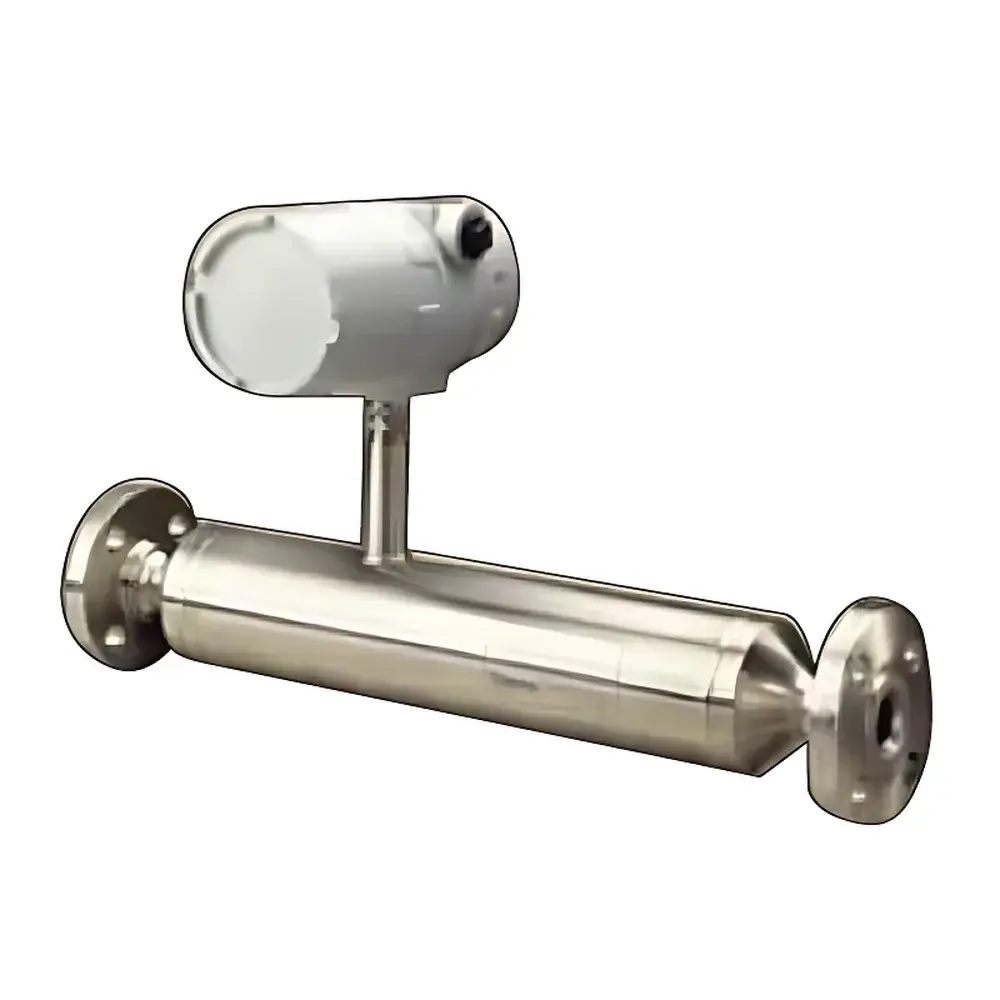

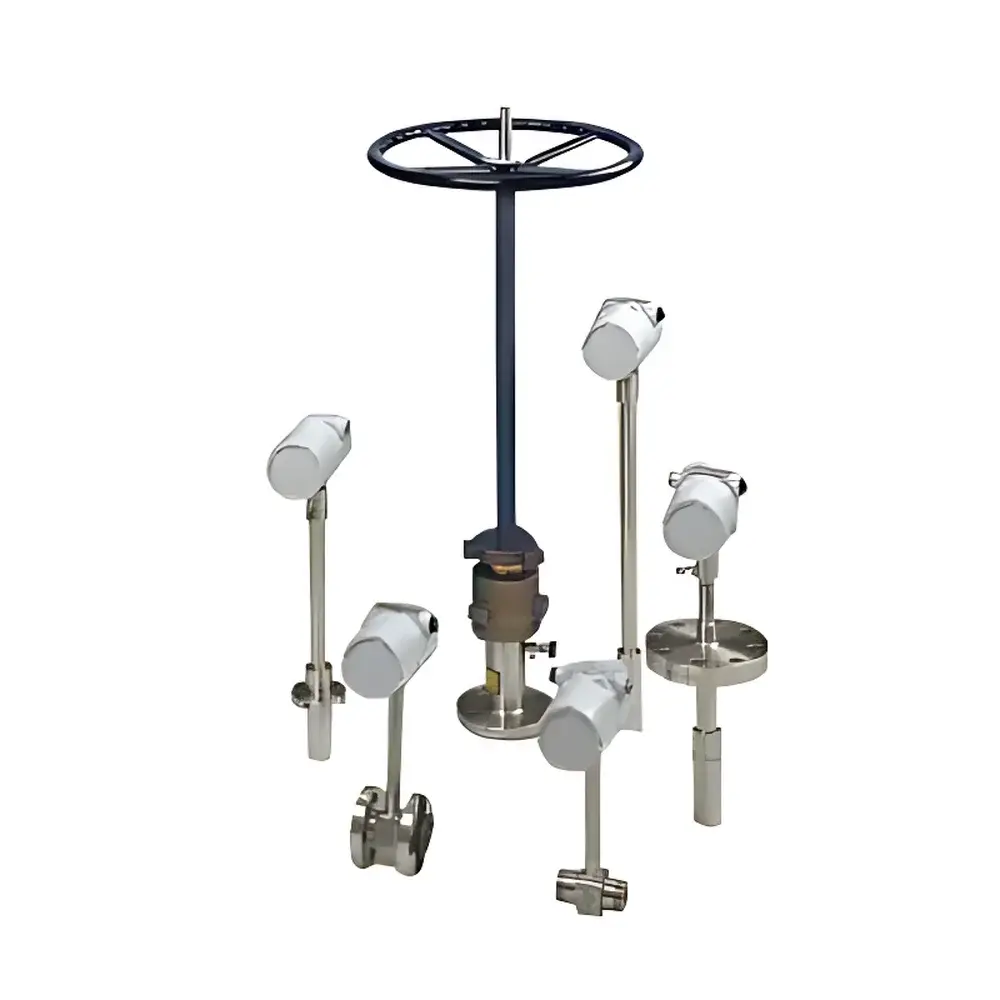

Thermo Scientific Sarasota FD910/FD950/FD960/FD900/ID900/PD900 Oscillating U-Tube Density Meters
| Brand | Thermo Fisher |
|---|---|
| Origin | USA |
| Manufacturer Type | Original Equipment Manufacturer (OEM) |
| Origin Category | Imported |
| Models | FD910, FD950, FD960, FD900, ID900, PD900 |
| Instrument Type | Oscillating U-tube Densimeter |
| Form Factor | Benchtop & In-line Process |
| Application Focus | Petroleum, Petrochemical, Chemical, LNG, and Power Generation |
| Density Range (Liquid) | 0–2100 kg/m³ |
| Density Range (Gas) | 0–1000 kg/m³ (FD900/ID900), 0–250 kg/m³ (PD900) |
| Accuracy (Liquid) | ±0.1 kg/m³ |
| Repeatability (Liquid) | 0.02 kg/m³ |
| Temperature Compensation | Integrated 4-wire PT100 (1/3 DIN) |
| Operating Temp (Liquid) | −50°C to +180°C |
| Operating Temp (Gas) | −200°C to +200°C |
| Pressure Rating | Up to 170 bar (FD900), 150 bar (ID900), 100–150 bar (PD900) |
| Enclosure Rating | IP65 / NEMA 4X |
| Hazardous Area Certifications | ATEX Ex ia IIC T4/T6, CSA Class I Div 1 Groups B, C, D, IECEx, NACE MR0175/ISO 15156 compliant |
| Output Options | 4–20 mA + HART (HME900), Frequency/Modulated Current (CM515), Dual-Channel PT100 |
| Calibration | NIST-traceable, performed in ISO/IEC 17025-accredited laboratory |
Overview
The Thermo Scientific Sarasota series of oscillating U-tube density meters represents a benchmark in continuous, in-line density measurement for demanding industrial environments. Based on the internationally standardized oscillating tube principle (ASTM D4052, ISO 12185, IP 365), these instruments determine density by measuring the natural resonant frequency of a precisely machined U-shaped glass or metal tube filled with process fluid or gas. As mass loading changes with density, the oscillation period shifts linearly—enabling high-resolution, real-time quantification without moving parts or sample extraction. Unlike offline pycnometers or hydrometers, the Sarasota platform delivers true process-integrated metrology: eliminating time lags, operator variability, and sampling errors inherent in grab-based methods. Its dual-tube architecture (in liquid models) enhances thermal stability and mechanical robustness, while integrated 4-wire PT100 sensors provide traceable, high-fidelity temperature compensation—critical for accurate density-to-standard-condition conversion (e.g., API gravity, °Brix, molecular weight). Designed for uninterrupted operation in refineries, chemical plants, LNG terminals, and power generation facilities, the Sarasota line meets stringent requirements for custody transfer, quality assurance, interface detection, and energy content monitoring under ISO 5167, AGA Report No. 8, and GPA 2145.
Key Features
- Oscillating U-tube core technology — Certified reference method per ASTM D4052; superior accuracy and long-term stability versus nuclear, Coriolis, or ultrasonic alternatives.
- Multi-model configuration flexibility — FD910 (stainless steel, general industrial), FD950 (Hastelloy C-276, corrosion-resistant), FD960 (Ni-Span C, low-temperature custody transfer), FD900 (bypass gas), ID900 (insertion-type gas/liquid), and PD900 (pocket-style gas) — each engineered for specific pressure, temperature, material compatibility, and installation constraints.
- NIST-traceable calibration — Factory-calibrated in an ISO/IEC 17025-accredited laboratory using certified reference materials; full calibration documentation including uncertainty budgets and equipment traceability statements provided.
- Hazardous area compliance — Certified for Zone 0/1 (ATEX Ex ia IIC T4/T6) and Class I Div 1 (CSA) environments; explosion-proof housings and intrinsically safe electronics ensure operational safety in hydrocarbon processing zones.
- Zero-drift thermal management — Integrated 1/3 DIN PT100 sensor mounted directly within the oscillation chamber enables real-time, physics-based temperature correction—eliminating reliance on external thermowells or interpolation algorithms.
- Minimal pressure drop & fouling resistance — Straight-through flow path (FD910/FD950/FD960), self-cleaning cavity geometry (ID900), and optional inline filtration (FD900/SG901 system) maintain measurement integrity in viscous, particulate-laden, or wet gas streams.
Sample Compatibility & Compliance
The Sarasota platform supports both liquid and gaseous media across extreme compositional and physical ranges. Liquid models accommodate hydrocarbons (crude oil, distillates, biofuels), aqueous solutions (acids, caustics, brines), polymers, and pharmaceutical intermediates—with wetted materials selected per NACE MR0175/ISO 15156 for sour service. Gas models measure natural gas, syngas, ethane, hydrogen, and LNG vapor with proven immunity to moisture, condensate carryover, and compositional transients. All units comply with international regulatory frameworks governing measurement integrity: ISO 9001:2015 quality management, PED 97/23/EC (Category III), EMC Directive 2014/30/EU (EN 61326), and RoHS. For regulated industries—including those subject to FDA 21 CFR Part 11, EU Annex 11, or GMP/GLP audit protocols—the CM515 and HME900 converters support electronic signature, audit trail logging, and role-based access control when integrated with validated DCS/SCADA systems.
Software & Data Management
While the Sarasota meters operate autonomously as smart field devices, their digital outputs integrate seamlessly into enterprise-level infrastructure. The HME900 converter provides HART 7 protocol support—including universal command set, multi-variable transmission (density + temperature + diagnostics), and device configuration via AMS Device Manager or DeltaV. The CM515 offers configurable frequency output (for PLCs), modulated 2-wire current loop, and native PT100 input—enabling direct connection to flow computers for mass/volume reconciliation (e.g., AGA-3, ISO 5167). Both converters support engineering unit scaling (kg/m³, °API, MJ/m³, lb/ft³), linearization tables, and alarm thresholds. Data integrity is preserved through timestamped analog outputs and optional digital archiving via OPC UA servers. Calibration history, firmware version logs, and sensor health diagnostics are accessible remotely—reducing site visits and supporting predictive maintenance strategies aligned with ISA-84 and IEC 61511 functional safety standards.
Applications
- Custody transfer & fiscal metering — Real-time density input for volumetric-to-mass conversion in pipeline handover points (API MPMS Ch. 11.5), marine loading terminals, and refinery gate meters.
- Interface detection & slug tracking — Discrimination of product batches (e.g., gasoline/diesel transitions) or water/hydrocarbon layers in multiphase pipelines with sub-second response time.
- Fuel gas energy content monitoring — Derivation of heating value (MJ/m³, BTU/scf) and Wobbe index from measured gas density—critical for combustion optimization and emissions compliance (EPA Method 19, EN 15403).
- Process analytical technology (PAT) — In-situ concentration control in alkylation units, amine treating, polymerization reactors, and solvent recovery systems—supporting ICH Q8/Q9 implementation.
- LNG quality assurance — Continuous verification of methane content, nitrogen rejection efficiency, and speciation during liquefaction and regasification—per ISO 8502 and GPA 2145.
- Waste minimization & sustainability reporting — Accurate density-driven yield calculations reduce off-spec production, optimize dilution ratios, and quantify wastewater stream composition for regulatory discharge reporting.
FAQ
What is the fundamental measurement principle used in the Sarasota density meters?
The instruments employ the oscillating U-tube method, where the resonant frequency of a vibrating tube filled with sample correlates directly to its density per the mass-spring relationship. This technique is standardized in ASTM D4052 and ISO 12185.
Do these meters require periodic recalibration in the field?
No—units are factory-calibrated to NIST-traceable standards and designed for zero-drift operation over extended intervals. Field verification is recommended annually per ISO/IEC 17025 guidelines, but adjustment is rarely necessary.
Can the same transmitter be used with different sensor types (e.g., FD910 and ID900)?
Yes—both HME900 and CM515 converters are model-agnostic and support all Sarasota sensor variants via standardized electrical interfaces and configuration templates.
How is temperature compensated during measurement?
A high-stability 4-wire PT100 sensor is embedded directly in the oscillation chamber, enabling real-time, physics-based correction without extrapolation or lookup tables.
Are these instruments suitable for use in SIL-rated safety loops?
While the sensors themselves are non-SIL-certified, they are widely deployed in SIL 2 loops when paired with certified logic solvers and configured per IEC 61511; failure mode and effects analysis (FMEA) reports are available upon request.



