
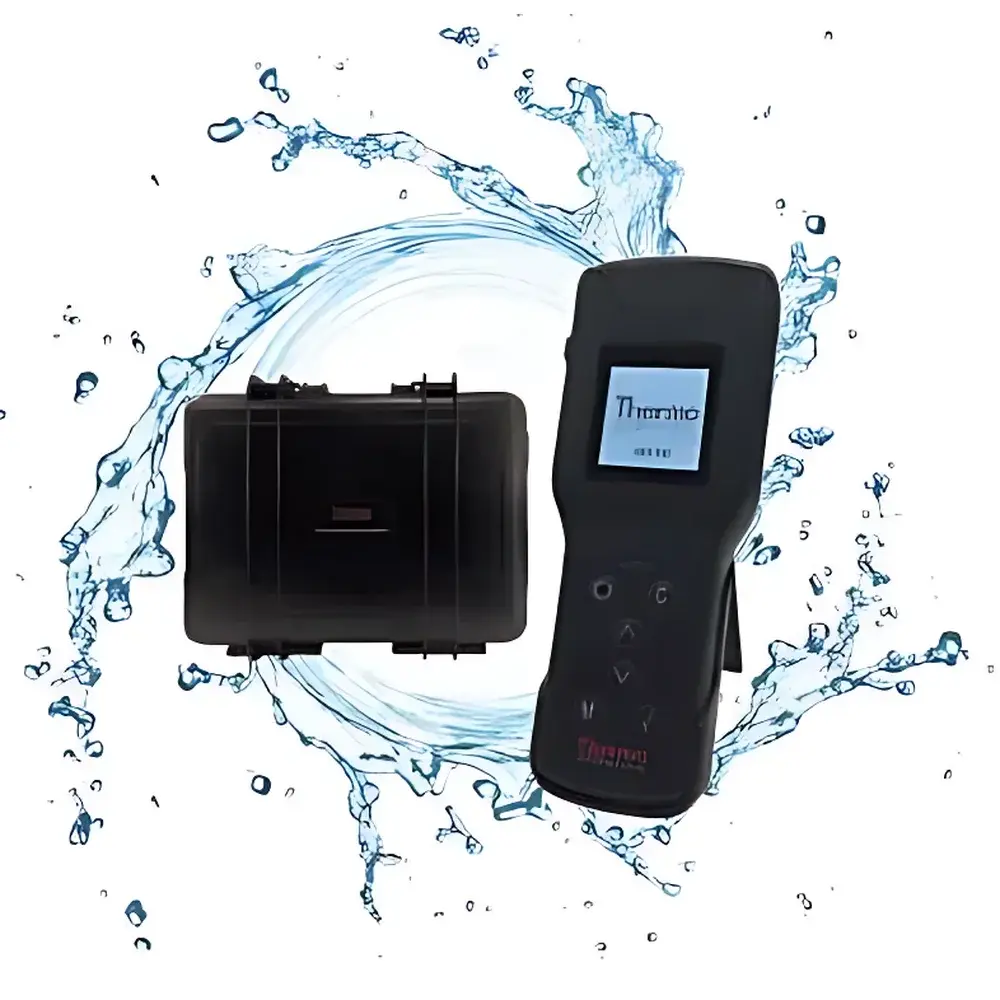
Thermo Scientific AQ4700 Water Toxicity Analyzer
| Brand | Thermo Fisher |
|---|---|
| Origin | USA |
| Manufacturer | Thermo Fisher Scientific |
| Product Type | Imported |
| Model | Thermo Scientific AQ4700 |
| Instrument Category | Online |
| Biological Indicator | Bioluminescent Bacteria |
| Detection Time | 5 min |
Overview
The Thermo Scientific AQ4700 Water Toxicity Analyzer is an online, real-time biological toxicity monitoring system engineered for precision, reproducibility, and regulatory compliance in environmental and industrial water quality management. It employs standardized bioluminescence inhibition assays using freeze-dried Vibrio fischeri (formerly Photobacterium phosphoreum) as the biological endpoint—leveraging the intrinsic, ATP-dependent light-emission pathway of these marine bacteria. Upon exposure to toxicants—including heavy metals, pesticides, phenols, surfactants, and unknown xenobiotics—the metabolic activity of the bacteria declines rapidly, resulting in quantifiable reduction of luminescence intensity within minutes. This principle aligns with the internationally recognized ecotoxicological endpoint defined in ISO 11348-3:2019 (“Water quality — Determination of the inhibitory effect of water samples on the light emission of Vibrio fischeri”), ensuring method traceability and interlaboratory comparability.
Key Features
- Three configurable assay modes: ISO-compliant toxicity mode (per ISO 11348-3), basic toxicity screening mode, and RLU (Relative Light Unit) mode enabling parallel ATP quantification for microbial load assessment
- Integrated photomultiplier tube (PMT) detector with high quantum efficiency and low dark current, calibrated against NIST-traceable luminance standards
- Automated reagent handling with pre-lyophilized bacterial vials—no cold chain required; shelf-stable at 2–8 °C for ≥12 months
- Onboard temperature-controlled reaction chamber (20 ± 0.5 °C) to ensure kinetic consistency across ambient fluctuations
- Real-time data acquisition with 1-second sampling resolution and automatic EC50 calculation per test cycle
- Compact, field-deployable architecture: weighs <4.2 kg, includes ruggedized carry case, IP54-rated enclosure, and 12–24 V DC power input for mobile or remote station use
Sample Compatibility & Compliance
The AQ4700 accepts raw or filtered aqueous samples without pretreatment—including surface water, drinking water, wastewater influent/effluent, leachates, and industrial process streams. Turbidity up to 100 NTU and salinity up to 35 g/L (seawater-equivalent) are supported via built-in salinity compensation algorithms. All assay protocols comply with ISO 11348-3, ASTM D5660-20 (Standard Test Method for Measuring the Inhibitory Effect of Water Samples on the Light Output of Vibrio fischeri), and EU Directive 2000/60/EC (Water Framework Directive) Annex V requirements for biological early-warning systems. Data integrity meets ALCOA+ principles, with full audit trail support for GLP/GMP environments and optional 21 CFR Part 11 compliance when paired with Thermo Fisher’s TraceFinder LIMS integration module.
Software & Data Management
Instrument control and data analysis are managed via Thermo Scientific ToxLink™ v3.2 software—a Windows-based platform supporting multi-user role-based access, electronic signatures, and automated report generation (PDF/CSV/XLSX). Raw luminescence decay curves, dose-response plots, and statistical summaries (IC10, IC20, EC50, confidence intervals) are stored with time-stamped metadata, including operator ID, calibration history, and environmental chamber logs. Cloud-enabled synchronization (via optional Thermo Connect™ gateway) allows centralized fleet monitoring and trend analysis across distributed monitoring networks.
Applications
- Emergency response: Rapid screening of accidental chemical spills, pipeline breaches, or post-disaster water supplies
- Drinking water safety: Continuous intake monitoring at municipal treatment plants and distribution points
- Wastewater compliance: Real-time toxicity verification before discharge—supporting ISO 10707 and national effluent guidelines
- Pharmaceutical manufacturing: Antibiotic residue screening in process water and cleaning validation swab eluates
- Academic research: Mechanistic studies of mixture toxicity, bioavailability modulation, and QSAR model development
- Regulatory surveillance: Accredited testing for national environmental agencies under ISO/IEC 17025 quality systems
FAQ
What biological indicator does the AQ4700 use, and how is it standardized?
It uses lyophilized Vibrio fischeri strain NRRL B-11177, certified to ISO 11348-3 reference material specifications and supplied with lot-specific viability and sensitivity certificates.
Can the AQ4700 differentiate between specific toxicants?
No—it measures integrated biological response to all bioavailable toxicants present; compound identification requires complementary analytical methods (e.g., LC-MS/MS or ICP-MS).
Is calibration required before each test?
Yes—each assay begins with a 3-point luminescence calibration using sterile dilution water and two reference toxicant solutions (ZnSO4 and 3,5-dichlorophenol), following ISO 11348-3 protocol.
How is data integrity ensured during long-term unattended operation?
All measurements are timestamped, digitally signed, and stored locally with redundant flash memory; system diagnostics log every hardware event and error condition.
Does the AQ4700 support remote diagnostics or firmware updates?
Yes—via secure HTTPS API interface and Thermo Remote Assist, enabling predictive maintenance alerts and over-the-air firmware upgrades compliant with IEC 62443-3-3 cybersecurity standards.
Related Products







