
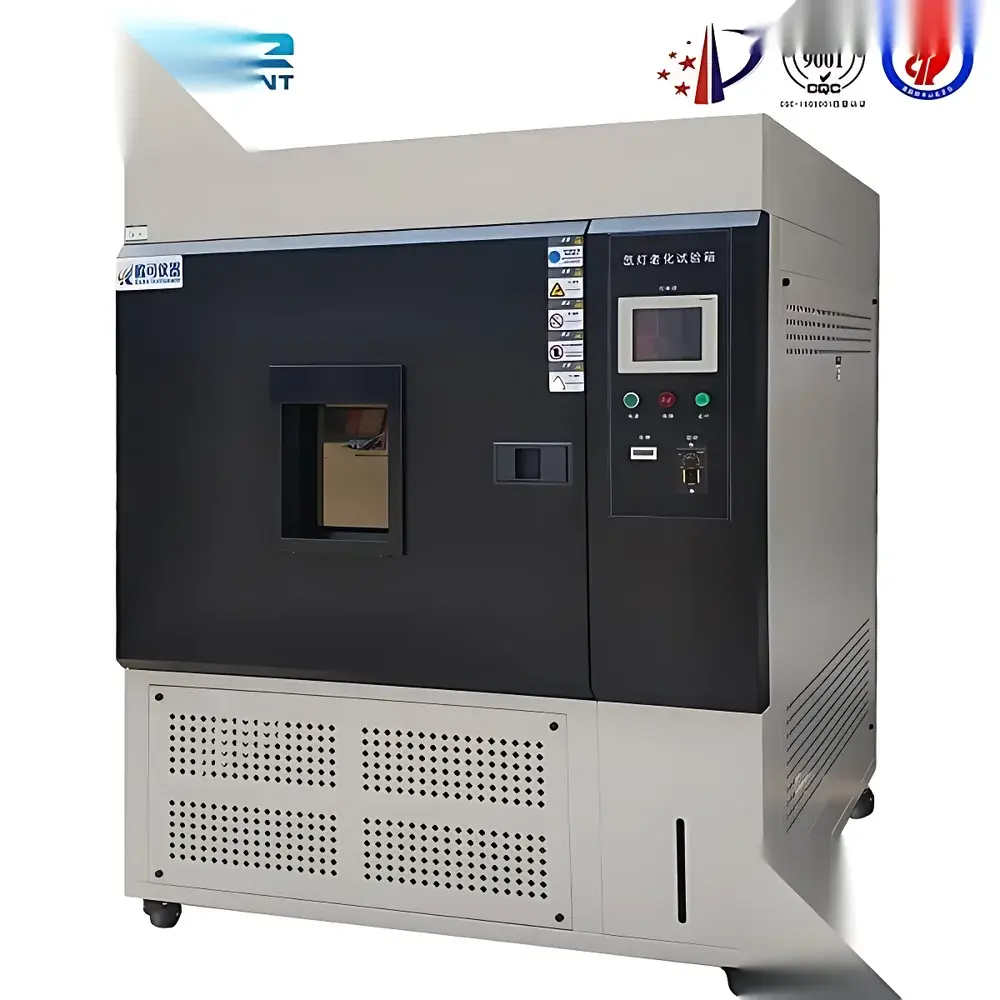
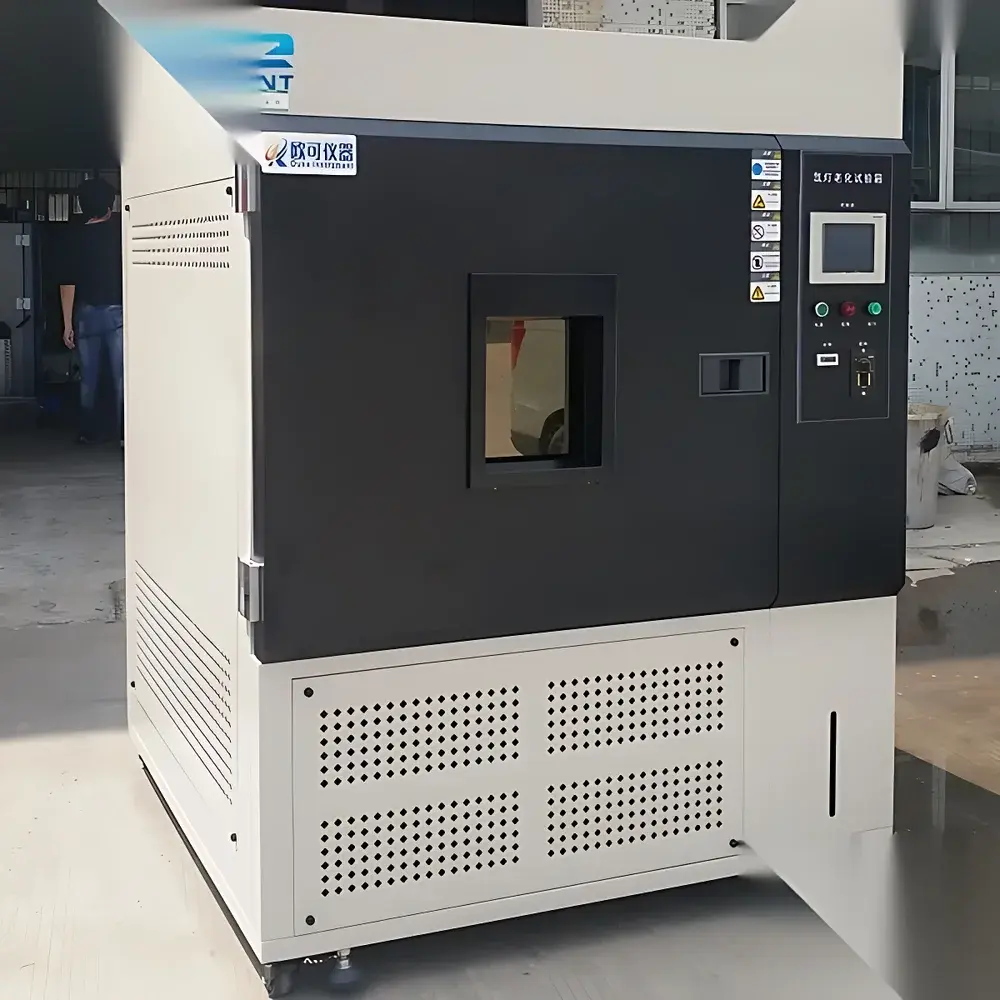
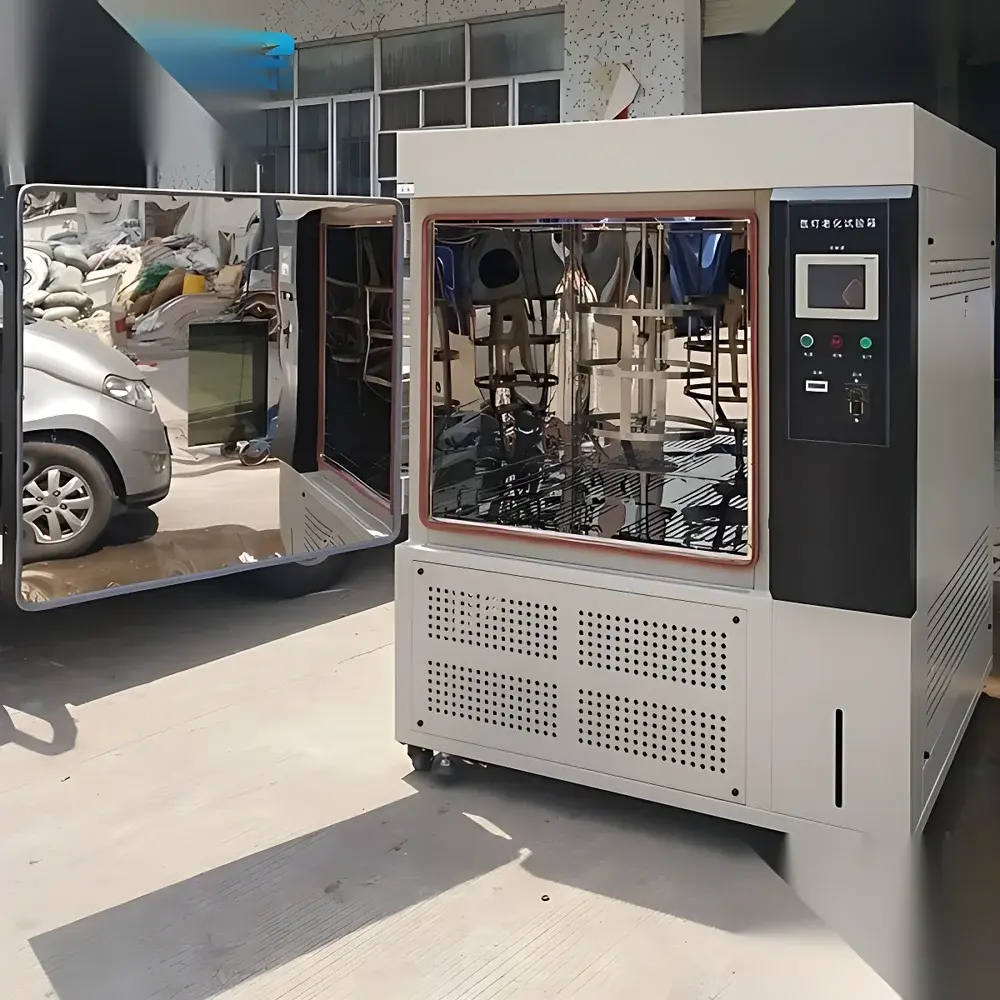
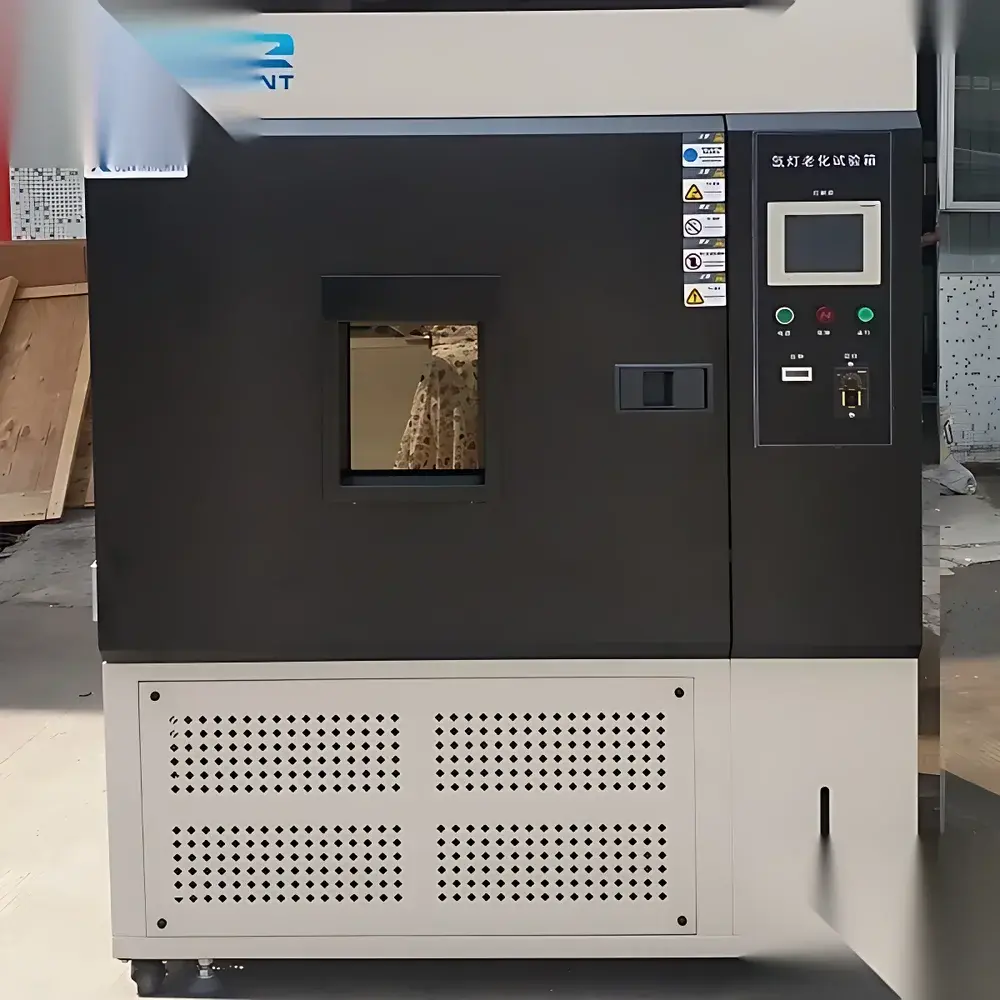
OK-XD-200 Xenon Arc Weathering Test Chamber
| Brand | OK |
|---|---|
| Model | OK-XD-200 |
| Chamber Type | Xenon Arc Environmental Aging Chamber |
| Effective Irradiation Area | 900 × 210 mm (W × H) |
| Standard Specimen Size | 75 × 150 mm or 75 × 300 mm |
| UV Irradiance | UVB-313: 0.55 W/m², UVA-340: 0.68 W/m² |
| Temperature Resolution | 0.1 °C |
| Light Cycle Temperature Range | 50–70 °C (±3 °C tolerance) |
| Condensation Temperature Range | 40–60 °C (±3 °C tolerance) |
| Black Panel Temperature Range | 30–80 °C (±1 °C tolerance) |
| Humidity Range (Light Cycle) | 30–80 %RH |
| (Dark Cycle) | up to 90 %RH |
| Relative Humidity During Exposure | 85–98 %RH |
| Wavelength Range | UV-A: 315–400 nm |
| Lamp Center-to-Center Spacing | 70 mm |
| Specimen-to-Lamp Distance | ~50 mm |
| Chamber Dimensions (H×W×D) | ~1550 × 1350 × 510 mm |
| Construction Material | AISI 304 Stainless Steel (Interior & Exterior) |
| Humidity System | Steam-based, SUS304 stainless steel humidifier and reservoir with auto water-level control |
| Heating Element | Stainless steel electric heating tubes |
| Humidity Sensor | Dry-wet bulb type |
| Sample Rack | Stainless steel and aluminum mesh frame |
| Compliance Standards | ASTM D4329, D4587, D5208, G154, G53 |
Overview
The OK-XD-200 Xenon Arc Weathering Test Chamber is an engineered environmental simulation system designed for accelerated material aging evaluation under controlled xenon arc irradiation. It replicates critical elements of terrestrial solar radiation—including UV-A (315–400 nm), visible light, and near-infrared—alongside synchronized thermal cycling, humidity modulation, rain simulation (via condensation), and dark periods. Unlike UV fluorescent lamp systems, xenon arc sources provide a spectral power distribution closely matching natural sunlight (CIE No. 85, ISO 4892-2), making the OK-XD-200 suitable for evaluating photodegradation mechanisms such as polymer chain scission, pigment bleaching, oxidative crosslinking, and surface embrittlement. The chamber operates on the principle of controlled radiant exposure calibrated to standardized irradiance levels (UVA-340: 0.68 W/m²; UVB-313: 0.55 W/m²), enabling reproducible, inter-laboratory comparable results in accordance with international weathering protocols.
Key Features
- Full-spectrum xenon arc lamp array with precise spectral filtering to emulate daylight (ISO 4892-3 compliant irradiance profiles)
- AISI 304 stainless steel construction for both interior and exterior chambers—resistant to corrosion, UV degradation, and condensate accumulation
- Microprocessor-based PID temperature controller with 0.1 °C resolution and ±3 °C uniformity across the irradiation zone during light cycles (50–70 °C) and condensation cycles (40–60 °C)
- Black panel thermometer (BPT) monitoring with ±1 °C accuracy over 30–80 °C range, providing direct surface temperature feedback relevant to real-world material response
- Steam-based humidification system using SUS304 stainless steel humidifier and reservoir, featuring automatic water level regulation and dry-wet bulb humidity sensing
- Adjustable specimen rack design with stainless steel/aluminum mesh structure, supporting standard test specimens (75 × 150 mm or 75 × 300 mm) at optimal distance (~50 mm) from lamp plane
- Integrated condensation cycle capability simulating nocturnal dew formation—critical for evaluating hydrolytic degradation pathways in coatings and polymers
Sample Compatibility & Compliance
The OK-XD-200 accommodates flat, rigid, or semi-flexible specimens up to 75 mm × 300 mm, mounted vertically on a rotating or static rack depending on application requirements. Its irradiation geometry ensures uniform exposure across the 900 × 210 mm effective area, minimizing edge effects and spatial non-uniformity. The chamber is fully compliant with globally recognized weathering standards including ASTM D4329 (plastics), D4587 (paints), D5208 (coatings), G154/G53 (UV fluorescent vs. xenon arc); ISO 4892-3 (methods for plastics), ISO 11507 (paints and varnishes); EN 534, prEN 1062-4, BS 2782, JIS D0205, and SAE J2020. It also satisfies Chinese national standards GB/T 16422.2-1999 (plastics), GB/T 1865-97 (coatings), GB/T 8427-89/8430-98 (textile colorfastness), and GB/T 14522-93 (mechanical property retention after aging). All compliance testing is traceable to NIST-traceable radiometric calibration procedures.
Software & Data Management
While the OK-XD-200 operates via embedded microcontroller with digital display and manual parameter setting, it supports optional RS485/Modbus RTU interface for integration into centralized laboratory data acquisition networks. Real-time logging of black panel temperature, chamber air temperature, relative humidity, and irradiance (via external calibrated sensor input) can be achieved using third-party SCADA or LIMS platforms. The system architecture adheres to GLP principles: all operational parameters are manually set and verified prior to test initiation; no automated report generation or electronic signature functionality is included, preserving auditability for regulated environments where 21 CFR Part 11 compliance is not required. For laboratories requiring full electronic records, external data loggers with timestamped, tamper-evident storage are recommended.
Applications
This chamber serves as a core tool in R&D, quality assurance, and regulatory submission workflows across industries where long-term outdoor durability is mission-critical. In automotive OEM and Tier-1 supplier labs, it validates exterior trim, headlamp lenses, and sealants against ISO 11507 and SAE J2020. Paint and coating formulators use it to assess gloss retention, chalking resistance, and adhesion loss per ASTM D4587 and GB/T 1865. Polymer compounders evaluate UV stabilizer efficacy in polyolefins, PVC, and engineering thermoplastics per ISO 4892-3 and GB/T 16422.2. Textile manufacturers rely on its reproducible xenon output for colorfastness certification (GB/T 8427, ISO 105-B02). Additionally, it supports accelerated oxidation studies in adhesives, elastomers, and cosmetic packaging materials—where synergistic UV/humidity/thermal stress drives failure modes such as yellowing, cracking, or delamination.
FAQ
What spectral filters are used to achieve daylight-matching irradiance?
The OK-XD-200 employs borosilicate outer and quartz inner filters to approximate CIE Standard Illuminant D65, meeting ISO 4892-3 requirements for xenon arc exposure.
Can the chamber perform cyclic tests with alternating light/dark and wet/dry phases?
Yes—it supports programmable multi-step cycles including irradiation + heat, condensation (dark + high RH), and moisture spray (optional accessory), per ASTM G154 and ISO 4892-3 Annex A.
Is black panel temperature measurement mandatory for test validity?
Per ISO 4892-3 and ASTM G154, black panel temperature is the primary thermal metric for xenon testing; the OK-XD-200 includes a calibrated BPT with ±1 °C tolerance.
Does the system meet FDA or ICH stability testing guidelines?
No—this chamber is not designed for pharmaceutical stability studies (ICH Q1A–Q1E); it is intended for material weathering per ASTM/ISO physical durability standards.
What maintenance intervals are recommended for the xenon lamp and filters?
Lamp lifetime is typically 1,500–2,000 hours; quartz and borosilicate filters require replacement every 500–800 hours to maintain spectral fidelity and irradiance stability.



