
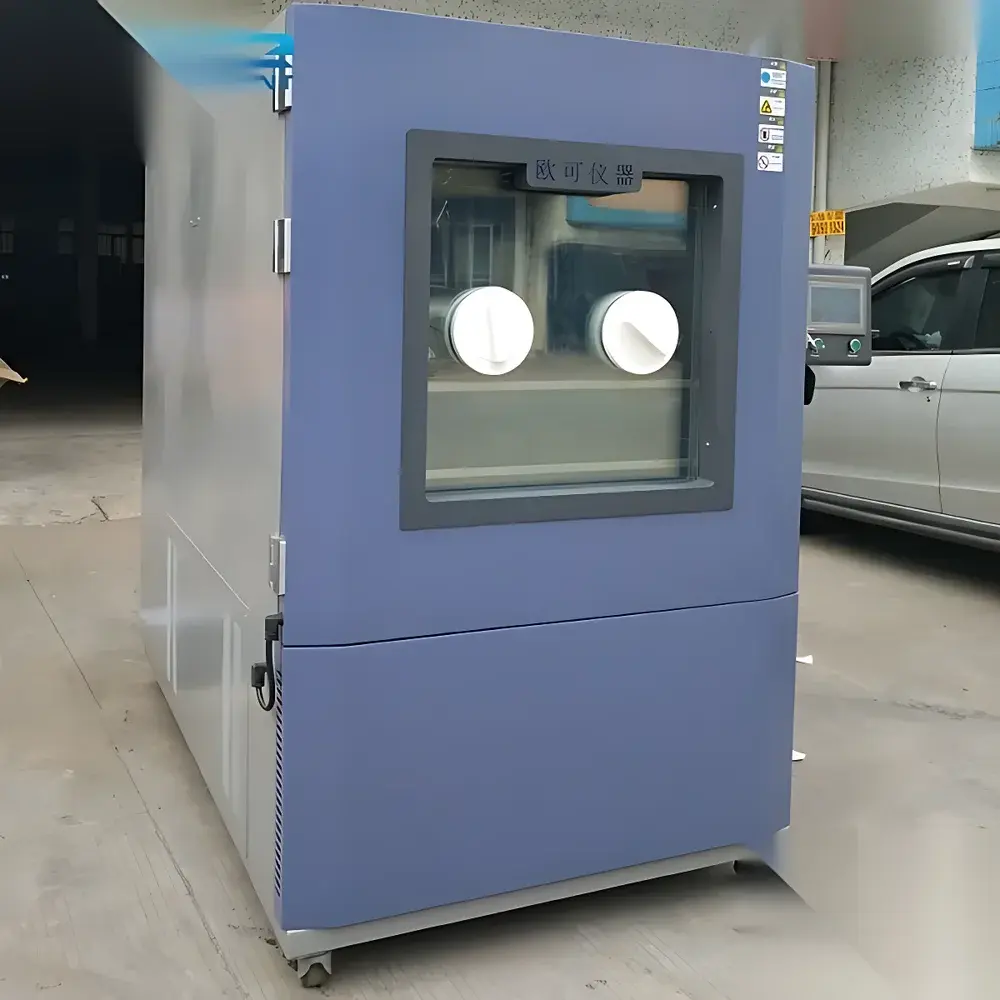
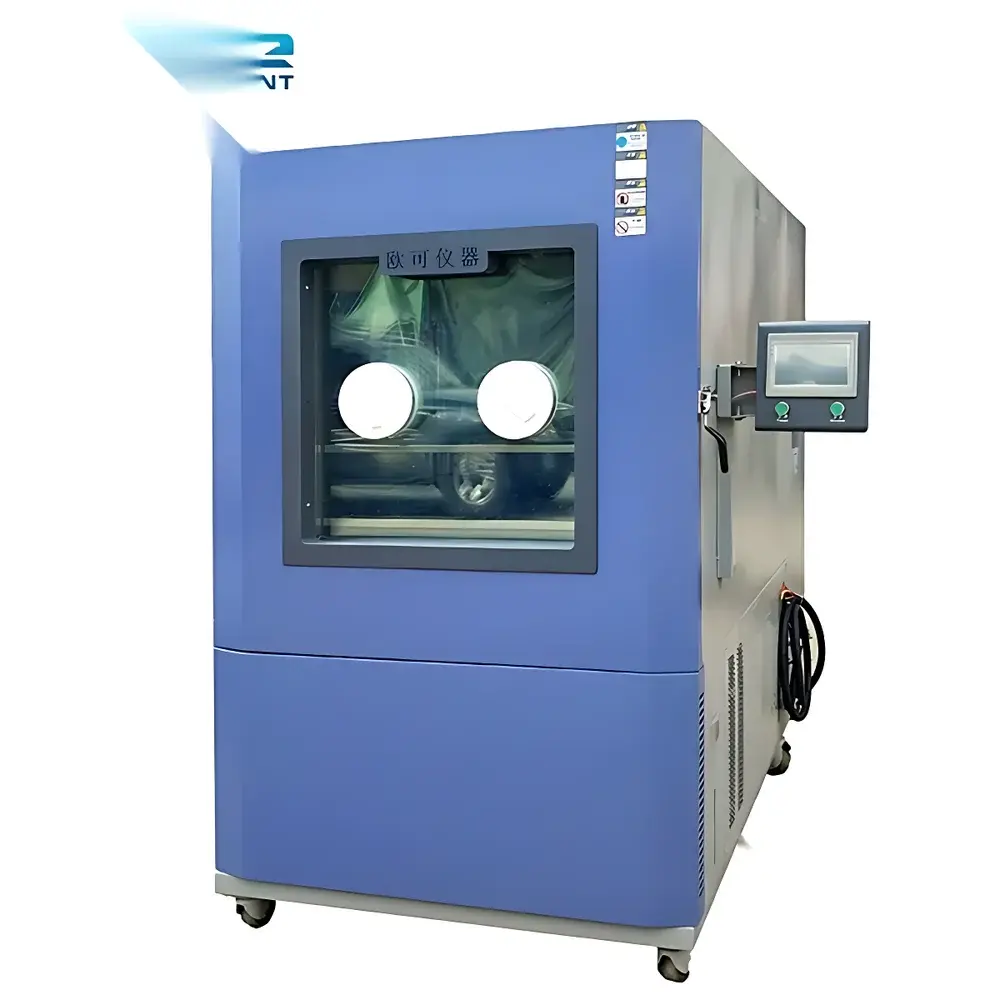
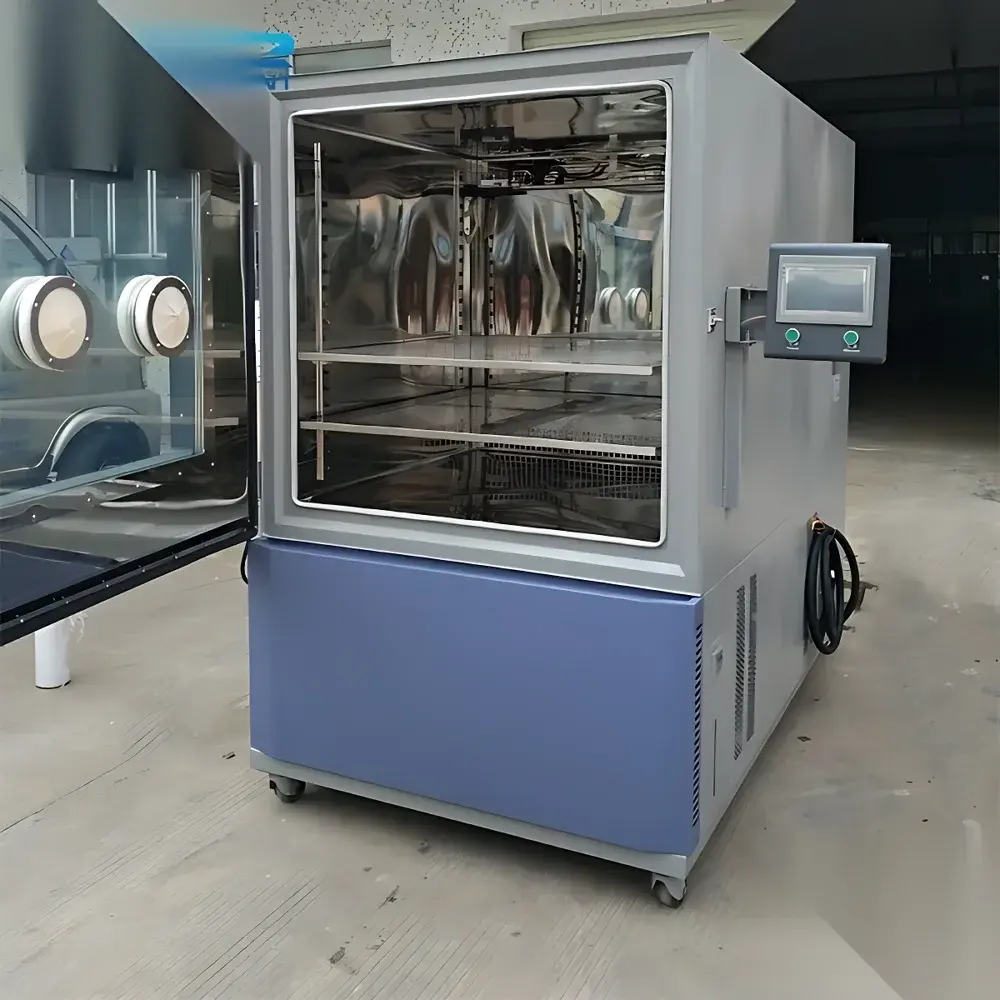
Environmental Test Chamber – Temperature and Humidity Controlled Chamber (Generic Industrial Grade)
No specifications available.
Overview
The Environmental Test Chamber – Temperature and Humidity Controlled Chamber is an industrial-grade climatic simulation system engineered for precise, repeatable, and long-term exposure testing under controlled thermal and hygrometric conditions. It operates on the principle of balanced temperature and humidity control (BTHC), utilizing proportional-integral-derivative (PID) algorithms to dynamically regulate heating, refrigeration, and steam/humidification outputs—ensuring that thermal and moisture energy input matches system losses in real time. This architecture enables stable, low-drift operation across wide operational envelopes, supporting qualification, reliability assessment, and environmental stress screening (ESS) of electronic components, automotive modules, aerospace hardware, packaging materials, and pharmaceutical primary packaging per internationally recognized test standards.
Key Features
- Robust dual-protection architecture: independent overtemperature cutoff, dry-run protection for humidifiers, low-water-level interlock, compressor overload/overheat/overcurrent monitoring, high-pressure refrigerant safety switch, molded-case circuit breaker, and residual-current device (RCD) for personnel and equipment safety.
- Advanced BTHC control logic implemented via touchscreen-based programmable controller—supporting multi-segment ramp-soak profiles, real-time data logging, and intuitive navigation without specialized training.
- High-efficiency refrigeration circuit employing full capillary tube expansion technology with automatic load capacity modulation—delivering smoother temperature transitions, improved stability at extreme setpoints, and enhanced longevity compared to thermostatic expansion valve (TXV) systems.
- Ergonomic cabinet design featuring seamless arc-shaped enclosure, flush-mount non-reactive handles, and modular internal chamber layout—optimized for operator accessibility, maintenance efficiency, and spatial integration within ISO-certified labs or production QA areas.
- Calibration-ready sensor interface accommodating traceable Pt100 RTD and capacitive humidity sensors; all control and alarm functions comply with functional safety principles defined in IEC 61508 (SIL 2 capable when configured with redundant inputs).
Sample Compatibility & Compliance
This chamber accommodates a broad range of sample types—including PCB assemblies, molded plastic enclosures, lithium-ion battery cells, sterile medical device packaging, and coated optical substrates—provided dimensional and thermal mass constraints remain within specified limits. Chamber performance specifications (e.g., temperature range, humidity range, ramp rates) are validated under no-load conditions at ambient reference temperature of 25 ± 6 °C, in accordance with ISO/IEC 17025 metrological practice. The system satisfies mandatory compliance requirements for environmental testing protocols including:
- GB/T 2423.1–2023 (formerly GB2423.1-89): Environmental testing — Part 2: Tests — Test A: Cold
- GB/T 2423.2–2023 (formerly GB2423.2-89): Environmental testing — Part 2: Tests — Test B: Dry heat
- IEC 60068-2-1: Environmental testing — Part 2-1: Tests — Test A: Cold
- IEC 60068-2-2: Environmental testing — Part 2-2: Tests — Test B: Dry heat
- GJB 1032–1990: Environmental stress screening procedures for electronic products
- MIL-STD-2164A: Environmental stress screening of electronic equipment
- GJB 234–1985 (Section 5.1.6): Quantitative environmental stress screening methodology
All test execution records support audit readiness for GLP, GMP, and ISO 9001 quality management systems. Data integrity meets ALCOA+ principles, and optional firmware upgrades enable 21 CFR Part 11-compliant electronic signatures and audit trails.
Software & Data Management
The embedded controller supports local data storage (≥100,000 timestamped points) and export via USB or Ethernet to CSV or XML formats. Optional PC-based software provides remote monitoring, multi-chamber fleet synchronization, statistical process control (SPC) charting, deviation alerting, and PDF report generation with digital signature fields. Firmware architecture permits secure over-the-air (OTA) updates and configurable alarm escalation (email/SMS) through enterprise IT infrastructure. All stored and transmitted data adhere to AES-256 encryption standards where enabled.
Applications
- Accelerated life testing of consumer electronics under combined thermal-humidity cycling (e.g., 85 °C / 85% RH)
- Qualification of automotive ECUs per AEC-Q200 and ISO 16750-4 environmental categories
- Stability studies for pharmaceutical packaging per ICH Q1A(R2) and USP
- Material compatibility validation of adhesives, conformal coatings, and elastomeric seals
- Environmental stress screening (ESS) of avionics line-replaceable units (LRUs) per MIL-HDBK-344
- Pre-conditioning of test specimens prior to mechanical or electrical characterization
FAQ
What does “balanced temperature and humidity control (BTHC)” mean?
BTHC refers to a closed-loop control strategy wherein the chamber’s heating, cooling, humidifying, and dehumidifying subsystems operate simultaneously and proportionally—ensuring net thermal and moisture exchange remains near zero during steady-state operation. This minimizes overshoot, reduces settling time, and improves long-term stability.
Are temperature ramp rates guaranteed under loaded conditions?
No. Published ramp rates reflect air temperature changes in an empty chamber under standard ambient conditions. Actual performance varies with specimen thermal mass, surface emissivity, airflow obstruction, and ambient water supply temperature (10–28 °C) and pressure (0.1–0.3 MPa).
Can the chamber be customized for non-standard internal dimensions?
Yes. Structural modifications—including extended height, reinforced shelves, or port configurations—are available upon engineering review and compliance verification.
Is third-party calibration certification included?
Factory calibration is performed using NIST-traceable standards. ISO/IEC 17025-accredited calibration certificates are available as an add-on service with documented uncertainty budgets.
Does the system support integration into a centralized lab automation network?
Yes. Modbus TCP, OPC UA, and HTTP REST API interfaces are supported for bidirectional communication with LIMS, MES, or SCADA platforms.
Related Products



