
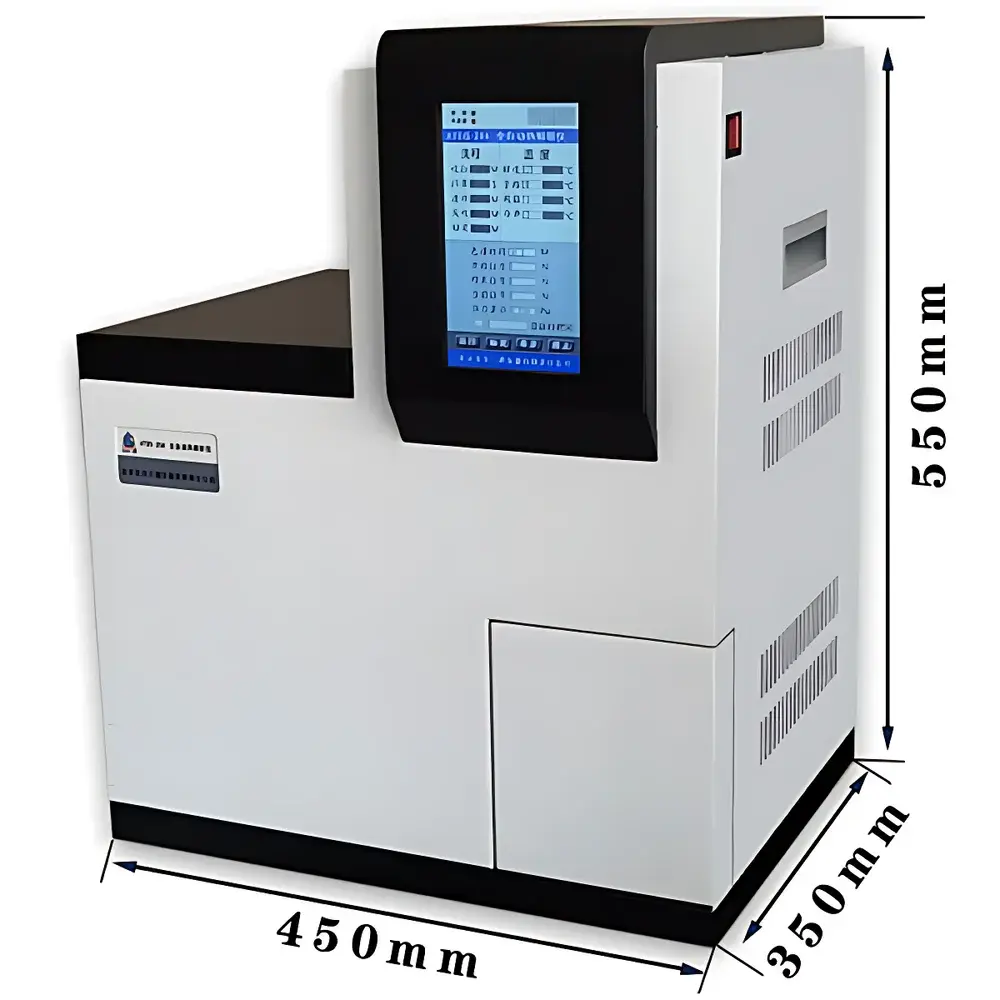
Sanpu ATDS-20A Fully Automated Two-Stage Thermal Desorber for Compliance with GB 50325–2020
| Brand | Sanpu |
|---|---|
| Origin | Shanghai, China |
| Manufacturer Type | Direct Manufacturer |
| Instrument Type | Two-Stage Thermal Desorber |
| Primary Desorption Temp Range | Ambient to 450 °C |
| Secondary Desorption Temp Range | 100 to 450 °C |
| Cryo-Focusing Trap Temp Range | −35 to Ambient °C |
| Desorption Recovery Rate | >99% (compound-dependent) |
| Sample Capacity | 20 positions |
| Cold Trap Cooling Method | Electronic Peltier Cooling |
| Temperature Control Accuracy | ±0.5 °C |
| RSD | ≤2.5% (for 0.05 μg benzene in methanol) |
| Sample Tube Format | 1/4″ OD × 3.5″ (ASTM D6196-compliant) |
| Valve Actuation | Motor-driven 6-port switching valve |
| Dimensions (L×W×H) | 350 × 450 × 510 mm |
| Weight | ~40 kg |
Overview
The Sanpu ATDS-20A is a fully automated two-stage thermal desorber engineered for high-fidelity, trace-level analysis of volatile organic compounds (VOCs) and semi-volatile organic compounds (SVOCs) in air, indoor environments, building materials, and industrial emissions. It operates on the principle of sequential thermal desorption—first releasing analytes from sorbent tubes under controlled heating (primary desorption), then refocusing them onto a cryogenically cooled trap (−35 °C), followed by rapid thermal desorption (secondary desorption) directly into the GC or GC-MS inlet. This two-stage architecture significantly enhances sensitivity, peak shape resolution, and quantitative reproducibility compared to single-stage systems—particularly critical for compliance-driven applications governed by stringent regulatory thresholds such as GB 50325–2020, HJ 644–2013, and HJ 734–2014. Designed for seamless integration with both domestic and international gas chromatographs—including Agilent, Thermo Fisher, Shimadzu, and PerkinElmer platforms—the ATDS-20A features hardware-level synchronization signals and standardized analog/digital I/O for bidirectional GC triggering and status feedback.
Key Features
- Fully automated batch processing of up to 20 sorbent tubes without operator intervention, supporting unattended overnight operation.
- Self-diagnostic startup sequence with real-time fault detection, automatic sample tray calibration, and positional error correction via proprietary stepper-motor indexing.
- Independent temperature control across four critical zones: primary desorption oven (ambient–450 °C), secondary desorption chamber (100–450 °C), transfer line (ambient–300 °C), and six-port valve manifold (ambient–300 °C)—all adjustable in 1 °C increments.
- Integrated Peltier-based cryo-focusing trap capable of stable operation down to −35 °C, enabling sharp, symmetrical chromatographic peaks even for early-eluting VOCs (e.g., benzene, toluene, ethylbenzene, xylenes).
- Programmable multi-step method sequences: desorption → inert gas purge → cold trapping → rapid thermal release → GC injection → post-run valve/line backflush (0–100 mL/min, continuously adjustable).
- Dedicated tube activation module with programmable heating profiles (up to 450 °C) and inert gas flow control, eliminating manual off-line conditioning.
- Onboard simulated sampling function (0–160 mL/min, calibrated mass flow control) for direct generation of calibration curves using standard gases or liquid spiking.
- Modular secondary desorption configuration: supports optional ambient-temperature or low-temperature secondary desorption modules for method flexibility with polar or thermally labile compounds.
- GC-synchronized triggering via TTL/relay outputs; compatible with third-party CDS software (e.g., OpenLab, Chromeleon, Empower) for audit-trail-compliant data acquisition.
Sample Compatibility & Compliance
The ATDS-20A accepts standard 1/4″ OD × 3.5″ stainless steel or quartz sorbent tubes (e.g., Tenax TA, Carbopack B/C, Carboxen 1000), compliant with ASTM D6196, ISO 16017-1, and EN 14662. Its design meets functional requirements of multiple Chinese national standards, including GB 50325–2020 (Control Standard for Indoor Environmental Pollution in Civil Building Engineering), HJ 644–2013 (VOCs in Ambient Air), HJ 583–2010 (BTEX in Ambient Air), and HJ 734–2014 (VOCs in Stack Emissions). For laboratories operating under GLP or ISO/IEC 17025 frameworks, the instrument supports full electronic record retention of method parameters, run logs, temperature profiles, and system diagnostics—facilitating 21 CFR Part 11–compliant validation when paired with validated chromatography data systems.
Software & Data Management
The ATDS-20A is operated via a 7-inch capacitive touchscreen interface running embedded Linux firmware. All method parameters—including temperature ramps, dwell times, flow rates, and valve timing—are configured through an intuitive graphical workflow editor. System logs (including timestamps, setpoint deviations, alarm events, and hardware status) are stored locally on internal flash memory and exportable via USB to CSV or PDF. The device provides RS-232, Ethernet, and dry-contact I/O interfaces for integration into LIMS environments or centralized lab automation networks. No proprietary software license is required; remote monitoring and control are achievable via standard HTTP API endpoints.
Applications
- Indoor air quality (IAQ) assessment per GB/T 18883–2002 and GB 50325–2020, including formaldehyde, TVOC, and specific VOCs in residential and commercial buildings.
- Automotive cabin air testing per HJ/T 400–2007, covering aldehydes, ketones, and aromatic hydrocarbons emitted from interior materials.
- Environmental monitoring of ambient and stack emissions per HJ 644–2013 and HJ 734–2014, with detection limits sub-pptr for C2–C12 hydrocarbons.
- Quality control of adsorbent tubes and validation of sampling efficiency using certified reference standards.
- Method development for emerging contaminants (e.g., siloxanes, halogenated VOCs) requiring precise thermal management and minimal carryover.
FAQ
Does the ATDS-20A support compliance with U.S. EPA Method TO-17?
Yes—the instrument’s temperature accuracy (±0.5 °C), cryo-focusing capability, and programmable desorption kinetics align with TO-17 performance criteria for sorbent tube desorption. Validation data packages for TO-17 are available upon request.
Can it be used with GC-MS systems requiring splitless injection?
Absolutely. The secondary desorption pulse width, trap release rate, and transfer line temperature are fully configurable to match splitless liner thermal profiles and minimize band broadening.
Is remote diagnostics supported?
Yes—via built-in Ethernet port and web-based status dashboard. Firmware updates and log retrieval can be performed over LAN without physical access.
What maintenance intervals are recommended for the Peltier cooling module?
No scheduled maintenance is required; the solid-state cooler has no moving parts or consumables. Annual verification of cold trap minimum temperature (−35 °C ±1 °C) is advised using NIST-traceable thermocouple calibration.
How is carryover minimized between samples?
Through three redundant mechanisms: (1) automated post-run backflush of the six-port valve and transfer line, (2) high-purity inert gas purge during cold trap regeneration, and (3) optional quartz-lined transfer tubing for highly reactive analytes.
Related Products





