
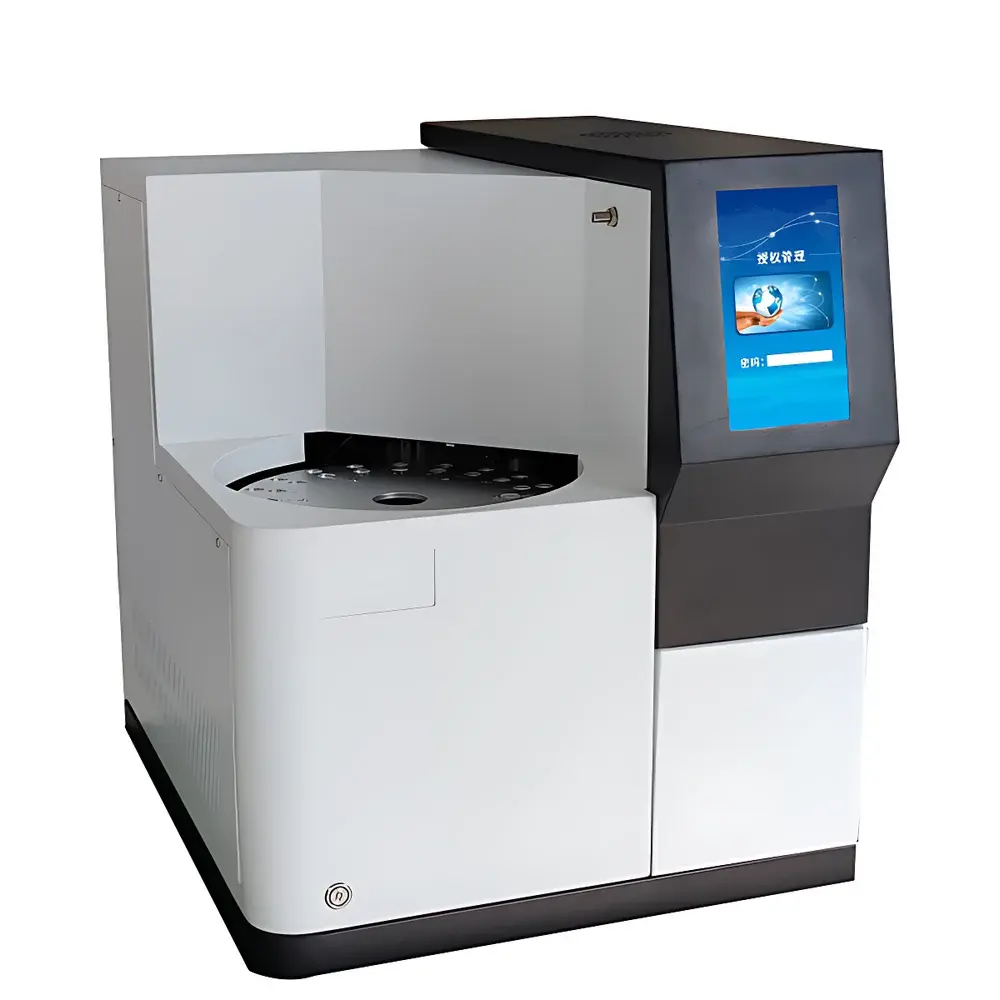
Sanpu ATDS-20B Fully Automated Dual-Channel Two-Stage Thermal Desorber
| Brand | Sanpu |
|---|---|
| Origin | Beijing, China |
| Manufacturer Type | Direct Manufacturer |
| Product Category | Domestic |
| Model | ATDS-20B |
| Instrument Type | Two-Stage Thermal Desorber / Thermal Desorption Unit |
| Desorption Temperature Range | Ambient to 450 °C |
| Cold Trap Temperature Range | −35 °C to Ambient |
| Desorption Recovery Rate | >90% (compound-dependent) |
| Sample Capacity | 40 positions (dual 20-position carousel) |
Overview
The Sanpu ATDS-20B is a fully automated dual-channel two-stage thermal desorber engineered for high-throughput, reproducible pre-concentration and introduction of volatile and semi-volatile organic compounds (VOCs and SVOCs) into gas chromatography (GC) or GC–MS systems. It operates on the principle of sequential thermal desorption: first-stage desorption releases analytes from sorbent tubes under controlled inert gas flow; second-stage focusing occurs in a cryogenically cooled trap (down to −35 °C), followed by rapid thermal desorption into the GC inlet. This two-stage architecture delivers narrow bandwidth injection, improved peak shape, enhanced sensitivity, and superior quantitative precision—critical for compliance with modern environmental and indoor air quality standards including HJ 644–2013, HJ 583–2010, GB/T 18883–2020, and HJ 734–2014. Designed for seamless integration with both domestic and international GC/GC–MS platforms—including Agilent, Thermo Fisher, Shimadzu, and PerkinElmer—the ATDS-20B supports method-driven automation without manual intervention across full unattended sequences.
Key Features
- Fully automated dual-channel operation: processes up to 40 samples (2 × 20-position carousels) sequentially or in parallel, minimizing downtime and maximizing lab throughput.
- Independent four-zone temperature control: desorption stage 1 (ambient–450 °C), valve zone (ambient–300 °C), transfer line (ambient–300 °C, 24 V low-voltage heating), and desorption stage 2 (ambient–450 °C), all programmable in 1 °C increments with stability ≤ ±0.5 °C.
- Electronically cooled cold trap: semiconductor-based cooling achieves −35 °C with precise ramping and hold capability, enabling efficient analyte focusing and sharp elution profiles.
- Integrated pneumatic control system: features motor-driven 6-port switching valves, adjustable purge/flush flow (0–100 mL/min), and programmable sample draw flow (0–160 mL/min) for standardized simulated sampling and calibration curve generation.
- Cross-contamination mitigation: passivated stainless-steel gas pathways, automated back-flush of transfer lines and injection valves, and inert sample handling reduce carryover to < 0.5% RSD (measured at 0.05 μg benzene in methanol).
- Intuitive human-machine interface: 7-inch capacitive touchscreen with real-time status animation, method navigation, and bilingual (English/Chinese) UI support, complemented by USB PC connectivity for centralized method management and audit-ready logging.
Sample Compatibility & Compliance
The ATDS-20B accepts standard 1/4″ × 3.5″ (OD × length) sorbent tubes compliant with ASTM D6196 and ISO 16017-1 specifications. Its dual-channel architecture allows concurrent processing of different tube types (e.g., Tenax TA, Carbopack B/C, graphitized carbon black) under independent thermal protocols. All operational parameters—including desorption time (0–60 min), cold trap hold time, and injection duration (0–60 min)—are fully programmable per method. The system meets functional requirements for GLP-compliant laboratories: user access levels, electronic signatures, tamper-evident audit trails, and 21 CFR Part 11–ready data integrity controls are embedded in firmware. It is validated for use in accredited environmental testing labs performing analyses per HJ/T 400–2007 (in-vehicle VOCs), GB 50325–2020 (civil building IAQ), and DB12/524–2020 (industrial VOC emission monitoring).
Software & Data Management
Control and data acquisition are managed via Windows-based PC software connected via USB 2.0. The platform supports ≥20 user-defined methods, each storing complete thermal, pneumatic, and timing parameters. Methods can be duplicated, versioned, and exported for inter-lab transfer. Real-time graphical display shows temperature profiles, valve actuation events, and pressure status. All system events—including power-on self-test results, error codes, calibration logs, and user login/logout timestamps—are recorded in a secure SQLite database with export to CSV/PDF. Software includes built-in tools for generating linear calibration curves using internal standard or external standard approaches, and supports synchronization triggers for GC start, data system acquisition initiation, and external event logging.
Applications
The ATDS-20B is routinely deployed in environmental monitoring labs for analysis of ambient air, indoor air, workplace atmospheres, and industrial stack emissions. Key application areas include: quantification of BTEX (benzene, toluene, ethylbenzene, xylenes), C2–C12 aliphatics, chlorinated solvents, carbonyls (via derivatization), and oxygenated VOCs in compliance with Chinese national standards; validation of building material emissions (e.g., carpets, adhesives, composite wood); screening of consumer products for residual solvents; and forensic air quality assessments following fire or chemical release incidents. Its robustness and repeatability (RSD ≤ 2.5% at trace levels) make it suitable for regulatory reporting and third-party certification workflows.
FAQ
What sorbent tube formats does the ATDS-20B support?
It accommodates standard 1/4″ OD × 3.5″ length adsorption tubes conforming to US EPA TO-17 and ISO 16017-1 dimensional specifications.
Can the instrument perform simultaneous two-channel analysis?
No—it operates in dual-channel sequential mode: while one channel performs desorption/focusing, the other prepares the next tube, ensuring continuous workflow without overlap.
Is remote monitoring or network integration possible?
Local USB control is standard; Ethernet or Wi-Fi modules are not included but can be integrated via third-party industrial gateways for SCADA-level lab-wide instrumentation networks.
How is calibration verification performed?
The system includes built-in simulated sampling functionality with adjustable flow and duration, enabling direct preparation of calibration standards on-tube using certified gas or liquid spiking techniques.
Does the ATDS-20B comply with FDA 21 CFR Part 11 requirements?
Yes—audit trail logging, electronic signature support, role-based access control, and data immutability safeguards meet core technical requirements for Part 11 compliance in regulated environments.




