
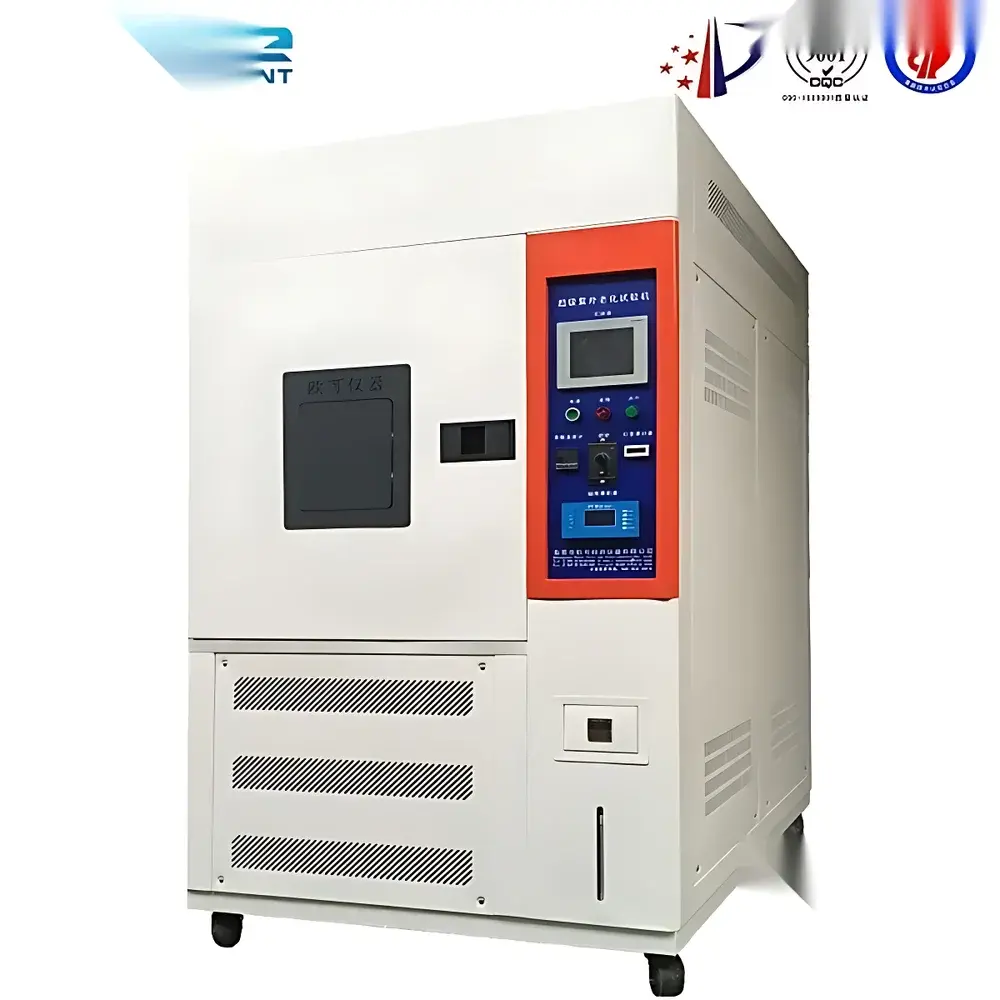
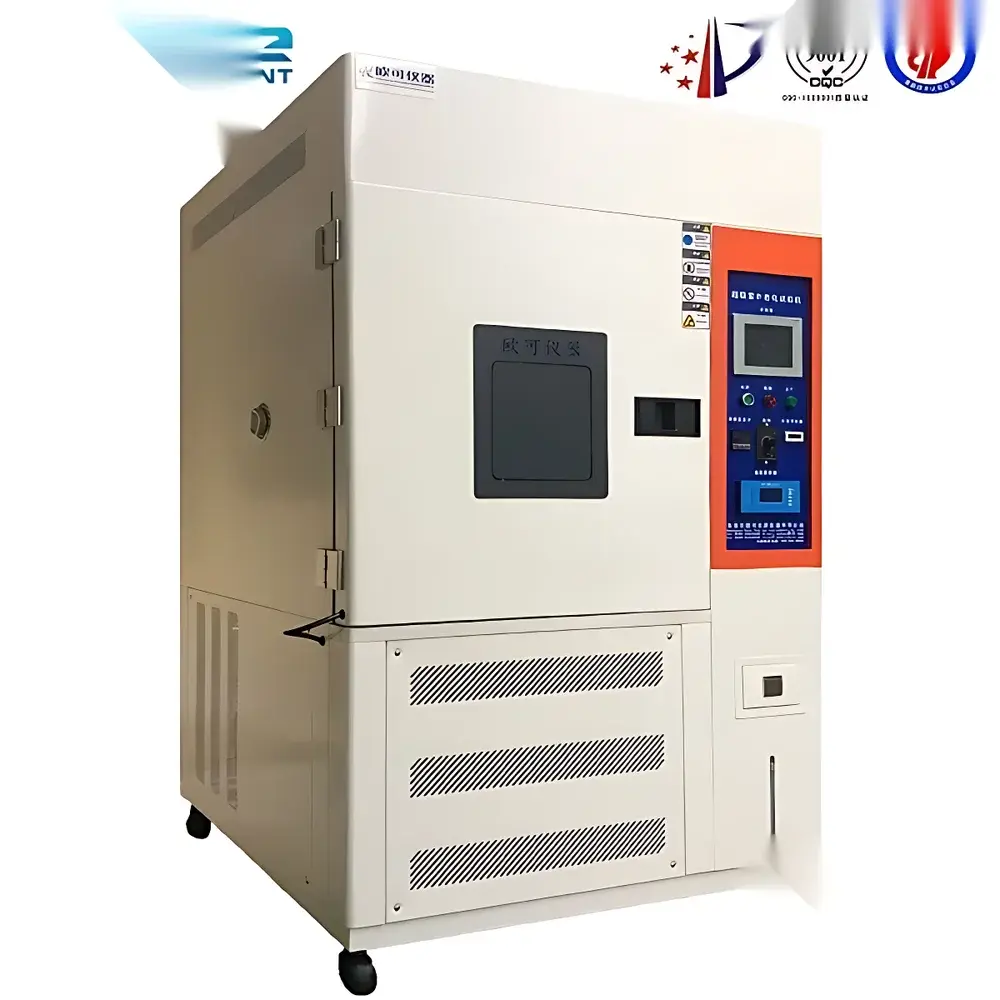
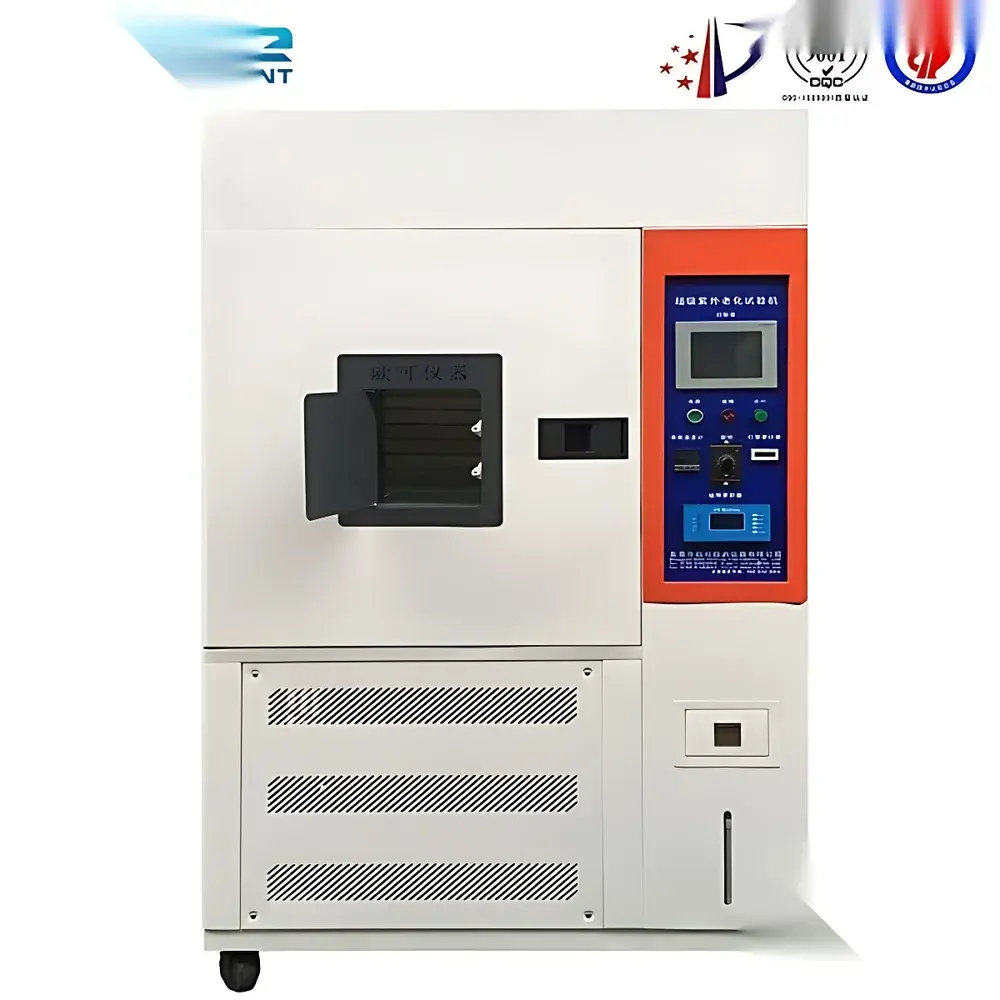
SuperUV Advanced Metal Halide UV Weathering Test Chamber
| Brand | Other Brands |
|---|---|
| Origin | Imported |
| Manufacturer Type | Authorized Distributor |
| Price | USD 21,500 (FOB) |
| Temperature Range | RT to 85 °C (Operating Range: 50 ±10 °C) |
| Humidity Range | 40–70 % RH (Illuminated) / 50–90 % RH (Dark Cycle) |
| Temp. Control Accuracy | ±0.5 °C |
| Humidity Control Accuracy | ±2.0 % RH |
| Temp. Uniformity | ±2.0 °C |
| Humidity Uniformity | ±3.0 % RH |
| Heating Rate | ≤25 min (RT → 85 °C) |
| Light Source | 2.5 kW Air-Cooled Metal Halide Lamp (1 unit) |
| Sample Tray | 500 × 400 mm Stainless Steel Rack |
| Irradiation Geometry | Top-Mounted Reflector-Based Direct Illumination |
| Spectral Output | 295–450 nm (UV-A/UV-B/Visible) |
| Irradiance Uniformity | ≥90 % across Sample Plane |
Overview
The SuperUV Advanced Metal Halide UV Weathering Test Chamber is an engineered environmental simulation system designed for accelerated photochemical degradation testing of materials under controlled solar-spectrum irradiation, thermal stress, and cyclic humidity conditions. Unlike fluorescent UV lamp-based systems (e.g., UVA-340 or UVB-313), this chamber employs high-intensity air-cooled metal halide lamps to replicate the spectral power distribution (SPD) of terrestrial sunlight—particularly the critical 295–450 nm band encompassing UV-B, UV-A, and near-visible radiation. This spectral fidelity enables physicochemically relevant aging mechanisms—including polymer chain scission, chromophore degradation, photo-oxidation, and hydrolytic cleavage—to be accelerated with high reproducibility. The chamber integrates precise temperature and humidity control with programmable irradiance cycles, supporting standardized exposure protocols aligned with ISO 4892-2, ASTM G155, SAE J2527, and IEC 61215 for photovoltaic module qualification.
Key Features
- Single 2.5 kW air-cooled metal halide lamp delivering spectrally stable output across 295–450 nm, closely matching AM1.5G solar irradiance in both relative spectral distribution and photon flux density
- Top-mounted optical configuration with parabolic reflector assembly ensures ≥90% irradiance uniformity over the 500 × 400 mm stainless steel sample plane
- Independent dual-channel climate control: PID-regulated heating (RT to 85 °C, ±0.5 °C accuracy) and steam-assisted humidification (40–70% RH during irradiation; 50–90% RH during dark condensation cycles)
- Thermal uniformity maintained at ±2.0 °C and humidity uniformity at ±3.0% RH across working volume—validated per ISO 17025-compliant mapping procedures
- Programmable test sequences with up to 99 segments, supporting complex multi-phase protocols: irradiation → condensation → water spray (optional add-on) → dark recovery
- Integrated real-time irradiance monitoring via calibrated broadband UV sensor (295–400 nm), traceable to NIST standards
Sample Compatibility & Compliance
The chamber accommodates full-size automotive exterior components (e.g., bumpers, trim, headlamp lenses), photovoltaic modules (up to 1.6 m × 1.0 m with optional extended tray), and electronic enclosures per IEC 60068-2-5 and MIL-STD-810H Method 505.5. Its spectral match to natural insolation satisfies the spectral validation requirements of ASTM G155 Annex A1 and ISO 4892-2 Clause 6.2. All control algorithms and data logging comply with FDA 21 CFR Part 11 requirements for audit trails, electronic signatures, and data integrity. System validation documentation—including IQ/OQ/PQ templates—is provided to support GLP and IATF 16949 laboratory accreditation.
Software & Data Management
Control and data acquisition are managed via a dedicated Windows-based software suite featuring intuitive graphical programming, real-time parameter visualization, and automated report generation (PDF/CSV). The system logs all operational parameters—including lamp voltage/current, chamber temperature/humidity, irradiance values, and cycle timing—with timestamped entries stored in encrypted SQLite databases. Data export supports ASTM E2046-compliant metadata tagging (sample ID, exposure dose, cumulative kJ/m² @ 340 nm). Optional Ethernet/IP interface enables integration into centralized LIMS or MES platforms, with TLS 1.2 encryption for secure remote monitoring and alarm notification via SMTP/SNMP.
Applications
- Automotive OEMs and Tier-1 suppliers conducting durability validation of paint systems, plastic substrates, adhesives, and sealants per GMW14124, Ford CETP 00.00-L-467, and VW TL 226
- Photovoltaic manufacturers performing IEC 61215-2 MQT10 (UV preconditioning) and UL 1703 accelerated weathering certification
- Coating formulators evaluating chalk resistance, gloss retention, and color stability under ISO 11341 and ASTM D4303
- Electronics manufacturers assessing housing material degradation and conformal coating integrity under IPC-9708 and JEDEC JESD22-A109
- Academic and contract research laboratories conducting mechanistic studies on photo-oxidative degradation kinetics using time-resolved FTIR and gel permeation chromatography correlation
FAQ
What spectral standard does the metal halide lamp meet?
The lamp’s unfiltered output (295–450 nm) is spectrally characterized per ISO/CIE 13837 and filtered to match the relative spectral irradiance of AM1.5G sunlight through 3 mm borosilicate glass—verified by third-party spectroradiometric calibration annually.
Can the chamber perform combined UV + water spray testing?
Yes—water spray functionality is available as a factory-installed option compliant with ASTM G155 Cycle 6, delivering calibrated 0.35–0.55 L/min/m² spray intensity with deionized water recirculation and filtration.
Is lamp spectral drift compensated during long-term tests?
Yes—the integrated broadband UV sensor continuously monitors irradiance; the controller automatically adjusts lamp power to maintain setpoint irradiance within ±5% tolerance over lamp lifetime (typical 1,500 h).
What validation documentation is included?
Each unit ships with Factory Acceptance Test (FAT) report, NIST-traceable lamp spectral certificate, temperature/humidity uniformity mapping data, and full IQ/OQ protocol packages aligned with ISO/IEC 17025 requirements.



