
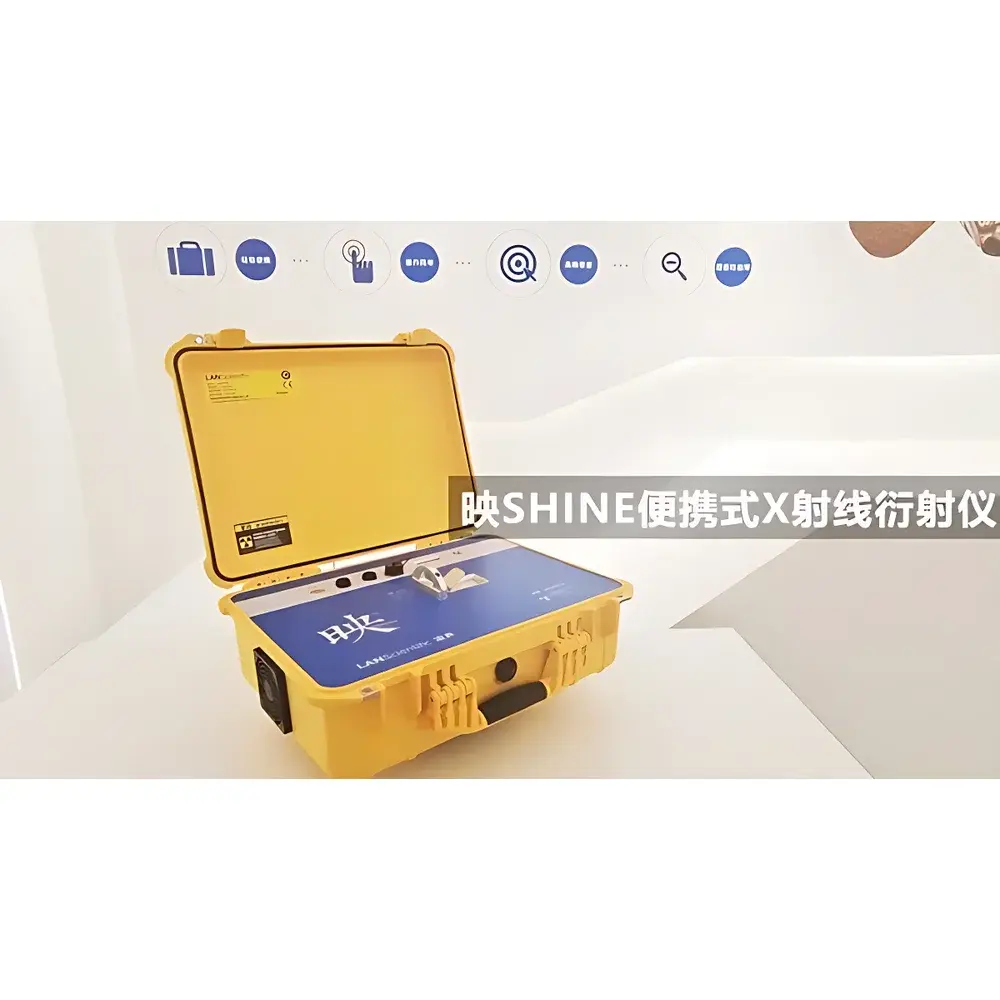
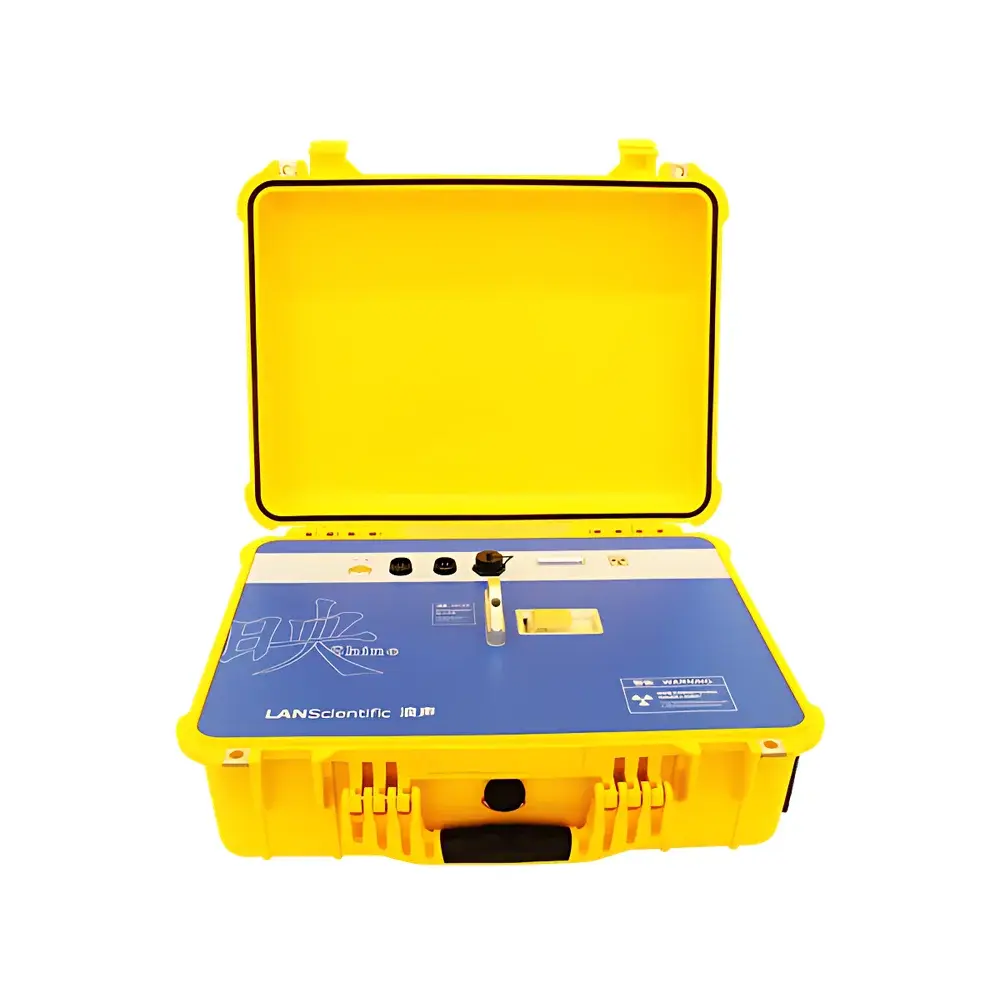
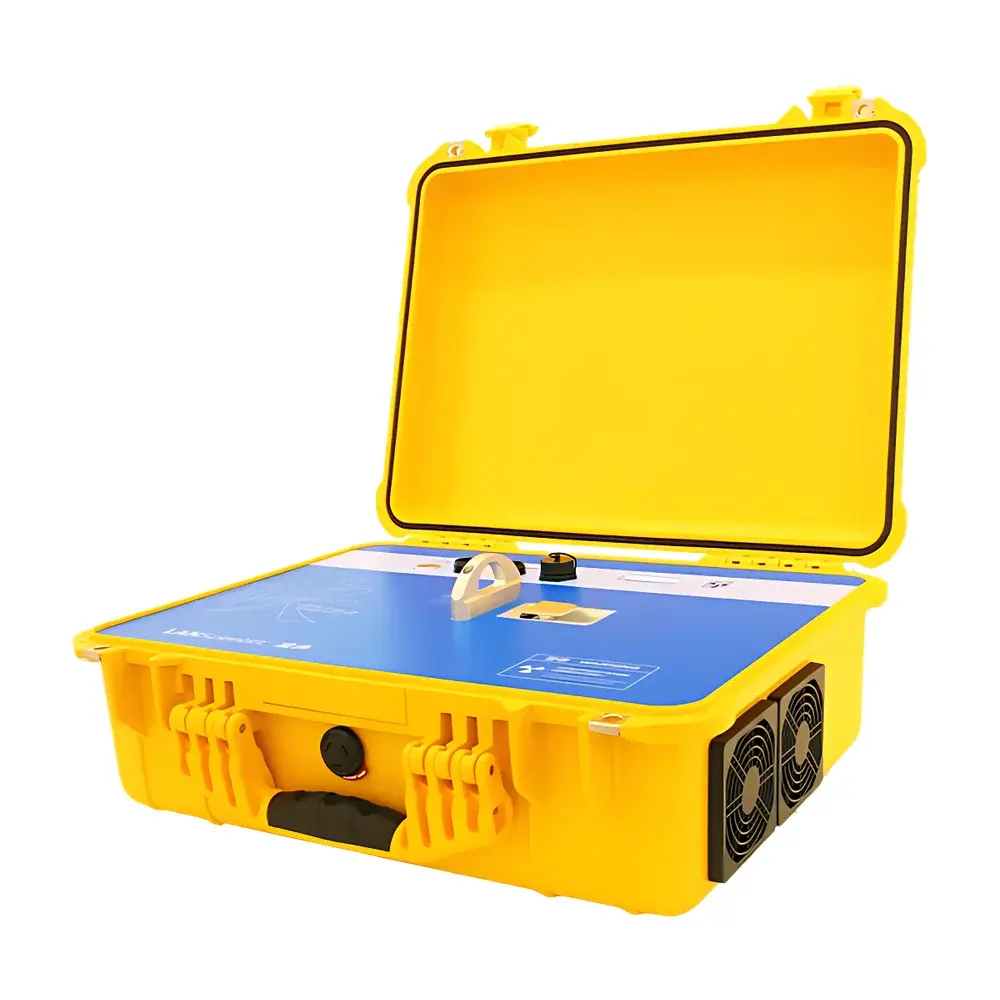
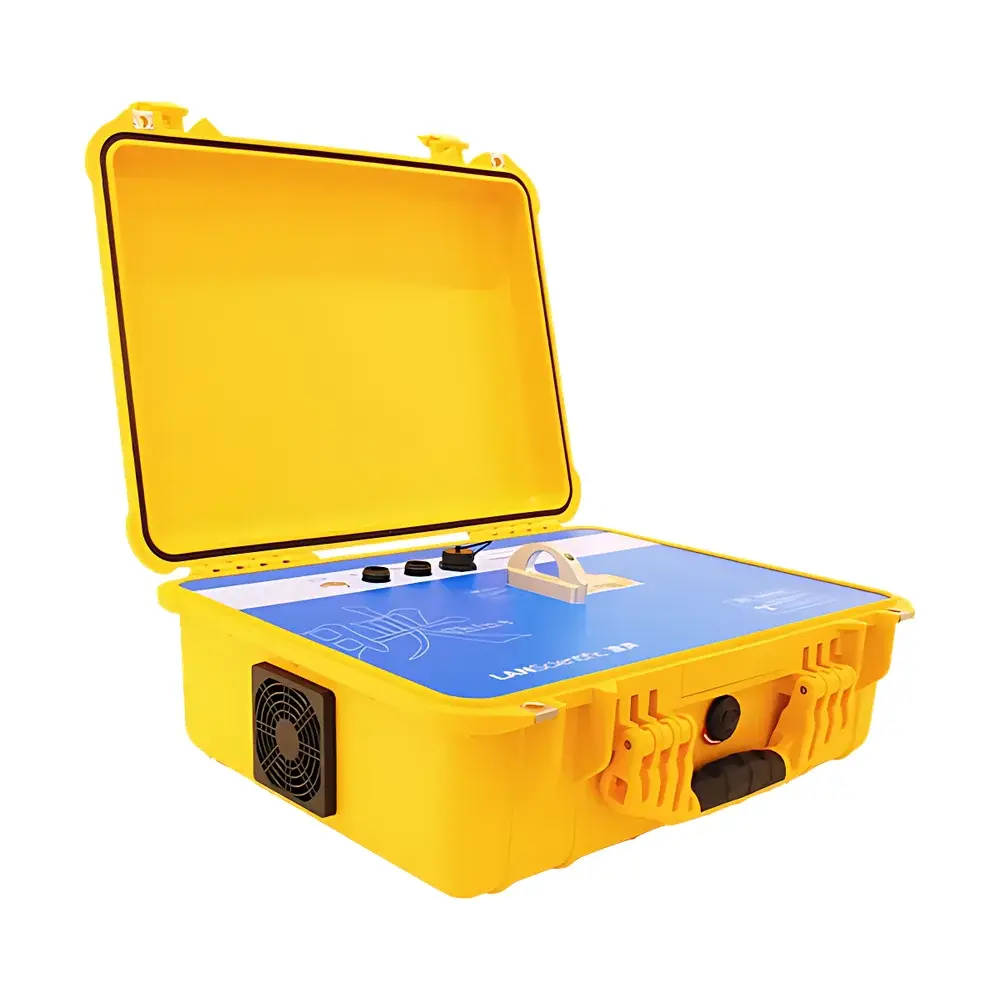
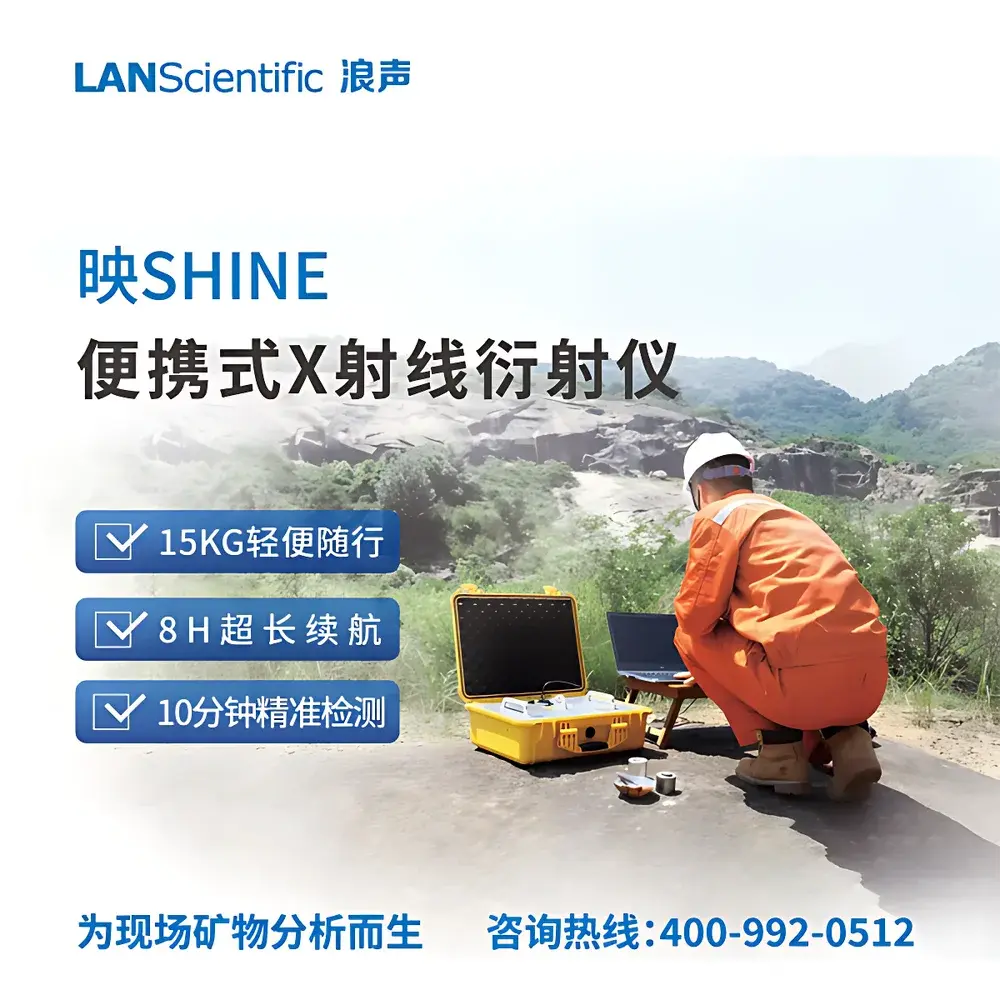
Brookfield LANScientific SHINE Portable X-ray Diffractometer (Geochemistry Edition)
| Brand | LANScientific |
|---|---|
| Origin | Jiangsu, China |
| Manufacturer Type | Manufacturer |
| Regional Classification | Domestic |
| Model | SHINE Geochemistry Edition (Minerals & Rocks) |
| Instrument Type | Powder X-ray Diffractometer |
| Geometry | Transmission |
| X-ray Source | Microfocus Tube with Collimator |
| Detector | CCD-based 2D Detector |
| Sample Form | Loose Powder (≈20 mg) |
| Sample Handling | Vibration-assisted Random Orientation |
| Data Output | Full 2θ Diffraction Pattern |
| Connectivity | USB / Bluetooth / Wi-Fi |
| Environmental Rating | IP54 (Dust- and Splash-Resistant) |
| Radiation Safety | Fully Shielded, Zero Leakage During Operation |
| Compliance | Meets GB/T 15445–2021 (Chinese Standard for Portable XRD), Designed per IEC 61010-1 Safety Requirements |
Overview
The Brookfield LANScientific SHINE Portable X-ray Diffractometer (Geochemistry Edition) is an engineered solution for in situ mineralogical phase identification and structural characterization in field-deployable environments. Operating on the fundamental principle of Bragg diffraction, the instrument utilizes a microfocus X-ray tube coupled with a precision collimator to generate a monodirectional beam that traverses a loose powder sample in transmission geometry. Unlike conventional reflection-mode diffractometers—where surface texture, particle packing, and preferred orientation introduce systematic errors—the SHINE’s transmission configuration ensures consistent beam penetration depth and uniform irradiation volume. A proprietary vibration module agitates the sample bed during acquisition, statistically randomizing crystallite orientation and maximizing the probability of satisfying Bragg’s condition across multiple lattice planes. This yields high-fidelity Debye–Scherrer rings captured by a calibrated CCD detector, enabling robust qualitative and semi-quantitative phase analysis without mechanical goniometer movement or angular recalibration.
Key Features
- Transmission-geometry XRD architecture optimized for low-density, heterogeneous geological powders—including clays, zeolites, and weathered ores—where reflection-mode instruments suffer from poor signal-to-noise and orientation bias.
- Integrated dual-modal detection: Simultaneous acquisition of XRD patterns and XRF spectral data within a single measurement cycle, delivering complementary elemental composition and crystalline phase information.
- No moving parts in the optical path: Eliminates mechanical wear, thermal drift, and alignment sensitivity—critical for long-term stability in mobile or off-grid operation.
- Pre-calibrated, fixed-sample-volume cell: 20 mg nominal loading ensures reproducible scattering volume; density-independent resolution enables reliable quantification across variable porosity matrices (e.g., lateritic soils vs. dense ilmenite concentrates).
- Ruggedized enclosure rated to IP54: Sealed against dust ingress and water splashes; shock-absorbing chassis and internal vibration damping support sustained use on rough terrain or aboard geological survey vehicles.
- Zero-radiation-leakage design: Triple-layer Pb–Cu–polymer shielding, interlocked shutter mechanism, and real-time dose monitoring comply with IEC 61010-1 and national radiation safety regulations (GBZ 127–2019).
Sample Compatibility & Compliance
The SHINE Geochemistry Edition accepts unprepared, dry, finely ground mineral powders (≤150 µm via standard ASTM E11 sieve). No pressing, binder addition, or glass-slide mounting is required—reducing preparation time to under three minutes. It is validated for routine analysis of silicates, carbonates, sulfides, oxides, and rare-metal-bearing phases (e.g., spodumene, beryl, lepidolite) relevant to Li–Be–Ta–Nb exploration. The system adheres to GLP-aligned data integrity protocols: all raw frames, metadata (voltage, current, exposure time, ambient temperature), and processing parameters are embedded in vendor-neutral HDF5 files. Audit trails meet requirements for ISO/IEC 17025 accredited laboratories performing mineral resource estimation per JORC or NI 43-101 reporting standards.
Software & Data Management
Acquisition and analysis are managed via SHINE-GeoSuite™, a Windows-based application supporting real-time pattern visualization, auto-indexing using the ICDD PDF-4+ database (2023 release), Rietveld refinement (via integrated GSAS-II engine), and quantitative phase analysis (QPA) using internal standard or reference intensity ratio (RIR) methods. All operations—including background subtraction, peak deconvolution, and crystallinity index calculation—are scriptable and repeatable. Data export supports CIF, XYE, CSV, and ASTM E1361-compliant .xrdml formats. Remote control via Bluetooth/WiFi enables synchronized logging with GPS-tagged field notebooks, while USB-C tethering allows offline batch processing on certified lab workstations compliant with FDA 21 CFR Part 11 (electronic signatures enabled).
Applications
- Real-time lithological discrimination during core logging and trench mapping.
- In-field grade control of pegmatite-hosted lithium resources (spodumene vs. petalite quantification).
- Tailings characterization for recovery feasibility studies—e.g., residual cassiterite in tin smelter slags or fluorite in phosphate beneficiation waste.
- Process mineralogy support in TiO₂ pigment manufacturing: anatase/rutile ratio monitoring and sulfate vs. chloride route residue profiling.
- Weathering profile analysis in regolith studies—quantifying kaolinite–smectite–illite transitions linked to paleoclimatic indicators.
- Forensic geosourcing of archaeological ceramics or construction aggregates via clay mineral fingerprinting.
FAQ
Does the SHINE require external cooling or compressed air?
No. The microfocus X-ray source employs thermoelectric (Peltier) cooling and operates continuously at ≤30 W power draw—compatible with standard 12 V DC field batteries.
Can it distinguish between polymorphs such as anatase and rutile TiO₂?
Yes. Its angular resolution (Δ2θ ≤ 0.02° FWHM) and low-background transmission geometry enable clear separation of diagnostic (101), (112), and (200) reflections in the 25–30° 2θ range.
Is calibration traceable to NIST or PTB standards?
Yes. Factory calibration uses Si SRM 640e and corundum SRM 1976a; users receive a certificate of calibration with uncertainty budget per ISO/IEC 17025 Annex A.
What is the minimum detectable phase fraction in QPA mode?
Under optimal conditions (well-crystallized phases, no amorphous matrix), detection limit is ~1.5 wt% for major phases using RIR-based quantification; Rietveld refinement extends sensitivity to ~0.8 wt% with appropriate internal standard addition.
How is data integrity maintained during extended field campaigns?
All raw frames include embedded SHA-256 checksums; software enforces write-once/read-many (WORM) archival mode when saving to external SSDs, preventing post-acquisition modification without audit-log entry.






