
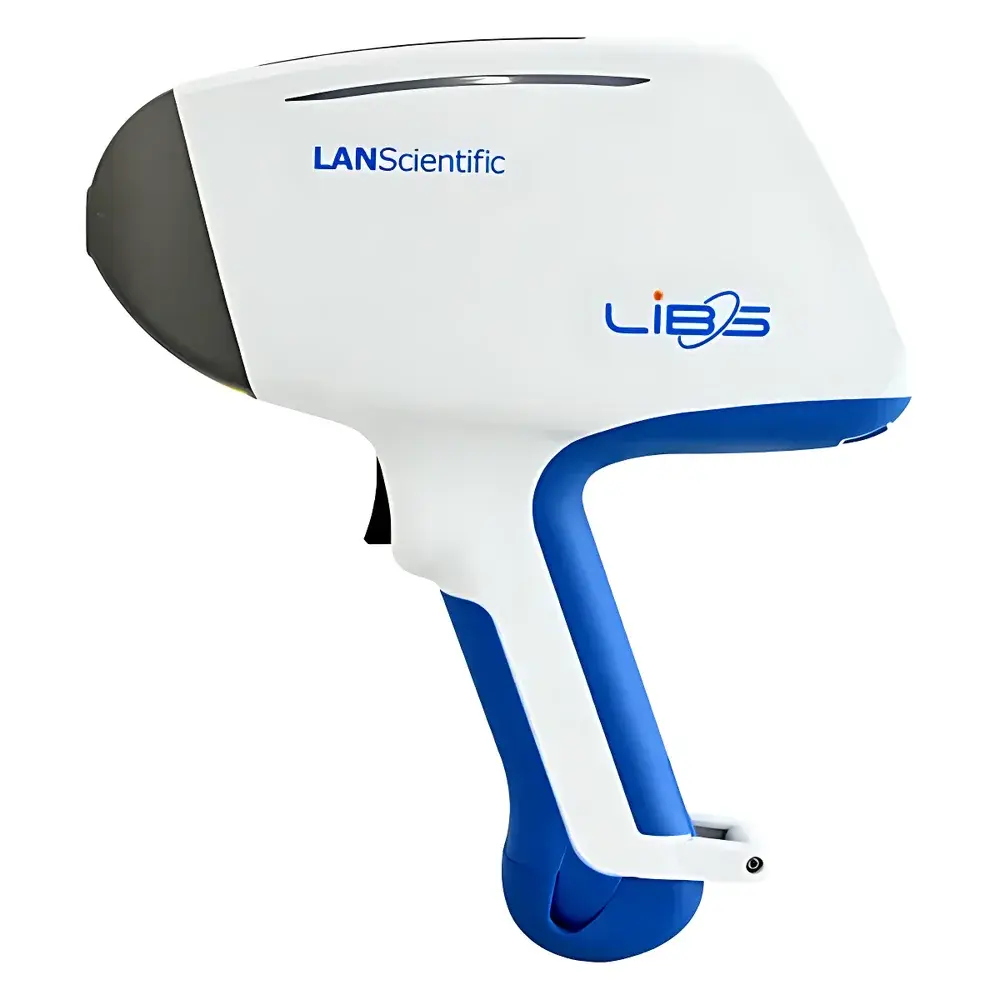
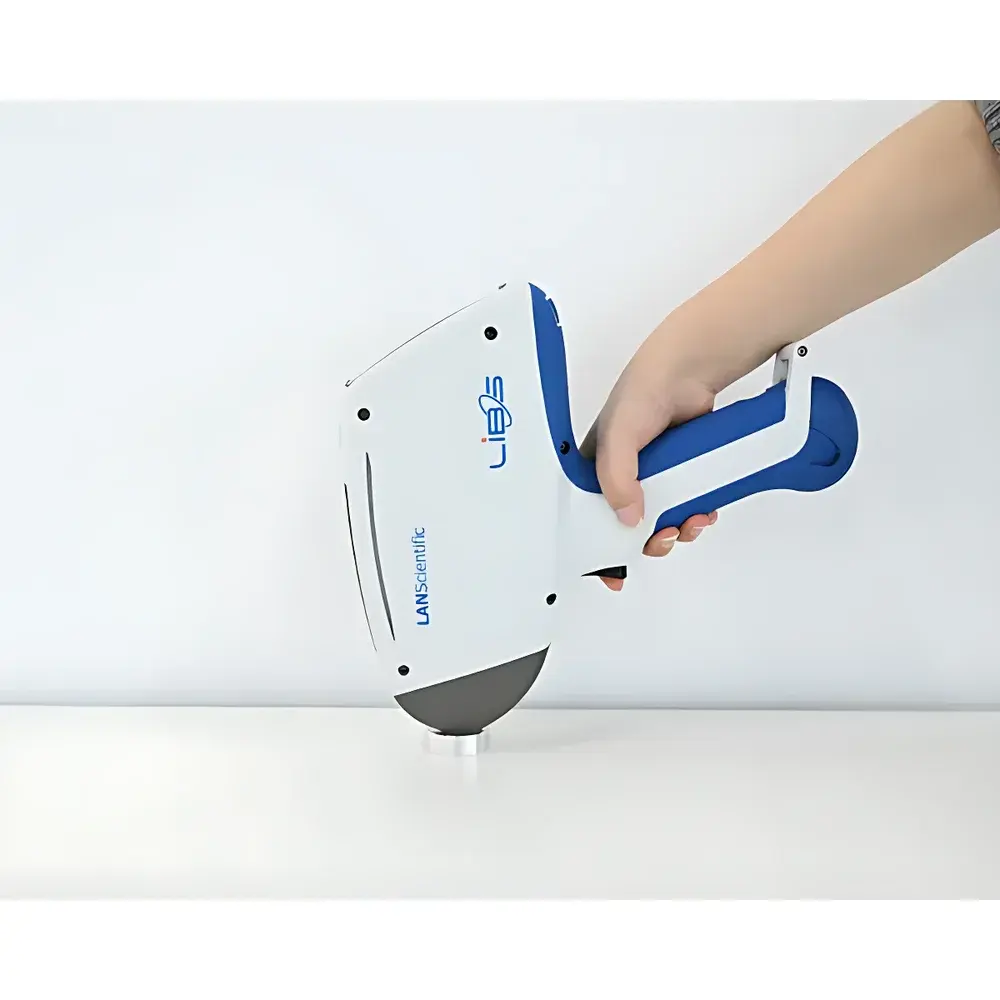
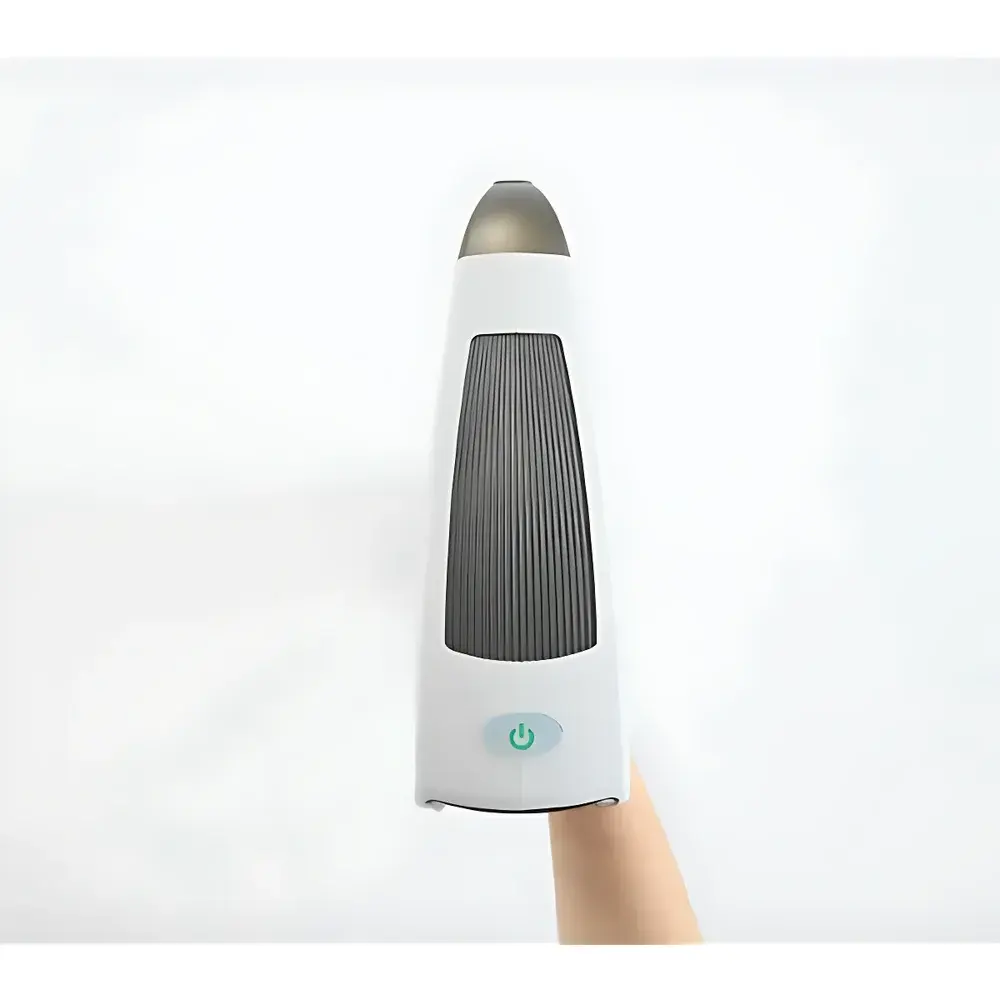
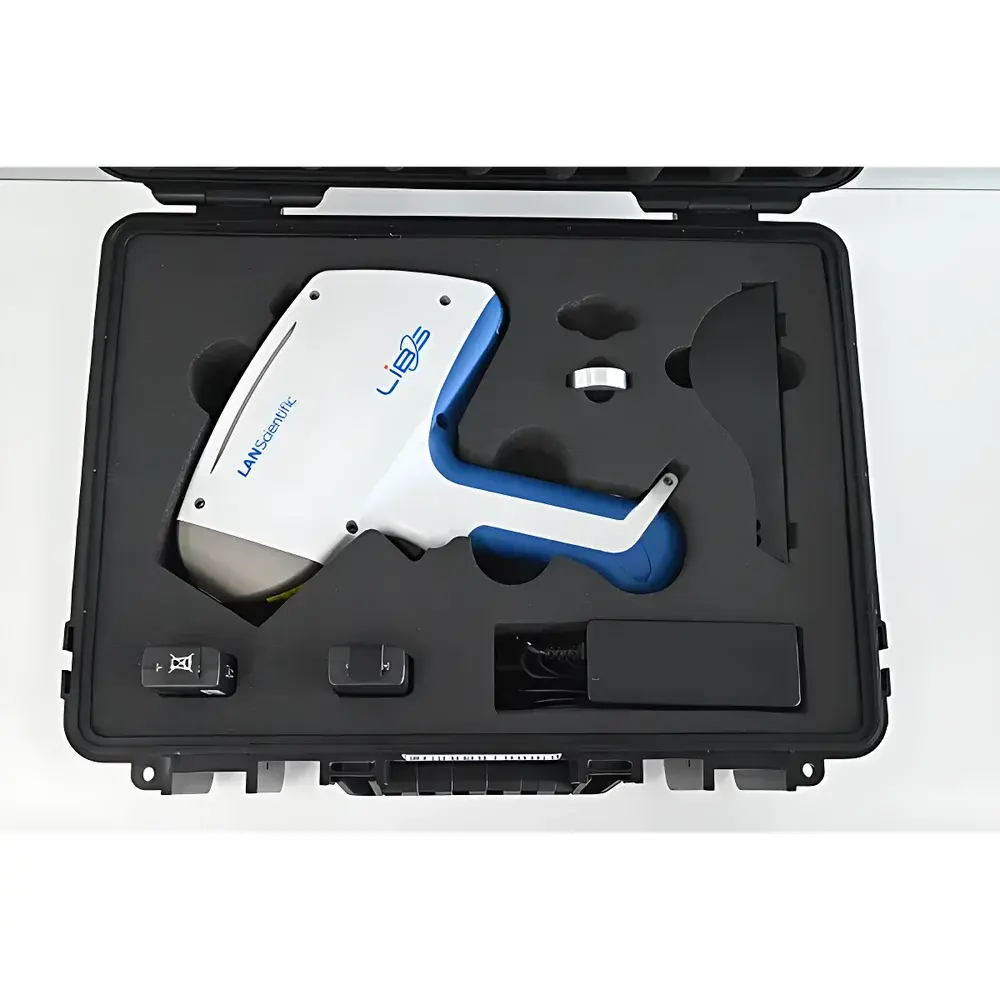
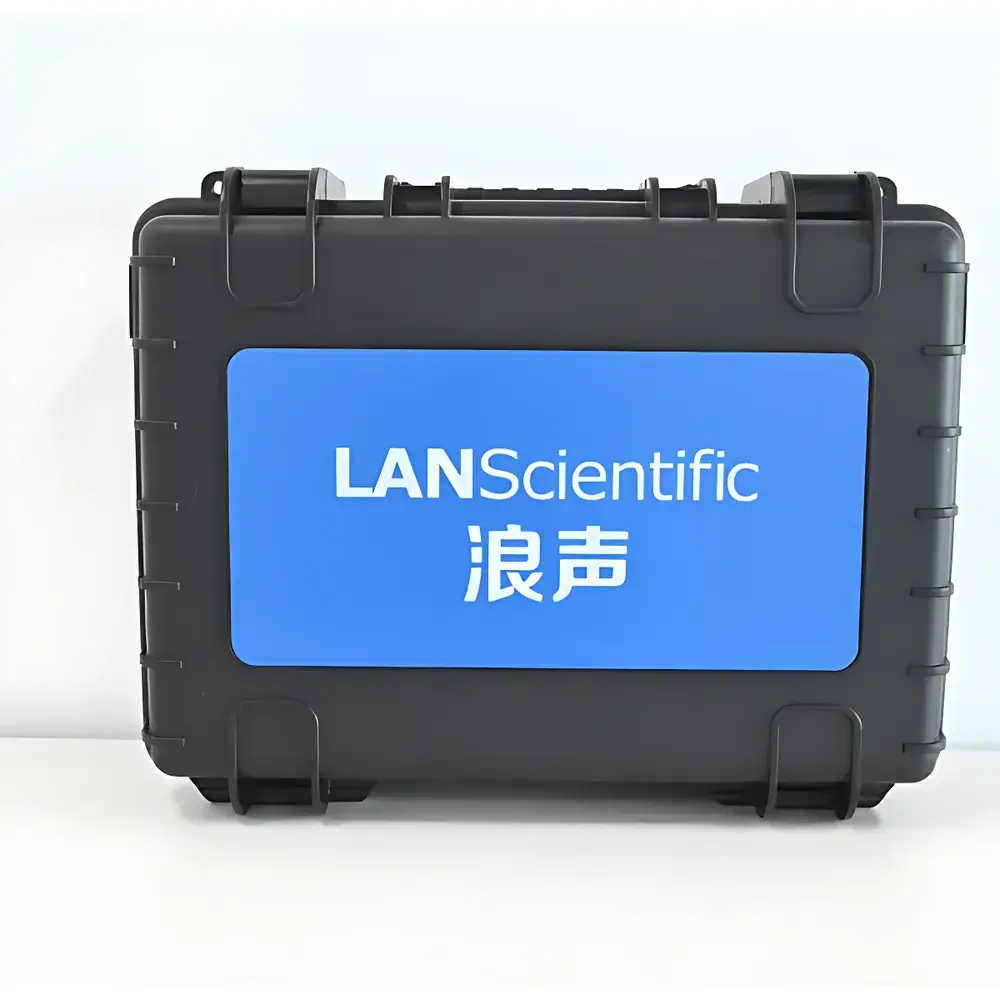
LANScientific LIBS 810 Handheld Laser Induced Breakdown Spectroscopy Analyzer
| Brand | LANScientific |
|---|---|
| Origin | Jiangsu, China |
| Manufacturer Type | Original Equipment Manufacturer (OEM) |
| Instrument Type | Handheld |
| Model | LIBS 810 |
| Compliance | CE, RoHS, FDA 21 CFR Part 11 (software audit trail enabled) |
| Laser Class | 3B (IEC 60825-1 compliant) |
| Weight | 1.65 kg |
| Detection Principle | Pulsed Nd:YAG laser-induced plasma emission spectroscopy |
| Elemental Coverage | Mg, Al, Si, Fe, Cu, Zn, Mn, Ti, Cr, Ni, Pb, Sn, and other metallic elements (Z ≥ 12) |
| Typical LOD | 1–50 ppm for major alloying elements (matrix-dependent) |
| Spectral Resolution | < 0.1 nm (FWHM at 300–800 nm range) |
| Analysis Time | ≤ 2 s per measurement |
| Sample Form Compatibility | Solid metals (polished or as-received), alloys, scrap, coatings, welds |
Overview
The LANScientific LIBS 810 is a handheld Laser Induced Breakdown Spectroscopy (LIBS) analyzer engineered for rapid, in-situ elemental analysis of metallic materials. It operates on the fundamental principle of laser-induced plasma emission: a high-energy, nanosecond-duration pulsed Nd:YAG laser (1064 nm, Class 3B) is focused onto the sample surface, generating a transient micro-plasma (>10,000 K). As the plasma cools, atoms and ions recombine and emit characteristic atomic/ionic line spectra across the UV–VIS–NIR range (300–800 nm). These emissions are collected via fiber-coupled optics and resolved by a high-throughput Czerny–Turner spectrometer with thermoelectrically stabilized CCD detection. Unlike XRF, LIBS requires no radioactive sources and exhibits superior sensitivity to light elements—especially Mg, Al, Si, and Li—making it uniquely suited for aerospace-grade aluminum alloys, magnesium die-cast components, and silicon-containing steels where traditional techniques face physical or regulatory constraints.
Key Features
- True handheld operation with ergonomic design: 1.65 kg total mass, balanced center-of-gravity, and IP54-rated enclosure for field deployment in foundries, scrap yards, and aircraft maintenance hangars.
- Micro-destructive analysis: Single-shot ablation crater diameter < 100 µm; depth < 1 µm—visually imperceptible on most finished metal surfaces and compatible with QA/QC inspection of critical components.
- Zero-sample-prep workflow: Direct analysis of raw, painted, oxidized, or coated metal surfaces without grinding, cutting, or vacuum chamber loading—enabling real-time pass/fail verification against ASTM B927 (aluminum alloy composition) or ISO 11573 (magnesium alloys).
- Integrated safety architecture: Dual-redundant hardware interlocks (beam shutter + proximity sensor), real-time laser power monitoring, and automatic beam termination upon loss of contact or tilt angle deviation beyond ±15°.
- Onboard spectral processing engine: Proprietary peak-fitting algorithm with matrix-matched calibration libraries (e.g., AA1xxx, AA5xxx, AZ91D, WE43), enabling quantitative analysis with RSD < 3% for repeat measurements on homogeneous alloys.
Sample Compatibility & Compliance
The LIBS 810 supports direct analysis of solid metallic samples—including wrought, cast, extruded, and welded forms—across ambient temperatures from –10 °C to 50 °C and relative humidity up to 85% non-condensing. It is validated for use on ferrous and non-ferrous alloys, including stainless steels, tool steels, titanium grades, and nickel-based superalloys. Liquid and powder samples require optional sample holders (not included); gas-phase analysis is not supported. The instrument complies with IEC 61326-1 (EMC for industrial environments), IEC 60825-1 (laser safety), and meets essential requirements for CE marking. Software firmware implements full 21 CFR Part 11 compliance: electronic signatures, role-based access control, immutable audit trails, and data integrity validation for GLP/GMP-regulated environments.
Software & Data Management
The embedded Android-based operating system runs LANScientific’s proprietary SpectraLink™ software, featuring intuitive touchscreen navigation, multi-language UI (EN/DE/FR/ES/CN), and offline calibration management. All spectral acquisitions are timestamped, geotagged (via optional GNSS module), and stored in vendor-neutral .spc and .csv formats. Data export supports USB-C transfer, Wi-Fi sync to local NAS or cloud LIMS (e.g., LabVantage, Thermo Fisher SampleManager), and automated report generation (PDF/Excel) compliant with ISO/IEC 17025 documentation standards. Firmware updates are delivered via secure OTA protocol with SHA-256 signature verification.
Applications
- Aerospace: Rapid grade verification of Ti-6Al-4V fasteners, Al-Li fuselage skins, and Mg-AZ31B structural brackets during line-side inspection.
- Automotive: On-vehicle identification of recycled aluminum body panels (e.g., AA6016 vs. AA6022) and verification of galvanized steel coating thickness via Zn/Fe ratio quantification.
- Scrap Recycling: Real-time sorting of mixed non-ferrous streams (Cu/Ni/Zn/Pb ratios in brass vs. bronze) to optimize shredder feed composition.
- Metal Fabrication: In-process monitoring of weld metal dilution (Cr/Ni/Mo in stainless overlays) and heat-affected zone (HAZ) segregation in pipeline girth welds.
- Electronics Manufacturing: Screening of solder alloys (Sn/Pb/Ag/Cu) and lead-free compliance verification per RoHS Annex II thresholds.
FAQ
Does the LIBS 810 require external calibration standards for routine use?
No—factory-loaded calibration models are traceable to NIST SRM 1250 (stainless steel) and BAM Al-Si reference materials. Users may perform optional recalibration using certified alloy check standards (e.g., CRM 113a, CRM 114a) to maintain long-term accuracy.
Can it analyze coated or anodized aluminum parts without surface preparation?
Yes—typical anodic oxide layers (< 25 µm) and thin organic coatings (< 10 µm) are fully ablated within the first 1–2 laser pulses; subsequent spectra originate from the bulk substrate. Signal-to-background ratio remains sufficient for reliable Mg/Al/Si quantification.
How does atmospheric conditions affect measurement repeatability?
Ambient air composition (N₂/O₂) contributes stable background lines used for internal normalization. Humidity > 85% may reduce plasma lifetime and increase continuum noise; performance validation per ISO 21087 confirms < 5% RSD variation across 20–80% RH when using built-in spectral drift compensation.
Is spectral data export compatible with third-party chemometric software?
Yes—all raw intensity spectra (wavelength vs. counts) are exportable in ASCII format with calibrated wavelength axis. Libraries support import into Unscrambler®, MATLAB®, or Python-based scikit-learn workflows for custom PLS or PCA modeling.
What maintenance is required for long-term operational reliability?
Annual optical path alignment verification and spectrometer dark-current characterization are recommended. No consumables or replaceable lasers are required—the diode-pumped solid-state laser has a rated lifetime of > 10⁶ shots under standard operating conditions.




