
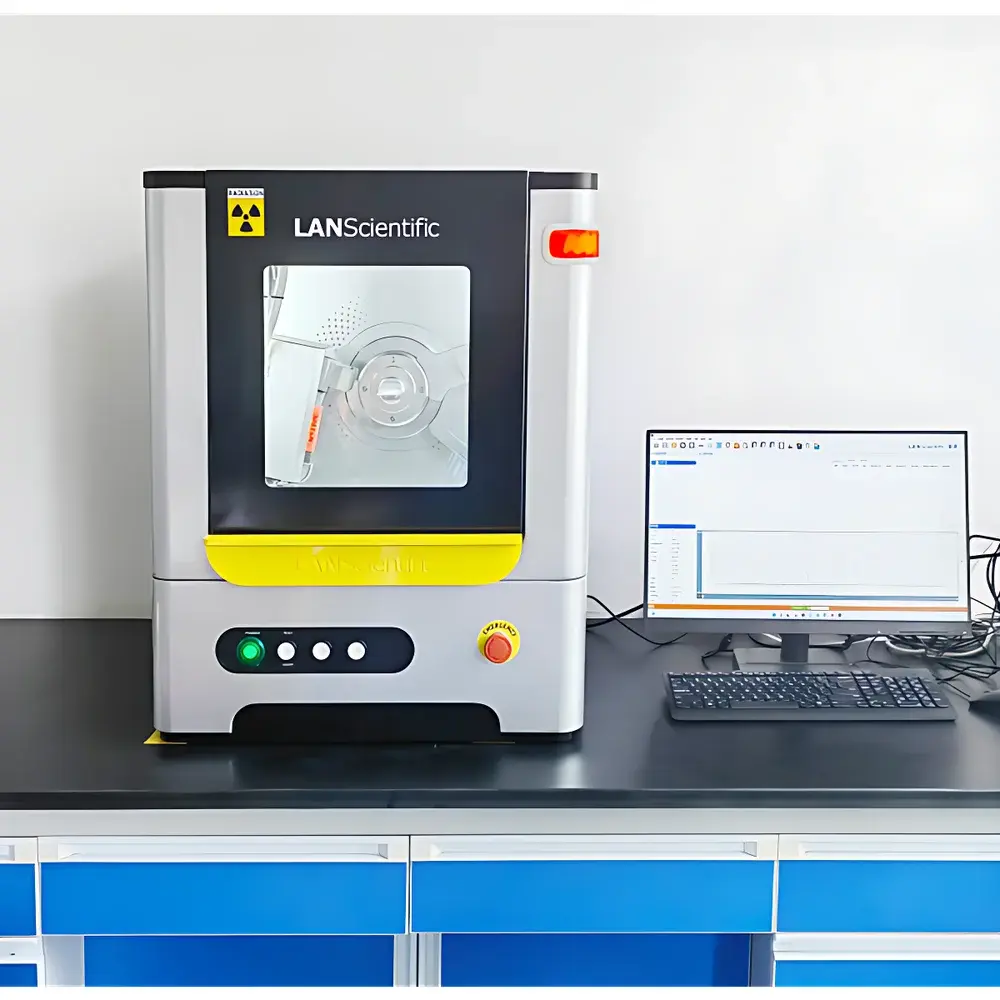
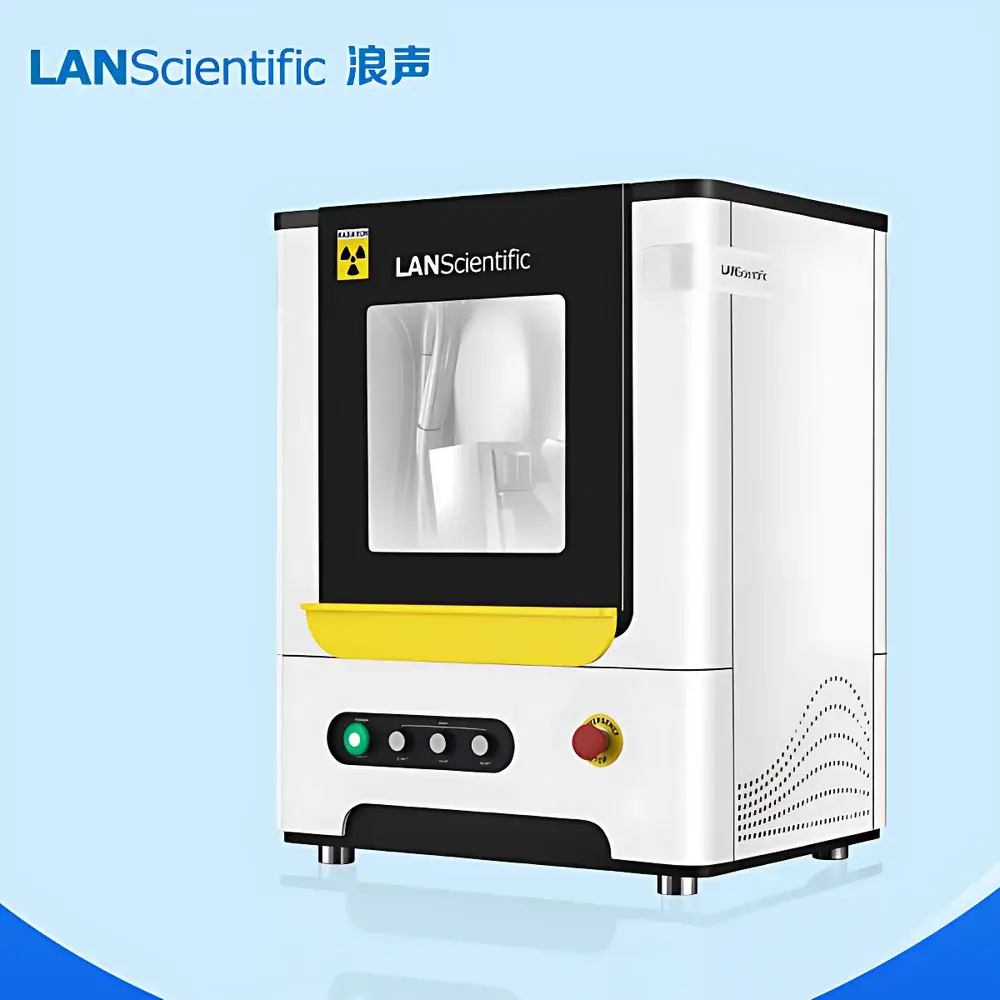
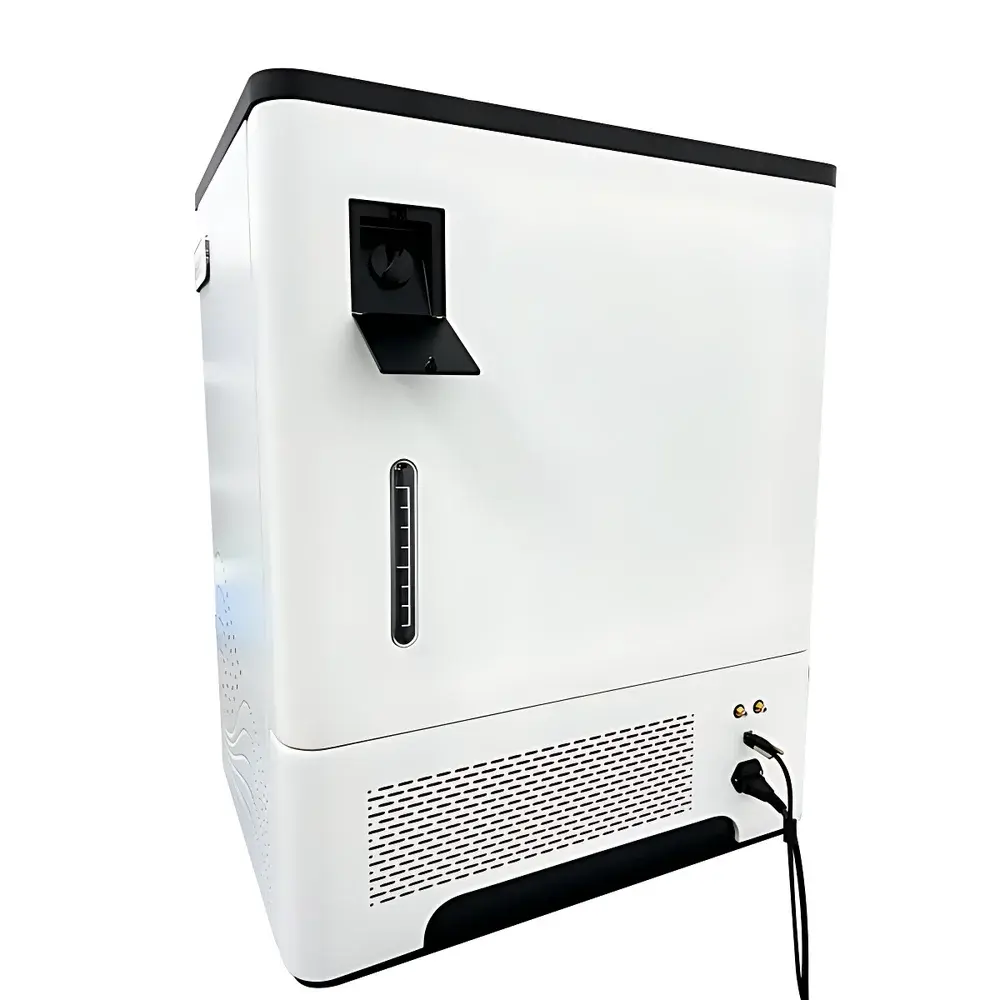
LANScientific FRINGE EV Desktop Powder X-ray Diffractometer for Pharmaceutical Crystal Structure Verification, API Structural Elucidation, and Impurity Phase Analysis
| Brand | LANScientific |
|---|---|
| Origin | Jiangsu, China |
| Manufacturer Type | Direct Manufacturer |
| Regional Classification | Domestic (China) |
| Model | FRINGE EV Pharmaceutical Crystal Diffractometer |
| Instrument Type | Benchtop Powder X-ray Diffractometer |
| Power Rating | kW-class (rated for high-flux operation) |
| Detector | Digital Pulse Processing Counter (DPPC), ≥1×10⁷ cps count rate |
| Optical Configuration | Integrated fixed Soller collimator, θs–θd reflection geometry |
| Safety | Interlocked fully enclosed sample chamber with auto-shutdown, real-time door status feedback |
| Software | CrystalX — automated phase identification, quantitative Rietveld refinement, crystallinity index calculation, and EDS-enabled hybrid data acquisition |
| Compliance | Designed to support GLP/GMP-aligned workflows |
Overview
The LANScientific FRINGE EV is a benchtop powder X-ray diffractometer engineered for rigorous structural characterization in pharmaceutical development and quality control laboratories. It operates on Bragg’s law (nλ = 2d sinθ) within a fixed θs–θd reflection geometry, where monochromatic Cu Kα radiation (λ = 1.5418 Å) is directed through integrated Soller collimators onto the sample stage at the goniometer center. Diffracted beams pass through anti-scatter and receiving slits before detection by a high-throughput Digital Pulse Processing Counter (DPPC). Unlike conventional scintillation or semiconductor detectors requiring secondary monochromators, the DPPC delivers simultaneous diffraction pattern acquisition and energy-dispersive spectral (EDS) data—enabling rapid phase discrimination without hardware reconfiguration. Its kW-class X-ray source ensures sufficient photon flux for low-abundance phase detection in complex API mixtures, while maintaining thermal stability and long-term angular reproducibility (<0.002° 2θ drift over 8 h).
Key Features
- Compact benchtop architecture with air-spring assisted large-window lift door—minimizes footprint and enables integration into standard laboratory workspaces without dedicated shielding rooms.
- Integrated fixed Soller collimator system—eliminates moving alignment components, enhancing mechanical robustness and enabling deployment in mobile or field-deployable labs (e.g., vehicle-mounted analytical platforms).
- DPPC detector with ≥1×10⁷ counts per second (cps) throughput—supports high-speed scanning (≤3 min full 5–80° 2θ range) while preserving peak resolution and signal-to-noise ratio for trace impurity detection.
- CrystalX software suite—provides automated ICDD PDF-4+ database matching, Rietveld quantitative phase analysis (QPA), crystallinity index calculation via reference intensity ratio (RIR) or whole-pattern fitting, and optional EDS-assisted elemental correlation.
- Full safety interlock system—comprising dual redundant door sensors, real-time chamber status display, and automatic beam cutoff upon door actuation—ensures compliance with IEC 61010-1 and national radiation safety regulations.
Sample Compatibility & Compliance
The FRINGE EV accepts powdered APIs, lyophilized formulations, crystalline excipients, thin-film coatings, and bulk metal-organic frameworks (MOFs) without mandatory pelletization—supporting capillary, zero-background Si, and reflective aluminum sample holders. It meets ISO 17025 method validation requirements for qualitative and quantitative XRD analysis when operated under documented SOPs. The system supports audit-ready workflows aligned with FDA Guidance for Industry on Analytical Procedures and Methods Validation (2015), USP , and ICH Q5A(R2) for structural confirmation of biopharmaceuticals and small-molecule APIs. Optional CrystalX modules include electronic signature capability and configurable 21 CFR Part 11-compliant audit trails.
Software & Data Management
CrystalX is a Windows-based application built on a modular architecture compliant with ASTM E1421 and ISO/IEC 17025 data integrity standards. It features real-time background subtraction, peak deconvolution using pseudo-Voigt functions, and batch processing for multi-sample crystallinity trend analysis. Raw .raw and .xy files are stored in vendor-neutral formats; processed reports export to PDF, CSV, and CIF (Crystallographic Information File) for third-party structure solution (e.g., TOPAS, GSAS-II). All user actions—including parameter changes, calibration updates, and report generation—are time-stamped and logged with operator ID, supporting GLP documentation and internal QA review.
Applications
- Pharmaceutical solid-state characterization: polymorph screening, hydrate/solvate identification, amorphous content quantification, and salt/co-crystal verification per ICH Q5A and Q6A.
- API impurity profiling: detection and quantification of crystalline degradation products or synthetic intermediates at ≥0.5 wt% levels in final drug substance.
- Excipient compatibility studies: monitoring physical interactions (e.g., cocrystal formation, phase separation) during accelerated stability testing.
- Regulatory submission support: generation of ICH-aligned XRD datasets for ANDA, NDA, and CMC sections, including reference standard qualification and batch-to-batch comparability assessments.
- Academic and industrial materials research: lattice parameter refinement, microstrain analysis, and preferred orientation correction for nanomaterials and battery cathode precursors.
FAQ
Does the FRINGE EV require external cooling or HVAC modifications?
No—it integrates an air-cooled kW X-ray tube with active thermal management, operating reliably in ambient lab conditions (15–30 °C, ≤70% RH) without chilled water or dedicated exhaust ducting.
Can CrystalX perform Rietveld refinement for unknown crystal structures?
CrystalX supports full-profile Rietveld refinement against known CIF entries; ab initio structure solution requires external software (e.g., FOX, Charge Flipping), but CrystalX exports high-fidelity .cif-ready data for seamless import.
Is the DPPC detector capable of distinguishing between chemically similar phases with overlapping diffraction peaks?
Yes—the combined angular resolution (FWHM ≤ 0.12° at 2θ = 40°) and energy-resolved detection enable discrimination of phases differing by <0.5° 2θ or exhibiting distinct fluorescence signatures (e.g., BaSO₄ vs. SrSO₄).
How is instrument calibration maintained across long-term operation?
The system includes automated calibration routines using NIST-traceable Si SRM 640e; angular accuracy is verified daily via internal reference scan, with drift logs accessible via CrystalX diagnostic dashboard.
What sample preparation protocols are recommended for hygroscopic APIs?
Use hermetically sealed capillaries under inert gas (N₂/Ar) or low-temperature stages (−10 °C); CrystalX includes humidity-controlled acquisition mode with real-time moisture compensation algorithms.





