
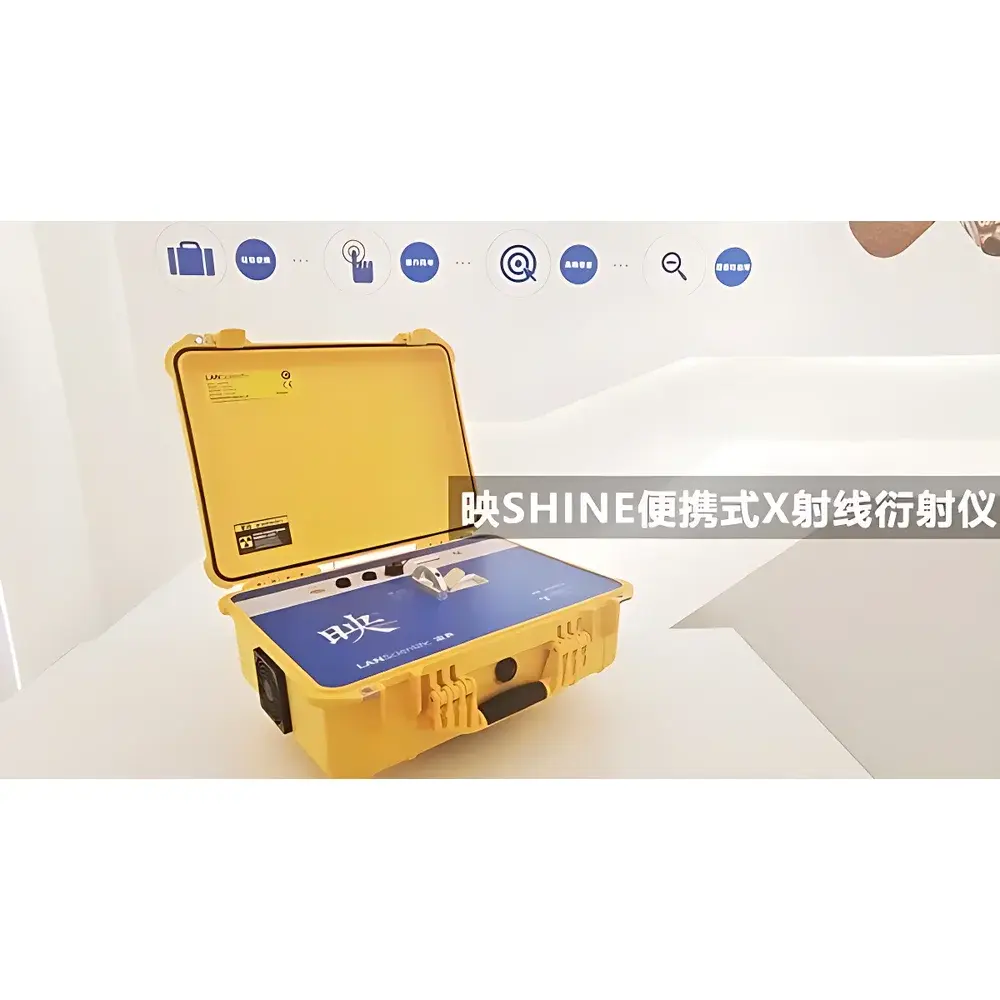
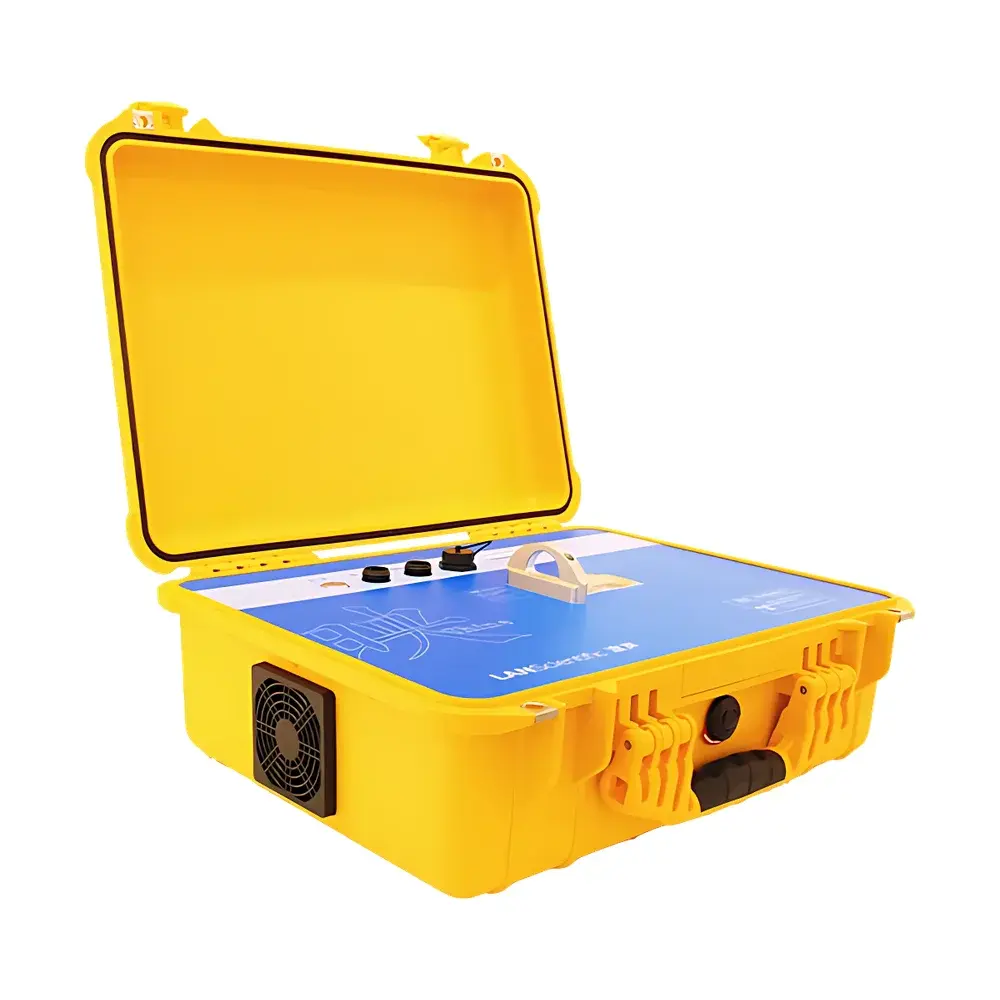
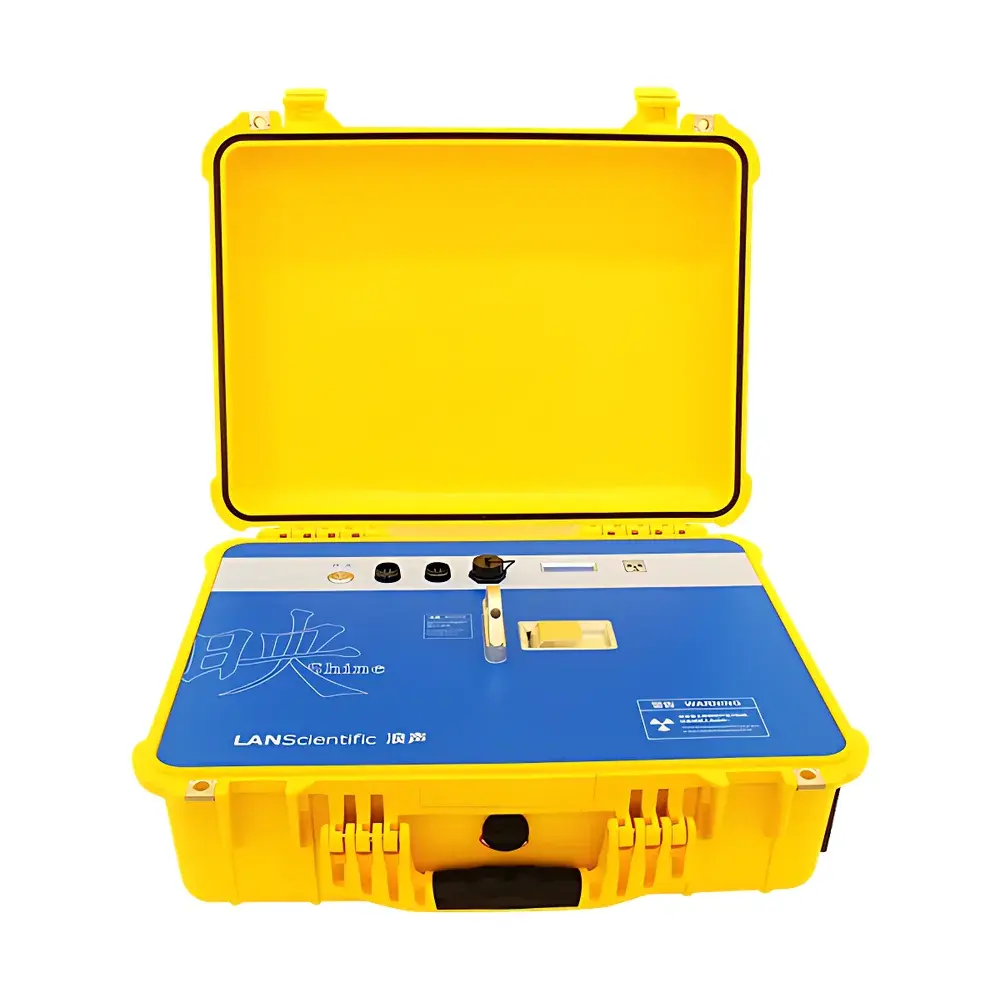
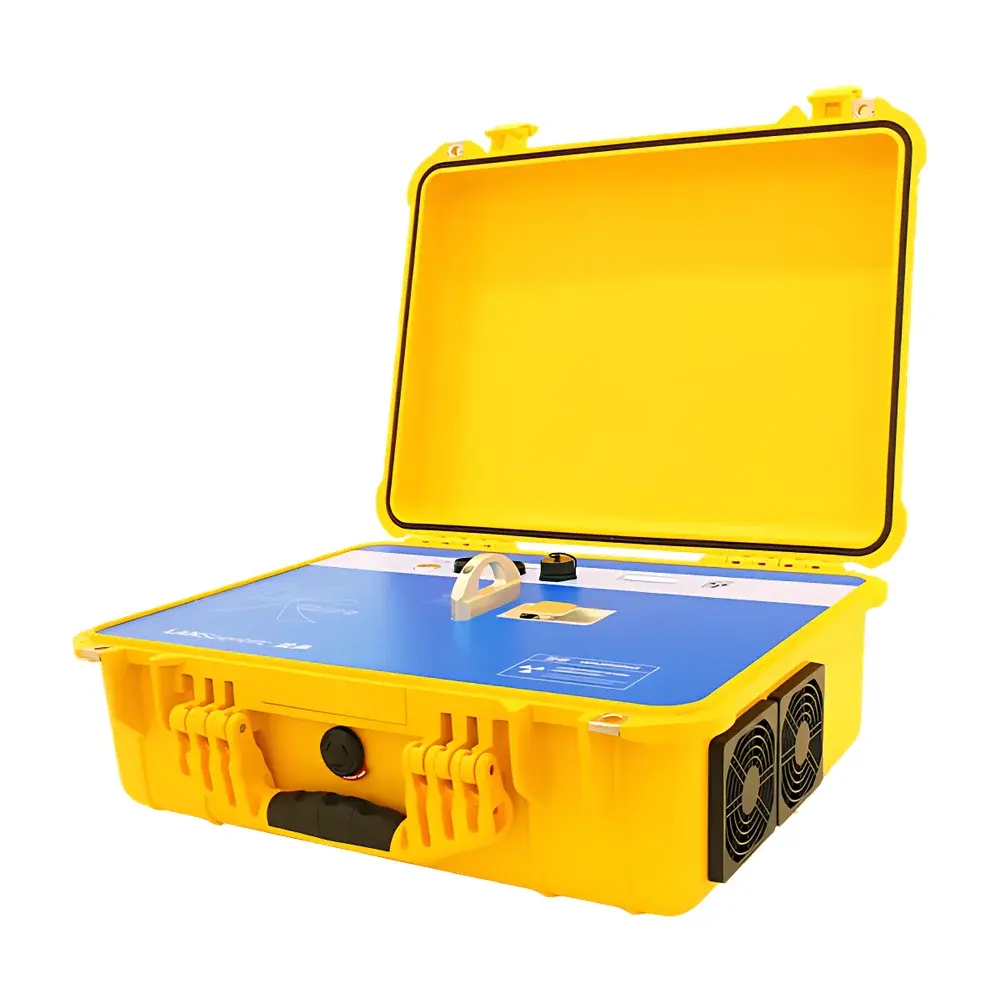
LANScientific SHINE Portable X-ray Diffractometer (Metal Corrosion Edition)
| Brand | LANScientific |
|---|---|
| Origin | Jiangsu, China |
| Manufacturer Type | OEM Manufacturer |
| Product Category | Domestic |
| Model | SHINE Metal Corrosion Edition |
| Instrument Type | Powder X-ray Diffractometer |
| Power Supply | Integrated Low-Power X-ray Source (Details in Technical Datasheet) |
| Detector | CCD-based 2D X-ray Detector |
| Connectivity | USB 3.0, Bluetooth 5.0, Wi-Fi 802.11ac |
| Sample Mass Requirement | ~20 mg per analysis |
Overview
The LANScientific SHINE Portable X-ray Diffractometer (Metal Corrosion Edition) is an engineered field-deployable solution for phase identification and semi-quantitative analysis of crystalline corrosion products and scale deposits directly at industrial sites. Based on Bragg’s law and the principle of constructive interference of monochromatic X-rays scattered by periodic atomic planes in crystalline lattices, the SHINE system performs powder X-ray diffraction (XRD) using a fixed-anode microfocus X-ray source and a high-sensitivity charge-coupled device (CCD) 2D detector. Unlike laboratory-bound benchtop diffractometers requiring vacuum environments, cryogenic cooling, or complex goniometric alignment, the SHINE platform adopts a simplified θ–θ geometry with pre-aligned optics and integrated beam conditioning—enabling rapid, operator-independent acquisition of Debye–Scherrer diffraction patterns under ambient conditions. Its design targets real-time structural diagnostics of iron oxides (e.g., hematite, magnetite, goethite), sulfides (e.g., pyrrhotite, troilite), carbonates (e.g., siderite, calcite), and mixed-layer hydroxides commonly formed on pipeline interiors, heat exchanger surfaces, boiler tubes, and refinery equipment.
Key Features
- True field-portable architecture: All-in-one ruggedized enclosure rated IP54 (dust- and splash-resistant), weighing under 12 kg with integrated battery option for >4 hours continuous operation.
- No external high-voltage generator or water-cooling circuit: Uses a solid-state, air-cooled microfocus X-ray tube operating at ≤40 kV / 1 mA, compliant with IEC 61010-1 safety standards.
- 2D diffraction imaging capability: CCD detector captures full Debye rings; radial integration and azimuthal slicing enable assessment of preferred orientation, particle statistics, and microstrain effects—critical for reliable quantification of anisotropic corrosion phases.
- Hybrid XRD–XRF co-analysis: Simultaneous collection of diffraction patterns and energy-dispersive X-ray fluorescence spectra allows cross-validated elemental–structural correlation (e.g., distinguishing Fe₃O₄ from FeOOH via combined lattice parameter + Fe/O ratio).
- Zero-calibration workflow: Factory-aligned optical path and auto-exposure algorithms eliminate need for routine angular calibration or zero-offset correction—reducing operational dependency on trained spectroscopists.
- Minimal sample preparation: Requires only ~20 mg of loose or lightly pressed solid material; no grinding, dilution, or silicon background subtraction needed for routine corrosion product screening.
Sample Compatibility & Compliance
The SHINE system is validated for direct analysis of heterogeneous, non-homogenized solid residues including rust flakes, mill scale, pipe scale, desiccated sludge, and electrochemical corrosion coupons. It accommodates irregularly shaped samples up to 25 mm × 25 mm × 5 mm without mounting fixtures. All analytical protocols align with ASTM E975 (Standard Practice for X-ray Diffraction Analysis of Metals and Alloys) and ISO 17873 (XRD phase analysis of corrosion products). Data acquisition and reporting support audit-ready metadata logging—including instrument ID, operator tag, GPS coordinates (via paired mobile device), timestamp, and environmental temperature/humidity—facilitating GLP-compliant documentation and traceability per ISO/IEC 17025 requirements.
Software & Data Management
The SHINE Control Suite (v3.2+) runs natively on Windows 10/11 and supports offline operation. It includes embedded Rietveld refinement engine (using TOPAS Academic libraries), ICDD PDF-4+ 2023 database (with corrosion-specific sub-libraries), and automated phase matching with confidence scoring. Raw 2D images are stored in TIFF format with embedded EXIF-style metadata; processed results export to CSV, XML, and PDF reports compliant with FDA 21 CFR Part 11 (electronic signatures, audit trails, and user access controls available in enterprise license tier). Remote firmware updates and method synchronization occur over encrypted Wi-Fi or USB tethering.
Applications
- In-situ identification of corrosion mechanisms in oil & gas transmission pipelines (e.g., CO₂-induced, H₂S-related, or microbiologically influenced corrosion).
- Rapid assessment of boiler tube deposit composition to guide chemical cleaning schedules and prevent thermal stress cracking.
- Root cause analysis of premature failure in refinery heat exchangers and sour-water strippers.
- Verification of passivation layer integrity on stainless steel components in pharmaceutical manufacturing systems.
- Field validation of corrosion inhibitor efficacy by tracking phase evolution of surface films before/after treatment.
FAQ
Does the SHINE system require external cooling or high-voltage infrastructure?
No. It operates with an integrated air-cooled X-ray source and low-power electronics—no external chiller, transformer, or grounding rod is necessary.
Can it distinguish between amorphous and crystalline corrosion products?
It detects crystalline phases with high sensitivity (detection limit ~1–2 wt% for major phases); amorphous content is inferred indirectly via residual background intensity after Rietveld fitting.
Is the instrument suitable for regulatory reporting in GMP environments?
Yes—when configured with Part 11-compliant software licensing, it provides electronic records with full audit trail, role-based access control, and secure data export.
What is the typical measurement time per sample?
Acquisition time ranges from 30 seconds (screening mode) to 5 minutes (high-resolution Rietveld mode), depending on required signal-to-noise ratio and phase complexity.
How is data security managed during wireless transmission?
All Wi-Fi and Bluetooth communications use TLS 1.2 encryption; local storage employs AES-256 full-disk encryption on optional SSD modules.






