
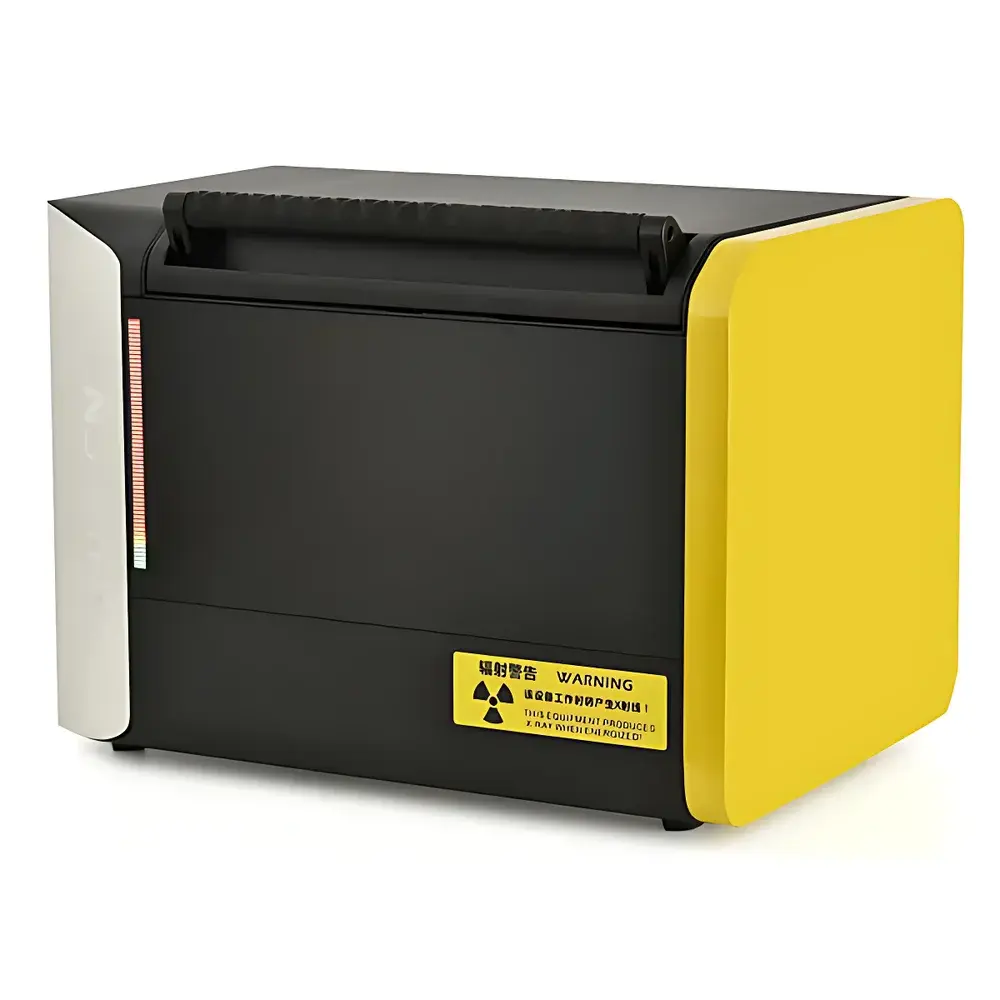
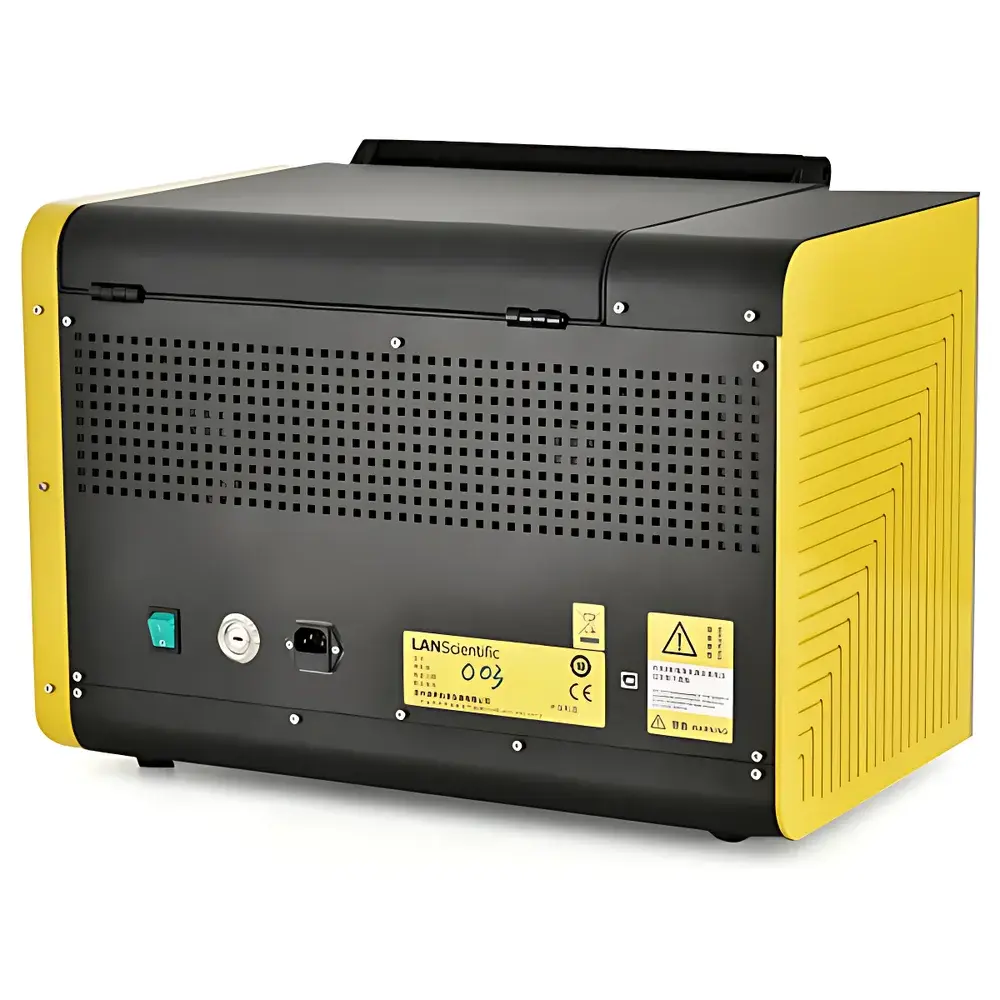
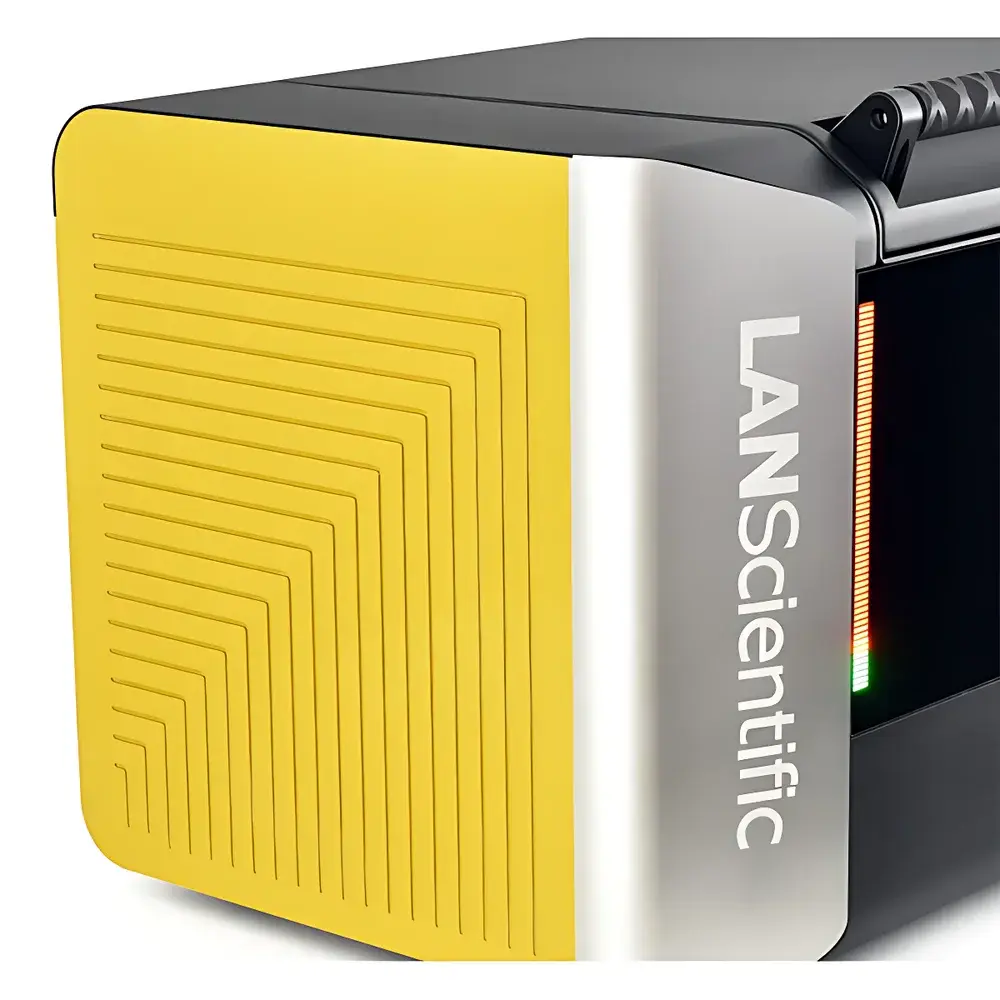
LANScientific ScopeX G59 Benchtop Precious Metals ED-XRF Spectrometer
| Brand | LANScientific |
|---|---|
| Origin | Jiangsu, China |
| Manufacturer Type | Direct Manufacturer |
| Regional Classification | Domestic (China) |
| Model | ScopeX G59 |
| Configuration | Benchtop |
| Instrument Type | Conventional ED-XRF Spectrometer |
| Industry-Specific Application | Non-Ferrous Metals (Precious Metals) |
| Elemental Range | Al (13) to U (92) |
| Detection Limit | ≤10 ppm for Ag and Cu |
| Quantitative Accuracy | ±0.001% for Au in AU99999-grade material |
| Detector | Large-Area Silicon Drift Detector (SDD) |
| Optical Geometry | Vertical Beam Path |
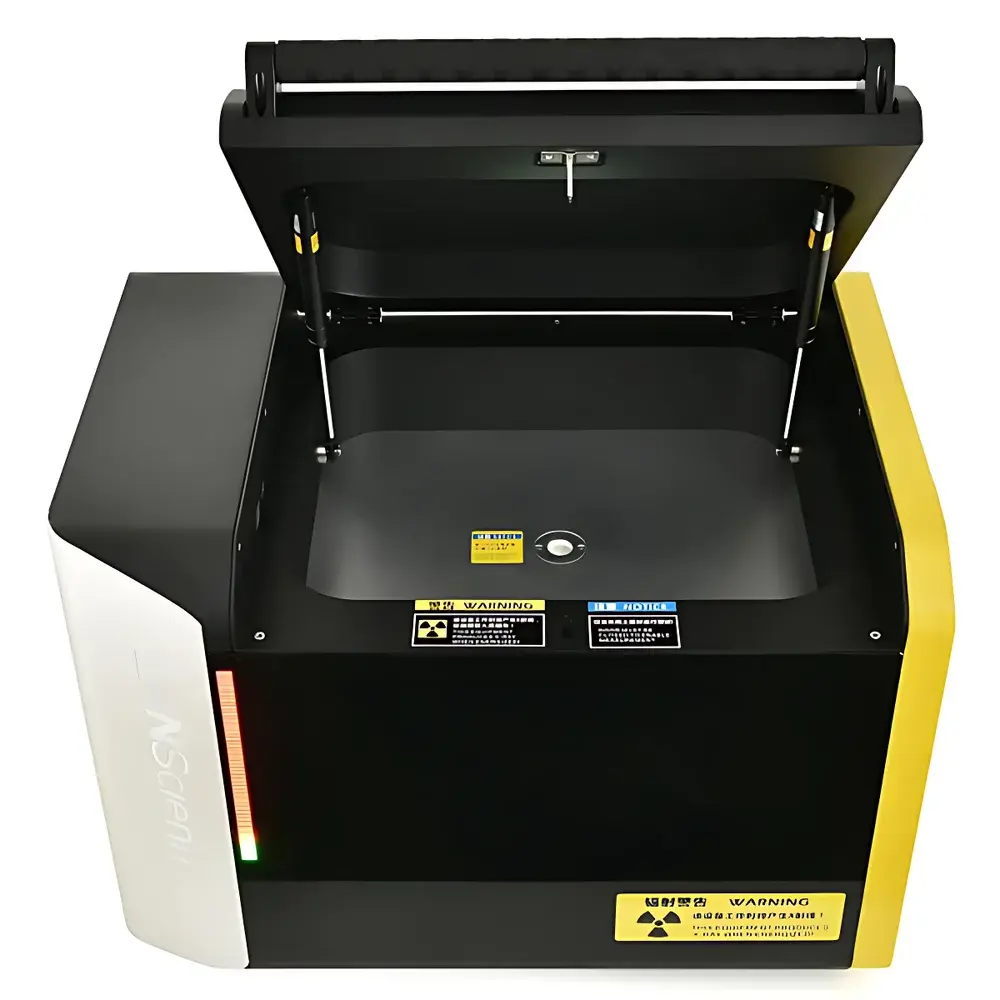
| Sample Chamber | Extra-Large, Accommodates Irregular & High-Volume Specimens |
| Excitation Source | Rhodium Anode Microfocus X-ray Tube |
Overview
The LANScientific ScopeX G59 is a benchtop energy dispersive X-ray fluorescence (ED-XRF) spectrometer engineered specifically for high-precision, non-destructive quantitative analysis of precious metals—particularly gold (Au), silver (Ag), and copper (Cu)—in ultra-high-purity applications. Operating on the fundamental principle of X-ray fluorescence, the instrument irradiates a sample with primary X-rays from a rhodium-target microfocus tube; characteristic secondary X-rays emitted by constituent elements are collected by a large-area silicon drift detector (SDD), enabling simultaneous multi-element detection across the range from aluminum (Z=13) to uranium (Z=92). Its vertically oriented optical path minimizes geometric scatter and optimizes signal-to-noise ratio for surface-sensitive analysis of polished, irregular, or mounted jewelry pieces. Designed to meet the metrological demands of AU9999 (99.99% pure gold) and AU99999 (99.999% pure gold) certification workflows, the ScopeX G59 delivers certified quantitative accuracy of ±0.001% for gold content, with detection limits ≤10 ppm for critical impurities Ag and Cu—fully aligned with ISO 11426:2016 (Gold — Determination of silver and copper — Flame atomic absorption spectrometric method) and complementary to ASTM E1361–22 (Standard Guide for X-Ray Fluorescence Analysis of Metals).
Key Features
- Vertical-beam excitation geometry optimized for flat, curved, and embedded precious metal specimens—eliminating shadowing effects common in horizontal configurations.
- Large-area SDD detector (≥50 mm² active area) providing high count-rate capability (>100,000 cps), enhanced energy resolution (<125 eV at Mn Kα), and reduced measurement time without compromising precision.
- Multi-aperture collimation system: interchangeable准直器 (100 µm, 300 µm, 1 mm) enabling spatially resolved analysis of fine engravings, solder joints, or small granules down to 0.5 mm diameter.
- Automated filter wheel with Rh, Pd, Al, and Ti filters for matrix-adaptive excitation—enhancing sensitivity for light elements (e.g., Ni, Zn) or suppressing spectral overlaps in complex alloys.
- Extra-large sample chamber (300 × 300 × 150 mm W×D×H) accommodating rings, bars, coins, and custom-mounted artifacts without disassembly or destructive sampling.
- Integrated thermal stabilization and vacuum-pump option (for light-element enhancement below Na) ensuring long-term spectral stability under ambient lab conditions.
Sample Compatibility & Compliance
The ScopeX G59 accepts solid, non-volatile samples up to 5 kg in mass—including cast ingots, stamped coins, wire segments, foil strips, and finished jewelry items with gemstone settings (non-organic stones only). It supports both direct surface analysis and standardized reference pellet preparation per ISO 21047:2020 (Jewellery — Gold alloys — Determination of composition by X-ray fluorescence spectrometry). All quantitative routines comply with GLP documentation requirements, including full audit trails for calibration history, operator ID, measurement parameters, and raw spectrum archiving. Software-generated reports include uncertainty estimation per ISO/IEC 17025:2017 Annex A.3 and support FDA 21 CFR Part 11-compliant electronic signatures when deployed in regulated QC environments.
Software & Data Management
Controlled via LANScientific’s proprietary XRFQuant Pro v5.2 software, the ScopeX G59 implements dual quantification engines: empirical calibration curves (for routine production batches) and fundamental parameter (FP) modeling (for unknown or heterogeneous alloys). The FP module incorporates matrix correction algorithms validated against NIST SRM 1830 (Gold Alloy Standard) and CRM GBW07181 (Au-Ag-Cu ternary reference material). Data export supports CSV, PDF, XML, and LIMS-compatible ASTM E1382 format. All spectra and results are timestamped, digitally signed, and stored in an encrypted local database with optional network backup. Optional integration with ERP/MES systems via OPC UA or RESTful API enables automated result injection into SAP QM or Oracle Quality modules.
Applications
- Refinery & mint QC: Rapid verification of Au fineness in doré bars and investment-grade bullion prior to assaying.
- Jewelry manufacturing: In-line monitoring of alloy homogeneity during casting, rolling, and heat treatment processes.
- Retail & appraisal: On-site authentication of hallmark compliance (e.g., UK Hallmarking Act 1973, EU Directive 94/62/EC) and detection of plating or diffusion-layer adulteration.
- Recycling & scrap valuation: Discrimination between 14K, 18K, 22K, and 24K fractions in mixed scrap streams using multi-point scanning.
- Research & development: Compositional mapping of diffusion couples, solder interfaces, and electroplated layers in prototype devices.
- Forensic metallurgy: Non-destructive comparison of trace-element “fingerprints” across seized or disputed gold specimens.
FAQ
Does the ScopeX G59 require helium purging or vacuum operation for gold analysis?
No—gold (Au L-lines) and major impurities (Ag Kα, Cu Kα) are efficiently excited and detected under air atmosphere. Vacuum mode is optional and recommended only when quantifying light elements (e.g., Mg, Al, Si) in base-metal substrates.
Can it analyze gold-plated items without damaging the coating?
Yes—the vertical geometry and low-power excitation (<50 W) ensure non-destructive analysis of coatings ≥0.1 µm thick. Depth profiling is achievable via variable kV/kV ramping combined with FP deconvolution.
Is method validation support provided for ISO/IEC 17025 accreditation?
Yes—LANScientific supplies full validation kits including uncertainty budgets, linearity studies, LOD/LOQ determination protocols, and interlaboratory comparison reports aligned with ILAC G8:2022.
What maintenance is required beyond annual recalibration?
Routine maintenance is limited to SDD detector cold-finger cleaning (biannual), X-ray tube warm-up verification (daily), and collimator alignment check (quarterly); no consumables or gases are required.
How does it handle heterogeneous or porous samples like sintered gold powder?
The FP engine applies particle-size and density corrections derived from reference measurements on NIST SRM 2822 (Gold Powder); users may define custom grain-size distributions for improved bulk-composition accuracy.




