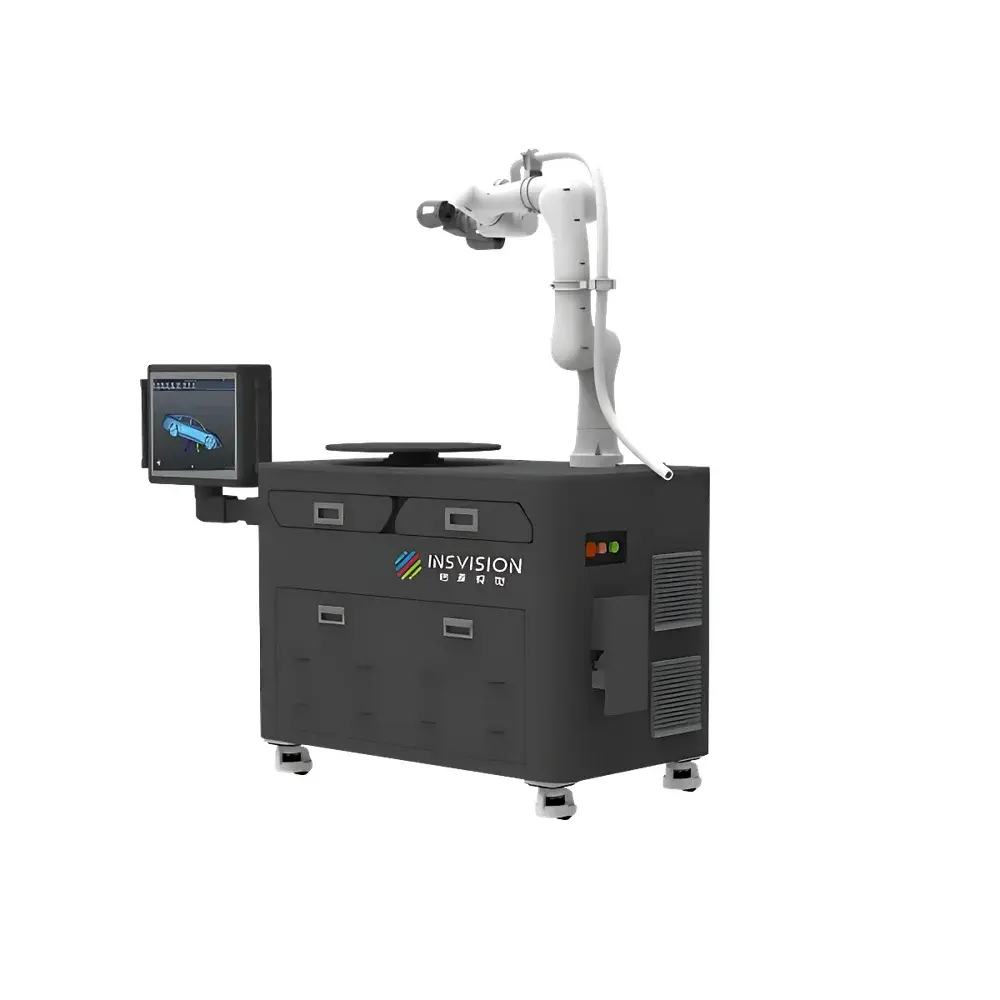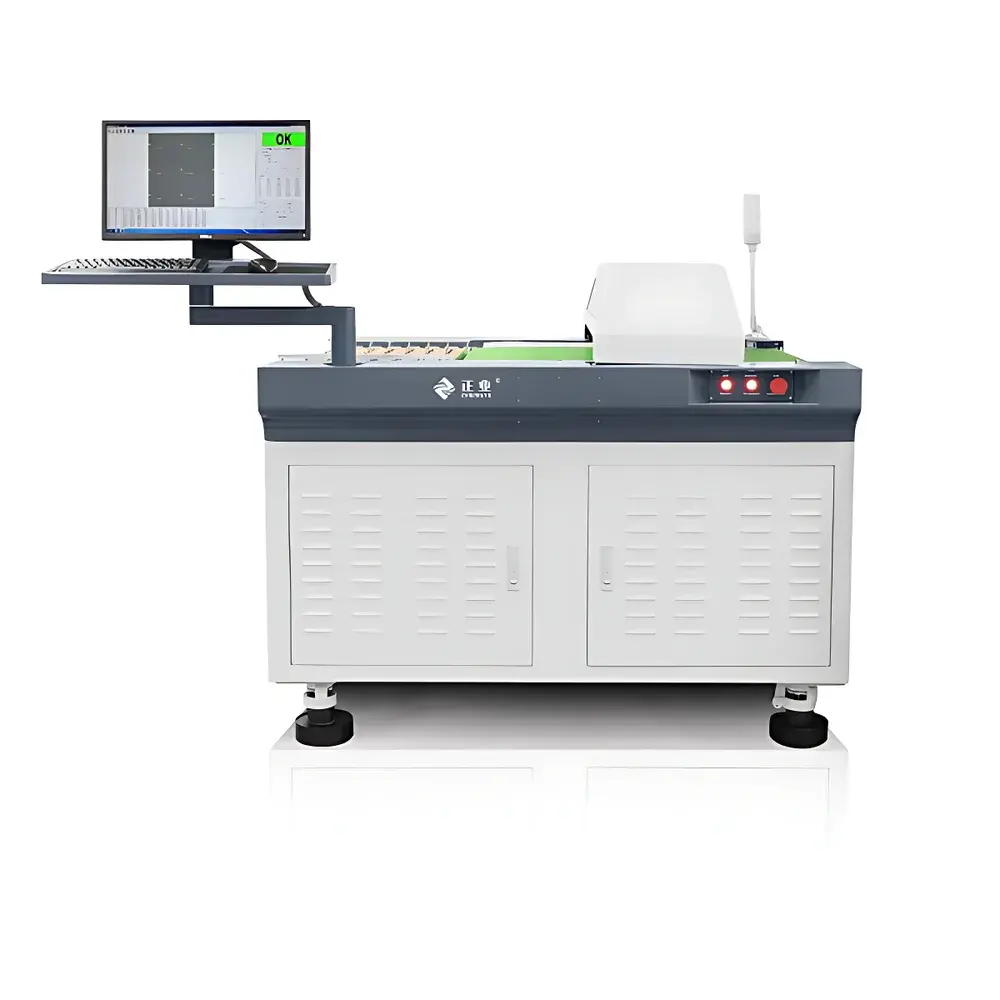
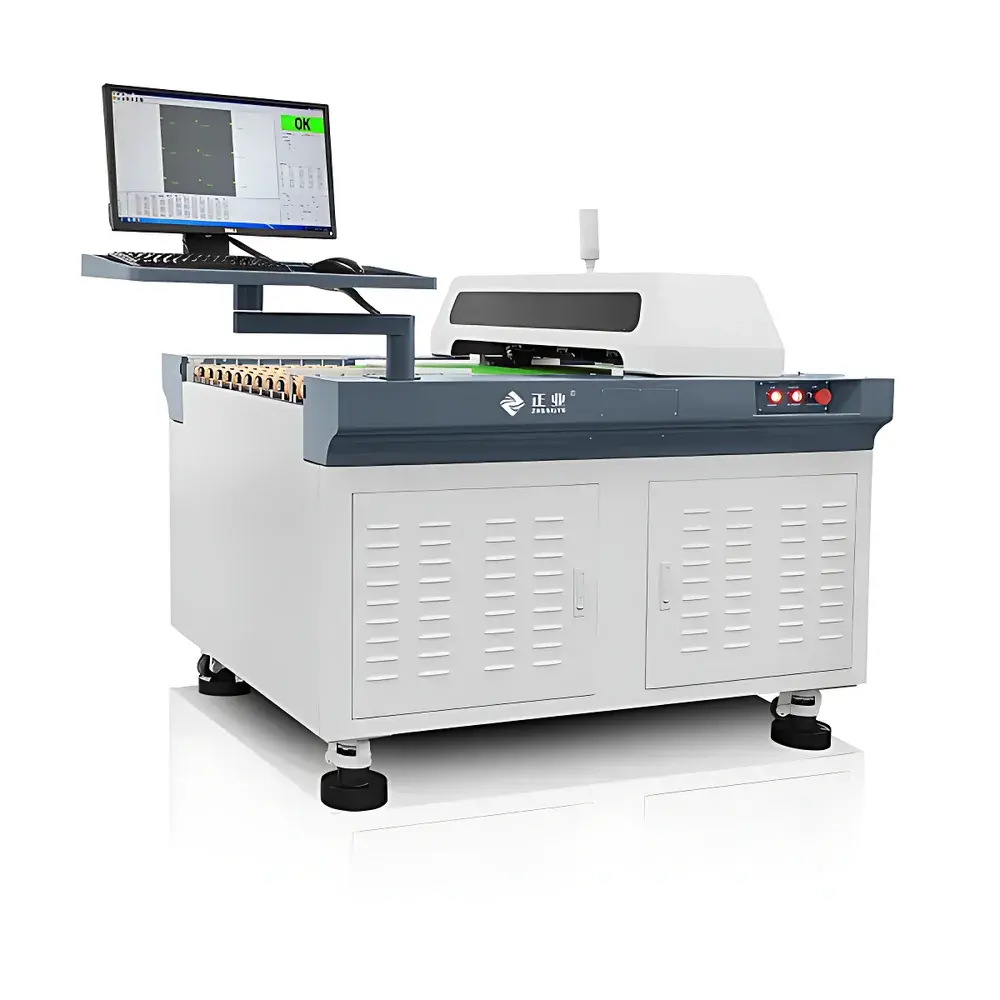
Zhengye BH11 In-Line PCB and Composite Material Thickness Gauge
| Brand | Zhengye |
|---|---|
| Model | BH11 |
| Measurement Principle | Non-contact laser displacement sensing |
| Thickness Range | 0–12 mm |
| Accuracy | ±5 µm (calibrated standard plate), ±25 µm (on warped PCBs <0.8 mm bow) |
| Resolution | 0.025 µm |
| Laser Spot Diameter | φ50 µm |
| Measurement Points | User-defined or software-configurable grid (5-point or 9-point uniform distribution) |
| Max. Sample Size | 650 mm × 620 mm |
| Min. Sample Size | 250 mm × 250 mm |
| Positioning Accuracy | ±3 mm |
| Cycle Time | 6–8 s per board |
| Conveyor Speed | 6 m/min or 12 m/min |
| Operating Temp. | 22 ± 3 °C |
| Power Supply | AC 220 V, 50 Hz |
| Pneumatic Requirement | 0.6–0.8 MPa |
| Power Consumption | 2 kW |
| Weight | 500 kg |
| Dimensions (L×W×H) | 1536 × 1245 × 1420 mm (platform height: 900 mm) |
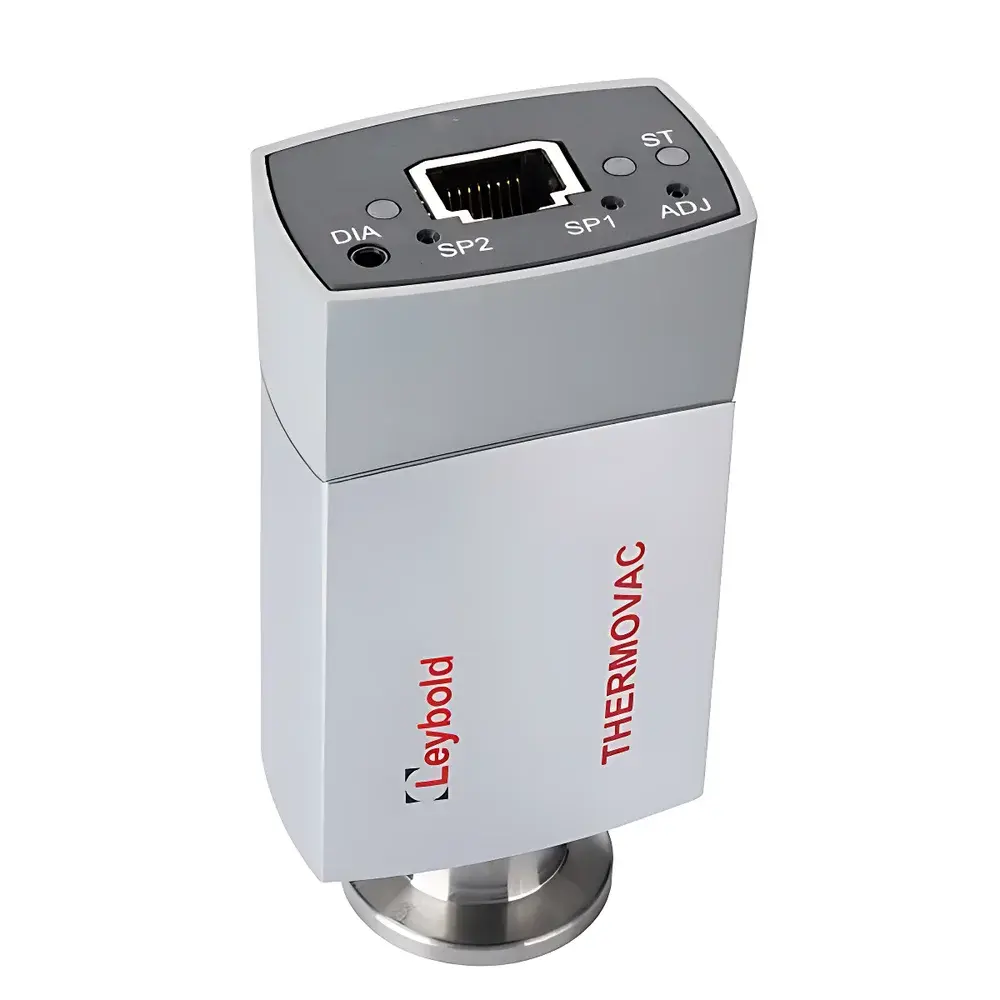
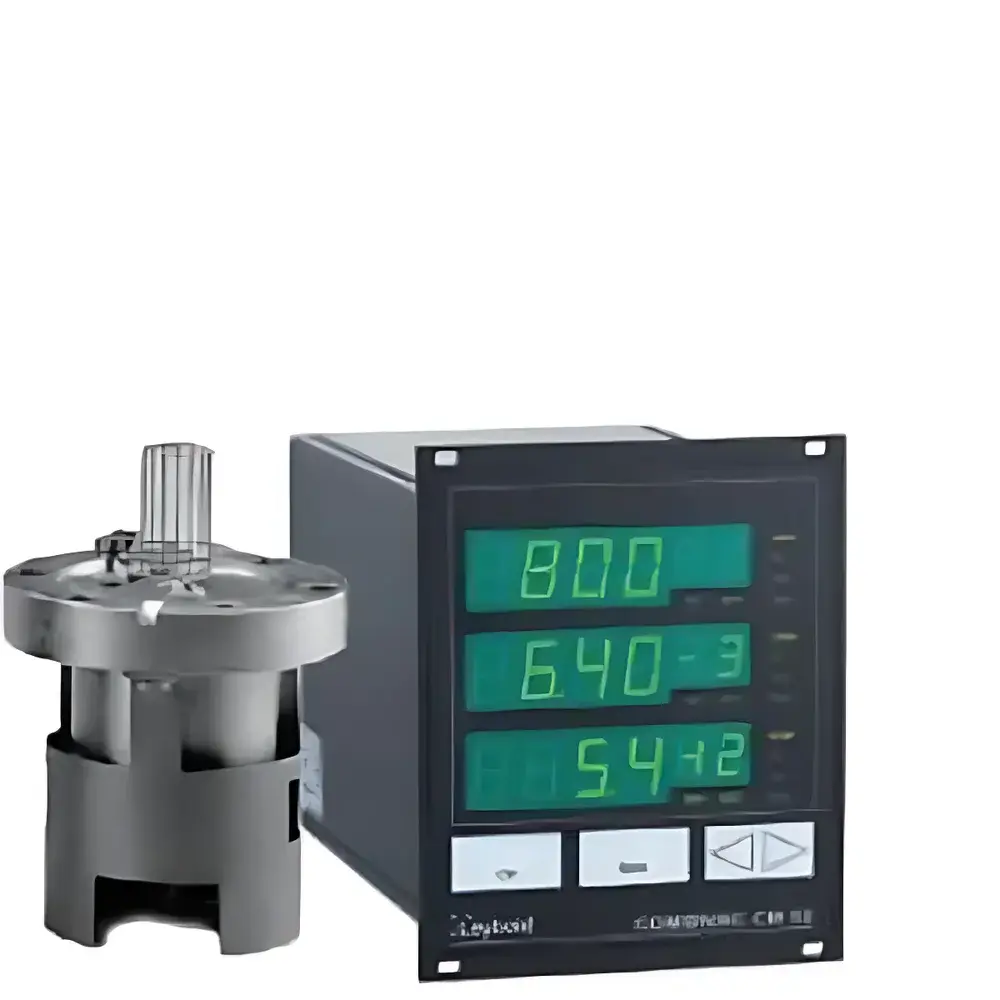
| Sensor | Keyence LK series laser displacement sensor |
| Statistical Analysis | Yes |
| Optional Board Stacking Function | Available |
| Compliance | Designed for ISO 9001-aligned production environments |
Overview
The Zhengye BH11 In-Line PCB and Composite Material Thickness Gauge is an industrial-grade, non-contact laser displacement measurement system engineered for real-time thickness verification during high-volume manufacturing of printed circuit boards (PCBs), laminated composites, injection-molded plastic panels, and precision-machined metal or polymer substrates. Built upon the proven metrological foundation of Keyence LK-series laser displacement sensors, the BH11 operates on triangulation-based optical distance measurement—delivering sub-micron resolution and traceable repeatability in dynamic production-line conditions. Unlike manual or contact-based gauging methods, the BH11 eliminates mechanical loading, surface deformation, and operator-induced variability, making it suitable for post-lamination PCB stack-up verification, prepreg thickness validation, and quality gate screening prior to drilling or routing. Its rigid structural architecture and thermally stabilized optical path ensure long-term stability under factory-floor environmental fluctuations (±3 °C around 22 °C reference), while its modular conveyor interface enables seamless integration into existing SMT lines, automated optical inspection (AOI) cells, or cleanroom-compatible assembly workflows.
Key Features
- Non-destructive, high-speed laser triangulation measurement with 0.025 µm sensor resolution and φ50 µm spot diameter for localized thickness profiling
- Configurable measurement point layout—supports user-defined coordinates or standardized 5-point/9-point uniform grids aligned to IPC-6012 and IPC-A-600 inspection zones
- Validated accuracy of ±5 µm against NIST-traceable gauge blocks; ±25 µm on production PCBs exhibiting ≤0.8 mm total indicator reading (TIR) warpage
- Dual-conveyor speed modes (6 m/min and 12 m/min) synchronized with real-time data acquisition to maintain consistent 6–8 second per-board throughput
- Integrated XY positioning stage with ±3 mm repeatability, enabling precise registration of measurement points relative to fiducials or board outlines
- Robust mechanical design (500 kg mass, steel-reinforced frame) minimizes vibration sensitivity and ensures long-term geometric stability in 24/7 operation
- Modular pneumatic interface (0.6–0.8 MPa) for optional downstream stacking, sorting, or reject-handling integration
Sample Compatibility & Compliance
The BH11 accommodates rigid and semi-rigid planar substrates ranging from 250 mm × 250 mm to 650 mm × 620 mm, with thicknesses spanning 0–12 mm—including multilayer FR-4 laminates, polyimide flex cores, aluminum-backed ceramic substrates, and glass-filled thermoplastics. Surface reflectivity, gloss, and minor topography are compensated via adaptive laser intensity control and multi-sample averaging algorithms. The system complies with ISO 9001 process monitoring requirements and supports data integrity frameworks aligned with FDA 21 CFR Part 11 when deployed with validated software configurations. All measurement records include timestamp, sensor ID, calibration status, environmental metadata (ambient temperature), and operator audit trail—enabling full traceability for internal quality audits or third-party certification (e.g., IATF 16949 for automotive PCB suppliers).
Software & Data Management
The BH11 runs on a deterministic real-time OS with embedded measurement engine and configurable HMI. Software modules include thickness trend analysis (X-bar/R charts), Cp/Cpk capability reporting, SPC alarm thresholds, and automated pass/fail classification based on user-defined upper/lower specification limits (USL/LSL). Raw sensor data (XYZ coordinates, intensity, confidence index) is stored in CSV and SQLite formats with SHA-256 hash integrity verification. Optional OPC UA server integration allows bidirectional communication with MES platforms (e.g., Siemens Opcenter, Rockwell FactoryTalk) for closed-loop process feedback. Audit logs capture all parameter changes, calibration events, and user logins—meeting GLP/GMP documentation standards for regulated electronics manufacturing.
Applications
- Post-lamination thickness uniformity verification of multilayer PCB stacks (IPC-6012 Class 2/3)
- In-process monitoring of prepreg resin flow and compression during hot press cycles
- Final QA screening of molded plastic housings, gaskets, and insulating spacers
- Thickness mapping of metal-clad laminates (e.g., IMS, MCPCB) for thermal performance validation
- Pre-shipment inspection of high-reliability aerospace or medical PCB assemblies
- Process capability studies for DOE-driven optimization of lamination pressure and temperature profiles
FAQ
What calibration standards are supported for traceability?
The BH11 accepts NIST-traceable gauge blocks and certified step-height artifacts. Calibration procedures follow ISO 17025–compliant protocols documented in the system’s IQ/OQ/PQ validation package.
Can the system measure warped or bowed PCBs?
Yes—measurement algorithms apply local plane-fitting correction across each defined point set. Performance is validated for PCBs with total bow ≤0.8 mm, delivering ±25 µm uncertainty relative to mechanical micrometer benchmarks.
Is remote diagnostics and firmware update capability available?
Yes—via secure TLS-encrypted Ethernet connection. Remote support includes real-time sensor health monitoring, log file retrieval, and over-the-air firmware patches compliant with IEC 62443-4-2.
Does the system support custom report templates for internal QA systems?
Yes—XML-based report schema customization is provided, allowing alignment with enterprise LIMS or ERP document control workflows.
What safety certifications does the laser subsystem carry?
The Keyence LK-series sensor is certified to IEC 60825-1:2014 Class 2M, with integrated interlock circuitry and beam shutter logic compliant with ISO 13857 machine guarding requirements.