
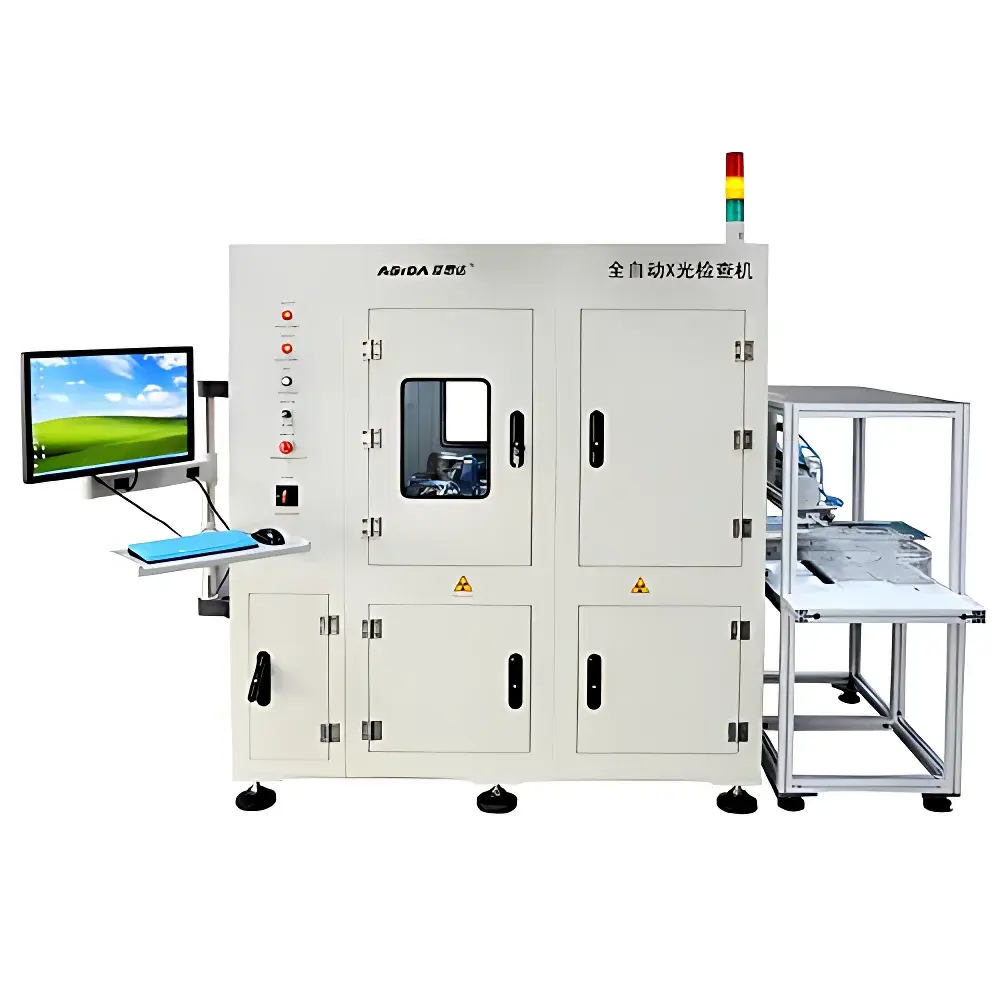
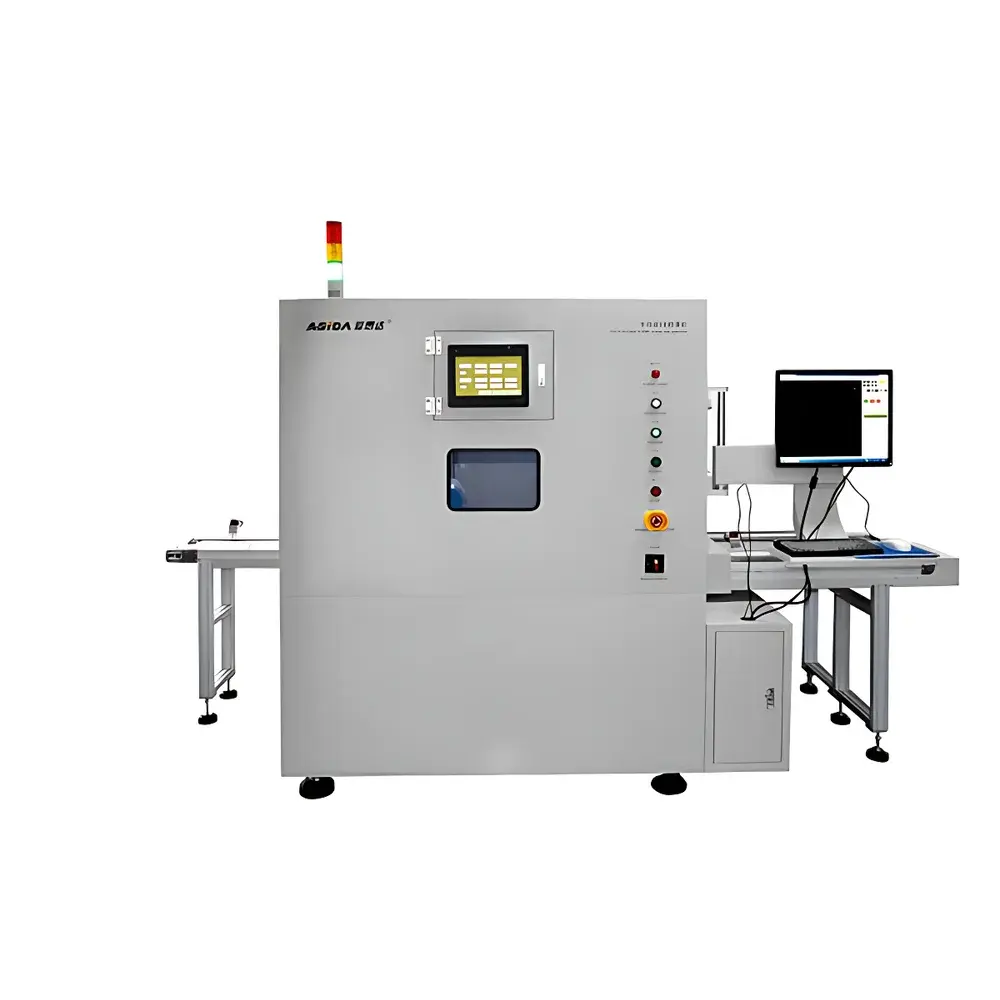
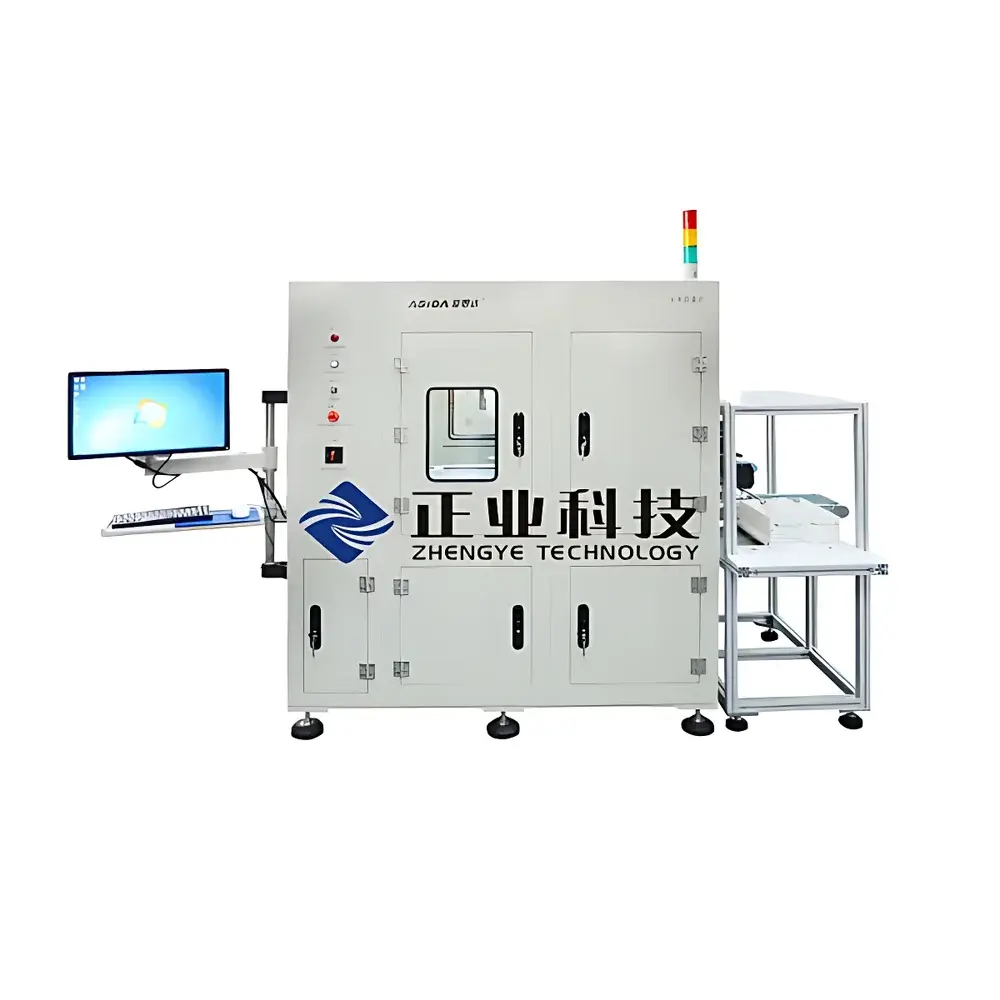
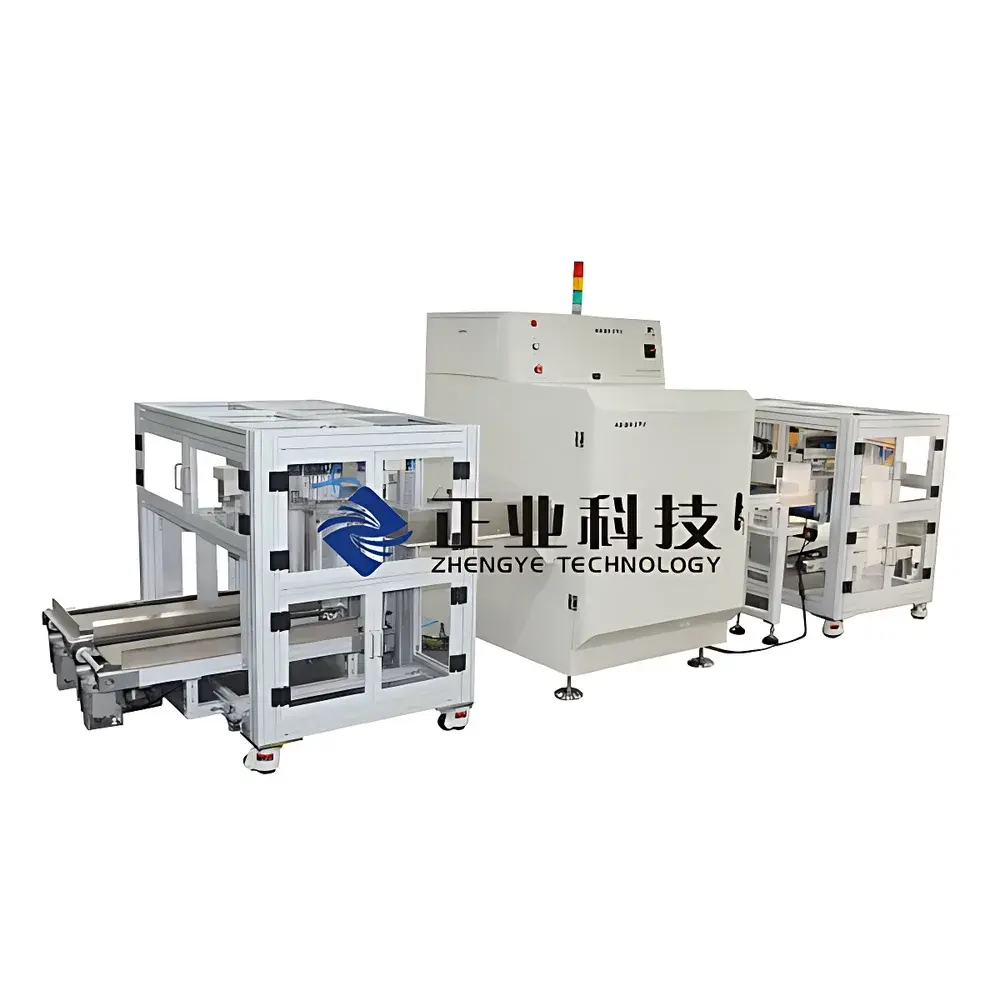
Zhengye XG5000 Series Industrial X-ray Inspection System
| Brand | Zhengye |
|---|---|
| Origin | Guangdong, China |
| Manufacturer Type | OEM/ODM Manufacturer |
| Regional Classification | Domestic (China) |
| Model | XG5000 Series |
| Pricing | Available Upon Request |
Overview
The Zhengye XG5000 Series Industrial X-ray Inspection System is a high-resolution, fully automated non-destructive testing (NDT) platform engineered for precision internal defect detection in high-volume manufacturing environments. Utilizing microfocus X-ray generation (typically 90–160 kV, <5 µm focal spot size) and high-dynamic-range flat-panel digital detectors, the system captures real-time radiographic images based on differential X-ray attenuation—enabling quantitative analysis of density variations, voids, foreign objects, misalignments, and structural anomalies. Designed specifically for process-critical applications in lithium-ion battery production, the XG5000 operates inline or near-line within cleanroom-compatible factory settings, delivering repeatable sub-millimeter defect resolution (<30 µm detectability under optimal conditions) without physical contact or sample preparation.
Key Features
- Fully automated inspection workflow: integrated conveyor-based auto-loading, programmable stage positioning, real-time image acquisition, AI-assisted defect classification, and pneumatic/electromechanical sorting of pass/fail units.
- Real-time system health monitoring: comprehensive diagnostics of X-ray tube voltage/current stability, detector temperature drift, gantry motion synchronization, interlock status, and radiation shielding integrity—all visualized via embedded HMI with configurable alarm thresholds.
- Multi-region synchronized imaging: simultaneous acquisition and side-by-side display of up to six predefined ROI (Region of Interest) views per specimen—including top-down, oblique-angle, and cross-sectional projections—each annotated with dimensional measurements, grayscale histograms, and contrast-to-noise ratio (CNR) metrics.
- Triple-layer radiation safety architecture: mechanically interlocked access doors, redundant hardware-based beam shutter control, and lead-acrylic shielding compliant with GBZ 138–2002 and IEC 61331-1:2014; surface dose rate ≤0.5 µSv/h at 5 cm distance under all operational modes.
- Modular mechanical design: adjustable source-to-detector distance (SDD: 400–900 mm), motorized tilt/rotation stages (±90° pitch, 360° yaw), and tool-less detector module replacement for rapid maintenance and multi-product line reconfiguration.
Sample Compatibility & Compliance
The XG5000 accommodates samples ranging from 5 mm × 5 mm × 2 mm (e.g., battery tab welds) to 400 mm × 300 mm × 150 mm (e.g., assembled battery modules), with maximum weight capacity of 5 kg per unit. It supports standard industrial form factors including cylindrical (18650, 21700), prismatic, and pouch cells; copper/aluminum foil electrodes; USB-C and Type-A connectors; die-cast aluminum housings; and insulated wire harnesses. The system conforms to ISO 17025:2017 requirements for calibration traceability, meets electromagnetic compatibility (EMC) per GB/T 18268.1–2010 (IEC 61326-1), and supports audit-ready documentation aligned with GMP Annex 11 and FDA 21 CFR Part 11 for electronic records and signatures when paired with optional validated software modules.
Software & Data Management
Equipped with Zhengye’s proprietary XVision Pro v4.x inspection suite, the system provides DICOM-compliant image storage, customizable AOI (Automated Optical Inspection) rule sets, statistical process control (SPC) dashboards with Cp/Cpk calculation, and raw image export in TIFF/RAW formats. All inspection logs—including timestamped images, operator ID, exposure parameters (kV, µA, ms), defect coordinates, confidence scores, and manual override history—are stored in encrypted SQLite databases with automatic daily backup to network-attached storage (NAS). Audit trail functionality records every user action, parameter change, and software update with immutable timestamps—fully supporting GLP/GMP validation protocols and internal quality audits.
Applications
- Lithium-ion battery manufacturing: detection of electrode coating gaps, separator wrinkles, anode/cathode misalignment, tab weld porosity, and foreign metallic particles in jelly rolls.
- Electronics assembly: verification of solder joint integrity in USB connectors, BGA voiding assessment, PCB trace continuity, and component placement accuracy.
- Die-casting quality assurance: identification of shrinkage cavities, gas porosity, core shift, and inclusions in aluminum/zinc alloy housings used in power tools and EV components.
- Wire harness and cable assembly: insulation thickness uniformity, conductor strand count verification, crimp barrel compression ratio, and connector pin insertion depth.
- Research & development labs: comparative microstructural analysis of novel electrode architectures, thermal runaway propagation studies, and post-cycle degradation mapping.
FAQ
What regulatory standards does the XG5000 comply with for industrial X-ray use?
It adheres to Chinese national radiation safety standards (GBZ 138–2002), IEC 61331-1:2014 for protective devices, and GB/T 18268.1–2010 for EMC. Optional CE marking support is available upon request for EU market deployment.
Can the system integrate with existing MES or SCADA platforms?
Yes—via OPC UA (IEC 62541) and Modbus TCP interfaces, enabling bidirectional data exchange for job dispatching, OEE tracking, and real-time SPC integration.
Is remote diagnostic support available?
All units include embedded Telematics firmware with TLS-encrypted remote access, allowing Zhengye Field Application Engineers to perform secure firmware updates, calibration diagnostics, and image chain optimization without onsite visits.
What is the typical throughput for battery cell inspection?
At 120 kV / 0.8 mA with 1.5 s exposure per view and dual-ROI acquisition, average throughput reaches 18–22 units per minute depending on part geometry and required resolution.
Does the system support custom algorithm development for proprietary defect types?
Yes—Zhengye provides SDK access and Python-based API documentation for customers to develop, train, and deploy domain-specific CNN models using their own labeled datasets, subject to NDA and validation protocol alignment.






